
TL;DR
Greg James’s bedroom shows a large jute rug beneath the bed paired with a floral runner along the room’s edge. Interior experts quoted by Ideal Home say the arrangement uses texture and placement to define areas while leaving the floor between the rugs exposed.
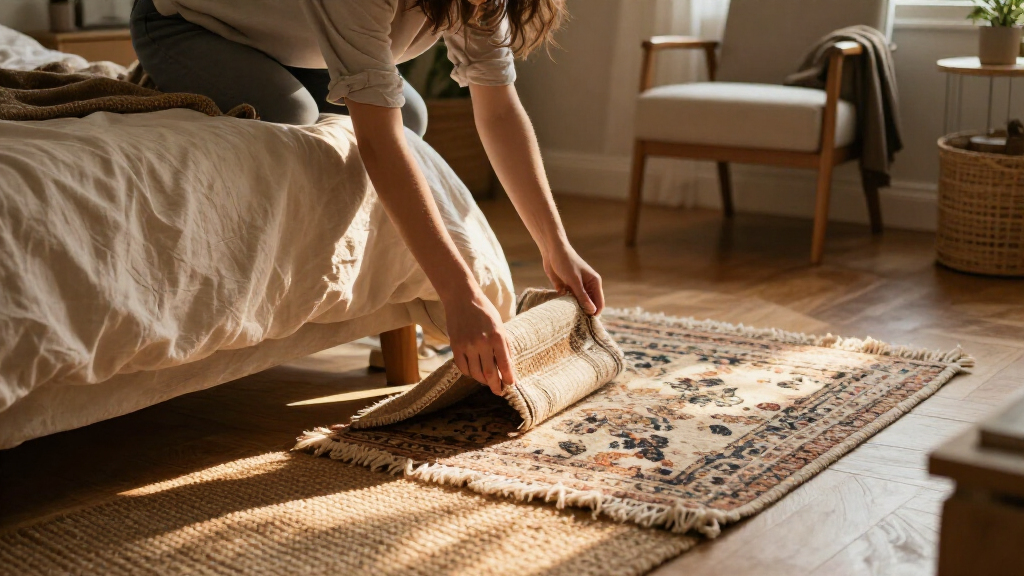
BBC Radio 1 presenter Greg James’s bedroom rug arrangement, highlighted by Ideal Home after he shared glimpses of his home on social media, pairs a large jute rug under the bed with an embroidered runner along the room’s edge. The setup offers a way to give the bed and a nearby walking area separate visual definition without covering the floor between them.

Get furniture and decor delivered free with Prime
- Fast, free delivery on millions of items
- Prime Video, Amazon Music and more included
- Member-only deals all year
Ideal Home describes the larger rug as a square, woven jute design positioned beneath the bed. A longer, embroidered runner sits alongside it. The article says the rug arrangement can be seen in images James shared on social media, but does not identify when those images were posted or provide a direct statement from James explaining his choices.
The exact products are not confirmed. The article says the large rug looks similar to La Redoute’s Aftas Square Hand-Woven Jute Rug and suggests Dunelm’s Hani Floral Wool Runner as one possible way to recreate the effect. Those are suggested alternatives, not products confirmed as being in James’s bedroom.
The visual effect comes from contrast without a sharp break in style: the broad natural-textured rug anchors the bed, while the runner adds a floral pattern and a softer detail. The rugs do not need to overlap. In the arrangement described, exposed floorboards remain visible between them, giving each rug room to read as a separate piece.
Why Greg James Uses Layered Rugs To Zone His Bedroom
A large jute rug anchors the bed while a floral runner defines a nearby walking area. Exposed floor between them lets each piece stand apart.
Two rugs, two roles
The layout creates visual zones without adding furniture or covering the whole floor.
- Large square woven jute rug
- Natural texture anchors the sleeping area
- Embroidered floral runner
- Marks a route and adds a distinct pattern
Keep the pieces distinct
Ideal Home’s description highlights contrast through placement, texture and pattern.
Place a larger rug beneath it to give the sleeping area definition.
Use a separate stretch of floor for a walking area or added warmth.
A visible gap helps each rug’s texture and pattern stand out.
Connect without matching
Complementary tones can link different designs while preserving contrast.
Natural base
The jute rug brings a broad, woven texture beneath the bed.
Floral detail
The runner adds a softer decorative accent beside it.
Related tones
Beige and natural-looking shades tie the pieces together without identical patterns.
How Separate Rugs Define Bedroom Areas
The arrangement is a practical example of zoning with furnishings rather than dividers. A rug under a bed can mark the sleeping area; a runner beside it can distinguish a route through the room or add warmth to a narrow strip of floor. The placement can help a bedroom feel organised without adding furniture that takes up space.
That may be useful where a full-size rug would be awkward, such as a narrow gap between a bed and a chest of drawers. Rugs Direct managing director Nick Acaster says a runner can extend warmth into that surrounding space, while the larger rug gives the bed a defined setting. This is expert commentary about the design approach, not evidence that the layout has a measured effect on comfort or room use.
There is also a straightforward styling lesson: rugs can relate through shared tones and natural textures without matching exactly. Hillarys style and trend expert Victoria Robinson says connection between pieces matters more than perfect coordination. In James’s pictured arrangement, beige and natural-looking shades link the rugs, while the runner’s floral pattern adds a distinct accent.
Products Worth Considering

Dyson Airstrait Wet-to-Dry Hair Straightener

Roborock F25 BX Cordless Wet/Dry Vacuum Cleaner

Hisense E7 Cinema Series 65-Inch Hi-QLED Mini-LED 4K UHD Smart Fire TV
As an affiliate, we earn on qualifying purchases.
The Bedroom Layout in the Report
The article presents James’s room as an example of a broader bedroom styling idea: using rugs to make areas feel distinct. It says the BBC Radio 1 presenter shares glimpses of his home life on social media, where the layered arrangement was noticed. No floor plan, room dimensions, or wider account of the bedroom’s design is provided.
Both experts quoted in the article describe the rugs in terms of texture, placement and visual flow. Acaster says the designs need not overlap and that leaving some floor exposed can help each texture and pattern stand out. Robinson describes the runner as creating direction through the room and separating a walking area from the place for rest.
Ideal Home also notes that more than one rug may suit bedrooms used for different activities, including reading or getting ready. That is a general design view, rather than a claim about James’s own routines. The article does not say whether he selected the arrangement for a specific practical reason or simply for its appearance.
“The two rugs complement one another because they’re not trying too hard to match.”
— Victoria Robinson, style and trend expert at Hillarys
What the Images Do Not Confirm
The report does not identify the exact rug brands or models in James’s room; its product comparisons are suggestions based on appearance. It also gives no measurements, so readers cannot tell how large either rug is or how much space separates them.
James is not quoted explaining why he chose the layout. The article’s claims about zoning, warmth and the arrangement’s visual effect come from design experts and the publication’s interpretation of the images, not from a stated explanation by the presenter. The date of the original social media post is also not specified.
Recreating the Look at Home
The article offers no announced follow-up from James or new development beyond the bedroom example. For readers interested in the styling, its practical suggestions are to place a larger rug beneath the bed, add a runner to a separate stretch of floor, and use complementary tones rather than identical patterns. Leaving a visible strip of floor between the pieces can keep their textures distinct.
Before buying, homeowners would need to check the room’s measurements and the rugs’ dimensions; the article does not provide a template for spacing or placement. Its named products are examples to consider, not confirmed items from James’s home. Whether a similar arrangement suits a particular bedroom depends on its layout and the amount of clear floor available.
Source: rss
Key Questions
What rugs does Greg James use in his bedroom?
The article describes a large square jute rug under the bed and an embroidered runner beside it. It does not confirm the products’ brands or models.
Do the rugs overlap?
No overlap is described. The arrangement leaves exposed floorboards between the two rugs, according to Ideal Home.
Why use a runner alongside a larger bedroom rug?
A runner can mark a separate walking area and add warmth to a narrow stretch of floor. In the layout described, it also adds a decorative pattern beside the larger rug.
Which products does the article suggest as alternatives?
It says La Redoute’s Aftas Square Hand-Woven Jute Rug looks similar to the larger rug, and suggests Dunelm’s Hani Floral Wool Runner as a possible alternative. These are recommendations, not confirmed purchases by James.
Source: idealhome.co.uk