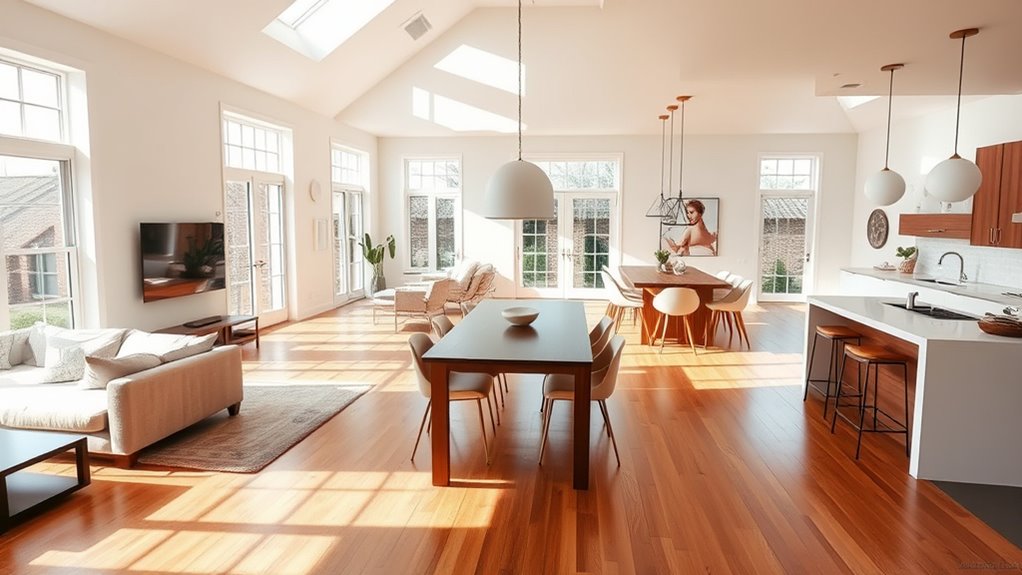

To define zones in your open floor plan, use furniture placement to create visual boundaries, such as anchoring seating with area rugs and arranging pieces to face focal points. Layer your lighting with ambient, task, and accent lights to differentiate areas subtly. Keep pathways clear for smooth movement, and incorporate decor or color schemes that highlight each zone’s purpose. If you’d like to explore more ideas, you’ll discover additional tips to make your space both functional and inviting.
Key Takeaways
- Use furniture arrangement and scale to create distinct functional zones without physical walls.
- Incorporate layered lighting to visually separate areas and highlight specific zones.
- Anchor seating with area rugs and position furniture to face focal points for clear zone definition.
- Apply different wall colors or decor themes to subtly differentiate open space zones.
- Maintain clear pathways and balance furniture placement to ensure smooth flow and visual harmony.
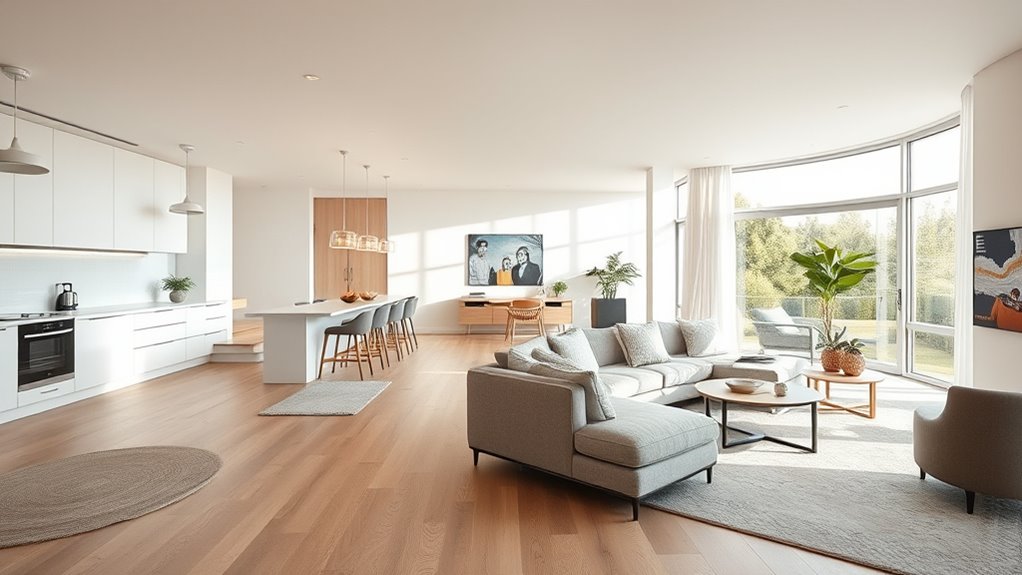
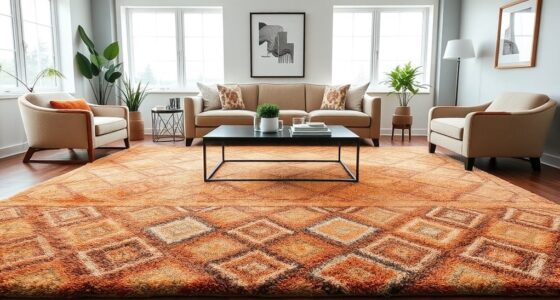
An open floor plan creates a seamless flow between your living spaces, making your home feel larger and more inviting. Without walls to define separate rooms, you need to be intentional with furniture placement and lighting strategies to create distinct zones. The way you arrange your furniture is key to establishing functional areas while maintaining the openness. For example, use area rugs to visually anchor a seating arrangement or dining space, creating a sense of boundary without physical barriers. Position sofas and chairs to define your lounge area, but leave enough space for easy movement. Avoid cluttered setups; instead, keep furniture scaled appropriately to the space, so each zone feels intentional and balanced. Additionally, incorporating layered lighting helps emphasize different zones and enhances the overall ambiance of your open layout.
Create distinct zones with furniture placement and area rugs for a seamless, inviting open floor plan.
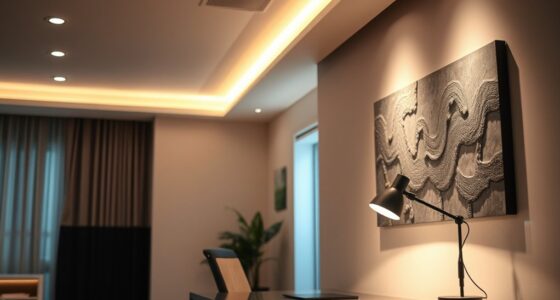
Lighting strategies also play a *vital* role in defining zones in an open floor plan. Rely on a mix of lighting sources—ambient, task, and accent—to highlight different areas. For instance, pendant lights over a dining table can signal that this is a designated eating space, while a pair of floor lamps or table lamps in the living area creates a cozy atmosphere. Use layered lighting to differentiate zones, avoiding uniform brightness throughout the room. This not only adds visual interest but also helps your eye naturally gravitate toward specific areas, subtly indicating their purpose.
Strategic furniture placement combined with effective lighting can also enhance the overall flow of your space. For example, position your sofa to face a focal point like a fireplace or a view, with a well-placed table lamp nearby to serve as both task lighting and a visual cue for the seating zone. Likewise, keep pathways clear by arranging furniture so that movement between zones is smooth and intuitive. This prevents the space from feeling chaotic or disjointed, ensuring each zone feels connected yet distinct.
Remember that color schemes and decor elements further reinforce the separation of zones. Using different wall colors or accent walls can delineate areas without walls, while coordinated decor ties the space together cohesively. When you combine intentional furniture placement, layered lighting, and thoughtful decor choices, you create a balanced, harmonious open floor plan. This approach allows each zone to serve its purpose effectively while maintaining the airy, spacious feel that makes open floor plans so appealing. Ultimately, the key is to design with purpose, ensuring your home functions beautifully and feels welcoming at every turn.
Frequently Asked Questions
How Do I Create Privacy in an Open Floor Plan?
You can create privacy in an open floor plan by using privacy solutions like strategically placed screens, curtains, or movable furniture to section off areas. Additionally, incorporate soundproofing techniques such as rugs, wall panels, or acoustic dividers to reduce noise and increase intimacy. These methods help you define personal spaces without walls, making your open layout functional, cozy, and private while maintaining its airy feel.
What Are the Best Furniture Arrangements for Zone Definition?
Think of your space as a puzzle waiting to be solved. You can create zones by arranging furniture grouping that naturally guides the eye. Use visual cues like rugs, sofas, and bookcases to anchor each area, making them feel distinct yet part of a cohesive whole. Position seating to encourage conversation and flow, so each zone feels inviting and purposeful without walls, just like pieces fitting perfectly together.
How Can Lighting Help Define Different Areas?
Lighting helps define different areas by creating distinct atmospheres. Use ambient lighting to softly illuminate larger spaces, making zones feel cozy and connected. Add task lighting, like pendant lights or reading lamps, in specific areas such as the kitchen or reading nook, to highlight their purpose. Combining these lighting types guides your eye and subtly separates zones without walls, making your open floor plan both functional and visually appealing.
Are Rugs Effective in Demarcating Spaces?
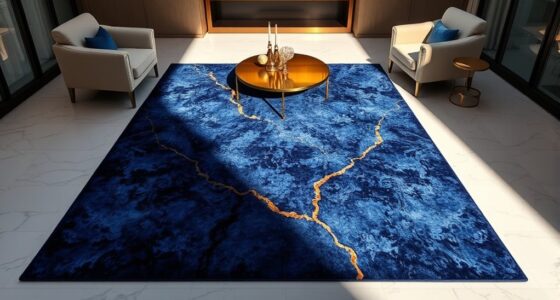
Think of area rugs as the painter’s brush, creating bold strokes of color blocking that carve out distinct zones. Rugs are highly effective; they anchor furniture and define spaces without walls, like invisible fences. With strategic placement, your area rugs can turn an open floor plan into a tapestry of cozy, functional zones. Choose different patterns or colors to enhance separation and add visual interest effortlessly.
How Do I Maintain a Cohesive Style Across Zones?
You maintain a cohesive style across zones by using consistent color coordination throughout your space. Choose a unified color palette for walls, furniture, and accessories to create harmony. Incorporate decorative accents like pillows, artwork, and decor items that share similar tones or styles, tying the zones together. This approach guarantees your open floor plan feels seamless and well-designed, while still allowing each zone to have its unique character.
Conclusion
By mastering open floor plan styling, you create a space that flows like a well-choreographed dance, where each zone seamlessly connects yet maintains its own personality. Defining areas without walls allows you to enjoy the freedom of an airy environment while still feeling organized and intentional. Think of it as painting a masterpiece with broad, confident brushstrokes—each zone blending harmoniously to reflect your lifestyle. With thoughtful design, your open space becomes a beautiful, functional sanctuary.