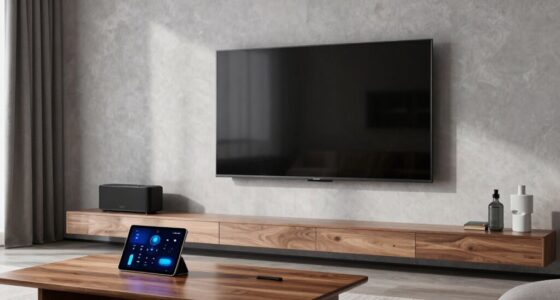
To create a balanced and inviting space, combine ambient, task, and accent lighting thoughtfully. Start with ambient lighting to set the general mood using ceiling fixtures, then add task lights to focus on functional areas like your desk or kitchen counter. Finally, incorporate accent lights to highlight artwork or architectural features, adding depth and interest. Mastering these layers will transform your room into a harmonious environment—if you keep exploring, you’ll discover how to perfect each layer for your space.

Get furniture and decor delivered free — and shop member deals
- Fast, free delivery on millions of items
- Access to Prime Big Deal Days deals on October 6–7
- Prime Video, Amazon Music and more included
Key Takeaways
- Combine ambient, task, and accent lighting to create a balanced, functional, and visually appealing space.
- Use ceiling fixtures for even ambient light, focused sources for tasks, and directional lights for accents.
- Adjust brightness and placement with dimmers and strategic positioning to enhance mood and highlight features.
- Ensure each layer complements the others without causing glare or shadows, maintaining harmony.
- Incorporate control options like dimmers and switches to customize lighting based on activities and atmosphere.
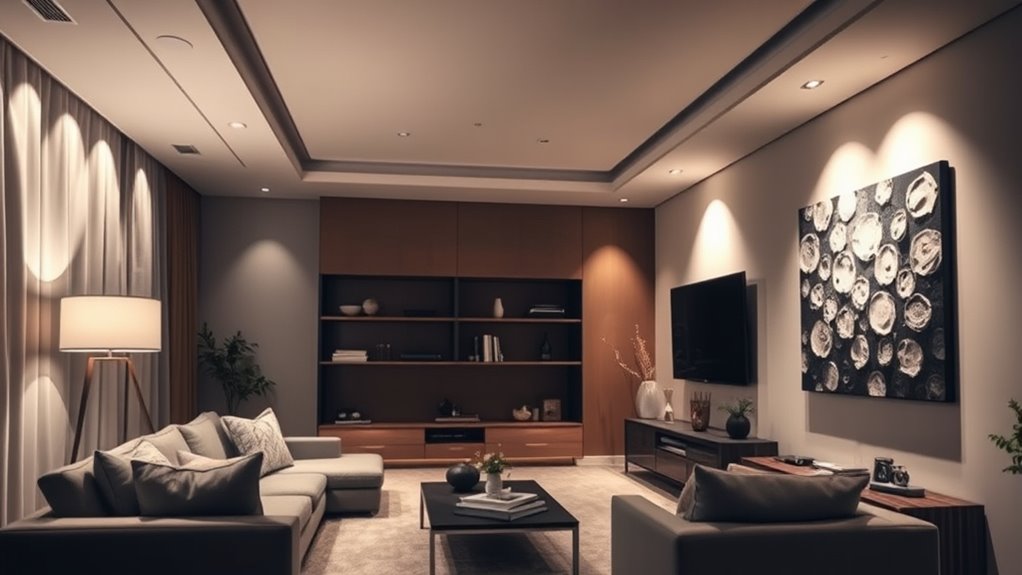
Have you ever wondered how to create a warm, inviting space that feels perfectly balanced? The secret lies in mastering layering lighting—combining different lighting techniques to achieve both functionality and ambiance. When you understand the core design principles behind layering lighting, you can transform any room into a harmonious haven. It’s not just about installing a single ceiling fixture; it’s about thoughtfully blending ambient, task, and accent lighting to enhance your space’s overall feel.
Start with ambient lighting, which sets the foundation for your room. It provides general illumination and creates a comfortable atmosphere. To implement this, you might choose ceiling-mounted fixtures like chandeliers, recessed lights, or flush mounts. These should be positioned to distribute light evenly, avoiding harsh shadows or overly bright spots. When you plan your ambient lighting, keep in mind the size and purpose of the space. Smaller rooms might benefit from a central ceiling light, while larger areas may require multiple fixtures to ensure uniform brightness. Using dimmers with your ambient lighting gives you control over the mood, allowing you to adjust the glow according to the occasion.
Next, incorporate task lighting to meet specific needs. Whether you’re reading, cooking, or working, task lighting helps you see clearly without straining your eyes. Think about focused lighting sources like table lamps, under-cabinet lights, or adjustable desk lamps. Position them strategically so they illuminate the work surface without causing glare or shadows. The key is to follow lighting techniques that maximize efficiency while minimizing clutter. For example, placing under-cabinet lights in the kitchen ensures countertop tasks are well-lit without overpowering the room. When designing this layer, consider the direction and intensity of light to prevent eye fatigue and create a functional, comfortable environment.
Finally, add accent lighting to highlight architectural features, artwork, or decorative pieces. This layer isn’t about illumination but about creating visual interest and depth. Use spotlights, wall sconces, or picture lights to draw attention to specific elements in your space. Proper placement and angle are essential to avoid harsh glares and to emphasize textures and colors effectively. Accent lighting adds personality and sophistication, making your space feel thoughtfully curated.
Frequently Asked Questions
How Do I Determine the Right Lighting Layers for My Space?
To determine the right lighting layers, start with a clear lighting hierarchy that balances ambient, task, and accent lighting. Consider your room’s primary use and desired ambiance, then add ambient lighting for overall brightness. Incorporate task lighting where activities occur, like near desks or cooking areas. Use accent lighting to highlight features or create mood. Adjust each layer to achieve a harmonious room ambiance that feels functional and inviting.
What Are Common Mistakes to Avoid in Lighting Layering?
Don’t let your lighting become a tangled web. Avoid overlighting pitfalls by using too many fixtures or overly bright bulbs, which can create glare and discomfort. Steer clear of inconsistent fixtures—mixing styles or finishes can disrupt harmony. Instead, choose complementary lighting elements that work together seamlessly, highlighting your space without overwhelming it. Remember, balanced layering creates ambiance, not chaos. Keep it simple, cohesive, and thoughtfully planned.
How Does Natural Light Influence Artificial Lighting Choices?
Natural light considerably influences your artificial lighting choices by guiding daylight integration and informing your window treatment decisions. You should prioritize allowing ample daylight during the day to reduce reliance on artificial light, using window treatments like blinds or sheer curtains to control glare and brightness. This balance enhances comfort, saves energy, and creates a well-lit space that feels natural and inviting, aligning artificial lighting with the natural light cycle.
Can Layering Lighting Save Energy and Reduce Costs?
Layering lighting can cut energy use by up to 40%, leading to significant cost savings. By combining ambient, task, and accent lighting, you target specific areas efficiently, avoiding over-illumination. This strategic approach guarantees you use only the light needed, improving energy efficiency. Plus, it enhances your space’s ambiance, making it more inviting while reducing your electricity bills. So, yes, layering lighting is a smart way to save energy and cut costs.
What Are Innovative Trends in Lighting Layering for Modern Interiors?
You can embrace innovative trends in lighting layering by integrating smart controls, allowing you to customize and automate lighting scenes effortlessly. LED innovations, like tunable white and color-changing options, enhance ambient, task, and accent layers, creating dynamic environments. These advancements enable you to optimize energy efficiency while elevating your space’s aesthetic and functionality, giving you flexible, modern lighting solutions that adapt seamlessly to your needs and preferences.
Conclusion
By mastering the art of layering ambient, task, and accent lighting, you create a space that’s both functional and inviting, much like a well-composed symphony. Think of it as painting with light—each layer adding depth and mood. When you balance these elements, your room transforms into a sanctuary that beckons and inspires, echoing the timeless elegance found in classic masterpieces. Embrace these strategies, and let your space tell its own mesmerizing story.
Fall Picks
fall essentials
As an affiliate, we earn on qualifying purchases.