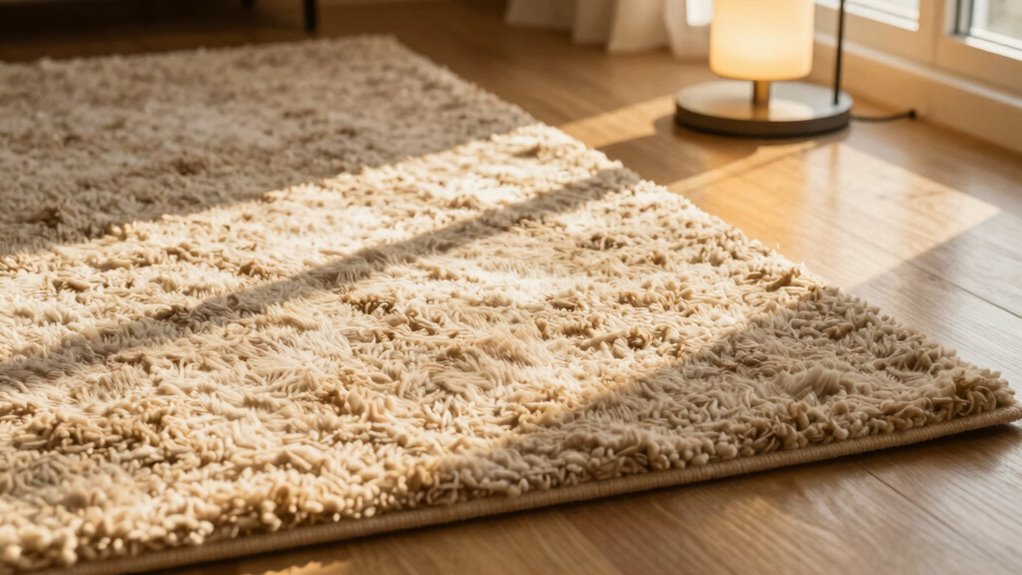

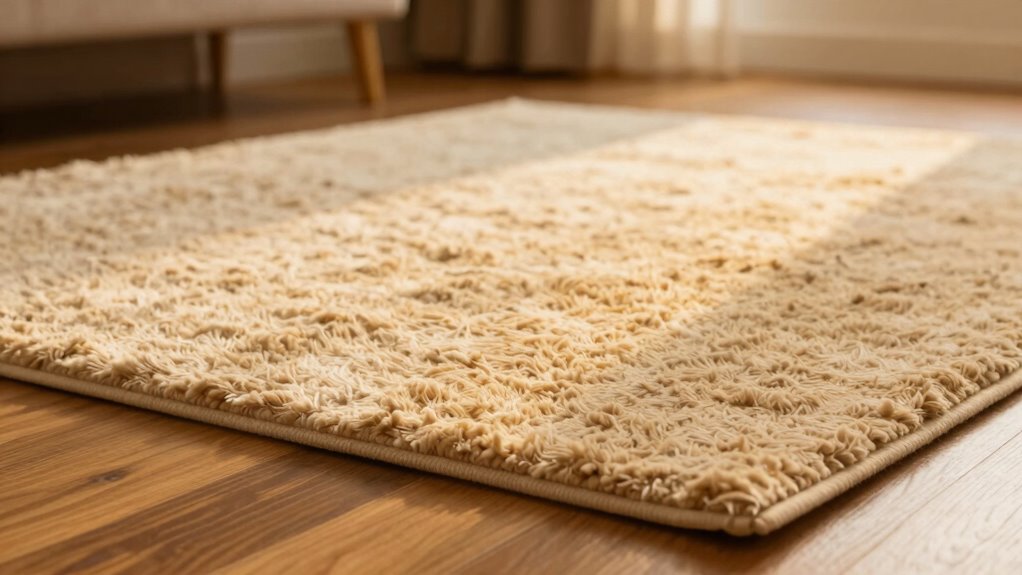
Your “neutral” rug can look yellow because of the lighting you use. Warm bulbs, like incandescent or bulbs with lower color temperatures, cast a yellowish hue that distorts the rug’s true color. Cool, daylight-like lights with higher Kelvin ratings show more accurate shades. Adjusting your lighting setup—such as choosing the right bulbs or positioning lights differently—can make a big difference. Keep exploring these tips to reveal your rug’s true colors in any light.
Key Takeaways
- Warm lighting, like incandescent bulbs, can cast a yellowish tint, making neutral rugs appear yellow.
- Cooler LED or fluorescent lights with higher color temperatures (5000K+) show true rug colors more accurately.
- Incorrect light placement or tilt can distort color perception, emphasizing warm tones in neutral rugs.
- Natural daylight offers the most accurate color rendering, minimizing artificial light distortions.
- Using high CRI, neutral-colored bulbs (3500K–4100K) helps prevent yellowish illusions and reveals true rug hues.
Why Does My Rug Look Yellow Under Certain Lights?
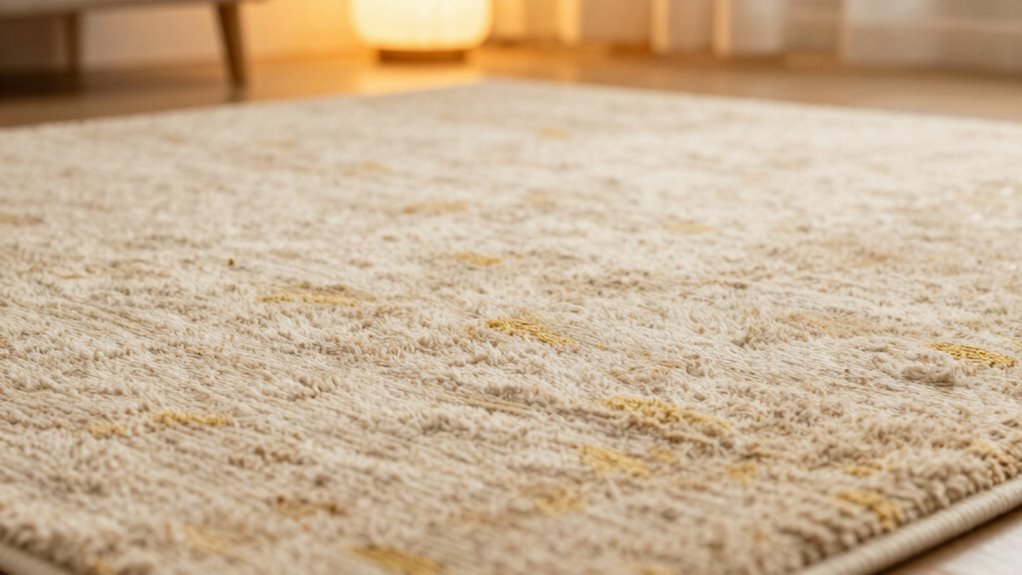
You might notice that your neutral rug looks yellow when certain lights are on, and this is often due to the type of lighting used. Lighting effects directly influence how colors are perceived, making your rug appear warmer or duller than it actually is. Incandescent bulbs emit a warm, yellowish glow that can cast a yellow tint over neutral tones, altering your perception of the rug’s true color. On the other hand, cool LED or fluorescent lighting produces a bluish hue that might make the rug seem less warm or even slightly off-color. These lighting effects manipulate how your eyes interpret color, causing your rug to look different under various light sources. Understanding this relationship helps you recognize that the yellow appearance isn’t a flaw but a trick of the light. Additionally, color temperature adjustments can help optimize your lighting conditions to better reflect the rug’s true hue.
How Can I Tell If Lighting Is Making My Rug Look Off?
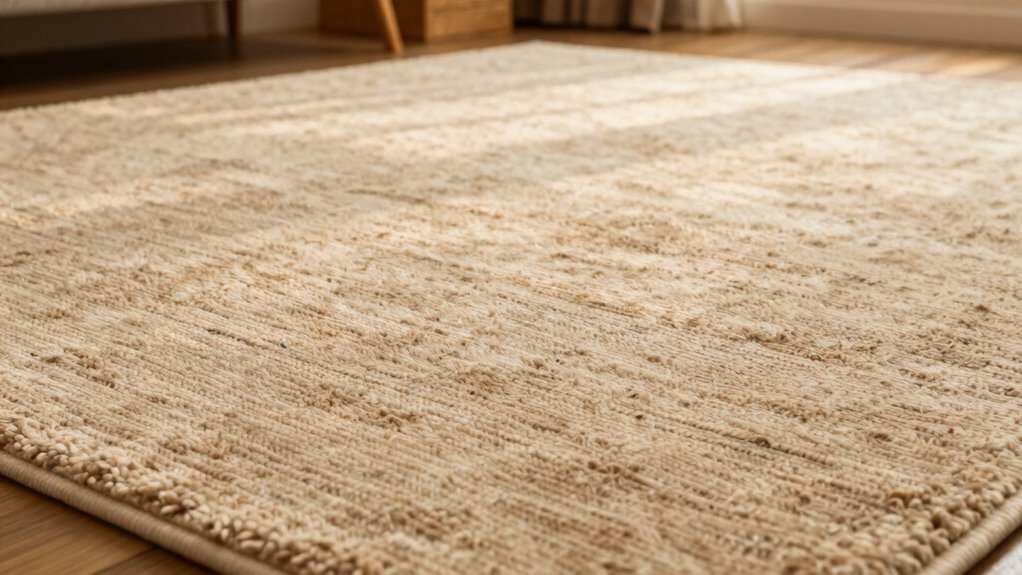
Determining if lighting is causing your rug to look off requires paying close attention to how its color appears under different conditions. Start by observing your rug in natural daylight, which provides a true sense of its color. Then, compare it under various lighting fixtures—incandescent, LED, or fluorescent—each with different color temperatures. If the rug’s tone shifts noticeably, especially appearing more yellow or dull under certain lights, your lighting may be the culprit. Pay attention to the color temperature of your bulbs; warmer tones (around 2700K) tend to cast a yellowish hue, while cooler tones (above 5000K) reveal more accurate colors. By testing your rug’s appearance across different lights, you can identify whether your lighting setup is making it look off. Lighting effects can significantly influence how colors are perceived indoors.
Which Light Bulbs Help Show Rug Colors True?

Choosing the right light bulbs can make a big difference in how your rug’s colors appear. Bulb color temperature influences whether colors look warm or cool, so selecting the right one helps reveal true shades. Natural light is also ideal, as it shows colors most accurately without artificial tinting. Additionally, understanding the essential oils for color perception can help optimize your space for accurate color display.
Bulb Color Temperature
When selecting light bulbs for your home, paying attention to color temperature is essential for accurately showcasing your rug’s true colors. The right color temperature influences how colors appear under different lighting. Bulb spectrum varies across color temperatures, typically measured in Kelvins. For true color representation, opt for bulbs in the 3500K to 4100K range, which produce neutral, white light that reveals your rug’s shades without distortion. Lower Kelvin bulbs (warm tones) tend to cast a yellowish hue, while higher Kelvin bulbs (cool tones) may give a bluish tint. Choosing the appropriate color temperature ensures your neutral rug looks authentic rather than artificially yellow or washed out. Additionally, understanding lighting’s effect on color perception can help you make better choices for your space. This simple adjustment greatly impacts how your space’s colors are perceived.
Natural Light Benefits
Ever wondered why your rug looks different depending on the time of day? Natural light offers distinct advantages for revealing true colors. First, it provides a full spectrum that accurately displays shades, helping you see your rug as it truly is. Second, natural light minimizes the impact of wall colors and artificial lighting, which can distort hues. Third, during midday, sunlight’s brightness enhances color clarity, making it easier to assess your rug’s true tone. Unlike artificial lighting, which can cast yellow or bluish tints, natural light reveals the authentic palette. By taking photos or inspecting your rug in natural daylight, you avoid color misinterpretation caused by artificial lighting and wall colors, ensuring you choose the right lighting solutions for your space. Additionally, understanding the lighting conditions can help you select the best type of bulbs, such as full-spectrum LEDs, to mimic natural light indoors.
Common Lighting Mistakes That Make Rugs Look Yellow

Many common lighting mistakes can cause your neutral rug to appear yellow or off-color. Poor lighting choices create lighting illusions that distort rug color perception. For example, using bulbs with a warm color temperature can cast an unwanted yellow tint. Similarly, inconsistent lighting across a room causes shadows and color shifts. The table below highlights typical mistakes:
| Mistake | Effect on Rug Color | Solution |
|---|---|---|
| Using warm white bulbs | Adds yellowish hue | Switch to neutral or daylight bulbs |
| Poorly balanced lighting | Creates uneven color perception | Use layered, balanced lighting |
| Inconsistent light sources | Causes color perception errors | Match bulbs and fixtures |
| Low-quality bulbs | Distort true rug color | Invest in high-quality LEDs |
Additionally, understanding the lighting temperature helps in selecting the right bulbs to prevent color distortion. Avoid these pitfalls to improve rug color perception and eliminate unwanted yellow illusions.
Easy Tips to Adjust Your Lighting and Show Rug Colors Accurately
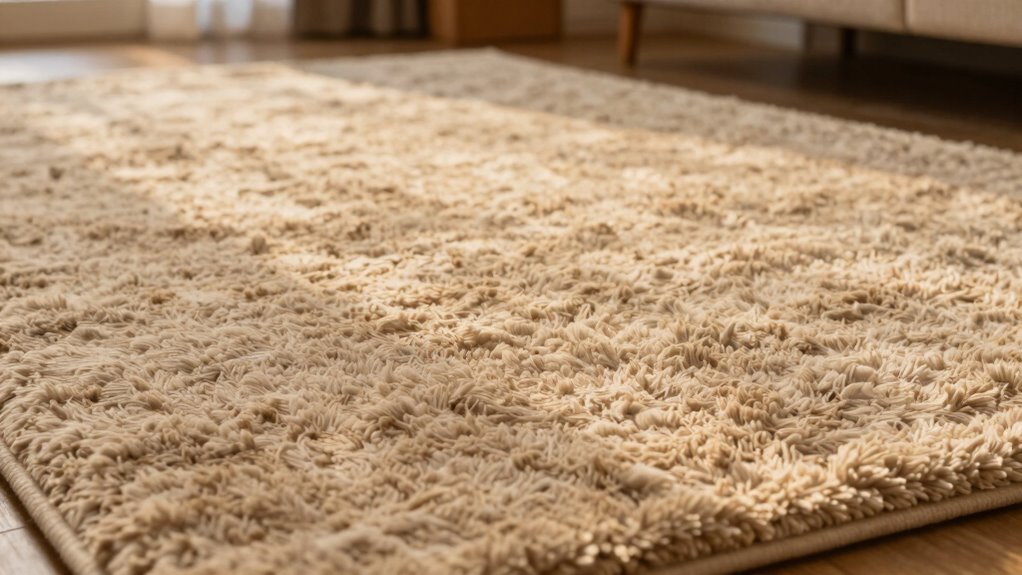
You can improve how your rug’s colors appear by choosing the right bulbs and adjusting their placement. Using natural light whenever possible also helps showcase true colors. These simple steps make a noticeable difference in avoiding yellow-toned illusions. Additionally, selecting appropriate air quality can reduce indoor pollutants that might influence how colors are perceived.
Choose Correct Bulb Type
Choosing the right bulb type is essential for accurately displaying your rug’s true colors. Your bulb selection directly affects color rendering, making your rug look more vibrant and true to life. To optimize your lighting, consider these tips:
- Opt for bulbs with a high Color Rendering Index (CRI) of 90 or above to ensure colors appear natural.
- Choose bulbs labeled as “daylight” or “bright white” to avoid warm, yellowish tones that distort neutral hues.
- Avoid incandescent bulbs, which tend to emit warm light, and instead select LED or halogen options for consistent, true-to-life color rendering.
- Regularly check your lighting setup and maintain proper airflow around fixtures to prevent dust buildup that could affect light quality.
Adjust Light Placement
Adjusting the placement of your light source can make a significant difference in how your rug’s true colors appear. Proper lamp placement and ceiling angles can reduce unwanted color casts. Position your lamp so the light hits the rug directly, avoiding shadows or glare. Experiment with ceiling angles to diffuse light evenly, preventing warm or yellow tones from dominating. Use the table below as a guide:
| Lamp Placement | Ceiling Angles | Effect |
|---|---|---|
| Centered overhead | Flat ceiling | Even illumination, true colors |
| Side placement | Steep angles | Highlights texture, reduces color distortion |
| Low height | Slight tilt | Adds warmth, may alter color perception |
| High placement | Diffused light | Softens shadows, shows true hues |
Adjusting these elements helps reveal your rug’s authentic color. Additionally, understanding lighting techniques can further enhance color accuracy in your space.
Use Natural Light When Possible
Whenever possible, opt for natural daylight to showcase your rug’s true colors. Natural light provides a balanced light temperature, helping your eyes perceive colors more accurately. To maximize this benefit:
- Position your rug near windows during the day to benefit from consistent, diffuse sunlight.
- Avoid direct sunlight that can cause harsh shadows or alter color perception.
- Use sheer curtains to soften light and prevent color distortion caused by overly warm or cool light temperatures.
- Understanding lighting conditions can help you choose the best time of day and environment for viewing your rug’s true hues. Natural light minimizes the yellow tint that artificial lighting often introduces. It reveals your rug’s true hues, making it easier to judge its color accurately. Remember, consistent exposure to natural daylight ensures your rug’s true colors shine through, free from misleading light temperature effects.
How to Test Your Space’s Lighting Before Buying New Rugs or Decor
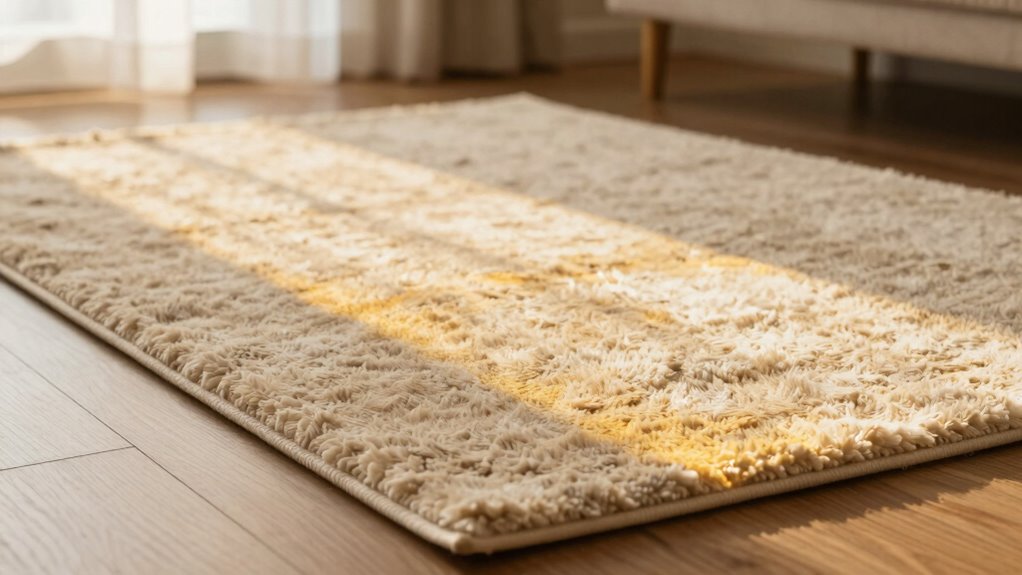
Before committing to new rugs or decor, it’s essential to see how your space’s lighting affects their appearance. Start by observing your room at different times of day and under various lighting conditions—natural sunlight, incandescent, and LED bulbs. Use samples or small swatches to test how rug dyeing might change in different lights, especially since fiber textures can reflect light differently. Take note of any yellowish or dull tones that appear under certain lighting, as these can distort your color choices. If possible, bring home a small sample or a similar rug to see how it looks in your space. This quick test helps you avoid buying items that won’t match your lighting environment, saving time and money later.
Simple Changes to Improve Color Accuracy in Your Home
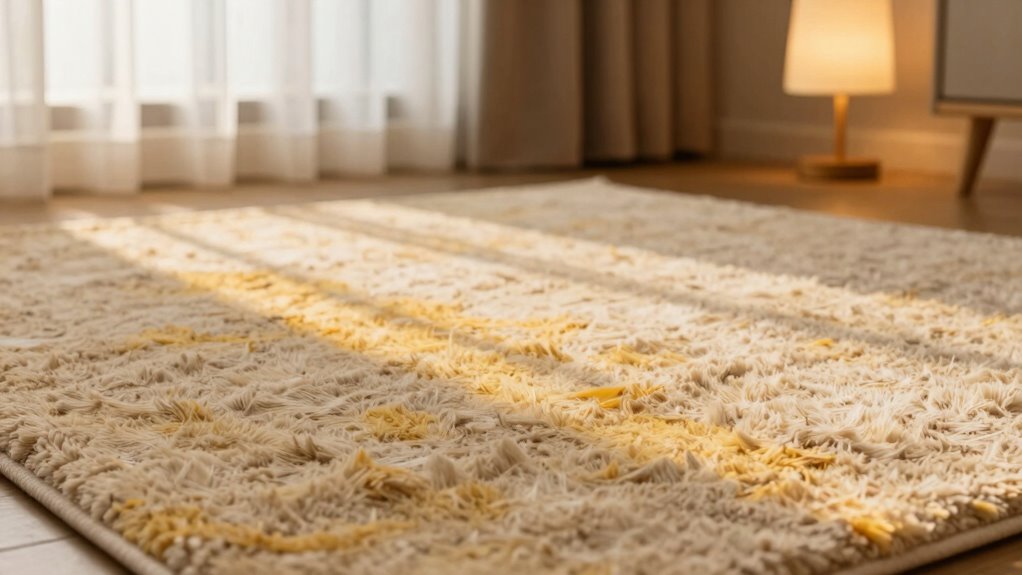
Even small changes can make a big difference in how accurately colors appear in your home. Lighting illusions considerably impact your color perception, often causing neutral tones to look yellow or off. To improve this, consider these simple steps:
- Switch to LED bulbs with a higher color rendering index (CRI), which reduce color distortion.
- Use bulbs with a color temperature between 5000K and 6500K for natural daylight effects.
- Avoid mixing different lighting sources, which can create conflicting lighting illusions and skew color perception.
These adjustments help create consistent, true-to-life lighting. By paying attention to lighting quality and temperature, you’ll see your space’s colors, including your rugs, appear more accurate and vibrant. Small tweaks lead to a noticeable difference in how your home’s colors are perceived.
When to Get Professional Help for Lighting and Color Matching
While adjusting your lighting setup can considerably improve color accuracy, there are times when expert help becomes necessary. If you’ve tried various lighting calibration techniques and still can’t achieve consistent, true-to-life colors, it’s time to consult a professional. A lighting specialist can perform precise calibration to guarantee your lights accurately reflect color without distortions. They also conduct detailed color analysis, identifying subtle color discrepancies caused by your current lighting conditions. This is especially important if you’re working with color-critical projects like art displays, photography, or high-end interior design. Professional help ensures your lighting setup is optimized for accurate color rendering, preventing ongoing issues with yellowed or washed-out hues that DIY adjustments might not resolve.
Quick Fixes to Make Your Rugs Look Their Best in Any Light

If your rug’s colors seem off under different lighting conditions, quick adjustments can make a significant difference. You can improve color perception and counteract lighting effects with simple tweaks. Here are three effective fixes:
- Adjust your light bulbs: Switch to LED bulbs with a higher color temperature (around 5000K) to neutralize yellowish hues and improve true color perception.
- Use curtains or window films: Block or filter natural light to reduce harsh lighting effects that distort your rug’s colors.
- Add complementary lighting: Incorporate cool-toned lamps to balance warm lighting, helping your rug look its best regardless of the light source.
These quick steps help you control lighting effects and guarantee your rug’s colors stay accurate and vibrant.
Frequently Asked Questions
Can Sunlight Change How My Rug’s Colors Appear Over Time?
Yes, sunlight can change how your rug’s colors appear over time. Natural light influences your perception of color, especially as UV rays cause fading or yellowing. If your rug is frequently exposed to direct sunlight, its original hues may dull or shift, making it look different from its true color. To keep your rug looking vibrant, consider using window treatments or rotating it regularly to minimize sun damage.
Are There Specific Colors or Patterns That Help Hide Yellowing?
If you want to hide yellowing, opt for rugs with colorful patterns or dark shades, as studies show they hide stains and discoloration better. Bright, busy designs distract the eye from any yellow tint, making the rug look newer longer. You can also choose patterns with deep hues or intricate designs that camouflage subtle discoloration, giving your space a fresh, vibrant look despite the yellowing.
How Often Should I Reevaluate My Lighting Setup for Color Accuracy?
You should reevaluate your lighting setup for color accuracy at least once every three to six months. Regular lighting maintenance helps guarantee consistent color calibration, preventing your neutral rugs from appearing yellow or distorted. Pay attention to any changes in your environment or lighting fixtures, as these can affect how colors are perceived. Consistent checks help you maintain true-to-life colors and avoid subtle shifts that impact your decor.
What Are the Signs That My Rug’s Color Has Faded or Changed?
Think of your rug like a chameleon, subtly shifting colors over time. Fading indicators include a duller appearance, less vibrancy, or uneven patches. You might notice color inconsistencies when certain areas look different from others or when the original hue seems to fade. If your rug no longer matches its initial shade or appears washed out, it’s a sign that its color has changed, and it may need care or replacement.
Is It Better to Use Warm or Cool Lighting for Overall Home Comfort?
You should choose warm lighting for overall home comfort because a lower color temperature creates a cozy, inviting atmosphere. It enhances relaxation and makes your space feel more comfortable. However, balancing warm and cool lighting can be ideal, depending on your needs. Aim for a lighting balance that suits different rooms, using warm tones in living areas and cooler ones in workspaces to optimize both comfort and functionality.
Conclusion
Remember, lighting is the artist behind your home’s true colors. When you choose the right bulbs and tweak your setup, you’re wielding a magic wand that reveals your rug’s vibrant soul instead of hiding it in shadows or yellow haze. Don’t let bad lighting paint a false picture—adjust, test, and shine a spotlight on your décor’s real beauty. Your perfect palette awaits, ready to brighten every corner and make your space truly come alive.