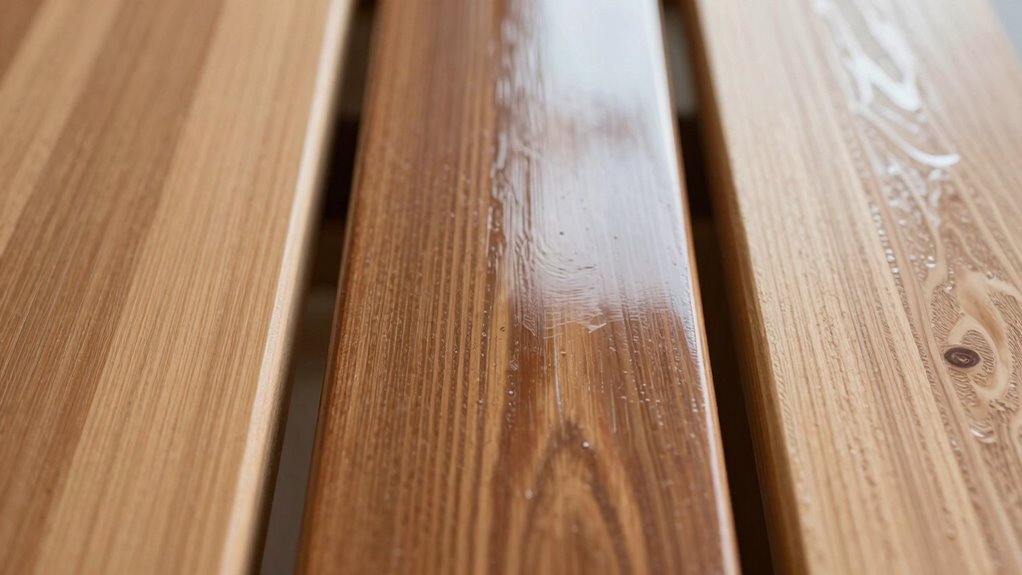

To identify whether your wood furniture has an oil, lacquer, or veneer finish, examine the surface closely. Oil finishes look matte, soft, and enhance the natural grain, while lacquer offers a shiny, glass-like smoothness with fine cracks over time. Veneer reveals thin, consistent patterns and may show edges or grain matching. Touch, visual clues, and simple tests can help you tell them apart. Keep exploring to discover more tips on recognizing these finishes.

Get furniture and decor delivered free with Prime
- Fast, free delivery on millions of items
- Prime Video, Amazon Music and more included
- Member-only deals all year
Key Takeaways
- Examine the surface gloss; lacquer typically has a high, mirror-like shine, while oil finishes are matte or satin.
- Check for surface cracking or shrinking; fine cracks often indicate lacquer aging.
- Feel the texture; oil finishes feel soft and smooth, whereas lacquer feels hard and glassy.
- Look at the wood grain; oil enhances natural grain, while veneer may show edges or pattern matching.
- Perform a scratch test; lacquer resists scratches better than oil, which may show wear more quickly.
oil finish wood furniture care kit
As an affiliate, we earn on qualifying purchases.
As an affiliate, we earn on qualifying purchases.
Why Identifying Wood Finishes Matters for Your Furniture
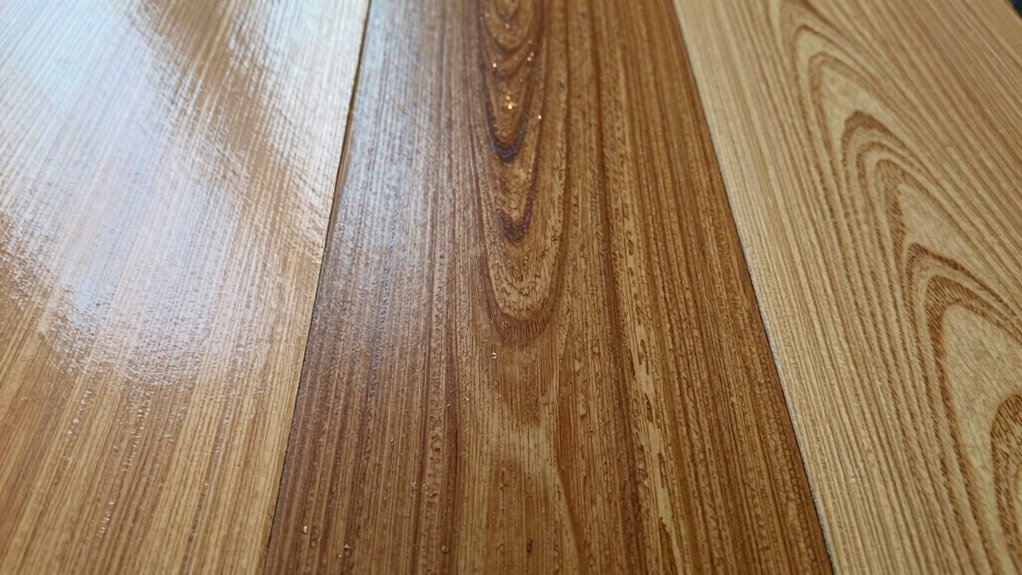
Knowing the type of wood finish on your furniture is essential because it directly affects how you care for and preserve it. Different finishes highlight or hide the wood grain, influencing the overall look and feel of your piece. For example, some finishes enhance the natural grain more than others, helping you achieve your desired style. Additionally, understanding finish durability helps you choose the right cleaning methods and avoid damage. Some finishes withstand moisture and wear better, making them ideal for high-traffic areas. Recognizing your furniture’s finish ensures you use appropriate products, preventing scratches, discoloration, or peeling. Ultimately, identifying the finish helps you maintain its beauty and longevity, saving you time and money in the long run.
What Are the Main Types of Wood Furniture Finishes?
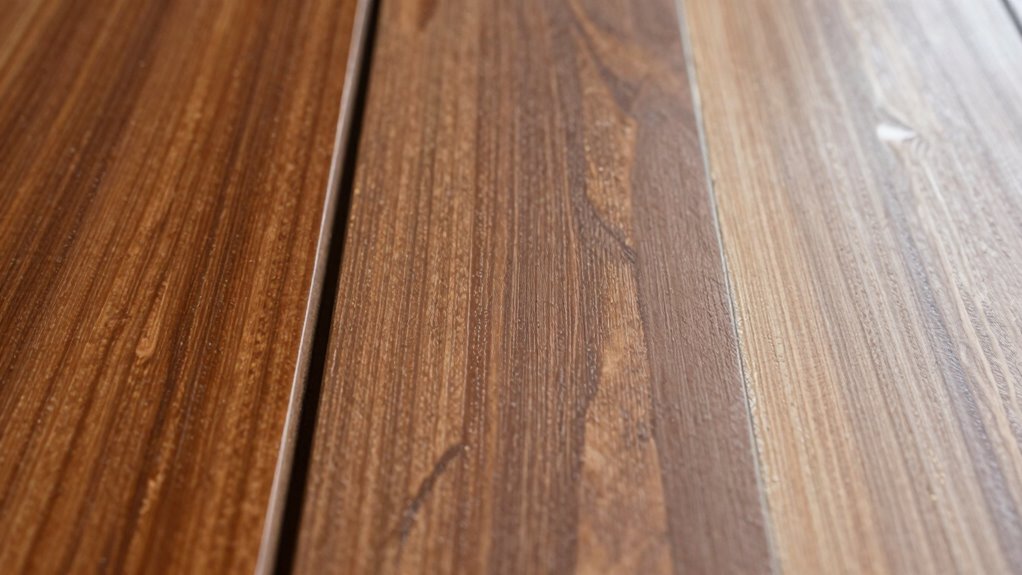
Understanding the main types of wood furniture finishes helps you choose the right look and feel for your pieces. You’ll notice differences in how they appear and touch, from smooth gloss to matte textures. Let’s explore the common finish coatings and their visual and tactile qualities.
Types of Finish Coatings
Wood furniture finishes come in several main types, each offering different levels of protection and aesthetic appeal. The most common coatings include oil, lacquer, varnish, polyurethane, and shellac. Oil finishes penetrate the wood grain, enhancing natural beauty and providing a warm, matte look, but they may require regular maintenance. Lacquer offers a smooth, glossy surface that dries quickly and provides excellent finish durability, resisting scratches and moisture. Varnish creates a tough, protective layer that highlights the wood grain while offering strong protection against wear and environmental damage. Polyurethane, available in oil-based or water-based formulas, delivers high durability and shields against moisture and scratches effectively. Shellac provides a warm, vintage appearance, but it’s less resistant to heat and water. Your choice depends on the desired look and the level of protection needed. Understanding finishing techniques can help you select the right coating for your furniture project.
Visual and Tactile Differences
Different finishes not only protect your furniture but also create distinct visual and tactile effects that influence its overall appearance and feel. Oil finishes tend to enhance grain patterns, adding warmth and a smooth, matte texture. Lacquer offers a glossy, hard surface that highlights color variations and provides a sleek touch. Veneers reveal intricate grain patterns and subtle color shifts, giving a premium look with a smooth or slightly textured feel. The key differences include:
| Finish Type | Visual & Tactile Characteristics |
|---|---|
| Oil | Enhances grain, soft matte, warm to the touch |
| Lacquer | High gloss, smooth, sharp color contrast |
| Veneer | Exquisite grain, smooth or slightly textured surface |
| Shellac | Warm glow, smooth, less durable than lacquer |
| Polyurethane | Glossy or satin, durable, even surface |
How to Recognize an Oil Finish on Your Wood Furniture
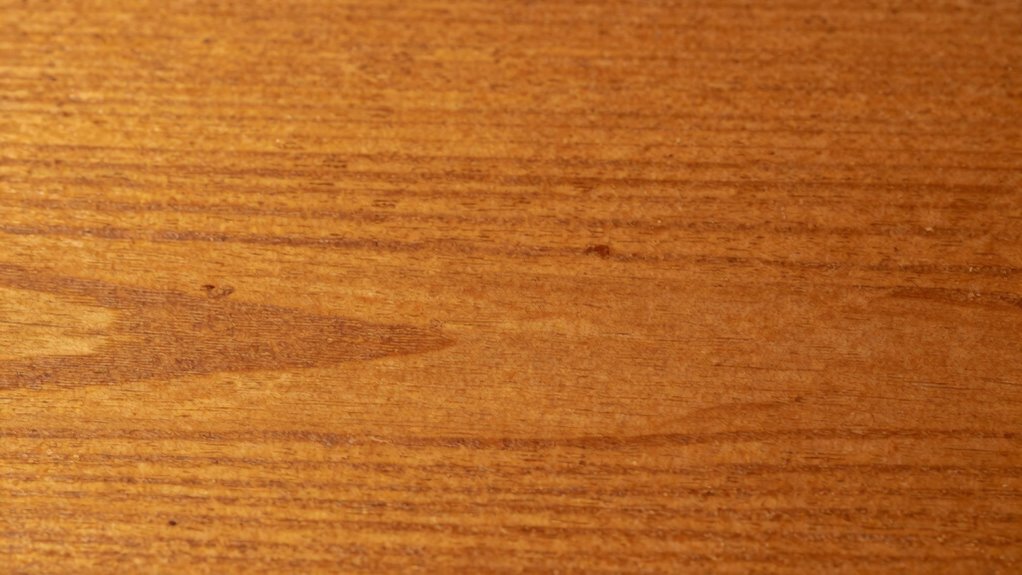
To identify an oil finish on your furniture, start by examining the surface for a soft, matte texture that feels smooth but not glossy. Look for areas where the finish absorbs oil or appears slightly duller, especially in spots that get touched often. These visual clues can help you determine if your piece has an oil-based coating. Additionally, Free Floating finishes often develop a natural patina over time, further indicating an oil application.
Visual Texture Clues
An oil finish often gives wood a subtle, matte sheen that’s easy to spot with careful inspection. Look closely at the grain patterns—oil finishes tend to enhance the natural lines and textures, making them more prominent. You’ll notice that the surface feels smooth but not overly glossy, with a soft, matte appearance. Color variations are usually more visible under an oil finish, highlighting the wood’s natural hues and subtle shifts in tone. Unlike lacquer, which creates a shiny, reflective surface, oil finishes leave a more subdued, natural look. Run your fingers lightly over the surface to feel for a gentle, even texture that doesn’t feel slick or glassy. These visual clues help you distinguish an oil finish from other types easily. Additionally, finishing materials can affect how the surface responds to touch and light, making it easier to identify the type of finish used.
Oil Absorption Signs
If your wood furniture absorbs oil-based finishes differently than other coatings, you can often spot the signs through careful examination. Look closely at the wood grain—an oil finish tends to soak in unevenly, highlighting natural patterns or creating a slightly matte appearance in certain areas. You might notice that the finish feels softer or less glossy compared to lacquer or veneer. This absorption indicates a porous surface designed to accept oil, which can enhance the wood’s natural beauty. Recognizing the finish’s porosity helps you understand how well your furniture’s finish will hold up. However, it also means the finish’s durability depends on proper application and maintenance. Over time, areas with greater oil absorption may wear faster or develop a duller look, revealing the true nature of an oil finish. Understanding these signs is essential for maintaining your furniture’s appearance and longevity.
How to Spot Lacquer and What It Looks Like
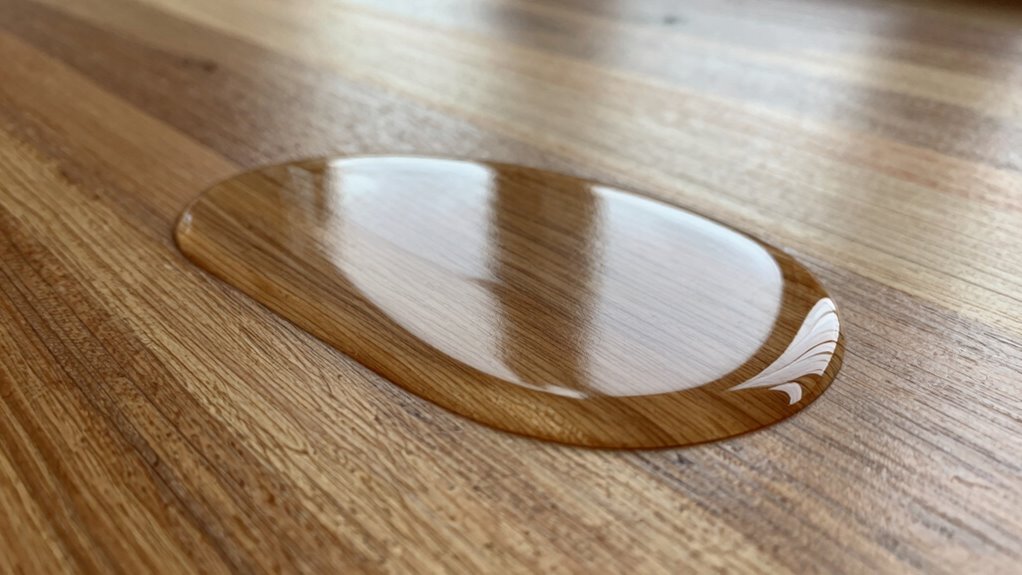
Ever wonder how to tell lacquer apart from other wood finishes? One key indicator is its high lacquer gloss, which gives furniture a shiny, smooth appearance. Lacquer often has a sleek, glass-like surface that reflects light vividly. Look closely for signs of finish cracking, especially around edges or detailed areas—this can happen over time as the finish ages or shrinks. Lacquer is typically very thin, so cracks and chips tend to be fine and delicate. Unlike oil finishes that absorb into the wood, lacquer sits on top as a hard, protective layer. If you notice a glossy, mirror-like surface with fine cracking, you’re likely looking at lacquer. Recognizing these signs helps distinguish it from other finishes like oil or veneer. European cloud innovation emphasizes the importance of sustainable solutions in modern industries.
How to Identify Veneer: Thin Layers and Pattern Clues
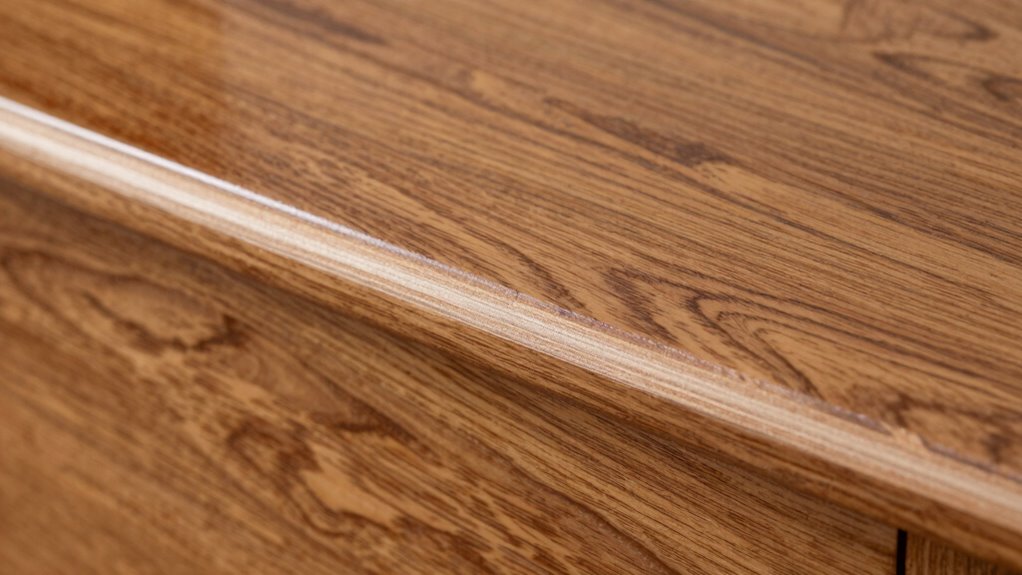
Wondering how to tell if a piece of furniture is veneered? Look closely at the layer thickness—veneers are extremely thin, often less than 1/32 inch. You might notice a subtle change in the surface when you gently pry at a corner or edge. Pattern matching is another key clue; high-quality veneers often have matching grain or pattern continuity across joints, indicating a thin layer carefully applied over a substrate. If the pattern looks perfectly aligned and consistent, it’s likely veneer. Also, observe the surface for signs of a different material underneath or a slight edge reveal. These clues help you identify genuine veneer from solid wood or other finishes, ensuring you understand what you’re working with. Additionally, inspecting the vetted dog names can sometimes give insights into popular or trendy finishes used on furniture pieces, as certain styles may be associated with specific decorative techniques.
Comparing the Look and Feel of Oil, Lacquer, and Veneer Finishes
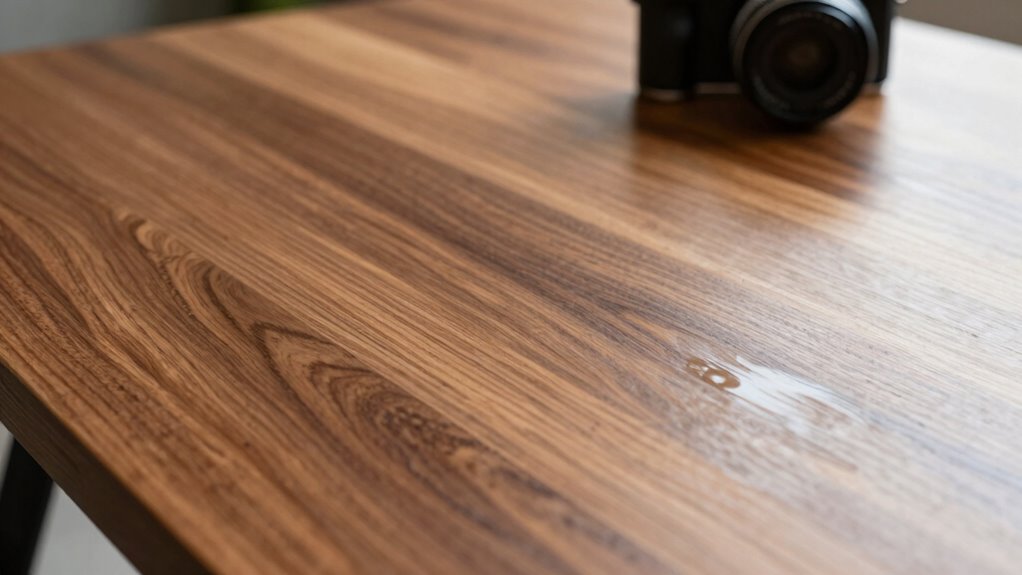
Understanding the visual and tactile differences between oil, lacquer, and veneer finishes helps you choose the right treatment for your furniture. Oil finishes highlight natural grain patterns, giving the wood a warm, matte appearance with subtle color variations that deepen over time. Lacquer provides a smooth, glossy surface that enhances the grain’s clarity, with sharp color contrasts and a sleek feel. Veneer finishes can mimic solid wood’s grain patterns but often have a uniform appearance, with consistent color variations across the surface. The feel of each differs: oil offers a soft, natural touch; lacquer feels hard and glass-like; veneer tends to be smooth but slightly thinner and less substantial. Recognizing these differences helps you select the best finish to match your aesthetic and comfort preferences.
Simple Tests to Differentiate Wood Finishes at Home

To identify different wood finishes at home, simple tests can provide quick and reliable clues. First, examine the wood grain; oil finishes often enhance the natural grain, making it appear richer and more textured. Lacquer finishes tend to create a smooth, glossy surface with minimal visible grain depth. Veneer surfaces may feel thinner and sometimes reveal a consistent pattern across the furniture. Next, consider the furniture weight; solid wood with an oil finish is usually heavier than veneered pieces, which are lighter due to the thin veneer layer. You can also perform a scratch test: oil finishes may show scratches that can be gently buffed out, while lacquer finishes often resist scratches better. Additionally, checking furniture durability can offer insights, as oil finishes typically require more maintenance and may show wear faster than lacquer. Combining these observations helps you distinguish the finish type accurately.
When and Why to Choose Oil, Lacquer, or Veneer for Your Projects

Choosing the right finish for your project depends on your goals, budget, and desired look. If you prioritize choosing durability, lacquer offers a tough, long-lasting surface ideal for high-use furniture or kids’ rooms. It provides a sleek, glossy finish that enhances surface aesthetics, making your piece look modern and polished. Oil finishes, on the other hand, penetrate deeply, emphasizing the wood’s natural grain and warmth. They’re perfect if you want a softer, more natural appearance and easier touch-ups. Veneer is best when you want the look of high-quality wood at a lower cost or to cover damaged surfaces. It’s ideal for achieving a consistent surface aesthetic, especially in large or intricate projects. Your choice ultimately aligns with how you want your furniture to look and perform over time. Additionally, understanding different application techniques can help ensure your chosen finish performs optimally for your specific project.
Frequently Asked Questions
Can Finishing Techniques Change Over Time or With Wear?
Yes, finishing techniques can change over time due to aging effects and regular finish maintenance. As furniture ages, finishes like oil may darken or develop a patina, while lacquer can crack or peel with wear. Veneer surfaces might show signs of lifting or damage. Proper maintenance helps preserve the original look, but over time, natural changes occur that can alter the finish’s appearance and texture.
Are There Environmentally Friendly Options for Wood Finishes?
Yes, you can choose environmentally friendly options for wood finishes. Look for eco-friendly coatings and low VOC finishes, which emit fewer harmful chemicals and are better for the environment. These options often use natural oils, water-based formulas, or plant-based resins, helping you maintain beautiful furniture while reducing your ecological footprint. Always check product labels to verify you’re selecting finishes that are safe, sustainable, and effective for your wood projects.
How Do Finishes Affect the Durability of Furniture?
Finish durability directly impacts your furniture’s lifespan, protecting it from daily wear and tear. A high-quality finish offers better wear resistance, keeping scratches, stains, and moisture at bay. If you choose a durable finish like lacquer, your furniture stays looking new longer. Conversely, finishes with lower durability may need frequent touch-ups or refinishing, so consider the type of finish carefully to make certain your furniture withstands everyday use.
Can Finishes Be Restored or Repaired After Damage?
Think of your furniture as a story worth saving. Yes, finishes can be restored or repaired after damage. For finish restoration, you can gently sand and reapply the same finish type, like oil or lacquer. Damage repair might involve touch-up kits or professional refinishing. Don’t despair—most damage can be fixed, breathing new life into your beloved piece and preserving its beauty for years to come.
What Tools Are Best for Applying Each Type of Finish?
You should choose the right tools based on the finish you want to apply. For oil finishes, use brushes with soft bristles and gentle brush techniques to avoid streaks. Lacquers are best applied with spray equipment for a smooth, even coat. Veneers often require a brush or foam applicator for precise application, ensuring you don’t damage the delicate surface. Always clean your tools thoroughly after each use for the best results.
Conclusion
Knowing how to identify oil, lacquer, and veneer finishes helps you care for and choose the right look for your furniture. Did you know that lacquer finishes can dry in just minutes, offering a quick, durable coat? By recognizing these finishes, you can make smarter decisions for restoration or new projects. Mastering these skills guarantees your furniture stays beautiful and lasts longer, saving you time and money in the long run.
Fall Picks
fall essentials
As an affiliate, we earn on qualifying purchases.