
TL;DR

Get furniture and decor delivered free with Prime
- Fast, free delivery on millions of items
- Prime Video, Amazon Music and more included
- Member-only deals all year
A Hunker report describes an Instagram DIY that reuses paper doilies as small shades or decorative backings for string lights. The project is intended for indoor decor, and the source advises using LED bulbs that do not become hot and keeping the paper away from rain.
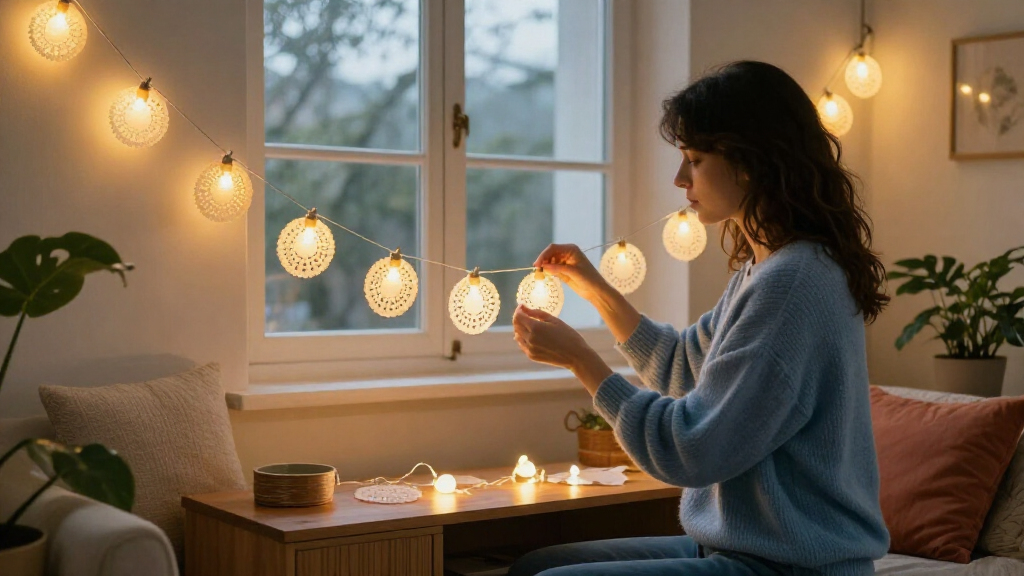
A craft video shared by Instagram user dhara.patel25 shows how to turn paper doilies into shades for string lights, offering a way to reuse leftover craft supplies as indoor decor. Hunker reported on the project, which can be made with folded paper, glue or tape, and cool-running LED lights; paper should not be placed around bulbs that get hot.
For a bell- or cone-shaped shade, the maker cuts a small doily in half, positions one bulb near its curved edge, and folds the straight sides around the light. The seam can be secured with glue or double-sided tape. A ribbon tied around the narrow end and the light string’s cord is another option described in the report. The process can be repeated for each bulb.
Doily size changes the result: the Instagram maker used small pieces, while Hunker says larger doilies can be cut into quarters to make shades. A different method uses liquid starch and a muffin tin to shape damp paper into a cup. After the doily dries, a slit or X in its base can let the bulb pass through.
For a quicker, flatter look, cut a small opening in the center of each doily and slide it over a bulb, placing the paper behind the light rather than wrapping it around the sides. The report says matching doilies create a more uniform display, while varied sizes and shapes add visual variation. It presents these as craft options, not as tested lighting products.
A Second Use for Craft Supplies
The project gives unused doilies a decorative purpose and changes the appearance of an ordinary string-light set without requiring purpose-made shades. Because the methods range from a flat backing to a shaped cover, people can adapt the look to the paper and supplies they already have.
There is a practical limit: paper near a light source can pose a fire risk if the bulb gets hot. Hunker’s report specifically advises using LED bulbs that do not heat the paper. The paper decorations are also vulnerable to moisture, so the report says they are not a good choice for outdoor use where rain can reach them.
Products Worth Considering

Philips Hue White and Color Ambiance Smart Light Starter Kit, 2 A19 Bulbs with Hub

PHILIPS Hue Smart LED Candle Light Bulb, B39, E12, 2-Pack

TCL 65-Inch QM6K QLED Mini-LED 4K HDR Smart Google TV, 144Hz
As an affiliate, we earn on qualifying purchases.
Three Ways to Shape the Doilies
The report describes three variations shown or suggested for the craft: folded half-doilies secured around individual bulbs, starch-shaped doilies formed in a muffin tin, and flat doilies slipped behind bulbs through a small cut. The first two create more shade-like forms; the third is faster and leaves the light string more exposed.
Paper color and shape affect the finished appearance. Hunker says white paper gives a soft look, while colored doilies make a brighter decoration. Heart-shaped or differently sized pieces can also be used. The report traces the featured shade technique to an Instagram video by dhara.patel25; it does not provide a publication date or additional testing of the methods.
““Before adding the paper decorations onto your string lights, ensure the bulbs are LED and don’t get hot enough to heat the paper.””
— Hunker, reporting on the craft
Safety and Durability Limits
The supplied report does not identify the light-string model, bulb temperature, paper weight, or adhesive used in the Instagram demonstration. It also does not report testing for heat, fire safety, or how securely the shades stay in place over time. The instruction to use cool-running LEDs is not a certification that every LED string is suitable for paper coverings; users should follow the light manufacturer’s safety directions and keep paper clear of any bulb or component that becomes warm.
The source does not give a tested outdoor rating or instructions for weatherproofing the craft. Since the shades are paper and can be damaged by rain, their use is best limited to dry indoor settings. The report’s publication date is also not supplied, so the timing of the original post and article cannot be established from the material provided.
Check the Lights Before Decorating
Anyone trying the project should first check the string-light maker’s instructions and confirm that the bulbs stay cool during operation. The paper should not touch a bulb that produces heat, and the finished strand should be kept dry and used indoors. If a shade becomes warm, scorched, or loose, stop using the lights and remove the paper.
The source describes a DIY technique rather than a scheduled product release or follow-up. No further testing, update, or additional guidance is identified in the supplied material.
Key Questions
How do you make a cone-shaped doily shade?
Cut a small doily in half, position a bulb near its curved edge, and fold the straight sides around the light. Secure the seam with glue or double-sided tape, as described in Hunker’s report.
Can larger doilies be used?
Yes. The report says larger doilies can be cut into quarters to make shades; the resulting covers will be larger than those made from small doilies.
Do paper doilies have to be shaped into shades?
No. A small slit or X in the center lets a flat doily slide over a bulb and sit behind it as a decorative backing.
Are these lights suitable for outdoor use?
The report says rain could damage the paper and does not recommend the decorations for outdoor settings exposed to moisture. It suggests the project for indoor decor.
What kind of bulbs should be used?
Hunker advises using LED bulbs that do not get hot enough to heat the paper. Check the light-string manufacturer’s instructions, and do not use paper coverings if any part of the lights becomes warm.
Source: hunker.com