You’ll notice that bouclé feels warm and inviting because of its textured, looped fibers that trap air, creating a soft, cozy touch. Its neutral tones like beige or cream boost this feeling, making spaces feel calm and safe. Leather, on the other hand, feels grounded with its smooth, natural surface and earthy shades like deep brown or black, which evoke strength and stability. To explore how these textures influence your space further, keep exploring these materials’ unique qualities.

Get furniture and decor delivered free with Prime
- Fast, free delivery on millions of items
- Prime Video, Amazon Music and more included
- Member-only deals all year
Key Takeaways
- Bouclé’s textured, looped fibers trap air, creating a sense of warmth and coziness upon touch.
- Soft, neutral tones in bouclé evoke calmness and relaxation, enhancing its warm feel.
- Leather’s smooth surface and natural imperfections convey strength, stability, and resilience.
- Earthy, deep tones in leather reinforce a grounded, solid presence.
- The tactile qualities of both materials evoke emotional comfort—bouclé through softness, leather through durability.

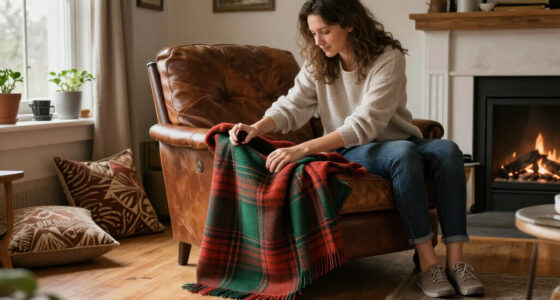
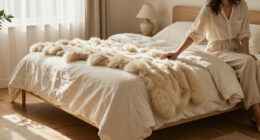
When you touch bouclé, it instantly feels warm and inviting, thanks to its textured, looped fibers that trap air and create a cozy sensation. This unique textile texture isn’t just about looks; it’s about how it makes you feel. The tactile experience of bouclé evokes a sense of comfort and softness that can transform a space into a haven. The texture’s tactile richness stimulates your senses, making it more than just a fabric—it’s an experience. The way bouclé’s fibers are woven creates a visual depth that invites you to touch and explore, which adds to its warm, welcoming vibe. It’s precisely this textured surface that contributes to its reputation as a cozy, comforting material. Additionally, the textile texture of bouclé can influence how you perceive the overall atmosphere of a room, making it feel more intimate and inviting. Color psychology also plays a big role in how bouclé feels. Soft, neutral tones like warm beige, cream, or taupe enhance the tactile warmth, reinforcing a sense of calm and safety. These colors evoke feelings of stability and comfort, making the space feel grounded and welcoming. When you see or sit on a piece of bouclé furniture in these hues, you instinctively associate it with relaxation and security. Conversely, bolder shades like deep blues or earthy greens can add a sense of sophistication and grounding, balancing the cozy texture with a more refined, stable appearance. The way colors influence your emotional response aligns perfectly with the textile’s tactile warmth, creating an environment that feels both inviting and rooted. Moreover, biodiversity in natural fibers can enhance the sustainability and ecological value of such textiles. Leather, on the other hand, exudes a different kind of warmth—one rooted in groundedness and strength. Its smooth, often slightly matte surface offers a tactile experience that’s firm yet comforting. Leather’s texture feels solid and substantial, giving you a sense of durability and permanence. The material’s natural imperfections and variations in grain add character, emphasizing its organic origin and reinforcing its grounded quality. When you run your hand over leather, it’s as if you’re connecting with a piece of history—something built to last. The rich, earthy tones of leather, like deep brown or black, also contribute to its grounded appeal. These colors are rooted in nature, reinforcing the feeling of stability and strength. The natural origins of leather further enhance this grounded perception. The use of sustainable practices in leather production can also influence how environmentally conscious consumers perceive its grounding qualities. Both materials evoke different emotional responses through their textures and colors. Bouclé’s cozy, textured surface and soft neutrals promote warmth and comfort, while leather’s firm, smooth touch and earthy tones evoke grounding and resilience. Both textiles are valued not only for their aesthetic appeal but also for their ability to create atmospheres that nurture emotional well-being through sensory experience and natural qualities.
Products Worth Considering

Dyson V10 Konical Cordless Stick Vacuum

eufy Security Essential 7-Piece Alarm System with HomeBase Mini

Dreame L40 Ultra Gen 2 Robot Vacuum and Mop
As an affiliate, we earn on qualifying purchases.
Frequently Asked Questions
How Do Lighting Conditions Affect the Perception of Bouclé and Leather?
Lighting conditions profoundly influence how you perceive bouclé and leather. Bright, natural light enhances the fiber density of bouclé, making its texture appear warmer and more inviting. Conversely, dim or warm lighting can deepen color saturation, making leather feel more grounded and substantial. Harsh or direct lighting might highlight textures differently, so adjusting lighting helps you experience the true warmth of bouclé and the grounded richness of leather more accurately.
Can Environmental Factors Change the Feel of Bouclé or Leather Over Time?
Environmental factors and material aging can definitely change how bouclé and leather feel over time. As you use and expose these materials, environmental influences like sunlight, humidity, and temperature can soften or strengthen their textures. Bouclé may become more supple with age, feeling warmer, while leather can develop a richer, more grounded feel as it ages gracefully. Regular care helps maintain their original tactile qualities longer.
Are There Specific Colors That Enhance Warmth or Grounding in These Materials?
Think of colors as the secret sauce for your materials; warm earthy tones like deep browns, burnt oranges, and rich beiges enhance the grounding and warmth of leather, while soft neutrals and warm creams boost bouclé’s cozy feel. Using color psychology and achieving visual harmony, these hues make your space inviting and balanced. You’re guiding the ambiance, making each piece feel both comforting and rooted in style.
How Does the Texture Influence the Emotional Response to Bouclé and Leather?
The texture profoundly influences your emotional response to bouclé and leather. Bouclé’s tactile comfort, with its soft, looped fibers, creates a cozy, inviting feeling that fosters warmth and intimacy. Leather’s smooth, grounded surface evokes a sense of stability and strength, encouraging an emotional connection rooted in durability. The tactile experience of each material shapes how you feel, making bouclé feel nurturing and leather feel reassuring and dependable.
Do Different Manufacturing Techniques Impact the Warmth or Grounding Qualities?
Yes, different manufacturing processes and material treatments markedly impact how bouclé feels warm and leather feels grounded. For bouclé, techniques like spinning and weaving can enhance its cozy, textured feel. Leather’s grounding quality depends on treatments like tanning and finishing, which can add weight and firmness, making it feel more solid and secure. These processes shape the tactile and emotional responses you experience, emphasizing warmth or grounding qualities in each material.
Conclusion
By understanding what makes bouclé feel warm and leather grounded, you can better appreciate their unique qualities. Bouclé’s cozy texture wraps you in comfort, while leather’s sturdy feel anchors your space. Think of these materials as yin and yang—balancing softness and strength. When you choose and combine them thoughtfully, your environment becomes a haven that feels both inviting and solid, like a warm hug and a steady anchor all at once.