TL;DR
Mauve is gaining attention in interiors as a softer alternative to familiar beige and brown neutrals. Its modern reputation draws on a history that includes William Perkin’s accidental 1856 dye discovery, a major Victorian fashion craze and later use in domestic rooms. Designers say its muted pigments and changing appearance in different light suit calm, layered spaces.
Mauve is gaining notice as a modern home color, with interiors experts describing the dusty pink-purple as an alternative to conventional beige and brown neutrals. A Livingetc report links that appeal to the shade’s history: it began as a synthetic dye discovered in 1856, became a Victorian fashion craze and later found a place in domestic interiors.

Get furniture and decor delivered free with Prime
- Fast, free delivery on millions of items
- Prime Video, Amazon Music and more included
- Member-only deals all year
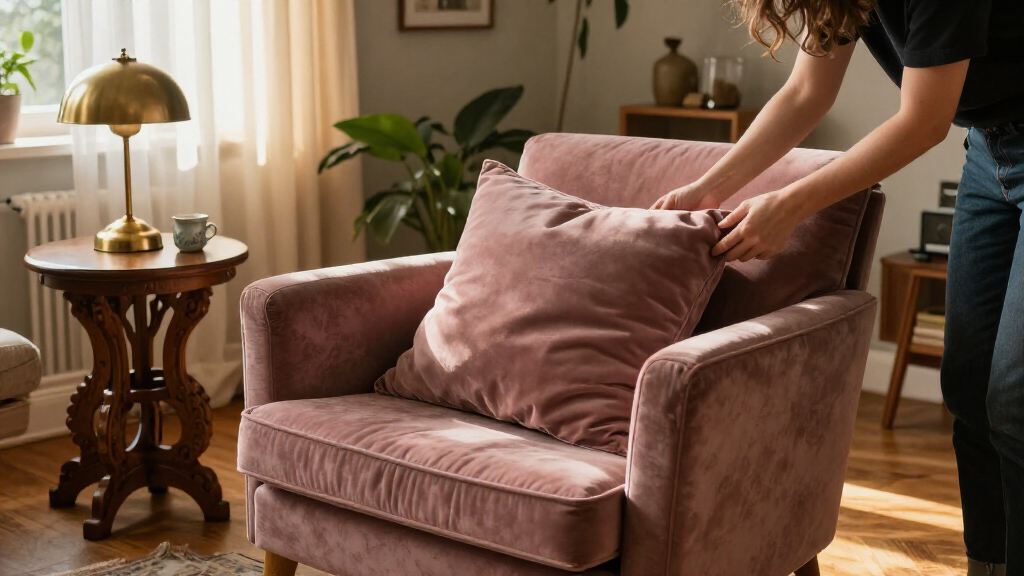
Mauve is generally described as a soft, dusty pinkish purple, often with blue, gray or brown undertones. Its position between familiar color categories is part of its character: it can read as pink or purple, while earthy undertones let it sit near the neutrals. The report distinguishes today’s muted shade from the original dye, which was more vivid and closer to royal purple, amethyst or grape.
Design professionals quoted by Livingetc say the color’s appeal is tied to both its quiet atmosphere and flexibility. Helen Shaw, Benjamin Moore UK’s color expert, calls mauve an increasingly popular alternative to traditional neutrals, saying it brings more personality than beige or brown. Cathryn Sanders, head of creative at Earthborn, describes it as soft and serene, suited to spaces where comfort is a priority.
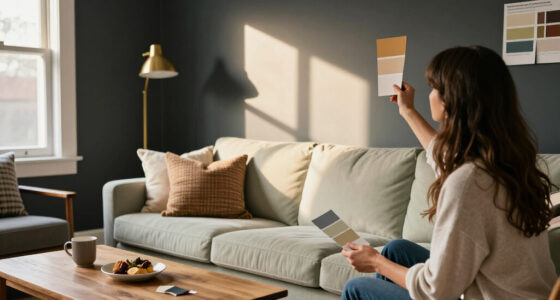
Its appearance can shift with the light. Lishan Tham, founder of Studio Shan, says an earthy mauve leaning toward cocoa and clay can create a calm, cocooning effect, appearing softer and pinker in morning light and moodier by evening. Louise McGarry, creative director of Studio Braw, similarly says it can function as a backdrop in bright sunshine and feel atmospheric on a dark winter evening.
Mauve’s changing story from dye to modern home
Once a vivid synthetic dye and Victorian fashion craze, mauve now offers a muted alternative to familiar neutrals. Its appeal spans color history, calm interiors and changing light.
A color with several lives
Mauve’s meaning shifted from vivid purple dye to a softer, dustier hue and a domestic decorating choice.
Why it suits today’s homes
Experts describe a balance of personality and softness for rooms centered on comfort.
Between familiar hues
Dusty pink-purple with blue, gray or brown undertones can sit near neutral palettes.
Soft and serene
Designers say muted mauve brings warmth and personality while keeping a subdued feel.
Across the room
The report describes mauve on walls, upholstery and a painted ceiling.
Light changes the effect
The same earthy mauve may feel different as daylight and surrounding materials change.
- May appear softer and pinker
- Can work as a backdrop in bright sunshine
- May feel moodier and more atmospheric
- Can create a calm, cocooning effect
What the trend evidence shows
The report gathers history and designer views, but does not measure market-wide adoption.
| Reported | Not established |
|---|---|
| Renewed attention and expert observations | How widely mauve is being used |
| Examples across walls, upholstery and ceilings | Whether the revival will last |
| Effects vary with tone and light | A standard definition or paint comparison |
Why Mauve Fits Today’s Interiors
Mauve’s current appeal matters because it offers homeowners and designers a way to move beyond familiar neutrals without choosing a highly saturated color. Its muted, earthy quality can bring warmth and personality while retaining a subdued feel. That makes it relevant to rooms intended for rest and everyday use, rather than only serving as a dramatic accent.
The color’s shifting appearance also gives it a practical design role: a room may feel different across the day without changing its palette. That effect depends on the light, the precise paint tone and the surrounding materials, so the expert comments are guidance rather than a guarantee of how every mauve will look. The report describes uses ranging from walls and upholstery to a painted ceiling, suggesting it can be applied in broad or more contained ways.
Its history adds another layer to the trend. Mauve has carried associations of fashion, age and domestic comfort at different times. Modern designers’ descriptions recast it as a flexible color choice, but the report does not establish how widely it is being used or whether the current interest will last.
Products Worth Considering

Ring Wired Doorbell Pro (3rd Gen) and Chime Plus Bundle, Deep Silver and White

Philips Hue Bridge Pro Starter Kit with 4 A19 E26 Color Smart Bulbs

Dyson Airwrap Co-anda2x Multi-Styler and Dryer for Curly and Coily Hair, Ceramic Pink/Rose Gold (2025)
As an affiliate, we earn on qualifying purchases.
From Perkin’s Dye to Home Color
The story begins in 1856, when 18-year-old chemistry student William Perkin was trying to synthesize quinine, then used to treat malaria. While experimenting with coal tar in a makeshift laboratory, he produced a dark residue. Cleaning a flask with alcohol revealed an intense purple color. Perkin went on to develop and patent the dye, helping usher in the age of synthetic dyes, according to the report.
The dye, known as mauve or mauveine, became fashionable in the 1860s. The report says Empress Eugénie of France favored the shade and Queen Victoria wore a mauve gown to her daughter’s wedding in 1858. Its popularity became so conspicuous that Punch magazine joked in 1859 that “mauve measles” had set in; the decade later became known as the “mauve decade.” The fashion trend had faded by the 1890s, while the name gradually came to describe a paler, dustier hue.
Mauve also appeared in Victorian domestic spaces. Cultural history curator Lucy Armstrong Blair told Livingetc that Alexandra, granddaughter of Queen Victoria and later Tsarina, redecorated rooms at the Alexander Palace, including a Mauve Boudoir, in 1896. Blair says the opaline mauve walls and upholstery recalled Alexandra’s Victorian upbringing and were intended to make a comfortable family space. The report says the Russian court criticized the room’s coziness, illustrating that mauve’s domestic associations were not universally welcomed.
““We’re seeing mauve become an increasingly popular alternative to traditional neutrals—it has more personality than a classic beige or brown palette, bringing a soothing and ethereal energy into spaces.””
— Helen Shaw, Benjamin Moore UK’s color expert
How Long the Mauve Revival Lasts
The report documents renewed attention to mauve and includes expert observations, but it gives no sales figures, survey data or market-wide measurements showing how common the color has become. “Increasingly popular” is Shaw’s assessment, not a quantified industry finding. It is also unclear whether the renewed interest will persist or remain a short-lived design trend.
Mauve is not a single fixed color, and the experts describe different results depending on undertones and lighting. The report does not set out a standard definition for modern mauve or compare particular paint formulations. Nor does the historical account establish that the Victorian color’s popularity directly caused today’s decorating choices; the connection is a history of changing associations, not evidence of a continuous trend.
Where Designers Use Mauve
The next development will be visible in how designers and homeowners use the shade across interiors, including whether it appears mainly in small accents or across walls and larger surfaces. The examples in the report include mauve walls, upholstery and a kitchen ceiling, while the quoted experts point to light and undertones as factors in the finished effect.
No specific launch, forecast date or measured milestone is provided. For now, the report presents mauve as a color attracting renewed attention, with its future standing in home design still to be seen.
Key Questions
What does mauve look like?
Mauve is a muted, dusty pinkish purple, often with blue, gray or brown undertones. The shade can appear warmer or cooler depending on its pigments and the light in a room.
Why is mauve being used in modern homes?
Designers quoted by Livingetc describe it as a softer alternative to beige and brown neutrals that can add personality while keeping a calm feel. These are expert assessments; the report does not include figures measuring its popularity.
When was mauve dye discovered?
William Perkin discovered the vivid purple dye accidentally in 1856 while experimenting with coal tar as he tried to synthesize quinine. The modern meaning of mauve later came to refer to a paler, dustier shade.
Does mauve change in different lighting?
Experts quoted in the report say it can. A dusty mauve may look softer and pinker in morning light and moodier later in the day, though the effect depends on the shade and room conditions.
Was mauve used in homes before its current revival?
Yes. The report describes an opaline mauve room at the Alexander Palace, redecorated by Alexandra in 1896. Cultural history curator Lucy Armstrong Blair says it was intended as a comfortable domestic space, though the Russian court criticized its cozy style.
Source: livingetc.com