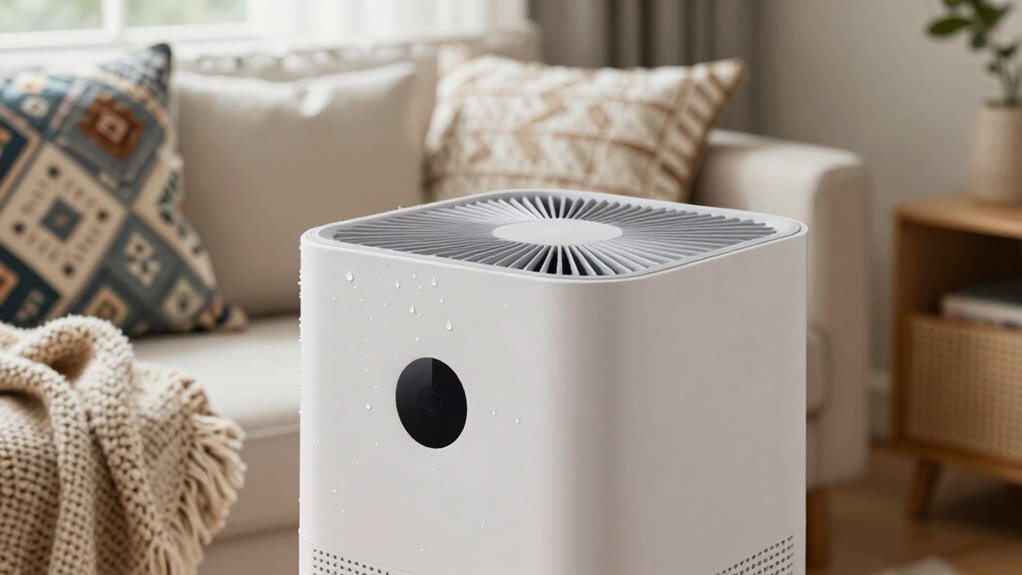
If you have many textiles at home, a dehumidifier helps prevent mold, mildew, and fabric damage caused by excess moisture. It continuously reduces humidity, which protects your curtains, upholstery, and clothing from discoloration and rot. Plus, it improves air quality by cutting down mold spores and musty odors. Maintaining proper humidity levels keeps your home healthier and your fabrics in better shape. Keep going to discover even more reasons why a dehumidifier is essential for textile-filled spaces.
Key Takeaways
- Dehumidifiers prevent mold growth that damages and discolors textiles like curtains, upholstery, and clothing.
- They reduce moisture levels, protecting fabrics from deterioration and extending their lifespan.
- Controlling humidity minimizes mold spores in the air, improving indoor air quality and reducing allergy risks.
- They eliminate musty odors caused by mold and mildew, keeping homes smelling fresh and clean.
- Dehumidifiers create a healthier, safer environment by maintaining optimal humidity and preventing indoor pollutants.
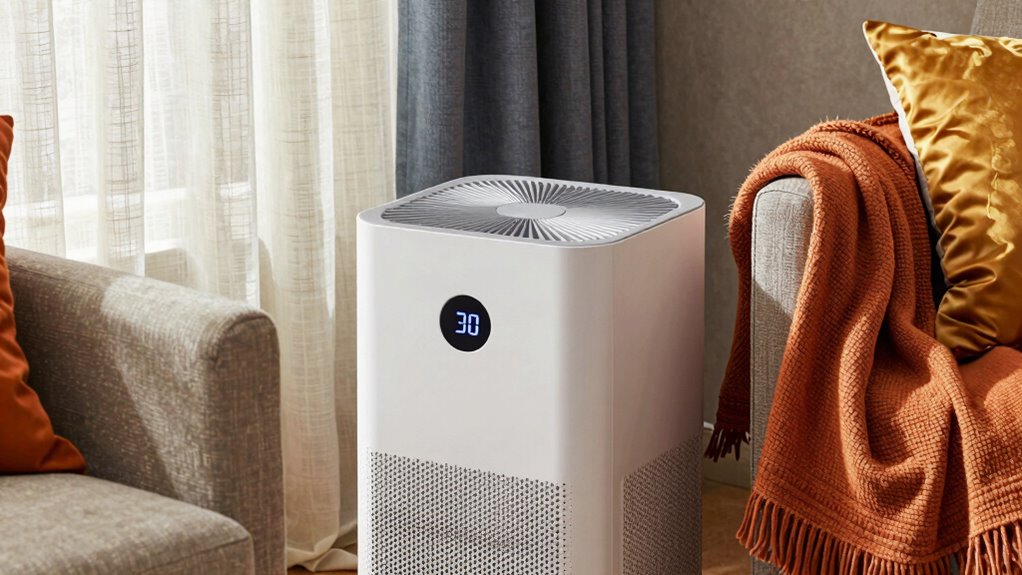
Textile homes, with their abundance of fabrics and fibers, are particularly vulnerable to excess humidity, which can lead to mold, mildew, and fabric deterioration. When moisture levels rise, mold spores find a perfect environment to thrive, making your home not only unsightly but potentially hazardous to your health. Using a dehumidifier helps you maintain ideal humidity levels, which is essential for mold prevention. By reducing excess moisture, you prevent mold growth before it begins, protecting your textiles and creating a healthier living space. This proactive approach is especially important if you or your family members suffer from allergies or respiratory issues, as mold spores are common triggers for allergic reactions. Keeping humidity in check minimizes mold spores in the air, considerably reducing allergy symptoms and promoting better breathing.
Maintaining optimal humidity prevents mold, protects textiles, and promotes healthier, allergy-free living spaces.
In textile-rich homes, where fabrics can trap moisture, controlling humidity becomes even more critical. Traditional cleaning and airing out fabrics can only do so much once moisture seeps into fibers. A dehumidifier continuously removes excess moisture from the air, creating an environment inhospitable to mold and mildew. This not only preserves the integrity of your fabrics but also enhances overall indoor air quality. When mold spores are kept at bay, you’ll notice fewer allergy symptoms like sneezing, coughing, or itchy eyes. It’s a simple but powerful step towards allergy reduction, especially during damp seasons or in areas prone to high humidity. Additionally, humidity control is a vital factor in maintaining a comfortable and healthy home environment. Proper ventilation and moisture management are essential for indoor air quality, since excess humidity can significantly impact respiratory health and comfort. Controlling humidity levels also helps to prevent the growth of other harmful indoor pollutants that thrive in damp conditions.
Furthermore, consistent humidity management supports the longevity of textiles, preventing premature fabric wear caused by mold and mildew. Over time, mold can weaken fibers, leading to discoloration, rot, and loss of texture. Regular use of a dehumidifier can also help in reducing musty odors, which are often caused by mold and mildew growth in fabrics and upholstery. With consistent use, a dehumidifier helps you extend the life of your curtains, upholstery, and clothing. It also reduces musty odors that often accompany mold presence, leaving your home smelling fresh and inviting. The device operates quietly and efficiently, making it a seamless addition to your home environment. Proper humidity management is an essential part of biodiversity in your home, as it contributes to a balanced indoor ecosystem that promotes health and well-being.
In essence, a dehumidifier isn’t just about comfort — it’s an essential tool for protecting your textiles and promoting health. By actively managing humidity levels, you create a safer, cleaner living space where mold can’t take hold and allergens are kept at bay. This small investment yields considerable benefits, ensuring your textile-rich home remains beautiful, healthy, and mold-free for years to come.

Cozylkx 100 Pack Silica Gel Desiccant Moisture Absorber Dehumidifier
- Ready to use: Open and use immediately
- Stable shape: Beads remain dry and unchanged
- Moisture protection: Prevents mildew, mold, and corrosion
As an affiliate, we earn on qualifying purchases.
As an affiliate, we earn on qualifying purchases.
Frequently Asked Questions
Can Dehumidifiers Prevent Mold Growth in Stored Textiles?
Yes, dehumidifiers can prevent mold growth in stored textiles by controlling humidity levels. They help maintain ideal conditions for fabric preservation, reducing excess moisture that fosters mold. By actively removing humidity from the air, you create an environment where mold spores struggle to thrive. Consistent humidity control through dehumidifiers ensures your textiles stay safe, preserving their quality and extending their lifespan.
Do Dehumidifiers Help Reduce Dust Mites in Textile Environments?
Yes, dehumidifiers help reduce dust mites in textile environments by lowering indoor humidity levels. Dust mites thrive in humid conditions, so controlling moisture is key to dust mite control. This not only improves air quality but also preserves textiles by preventing mold and mildew growth. When you use a dehumidifier, you’re actively creating a less hospitable environment for dust mites, ensuring your textiles stay cleaner, healthier, and better preserved.
How Loud Are Dehumidifiers Typically During Operation?
Dehumidifiers usually operate with noise levels between 40 to 60 decibels, which is comparable to a quiet conversation or background music. During operation, you might notice a gentle hum or soft sound, especially on higher settings. Sound comparison shows they’re quieter than a dishwasher or vacuum cleaner, making them suitable for bedrooms or living spaces. If noise bothers you, choose models specifically designed for quiet operation.
Are There Specific Dehumidifier Features Ideal for Textile Homes?
Think of your home as a delicate symphony, where every instrument matters. For textile-rich spaces, look for dehumidifiers with energy efficiency and sleek design aesthetics. These features guarantee you save energy while blending seamlessly into your decor, protecting fabrics from mold and moisture damage. Select models with adjustable humidity controls and quiet operation, so your home stays comfortable, stylish, and harmonious without disruptions.
Can Dehumidifiers Improve Indoor Air Quality in Textile-Rich Homes?
Yes, dehumidifiers can improve your indoor air quality in textile-rich homes by managing humidity levels and reducing mold, dust mites, and musty odors. Many models also include air purification features, filtering allergens and pollutants from the air. By maintaining ideal humidity and cleaning the air, you create a healthier environment, protecting your textiles and enhancing overall comfort. This dual action makes dehumidifiers essential for textile-heavy spaces.
Conclusion
So, next time you’re tempted to overlook that dehumidifier, think again. After all, it’s not just about keeping the air dry—it’s about protecting your precious textiles from the sneaky villain called moisture. Ironically, the very device you might see as a hassle is actually your home’s best defender, preserving your fabrics’ beauty and lifespan. So, embrace the dehumidifier—your delicate textiles will thank you, even if you never saw it coming.