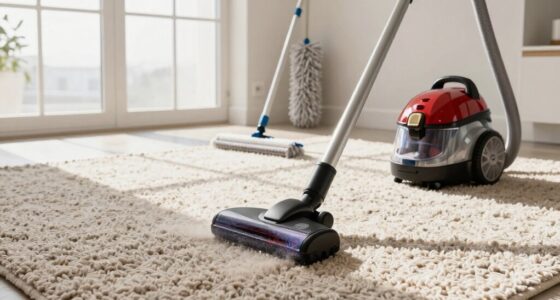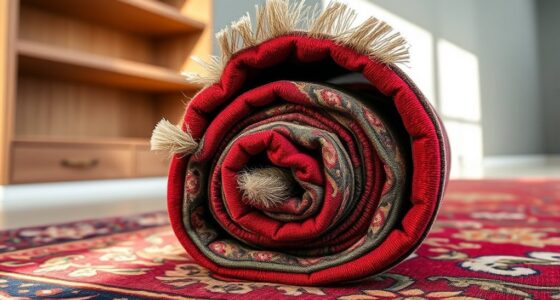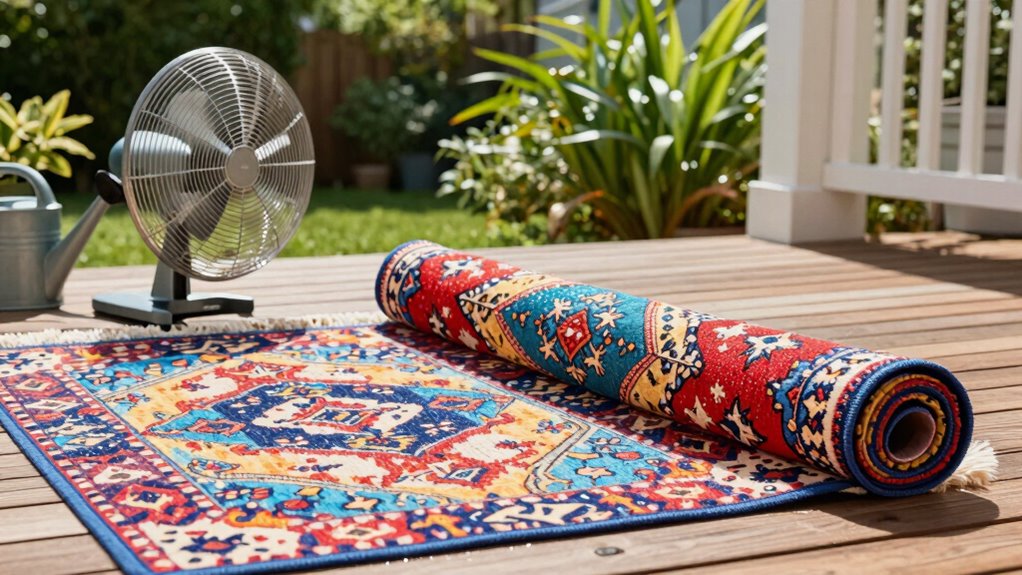

In humid climates, quickly drying your outdoor rug is key to preventing mold and mildew. Shake off excess water, then lay it flat in bright, breezy sunlight, rotating it regularly for even drying. Use fans or blowers to boost air circulation, and consider elevating the rug on racks or furniture. Avoid leaving it damp for long, and check moisture levels frequently. Keep these tips in mind, and you’ll discover more effective techniques to keep your rug mold-free.

Get furniture and decor delivered free — and shop member deals
- Fast, free delivery on millions of items
- Access to Prime Big Deal Days deals on October 6–7
- Prime Video, Amazon Music and more included
Key Takeaways
- Elevate outdoor rugs on furniture or racks for improved airflow and faster drying in humid conditions.
- Use fans, blowers, or dehumidifiers to circulate air and accelerate moisture evaporation.
- Remove excess water promptly by shaking or blotting before laying rugs in sunlight.
- Regularly rotate and reposition rugs to ensure even drying and prevent mold buildup.
- Choose quick-drying synthetic rugs and always dry thoroughly to prevent mold and mildew growth.
As an affiliate, we earn on qualifying purchases.
Why Humidity Challenges Outdoor Rug Care and How to Tackle Them
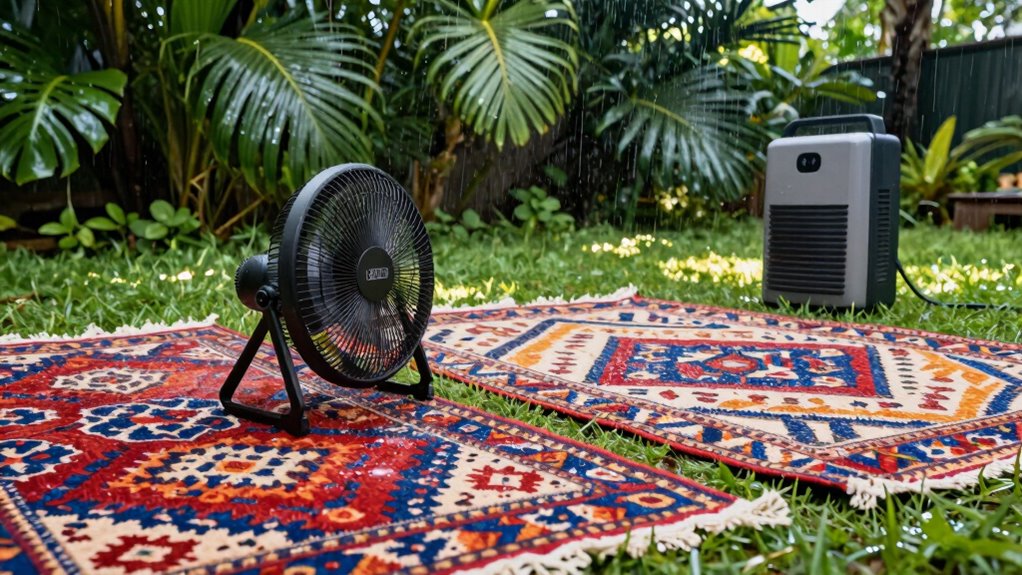
Humid climates pose unique challenges for outdoor rug maintenance because moisture can promote mold, mildew, and unpleasant odors. To guarantee your rug stays in good shape, you need to prioritize climate adaptation and moisture management. High humidity levels mean you must regularly check for trapped moisture and ensure proper airflow around your rug. Using a breathable rug pad can help improve ventilation and reduce moisture buildup underneath. It’s also essential to avoid leaving the rug wet for extended periods; prompt drying prevents mold growth. Elevating your rug off the ground with weather-resistant backing can promote better drainage and air circulation. Proper color accuracy in your choice of rug materials can also influence how well they withstand humid conditions. By understanding how humidity affects your outdoor rug, you can implement effective moisture management strategies that keep it looking fresh and lasting longer.
Check Your Rug’s Material to Know How It Should Be Dried
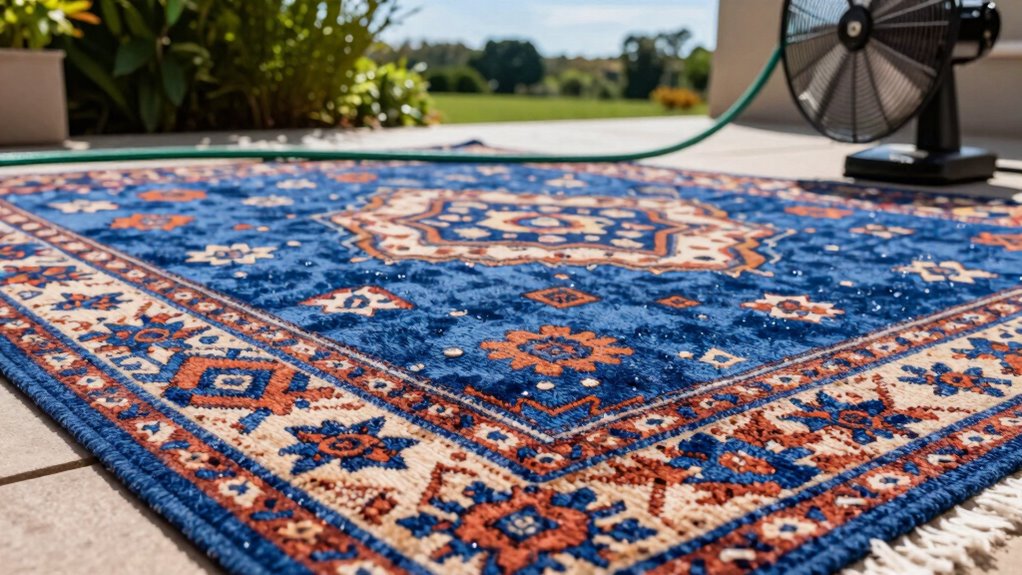
Understanding the material of your outdoor rug is essential because different fabrics have specific drying requirements. Check your rug’s material to know how it should be dried properly. For instance, synthetic fibers like polypropylene or polyester typically dry quickly and can be air-dried in the sun, following the drying instructions on the label. Natural fibers such as jute or sisal, however, tend to absorb moisture and may require a more gentle drying process to prevent mold or damage. Always read the rug’s labels or manufacturer’s guidelines to determine the best drying method. Knowing your rug’s material helps you avoid improper drying techniques that could lead to mold, mildew, or fabric deterioration, especially in humid climates where moisture lingers. Additionally, using professional cleaning techniques can ensure your rug stays in optimal condition over time.
How to Dry Out Outdoor Rugs in Humid Weather: A Simple Routine
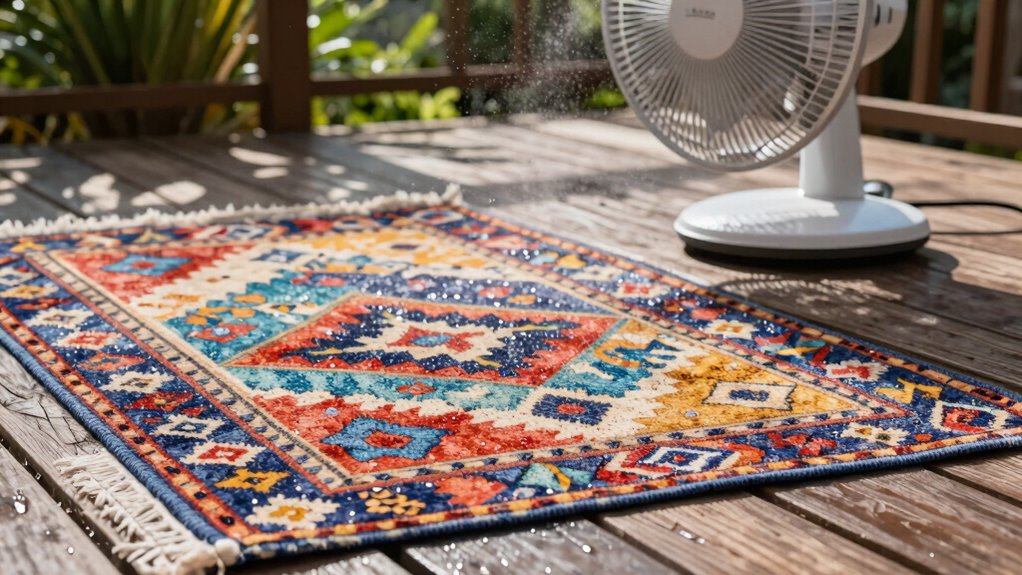
When drying outdoor rugs in humid weather, it’s important to act quickly and follow a simple routine to prevent mold and lingering moisture. First, remove excess water by shaking or blotting the rug. Next, lay the rug flat in an area with plenty of sunlight exposure and good air circulation. These factors speed up evaporation and reduce humidity around the rug. Use the following table to visualize effective drying ideas:
| Sunlight Exposure | Air Circulation |
|---|---|
| Place in direct sun | Use fans or breezes |
| Rotate regularly | Ensure open space |
| Avoid shade | Keep off damp ground |
| Dry early mornings | Space out rug for airflow |
| Keep dry environment | Use a dehumidifier |
Implementing energy-efficient solutions can further enhance the drying process and maintain your outdoor rug’s quality. This routine helps accelerate drying and keeps your outdoor rug fresh.
Tools and Tips for Fast, Effective Rug Drying
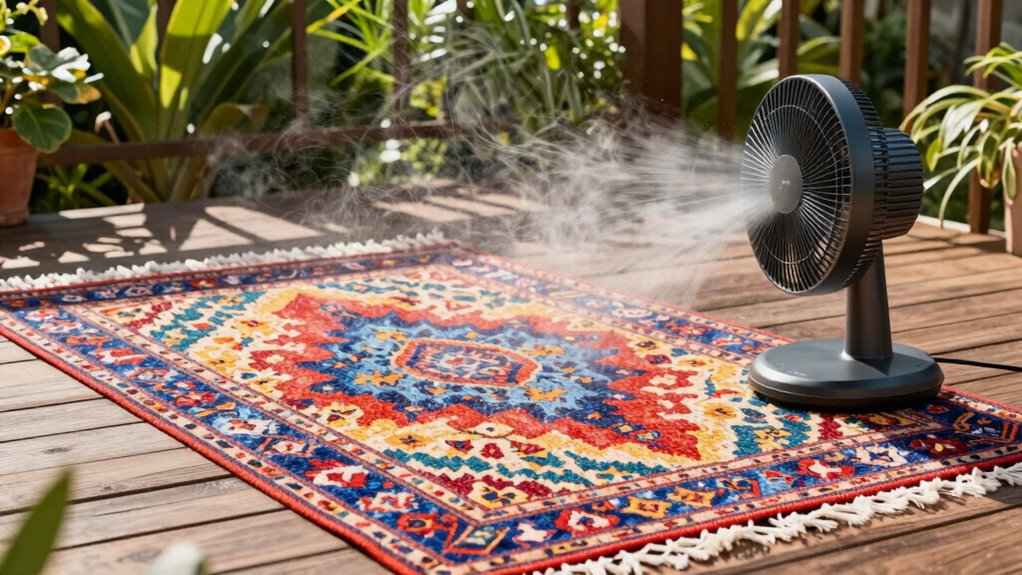
Looking for ways to dry your outdoor rug faster and more effectively? The right tools can make a big difference in your rug cleaning and outdoor maintenance routine. Use a high-powered wet/dry vacuum to extract excess water quickly, reducing drying time. A fan or blower can help circulate air and speed up evaporation, especially in humid conditions. If possible, elevate your rug on outdoor furniture or use drying racks to improve airflow underneath. A moisture meter can help you monitor when the rug is thoroughly dry, preventing mold growth. Applying a gentle, absorbent towel can also remove surface moisture before using fans or sun. Additionally, choosing appropriate outdoor rugs made from quick-drying materials can significantly decrease drying time. Combining these tools and tips ensures your outdoor rug dries faster, stays clean, and remains in top shape longer.
Mistakes That Can Make Mold Worse: and How to Avoid Them
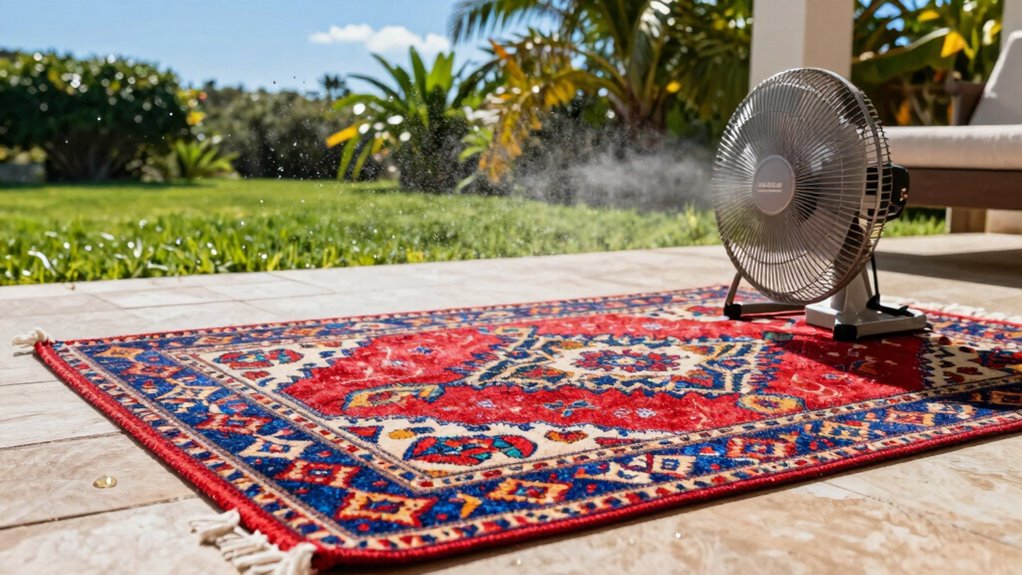
One common mistake that can worsen mold growth on your outdoor rug is failing to thoroughly dry the area after cleaning or exposure to moisture. Leaving damp spots creates an ideal environment for mold to thrive. Overwatering mistakes, such as excessive watering or oversaturation, can seep into the rug fibers and trap moisture, making drying difficult. Additionally, improper storage—like folding or stacking the rug while it’s still damp—can trap moisture and promote mold development. To avoid these pitfalls, always make certain your rug is completely dry before storing it, and resist the urge to overwater plants near your outdoor space. Proper drying and storage habits are vital in preventing mold from spreading and damaging your outdoor rug. Being aware of moisture control techniques can help you maintain a mold-free outdoor environment and extend the life of your rug.
Long-Term Tips to Keep Outdoor Rugs Mold-Free in Humid Conditions
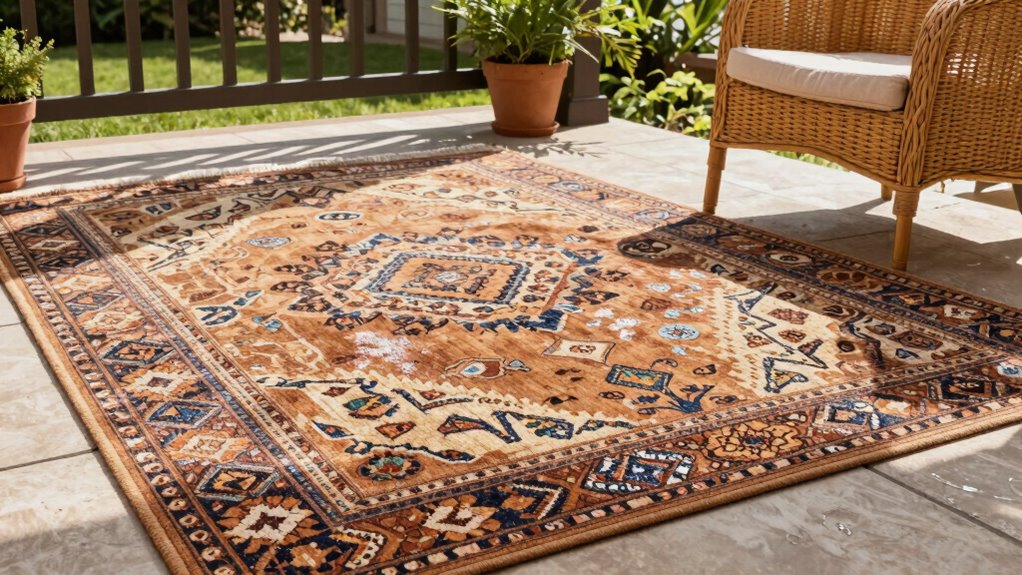
Maintaining a mold-free outdoor rug in humid conditions requires consistent care and proactive measures. Regularly elevate and rotate your rug to improve airflow and prevent moisture buildup, which benefits indoor air quality by reducing mold spores indoors. Guarantee proper drainage around your outdoor space to avoid standing water, a key factor in mold growth. Using a mildew-resistant rug pad can also help keep your rug dry and mold-free. Keep pests like insects and rodents at bay, as they can introduce mold or damage the rug’s fibers. Additionally, clean your rug with natural solutions that inhibit mold growth and prevent pest infestations. Incorporating specialized storage solutions when not in use can further prolong your rug’s lifespan by protecting it from excessive humidity. These long-term habits not only preserve your rug but also contribute to a healthier outdoor and indoor environment.
Frequently Asked Questions
Can I Use a Hairdryer to Dry My Outdoor Rug Quickly?
You can use a hairdryer to dry your outdoor rug quickly, but you should prioritize hairdryer safety. Keep the device at a safe distance to prevent damage or fire hazards, and use it on a low heat setting. Follow rug drying tips like working in sections and avoiding excessive heat. This method works best for small areas, but for larger rugs, air drying or a fan might be more effective and safer.
Are There Eco-Friendly Methods for Drying Outdoor Rugs in Humid Climates?
Yes, you can use eco-friendly methods like natural air drying to dry your outdoor rug in humid climates. Opt for biodegradable drying methods such as hanging your rug in a breezy, shaded area, ensuring good airflow. Avoid energy-intensive options, and instead, rely on the sun and wind to naturally evaporate moisture. This approach not only preserves the environment but also keeps your rug in great condition without harmful chemicals.
How Often Should I Check My Outdoor Rug for Mold Growth?
You should check your outdoor rug for mold growth at least once a week, especially during humid months. Regular rug maintenance helps prevent mold by catching early signs of moisture buildup. Look for discoloration, a musty smell, or fuzzy spots. Promptly addressing any issues keeps your rug in good shape, reduces mold risk, and makes sure it stays clean and safe for outdoor enjoyment.
Is It Safe to Use Bleach to Remove Mold From Outdoor Rugs?
While bleach safety might seem straightforward, it’s best to proceed with caution for mold removal on outdoor rugs. Bleach can effectively tackle mold, but it may also damage the rug fibers and harm surrounding plants. Use a diluted mixture and wear gloves. Always rinse thoroughly afterward. For a safer alternative, consider vinegar or commercial mold removers designed for outdoor fabrics. Your goal is effective cleaning without unintended consequences.
What Are the Best Storage Practices to Prevent Mold in Humid Weather?
To prevent mold in humid weather, you should follow key storage tips. Always make certain your outdoor rug is completely dry before storing it in a well-ventilated area. Roll the rug instead of folding to avoid creases where moisture can accumulate. Use breathable storage bags or containers to allow airflow and prevent mold growth. Regularly inspect and clean your rugs, and consider using moisture absorbers to keep humidity levels low, guaranteeing mold prevention effectively.
Conclusion
By following these simple steps, you can keep your outdoor rugs looking fresh and mold-free, even in humid weather. Remember, neglecting proper drying can lead to stubborn mold and damage that’s hard to fix. Isn’t your outdoor space worth protecting? With a little effort and the right routine, you’ll enjoy beautiful, dry rugs season after season. Don’t let humidity ruin your outdoor oasis—take action today and keep your rugs in top shape.
Fall Picks
fall essentials
As an affiliate, we earn on qualifying purchases.