
If you pick the wrong sauna type, you might miss out on the benefits you’re after, like deep relaxation or detox. Infrared saunas heat your body directly at lower temperatures, helping muscles relax quickly, but may feel less intense if you prefer higher heat. Traditional saunas offer moist, intense heat that promotes sweating and detox. Choosing based on your wellness goals guarantees you receive the full rejuvenating experience—more details can show you how to make the right choice.
Key Takeaways
- Choosing the wrong sauna type based on personal heat sensitivity can lead to uncomfortable experiences and minimal therapeutic benefits.
- Ignoring your wellness goals may cause selecting an ineffective sauna, resulting in feeling nothing or no noticeable improvements.
- Not considering humidity preferences or heat penetration depth can diminish the effectiveness of your sauna session.
- Overlooking proper installation, safety features, or brand reputation may lead to a poor experience with no perceived benefits.
- Using the wrong sauna for your specific needs (e.g., infrared for deep tissue warmth, traditional for detox) can result in feeling nothing or underwhelmed.
Which Sauna Is Right for Your Wellness Goals? (Infrared or Traditional?)
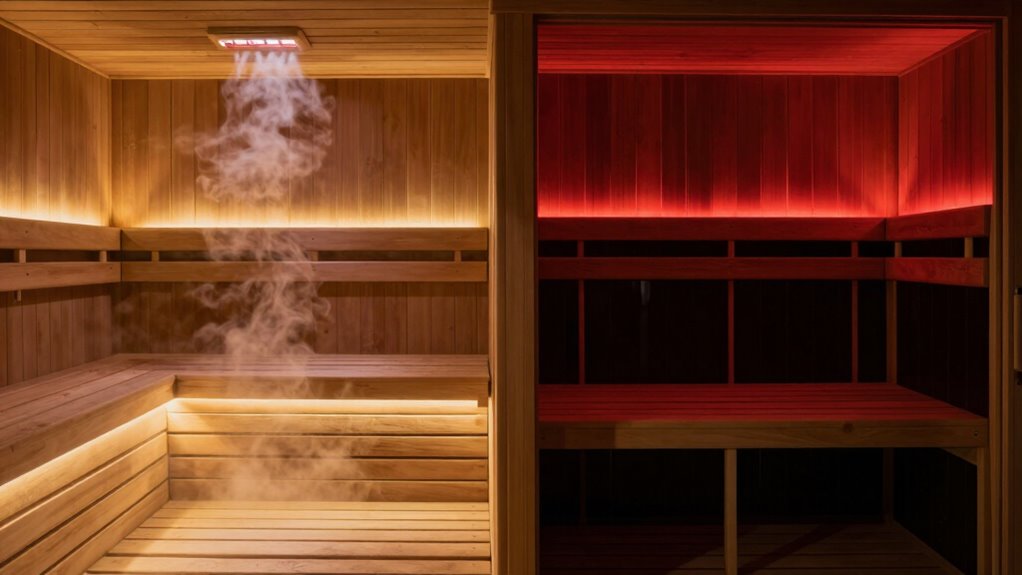
Choosing between an infrared and a traditional sauna depends on your specific wellness goals. If you want precise temperature regulation and better humidity control, a traditional sauna might suit you better. Traditional saunas typically operate at higher temperatures with adjustable humidity, creating a classic, moist heat experience. This environment can promote detoxification and relaxation, especially if you prefer a steamier atmosphere. Conversely, infrared saunas heat your body directly with infrared rays, often at lower temperatures, and offer a dry heat environment. If you’re looking for a quicker, milder session with easier temperature control, infrared could be ideal. Consider how your body responds to humidity and heat intensity when choosing. Your wellness goals will guide you toward the sauna that best supports your relaxation, detox, or therapeutic needs. Understanding sauna types can help you make an informed decision tailored to your preferences.
What Are the Main Differences Between Infrared and Traditional Saunas?
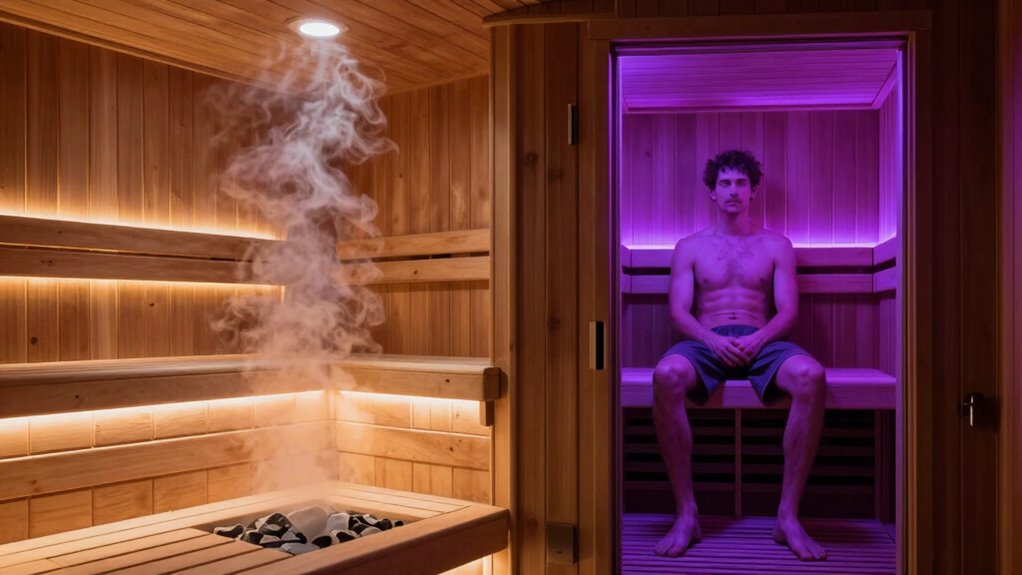
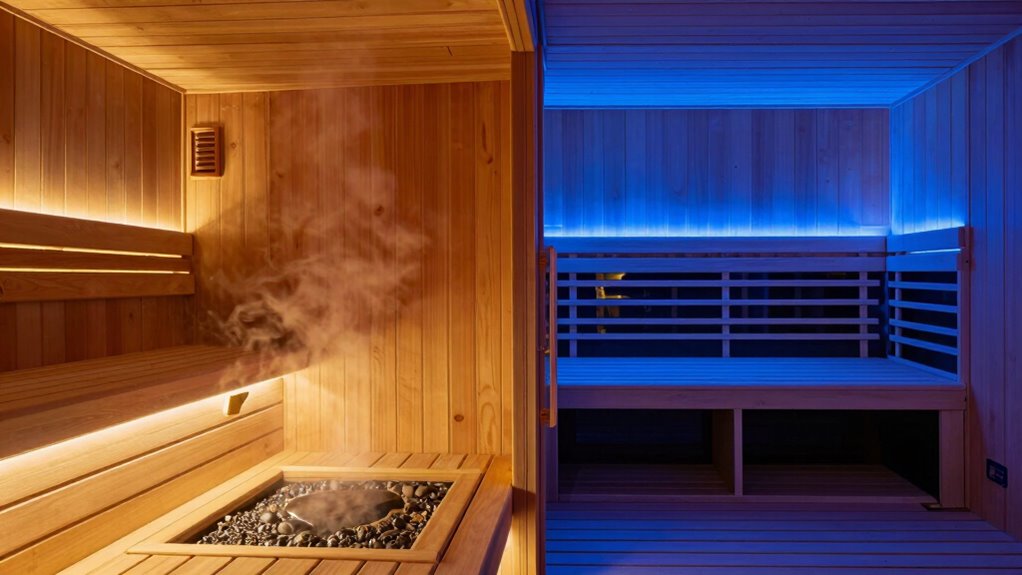
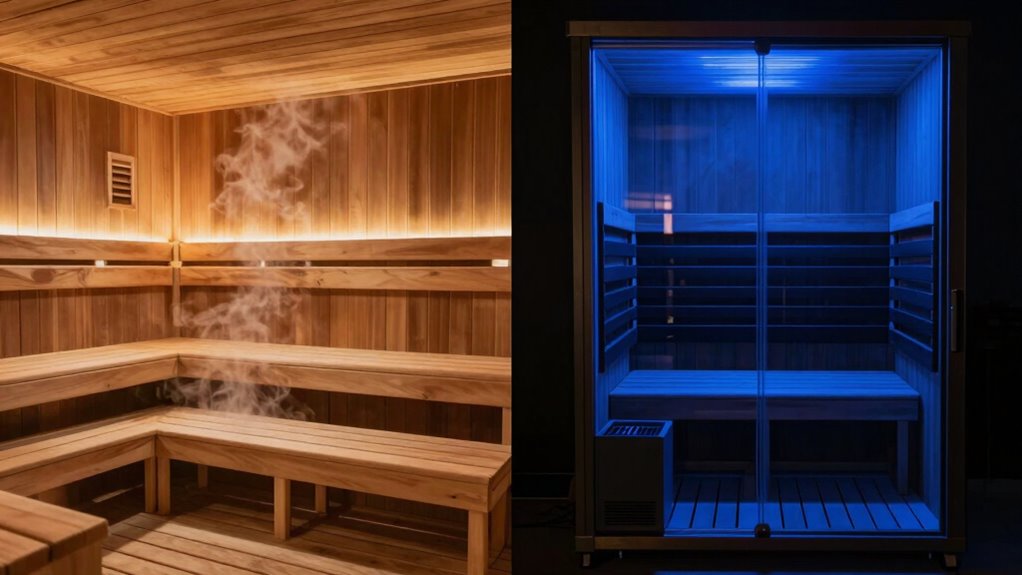
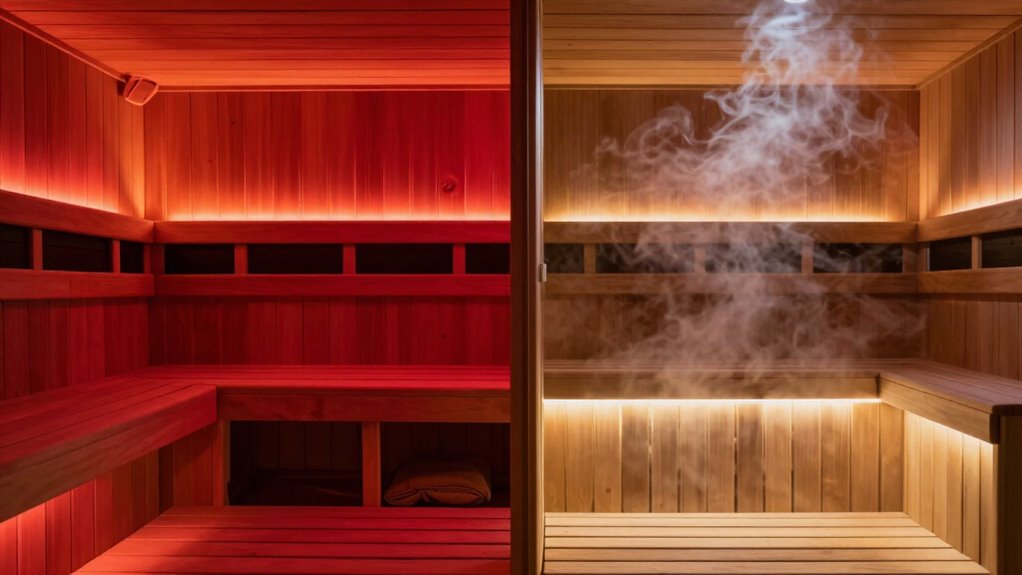
Infrared and traditional saunas differ primarily in how they generate and deliver heat. Traditional saunas heat the air using sauna materials like wood stoves or electric heaters, creating a dry or humid environment depending on the design. Infrared saunas use infrared panels that directly warm your body without substantially heating the air. This difference impacts your experience, as infrared heat penetrates deeper into your skin. Sauna lighting also varies; traditional models often feature soft, ambient lighting, while infrared saunas may incorporate LED lights that enhance relaxation or mood. The choice of sauna materials influences durability and ambiance, with traditional saunas emphasizing natural wood and infrared models focusing on sleek, modern finishes. These core differences shape how you experience heat, comfort, and ambiance during your session. Additionally, the technology behind infrared heating allows for quicker warm-up times and energy efficiency, making infrared saunas a popular choice for many users.
How Do Infrared and Traditional Saunas Penetrate Your Body Differently?
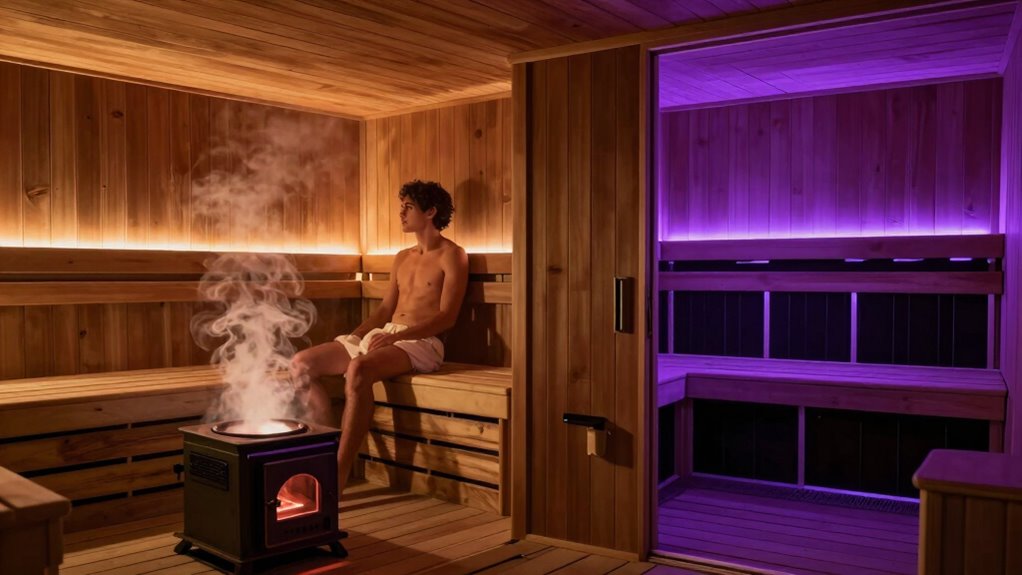
Because infrared and traditional saunas heat the body differently, they offer distinct experiences in how warmth penetrates your tissues. Infrared therapy uses radiant heat to directly warm your skin and underlying muscles, allowing deeper body penetration at lower temperatures. This targeted heating can promote muscle relaxation and pain relief more efficiently. In contrast, traditional saunas heat the air, which then warms your skin and surface tissues through convection and conduction. The heat from a traditional sauna doesn’t penetrate as deeply, relying more on surface warmth to elevate your overall temperature. As a result, infrared therapy provides a more direct and intense body penetration, often leading to quicker relaxation and detoxification effects, while traditional saunas offer a more general, surface-level warmth experience.
What Are the Temperature and Humidity Levels in Each Sauna Type?
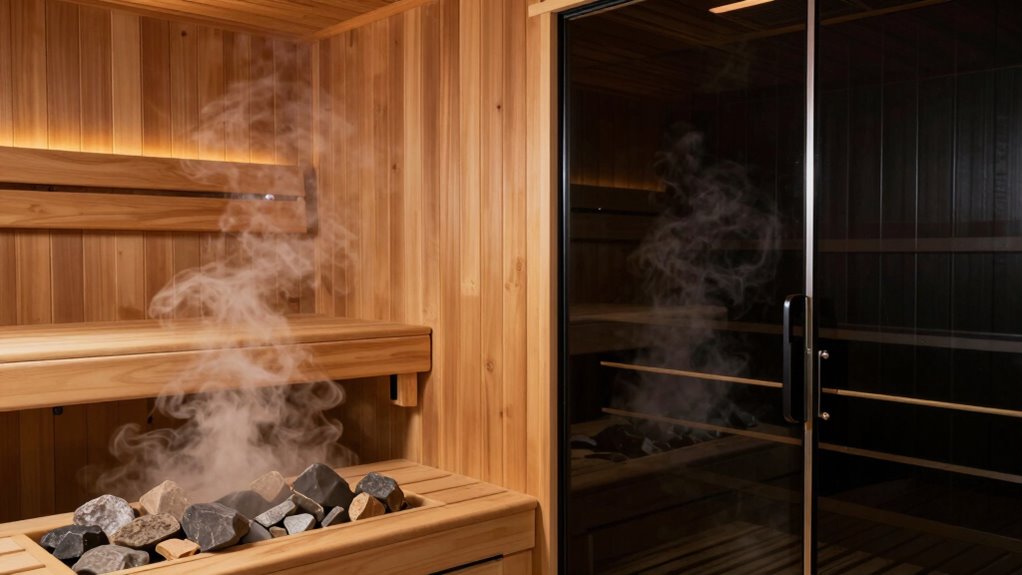
Traditional saunas operate at higher temperatures, typically ranging from 150°F to 195°F (65°C to 90°C), creating a hot, dry environment that promotes sweating and circulation. The humidity levels in these saunas are usually low, around 10-20%, which intensifies the dry heat and makes the temperature feel even hotter. In contrast, infrared saunas operate at lower temperature ranges, usually between 120°F and 140°F (50°C to 60°C). The humidity levels in infrared saunas are generally very low, often less than 10%, but because the heat penetrates deeper, you still experience warmth without the intense dryness. This difference in temperature and humidity levels influences how each sauna affects your body and comfort during use. Additionally, the different heat transfer methods can impact your overall sweating response and perceived comfort during your session.
What Are the Health Benefits and Risks of Infrared vs. Traditional Saunas?
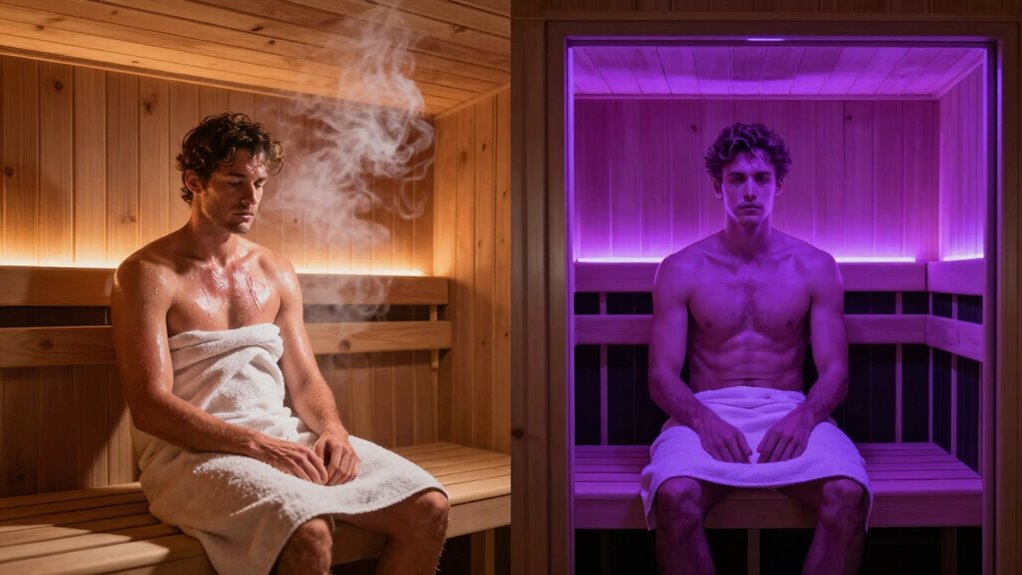
Both infrared and traditional saunas offer distinct health benefits, but understanding their potential risks is equally important. Infrared saunas promote relaxation, improve circulation, and may aid muscle recovery. Traditional saunas boost cardiovascular health, enhance skin detoxification, and reduce stress. However, be cautious of detoxification myths—sweating alone isn’t a complete detox. Overuse can lead to dehydration or heat exhaustion, emphasizing sauna safety. Here are some key points to contemplate:
- Infrared saunas typically operate at lower temperatures, reducing risk for heat intolerance.
- Traditional saunas create higher heat, which can be risky for heart conditions.
- Both types may cause dehydration if you don’t hydrate properly.
- Always listen to your body and limit exposure to avoid overheating.
- Incorporating natural heating methods like those used in backyard saunas can enhance your experience while maintaining safety.
Which Sauna Offers a Better Experience for Relaxation and Pain Relief?
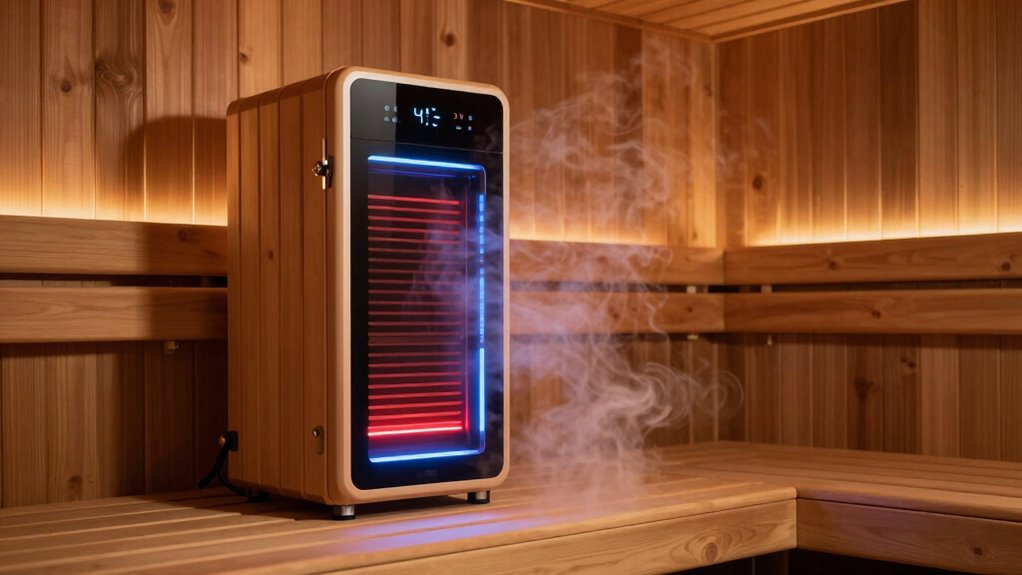
When it comes to relaxation and pain relief, choosing the right sauna depends on your preferences and needs. Infrared saunas offer a gentle heat that penetrates deeper into your muscles, which many find effective for pain relief and calming the mind. Traditional saunas, with their higher humidity levels, create a more intense experience that promotes sweating and relaxation. Your comfort level with humidity plays a role—if you prefer a drier heat, infrared might suit you better. Additionally, installation costs differ; infrared units are typically easier and cheaper to set up, while traditional saunas may require more investment. Proper ventilation considerations are essential for both types to ensure safety and comfort. Ultimately, if you seek a soothing, customizable experience, both can work, but your personal comfort with humidity and budget influence which sauna provides a better relaxation and pain relief experience.
How Much Do Infrared and Traditional Saunas Cost to Set Up and Maintain?
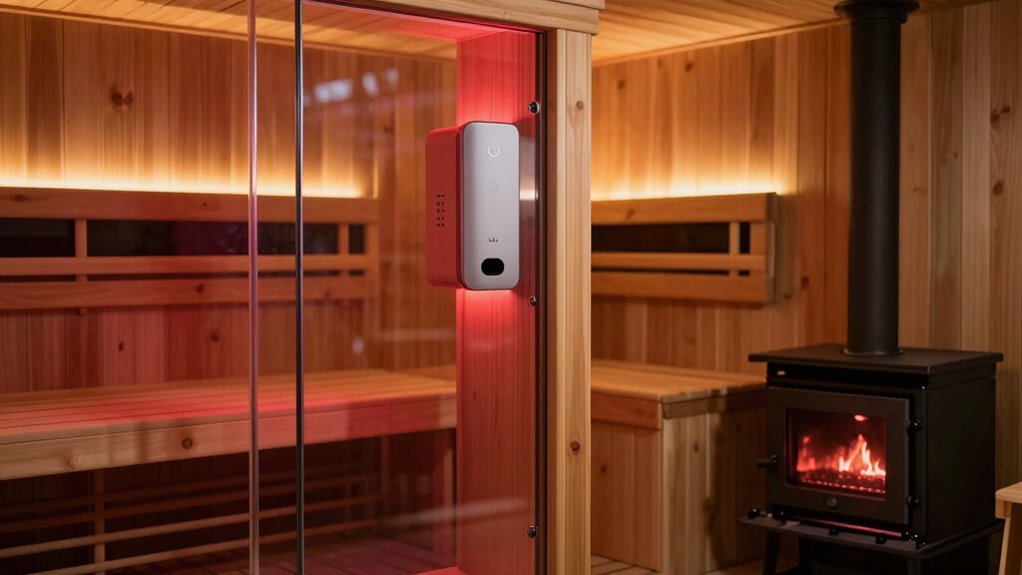
Setting up a sauna involves different costs depending on whether you choose infrared or traditional models. Infrared saunas typically have lower installation expenses, while traditional saunas may require more extensive setup. Keep in mind, maintenance costs can also vary, impacting your long-term investment. Additionally, assessing reliable power sources can help ensure safe and efficient operation of your sauna over time.
Installation Costs Comparison
Infrared saunas generally cost less to install and maintain compared to traditional saunas. Their installation expenses are lower because they don’t require extensive wiring, plumbing, or specialized ventilation. Here’s a quick cost comparison:
- Infrared saunas typically start at $1,000 to $3,000 for basic models, with minimal setup.
- Traditional saunas can range from $3,000 to $8,000, including materials and professional installation.
- Infrared units often save on electrical work, reducing initial setup costs.
- Traditional saunas may need additional costs for proper ventilation and water supply.
- Additionally, the energy efficiency of infrared saunas can lead to lower ongoing operating expenses.
This difference in installation expenses makes infrared saunas more budget-friendly upfront, especially if you’re looking for a quick, cost-effective setup.
Maintenance Expenses Overview
Maintenance costs for saunas vary considerably between infrared and traditional models. Infrared saunas generally have lower ongoing expenses due to their energy efficiency, consuming less power during use. This efficiency not only reduces electricity bills but also simplifies maintenance requirements, making upkeep more straightforward. Traditional saunas often require more frequent upkeep, such as replacing heating elements and managing increased humidity levels, which can add to long-term costs. When considering a cost analysis, infrared models tend to save money over time thanks to their energy-efficient design and simpler components. In contrast, traditional saunas may have higher maintenance expenses, but some owners appreciate their durability and classic appeal. Overall, your choice influences maintenance costs, with infrared saunas offering a more budget-friendly option for ongoing expenses.
Common Mistakes to Avoid When Choosing a Sauna
Selecting the incorrect sauna can lead to disappointment and wasted money, so it’s essential to avoid common pitfalls. One mistake is falling for sauna myths that downplay safety considerations or exaggerate benefits. Second, overlook your space and power supply, choosing a unit that doesn’t fit your home or budget. Third, ignore the type of sauna—infrared or traditional—without understanding their differences. Fourth, neglect researching reputable brands and reviews, risking safety issues or poor quality. Be cautious of misleading claims and always verify safety features. By avoiding these mistakes, you guarantee your sauna experience is safe, effective, and tailored to your needs. Being informed helps you steer clear of misconceptions and choose wisely for long-term satisfaction.
Final Tips: How to Pick the Best Sauna for You and Feel Rejuvenated
To choose the right sauna, start by considering what feels most comfortable for you and suits your preferences. Think about your health goals and how different sauna types can support them. This will help you select a sauna that leaves you feeling truly rejuvenated. Additionally, understanding the different sauna technologies can ensure you make an informed choice that aligns with your wellness needs.
Assess Personal Comfort Preferences
Choosing the right sauna ultimately depends on your personal comfort preferences. To find what suits you best, consider how you respond to different temperature levels and sensations. Here are some points to help you assess your preferences:
- Do you prefer a gentle heat or a more intense, hot experience?
- Are you comfortable with higher temperatures for shorter sessions or lower temps for longer relaxation?
- How sensitive are you to heat, and do you prefer infrared’s milder warmth or the traditional sauna’s steamy environment?
- Do you find that your personal comfort improves with dry heat or moist heat?
Understanding these factors will guide you toward selecting a sauna that feels right for your body, ensuring a rejuvenating experience aligned with your temperature preferences. Additionally, consider the type of heater used in the sauna, as it can significantly impact your overall comfort and relaxation.
Consider Health Goals
Your health goals play a significant role in determining which sauna will best support your well-being. Whether you’re seeking relaxation, detoxification, or relief from chronic pain, selecting the right sauna aligns with your needs. Consider if you want the benefits of alternative therapies like improved circulation or skin health. To help, here’s a quick comparison:
| Goal | Sauna Type | Recommended Accessories |
|---|---|---|
| Detox & relaxation | Infrared | Aromatherapy diffusers, heated mats |
| Pain relief | Traditional | Lumbar supports, waterproof cushions |
| Skin health | Infrared | Infrared therapy panels, body brushes |
| Improved circulation | Traditional | Moisture-resistant towels, heart rate monitors |
| Enhanced detox | Both | Detox wraps, sauna thermometers |
Matching your goals with the right sauna and accessories helps you feel rejuvenated every time.
Frequently Asked Questions
Can I Use an Infrared Sauna if I Have Skin Sensitivities?
Yes, you can use an infrared sauna if you have skin sensitivities, but you should proceed cautiously. Infrared saunas typically cause less skin irritation and allergy concerns compared to traditional saunas because they operate at lower temperatures and don’t produce as much steam. However, it’s best to start with short sessions, use gentle skincare products, and consult your healthcare provider to guarantee it’s safe for your skin sensitivities.
How Long Should I Stay in Each Type of Sauna for Health Benefits?
Did you know that most sauna users spend about 15-30 minutes per session? For ideal timing, follow the duration guidelines for each type. In an infrared sauna, 20-30 minutes is perfect, while traditional saunas typically recommend 15-20 minutes. Staying within these limits helps you enjoy health benefits without overdoing it. Always listen to your body and gradually increase your session length for the best experience.
Are There Any Safety Precautions for Pregnant Women Using Saunas?
If you’re pregnant, it’s vital to follow sauna precautions for pregnancy safety. You should avoid high temperatures, prolonged sessions, and hot environments, as these can pose risks. Always consult your healthcare provider before using any sauna. Keep the temperature moderate, stay hydrated, and listen to your body. Prioritizing sauna precautions helps guarantee both your safety and the health of your baby during pregnancy.
Do Different Sauna Types Affect Detoxification Differently?
Think of sauna types as different streams leading to the same ocean of detox. Infrared saunas penetrate deeper, boosting sweat production and enhancing detox efficiency by releasing toxins more effectively. Traditional saunas heat the surface, promoting sweating but possibly less efficiently. Your choice influences how thoroughly toxins are flushed out, so pick the one that aligns with your detox goals to maximize sweat production and overall cleansing.
Which Sauna Type Is More Energy-Efficient for Home Use?
You’ll find infrared saunas more energy-efficient for home use because they consume less energy due to lower operating temperatures. They also have lower installation costs since they’re easier to set up and don’t require extensive wiring or plumbing. Traditional saunas, on the other hand, often have higher energy consumption and installation expenses. So, if you want a budget-friendly, energy-saving option, infrared saunas are the smarter choice.
Conclusion
Choosing the right sauna depends on your wellness goals and preferences. Did you know that infrared saunas typically operate at lower temperatures but still offer deep tissue benefits? Whether you prioritize relaxation, pain relief, or budget, understanding the differences helps you make an informed decision. Invest wisely, and you’ll maximize your health benefits—so don’t settle for the wrong choice and feel nothing. Your perfect sauna experience is just a decision away.