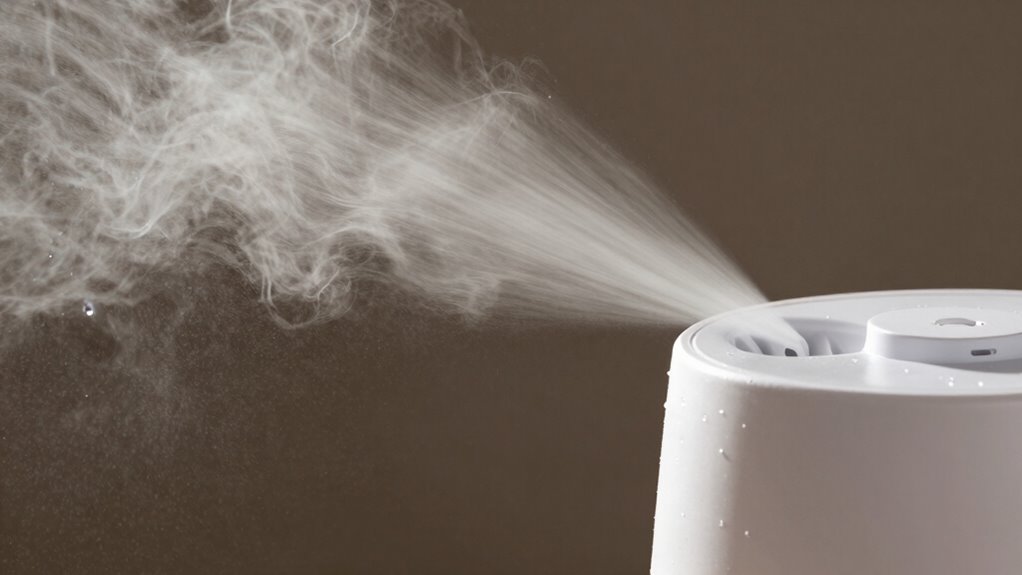

Different humidifier types produce varying amounts of dust depending on how they work and water quality. Ultrasonic models often leave mineral residues on surfaces because they use vibrations that don’t evaporate minerals, especially if your water isn’t distilled. Evaporative units usually generate less dust when filters are kept clean and water is filtered, while impeller humidifiers can disperse mineral particles if water is hard. To reduce dust, proper maintenance and water choices matter—keep exploring to learn how each type impacts your indoor air.

Get furniture and decor delivered free — and shop member deals
- Fast, free delivery on millions of items
- Access to Prime Big Deal Days deals on October 6–7
- Prime Video, Amazon Music and more included
Key Takeaways
- Mineral content in water, especially in ultrasonic and impeller humidifiers, causes dust and residue to disperse into the air.
- Using tap water with minerals increases dust; distilled or demineralized water reduces mineral buildup and dispersal.
- Ultrasonic humidifiers break water into mist but leave mineral deposits on surfaces if water isn’t demineralized.
- Evaporative humidifiers trap minerals in filters, minimizing dust, but require regular filter maintenance for optimal performance.
- Proper cleaning, water changes, and filters help prevent mineral buildup and reduce dust released by humidifiers.
Top picks for "humidifier mist leav"
As an affiliate, we earn on qualifying purchases.
Why Does My Humidifier Leave Dust Behind?
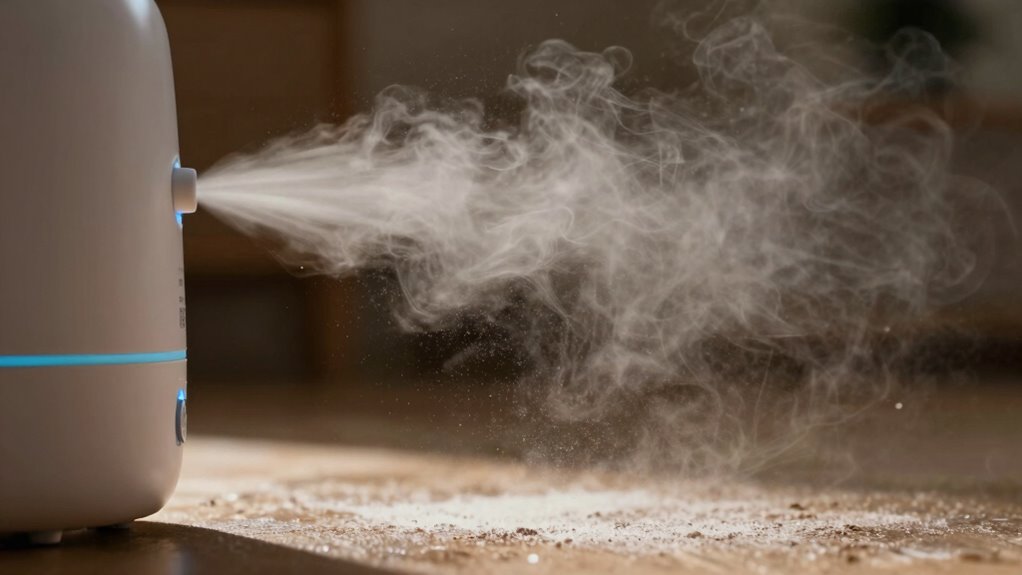
If your humidifier is leaving dust behind, it’s usually due to mineral deposits from the water you’re using. Hard water contains minerals that don’t evaporate, so they settle as dust or white residue. To reduce this, check your humidifier’s compatibility with air purifiers that can filter out airborne minerals. Regular humidifier maintenance, like cleaning and descaling, helps prevent mineral buildup and guarantees ideal performance. Using distilled or demineralized water can substantially cut down on dust formation. Keep an eye on your unit’s filters and replace them as recommended, since clogged filters can worsen dust issues. Proper maintenance not only minimizes dust but also extends your humidifier’s lifespan and improves air quality in your space. mineral deposits can be minimized by understanding the differences between common humidifier types and their maintenance needs.
How Do Evaporative Humidifiers Work, and Do They Cause Dust?
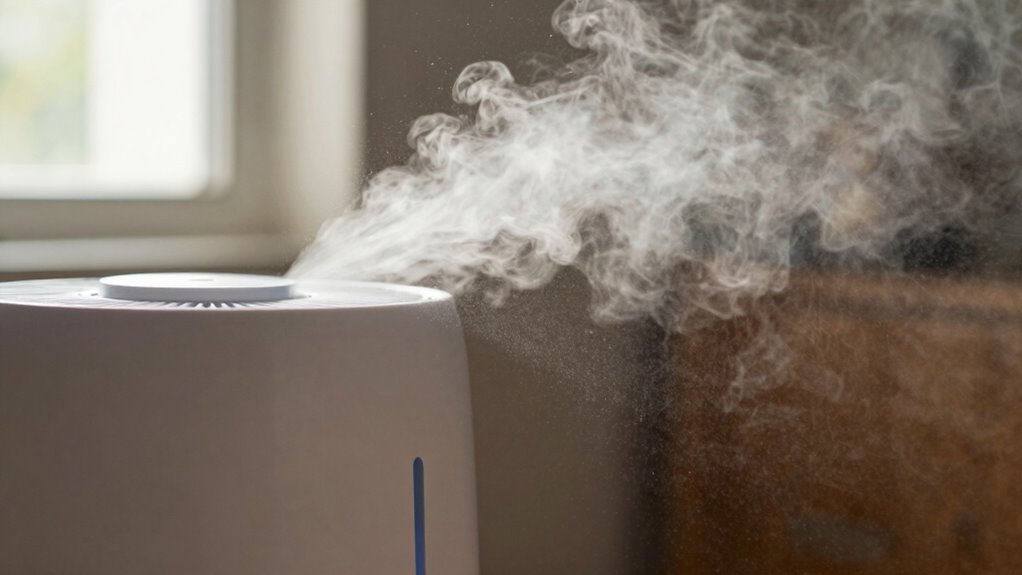
Evaporative humidifiers work by drawing air through a moist wick or filter, causing water to evaporate into the room. This process can trap dust and particles, but it might also spread some minerals if the water isn’t purified. Understanding how this affects your indoor air quality helps you decide if an evaporative humidifier is right for you. Additionally, the contrast ratio of the humidifier’s operation can influence how effectively it maintains desired humidity levels without dispersing dust.
How Evaporative Humidifiers Function
Since they rely on natural evaporation, evaporative humidifiers work by drawing warm, dry air through a saturated wick filter, where the air absorbs moisture before being released into the room. This process helps maintain humidity levels without creating mist. To keep your humidifier functioning properly, regular humidifier maintenance and water filtration are essential. The wick filter traps minerals and prevents dust from circulating, reducing the chance of dust settling around your space. Proper humidifier maintenance is key to ensuring optimal performance and air quality. Here’s a quick visual:
| Air Intake | Water Saturation | Moisture Release |
|---|---|---|
| Draws dry air | Wick absorbs water | Humidified air exits |
| Filter traps minerals | Maintains consistent humidity | Prevents dust buildup |
| Requires regular replacement | Ensures efficient operation | Keeps dust at bay |
| Uses water filtration | Reduces mineral dust | Easy to maintain |
| Natural evaporation | No mist or spray | Gentle humidity release |
Dust Generation Mechanisms
While evaporative humidifiers are effective at maintaining humidity without creating visible mist, some users worry about dust. This concern stems from how these devices work, drawing in dry air through a wick filter soaked with water. As the air passes over the filter, water evaporates, increasing humidity. However, dust particles present in the air can also be drawn into the humidifier. When water evaporates, these particles are left behind or settle into the filter, but some may get dispersed into the air again. This process can impact air quality, especially if dust levels are high in your environment. Although evaporative humidifiers help keep air moist without mist, they can contribute to dust particles circulating in your indoor air, potentially affecting overall air quality. Additionally, the efficiency and dust dispersion may vary based on the type and condition of the wick filter, which can influence how much dust is released into the environment.
Effects on Indoor Air Quality
Evaporative humidifiers work by pulling dry air through a wetted wick filter, where water evaporates into the air to increase humidity. This process generally improves indoor air quality by adding moisture, which can reduce respiratory irritants and dry skin. However, the air quality impacts depend on the water source and filter cleanliness. If not maintained properly, evaporative humidifiers can circulate indoor pollutants like dust, mold, or bacteria that settle on the wick. These pollutants may be released into the air along with the mist, potentially aggravating allergies or respiratory issues. Regular cleaning and using distilled or filtered water help minimize indoor pollutants. Proper humidifier maintenance is essential to prevent dust buildup and ensure healthy indoor air. Overall, when used correctly, evaporative humidifiers tend to boost comfort without markedly compromising indoor air quality.
What Makes Ultrasonic Mist Leave Mineral Residue?
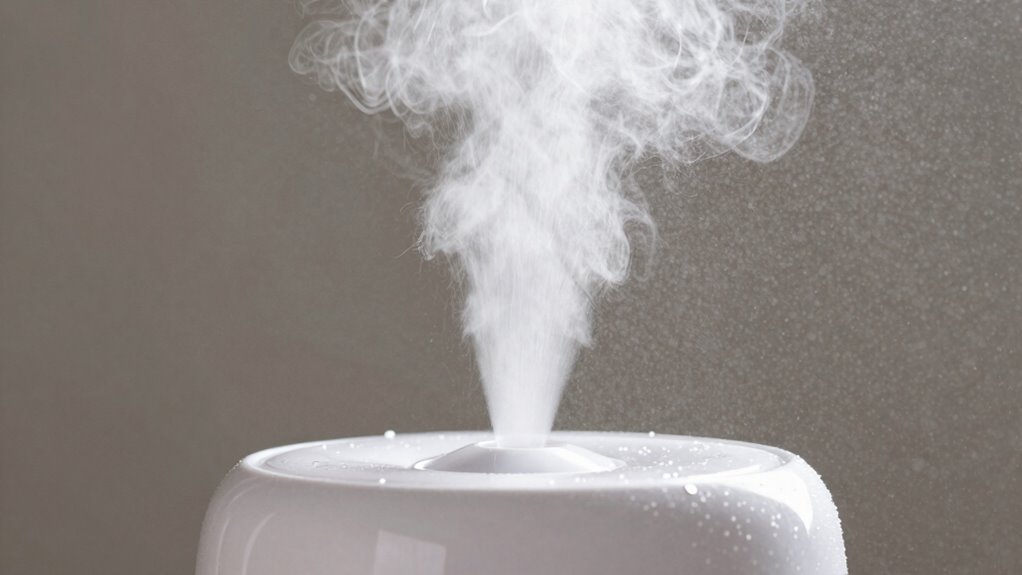
Ultrasonic humidifiers use vibrations to create mist, but this process can leave mineral residues if your water contains minerals. When minerals are present, the ultrasonic vibrations break them apart, causing tiny particles to settle as residue. Understanding how mineral content and the vibration mechanism interact helps explain why mineral deposits often appear on surfaces. Additionally, using distilled or deionized water can significantly reduce mineral buildup and keep your humidifier cleaner.
Ultrasonic Vibration Mechanism
Have you ever wondered why ultrasonic mist sometimes leaves mineral residue behind? It all comes down to the ultrasonic technology and vibration mechanism. Ultrasonic humidifiers use high-frequency vibrations to turn water into mist. These vibrations are generated by a metal diaphragm that vibrates millions of times per second, creating ultrasonic waves. This process produces a fine mist, but it doesn’t distinguish between water and minerals. Minerals don’t vaporize; instead, they get trapped in the mist and settle as residue. To visualize this, consider the table below:
| Feature | Water Molecules | Mineral Particles | Residue Formation |
|---|---|---|---|
| Ultrasonic waves | Vibrate rapidly | Remain intact | Settles on surfaces |
| Vibration mechanism | Creates mist | Leaves minerals | Leaves dust |
| Water vapor | Pure vapor | Minerals stay | Mineral dust |
This is why residue appears, even with ultrasonic technology.
Mineral Content in Water
Mineral content in water directly impacts whether ultrasonic mist leaves behind residue. When water has high mineralization, it contains dissolved minerals like calcium and magnesium. As the ultrasonic vibrations break water into fine mist, these minerals don’t evaporate but remain in tiny particles. When the mist settles, calcium buildup and mineral deposits can form on surfaces and inside the humidifier. This residue is especially noticeable with hard water, which has a high mineral content. To minimize this, you can use distilled or demineralized water, which has fewer dissolved minerals. Reducing mineral content not only prevents calcium buildup but also helps your humidifier operate more efficiently and reduces the need for frequent cleaning. Knowing the water’s mineralization level is key to avoiding dust and residue left by ultrasonic humidifiers.
Why Do Impeller Humidifiers Sometimes Disperse Dust?
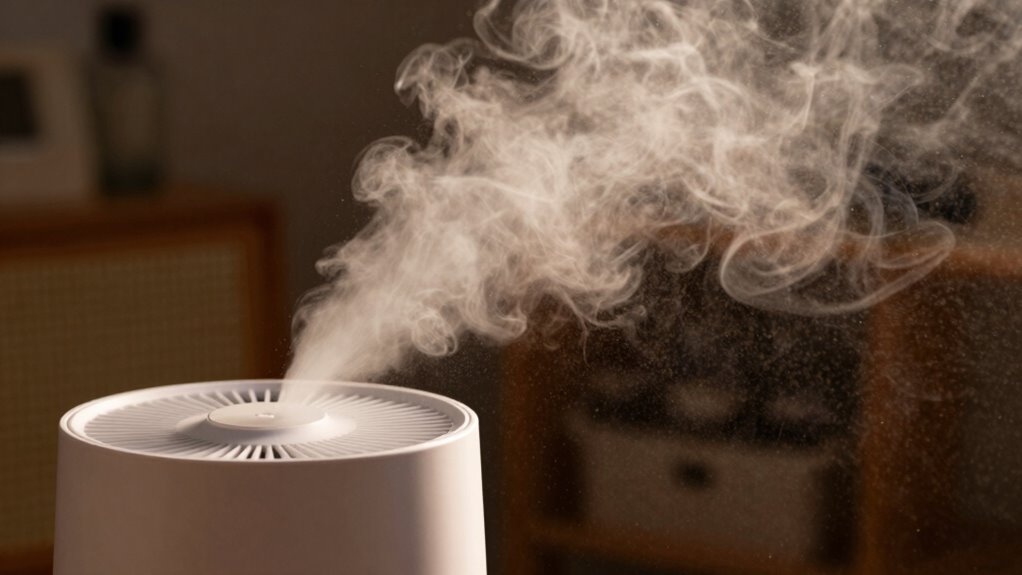
Impeller humidifiers can sometimes disperse dust into the air because tiny mineral particles from tap water get broken apart and thrown into the mist. This happens when the impeller spins quickly, pulverizing water droplets along with minerals. If you neglect humidifier maintenance or don’t use mineral filtration, mineral deposits build up and are released into the air as dust. To reduce dust dispersal, regularly clean your humidifier and consider using filtered or distilled water. Here’s a quick guide:
| Action | Effect | Recommended Frequency |
|---|---|---|
| Clean humidifier | Prevents mineral buildup | Weekly |
| Use mineral filtration | Removes minerals from water | Before filling humidifier |
| Replace water regularly | Reduces mineral concentration | Daily |
| Check for deposits | Ensures efficient operation | Monthly |
A common cause of mineral dust is mineral buildup in the device, which can be minimized by proper maintenance.
How Water Hardness and Minerals Contribute to Dust in Humidifiers
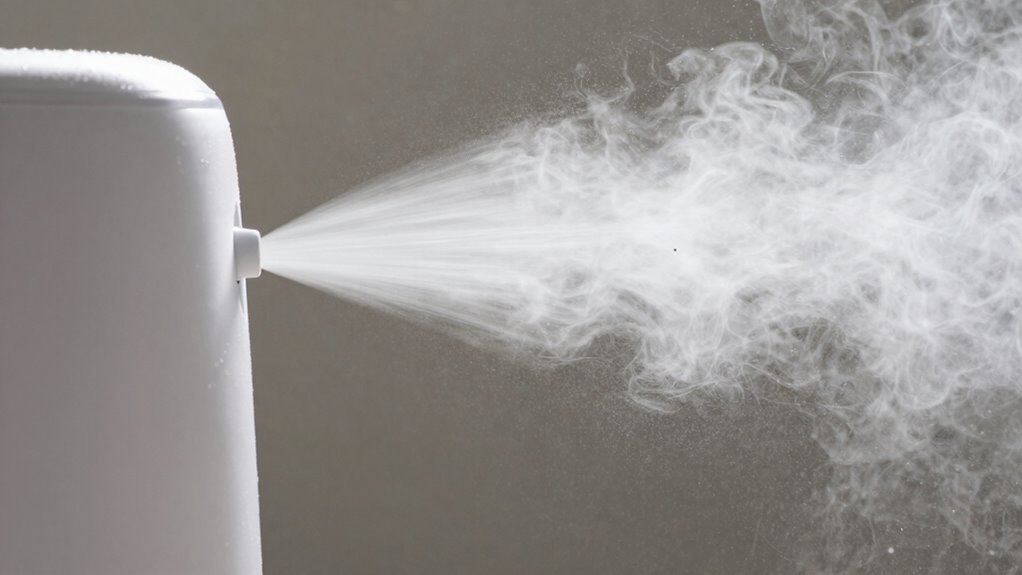
Water hardness, caused by dissolved minerals like calcium and magnesium, directly impacts how much dust your humidifier releases into the air. Hard water contains high mineral levels, which can build up inside the device, leading to mineral deposits and dust particles. To reduce this, water softening methods like using mineral filters can help remove or reduce minerals before they enter your humidifier. These filters trap minerals, preventing them from dispersing with the mist and minimizing dust buildup. Without proper water softening, minerals can settle in your humidifier and be blown out as fine dust, affecting air quality and potentially damaging the device. Choosing a humidifier with mineral filters or regularly using water softening techniques can notably reduce dust caused by mineral content. Mineral buildup inside devices is a common issue that can be mitigated through effective water treatment methods.
Tips to Minimize Dust and Mineral Buildup in Your Humidifier
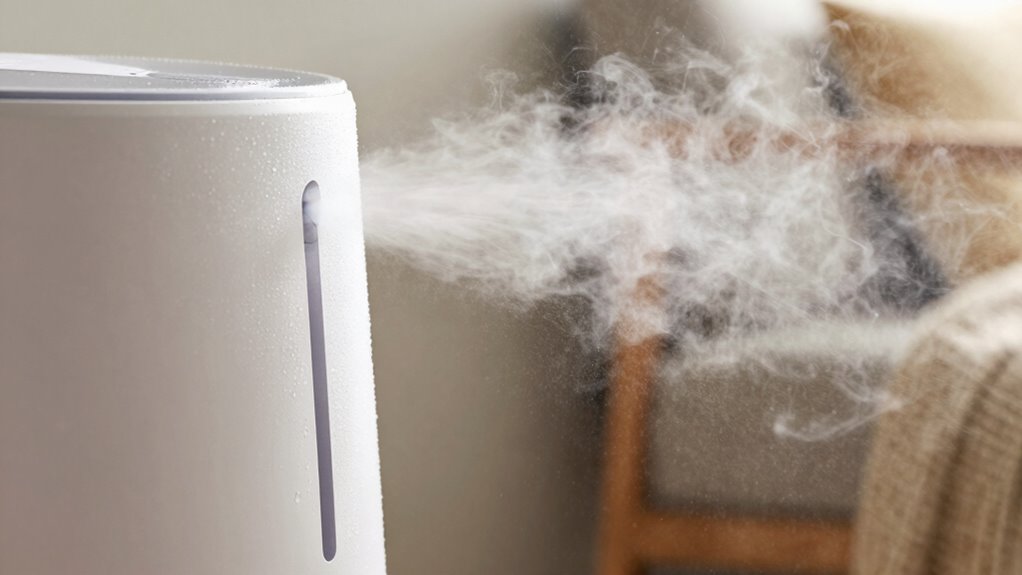
To effectively minimize dust and mineral buildup in your humidifier, regular maintenance is essential. Change the water daily and clean the tank weekly to prevent mineral deposits that can compromise your air quality. Use distilled or filtered water instead of tap water, as it contains fewer minerals, reducing dust formation and promoting dust prevention. Always follow the manufacturer’s cleaning instructions, paying attention to filters and other parts prone to buildup. Keep the humidifier dry when not in use to inhibit mold and bacteria growth, which can worsen air quality. Regularly inspecting and cleaning your device ensures it operates efficiently and minimizes dust particles released into the air. Additionally, understanding water quality issues can help you choose the best water source to reduce mineral buildup. By maintaining your humidifier properly, you help create a cleaner environment and improve overall air quality.
Which Humidifier Types Are Best for a Dust-Free Home?
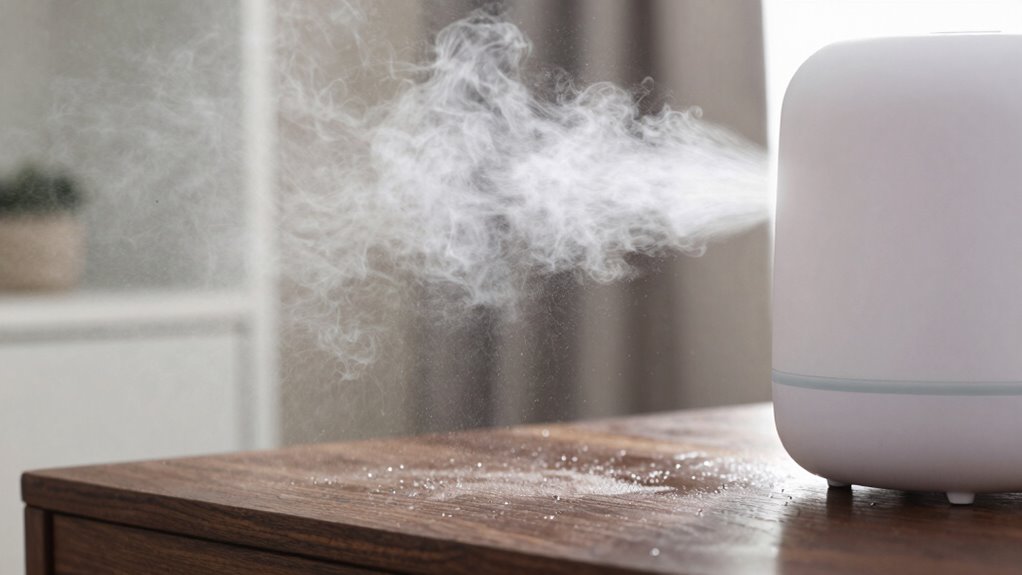
If you want a dust-free home, choosing the right humidifier type is vital. Ultrasonic humidifiers are your best bet because they produce fine mist without creating dust, provided you keep up with regular humidifier maintenance. These units don’t rely on filters, reducing dust accumulation and mineral buildup. Evaporative humidifiers can also be effective if you regularly change filters and clean components, which are essential dust prevention techniques. Avoid wick filters that trap dust and minerals, as they can harbor dirt if not maintained properly. Steam vaporizer models are less likely to disperse dust since they boil water completely, but they require consistent cleaning to prevent mineral deposits. Overall, selecting a humidifier that’s easy to clean and maintain helps keep your home dust-free. Additionally, choosing models with appropriate filtration systems can further improve air quality and reduce dust spread.
Troubleshooting Common Dust Problems With Different Humidifier Mist Types
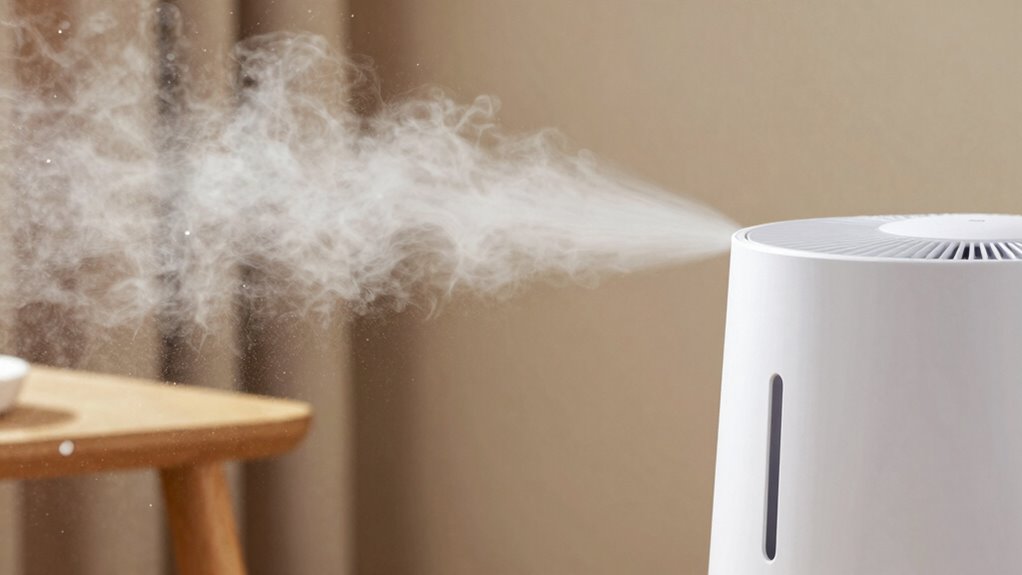
Choosing the right humidifier type can considerably impact dust problems in your home. To troubleshoot dust issues, consider the mist type and how it interacts with your environment. For example, ultrasonic humidifiers often produce fine mist that can spread dust if filters aren’t maintained properly. To reduce dust:
- Regularly replace or clean your humidifier filter to prevent dust buildup.
- Use air purifier integration to capture airborne dust before it settles.
- Switch to evaporative models, which naturally filter dust through a wick or fan.
- Maintain proper humidifier filter maintenance routines to minimize dust dispersal.
Proper filter maintenance and integrating your humidifier with an air purifier help keep dust under control, regardless of mist type. This approach ensures cleaner air and fewer dust particles settling around your home.
Frequently Asked Questions
Can Using Distilled Water Prevent Dust Buildup in My Humidifier?
Yes, using distilled water can prevent dust buildup in your humidifier. Since distilled water has fewer minerals, it reduces mineral deposits that can cause dust and white particles to scatter into the air. Poor water quality with minerals promotes dust formation, so switching to distilled water helps keep your humidifier cleaner and your air clearer. This simple change minimizes dust, making your environment healthier and your humidifier more efficient.
Are Certain Humidifier Models Less Likely to Produce Dust?
Think of some humidifier models as gentle rainmakers, dispersing mist smoothly without leaving a trail of dust. You’ll find that models with high-quality, anti-mineral buildup humidifier material tend to produce cleaner mist dispersal. These often have built-in filters or advanced technology designed to minimize dust and mineral deposits. Selecting a humidifier with these features guarantees you breathe easier, free from dust settling on surfaces, and enjoy consistent, clean mist throughout your space.
How Often Should I Clean My Humidifier to Reduce Dust?
You should clean your humidifier at least once a week to reduce dust buildup. Follow a regular maintenance schedule and use effective cleaning techniques, like soaking parts in vinegar or using mild soap and water. This prevents mold and mineral deposits that contribute to dust. If you notice more dust, increase cleaning frequency. Consistent maintenance guarantees your humidifier works efficiently and keeps your air clean and dust-free.
Does Room Humidity Level Affect Dust Dispersion From Humidifiers?
Sure, cranking up your room humidity might make dust particles dance more wildly, but it’s not just about the air. Proper humidity control actually helps settle dust and reduces dispersion from your humidifier. When the air is too dry or overly humid, dust particles become more airborne, settling everywhere. So, keep the humidity balanced; it’s like giving dust a little less energy to float around, keeping your space cleaner.
Are Air Purifiers Helpful in Reducing Dust From Humidifier Mist?
Air purifiers are effective in reducing dust from humidifier mist by capturing airborne particles before they settle. To improve dust reduction techniques, guarantee your air purifier has a HEPA filter and run it continuously. Keep your humidifier clean and use distilled water to minimize mineral dust. Proper ventilation also helps disperse dust particles, making your environment cleaner and healthier. Combining these methods enhances overall dust control.
Conclusion
To keep your home feeling fresh and welcoming, choosing the right humidifier and maintaining it well can make all the difference. By understanding how different mist types work and managing mineral levels, you can enjoy a comfortable environment without the unwanted dust. A little care goes a long way in creating a space where air feels just right—light, pure, and soothing. Keep experimenting, and your cozy oasis will stay inviting and dust-free.
Fall Picks
fall essentials
As an affiliate, we earn on qualifying purchases.