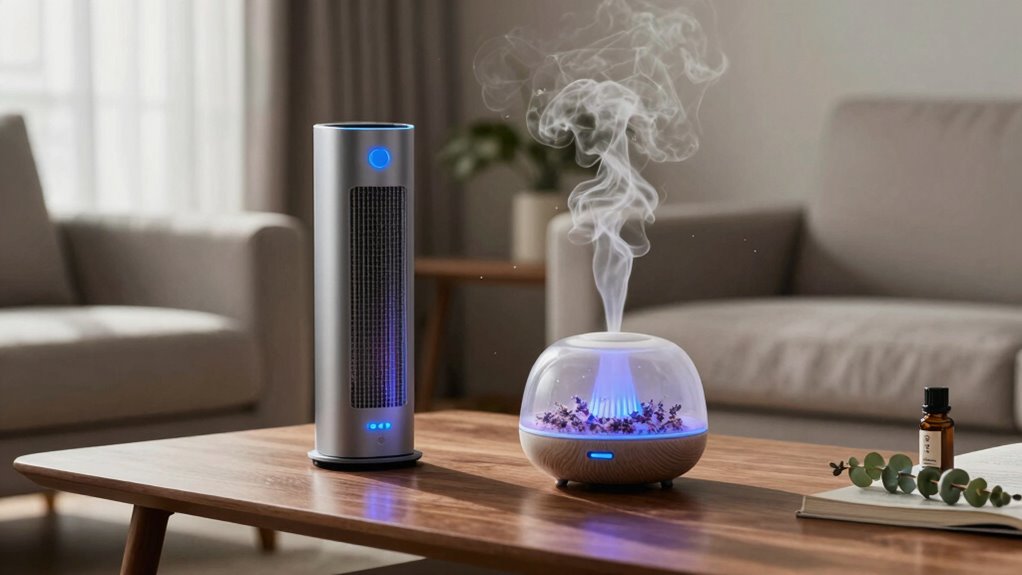

Using essential oils with air filters can seem like a good idea for improving your space, but it can backfire if oils cause buildup on filters, reduce airflow, or irritate your respiratory system. Some filters, like activated carbon, absorb oils well, while others may struggle, leading to decreased efficiency. Overuse or improper placement of diffusers can also trigger health issues. Keep in mind these risks and how to prevent them—more details await if you keep exploring.

Get furniture and decor delivered free with Prime
- Fast, free delivery on millions of items
- Prime Video, Amazon Music and more included
- Member-only deals all year
Key Takeaways
- Essential oils can cause buildup on filters, reducing their effectiveness and airflow, potentially straining HVAC systems.
- Diffusing oils improperly or excessively may lead to overpowering scents and respiratory irritation indoors.
- Certain filters, like activated carbon, absorb oils but can become clogged, decreasing air purification efficiency.
- Oil residue on filters can harbor mold or bacteria, posing health risks and damaging airflow systems.
- Unmonitored diffusing can trigger allergic reactions or respiratory issues, especially for individuals with pre-existing conditions.
activated carbon air filter for essential oils
As an affiliate, we earn on qualifying purchases.
As an affiliate, we earn on qualifying purchases.
Why Do People Combine Essential Oils and Air Filters Indoors?
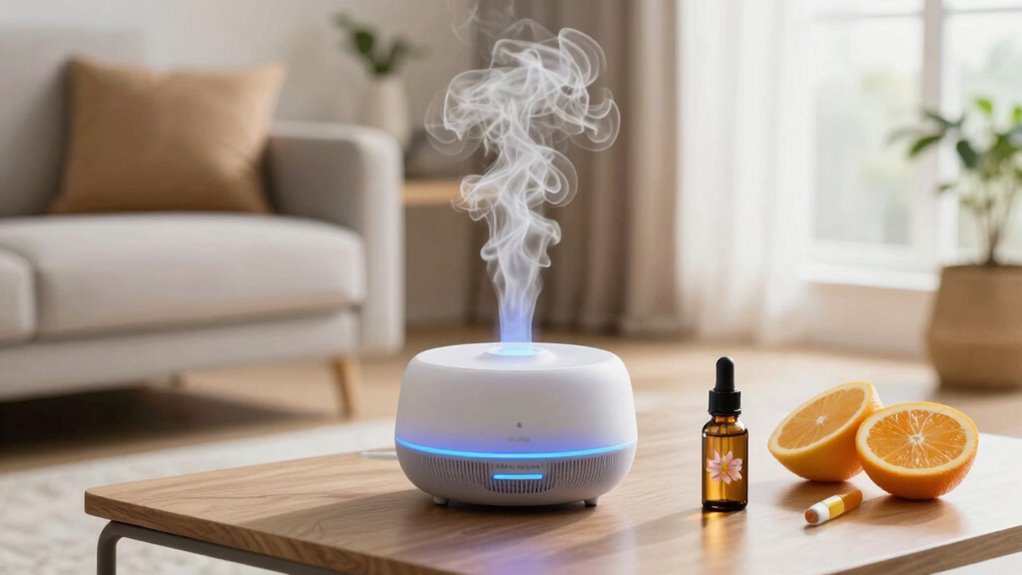
Have you ever wondered why so many people blend essential oils with air filters indoors? It’s mainly about enhancing the air quality and creating a pleasant environment. Proper diffuser placement is key; placing it in central areas allows the scent to disperse evenly, maximizing its benefits. However, you should be mindful of oil concentration—using too much can lead to overpowering smells or even irritation. When combining essential oils with air filters, people often aim to harness aromatherapy benefits while improving indoor ambiance. Keep in mind, maintaining ideal diffuser placement and correct oil concentration ensures a safe and effective experience. Overdoing it can cause discomfort or diminished benefits, so moderation and strategic positioning are essential. Additionally, understanding your air filtration system can help prevent potential issues caused by improper use of essential oils.
How Do Essential Oils Interact With Indoor Air and Air Filters?
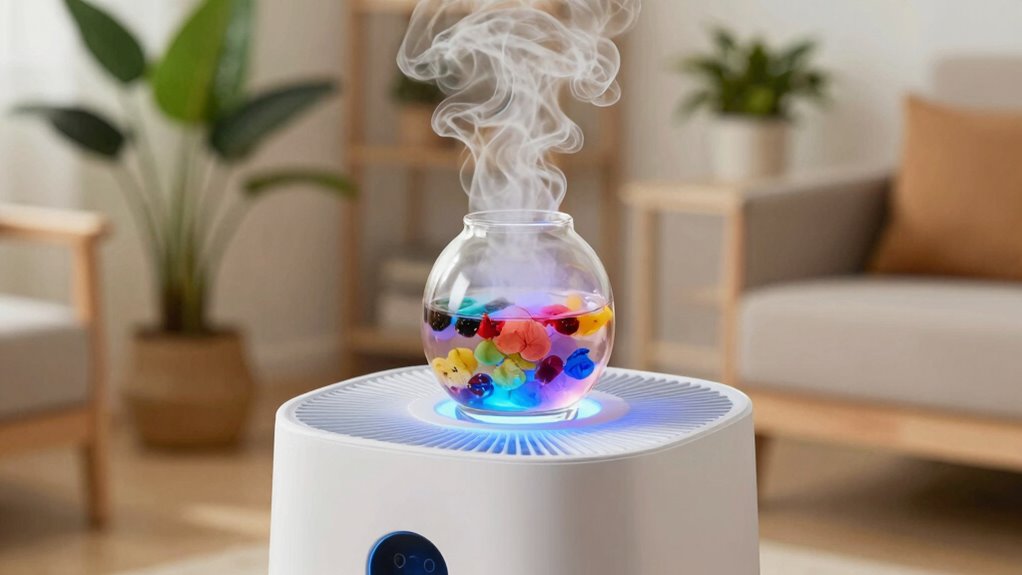
When you add essential oils to indoor air, they don’t just create a pleasant scent—they also interact with the air and your air filtration systems in complex ways. Diffuser safety is vital because certain oils can cause buildup on filters, reducing their effectiveness. Over time, oil particles can coat filter components, impacting oil longevity and making filters less efficient at trapping airborne contaminants. This buildup may lead to decreased airflow and increased strain on HVAC systems. Consider the type of filter you use; some are more resistant to oil accumulation. Regularly cleaning or replacing filters can help maintain air quality. Additionally, understanding filter compatibility can help you choose the right system to minimize issues. Be mindful of how diffusing oils influences your indoor environment and equipment to avoid unintended consequences that could compromise both health and system performance.
What Are the Health and Equipment Risks of Diffusing Essential Oils?
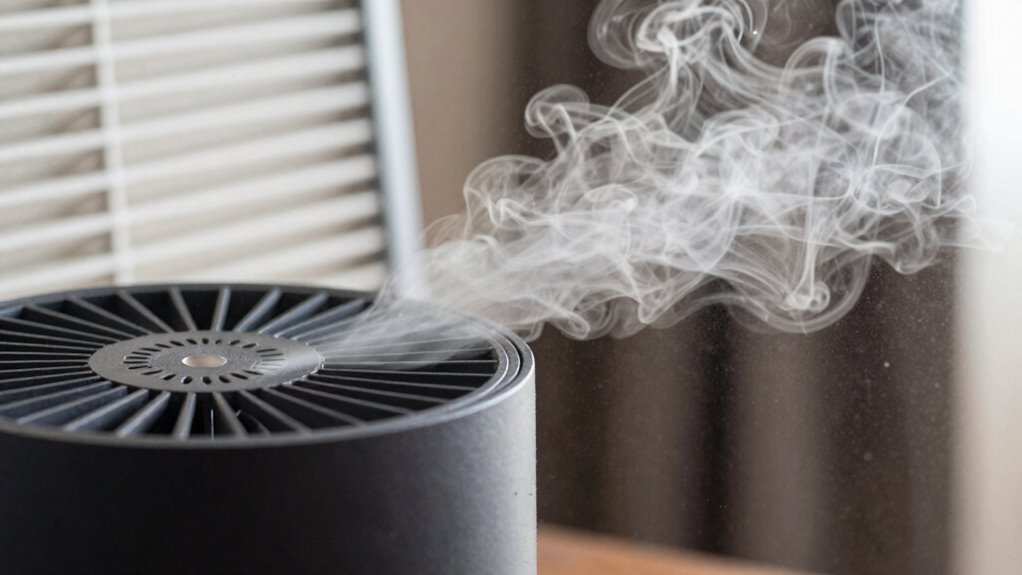
Diffusing essential oils can cause respiratory irritation or trigger allergic reactions, especially for sensitive individuals. It also risks contaminating your air filters, potentially reducing their effectiveness. Being aware of these risks helps you use essential oils safely and maintain your equipment properly. Additionally, understanding the importance of craftsmanship and design in your air filtration systems can help ensure their durability and optimal performance over time.
Respiratory Irritation Risks
While many people enjoy the soothing scent of essential oils, diffusing them can pose health risks, especially to those with sensitive respiratory systems. Inadequate air quality management can lead to inhaling concentrated oil particles, causing irritation or inflammation of your airways. Aromatherapy safety practices recommend limiting exposure and using proper diffuser settings, but even small amounts can trigger coughing, wheezing, or asthma symptoms in vulnerable individuals. Additionally, certain oils release volatile compounds that irritate mucous membranes and exacerbate respiratory issues. If your home has poor ventilation or you use air filters that trap oil particles, these risks increase. Proper air quality management is essential to minimize potential health hazards associated with diffusing essential oils, especially if members of your household have pre-existing respiratory conditions.
Filter Contamination Potential
Have you considered how essential oils can contaminate your air filters over time? When diffusing oils, absorption into filter materials varies based on filter material compatibility. Some filters, especially those not designed for oil absorption, can trap oils within their fibers, leading to contamination. Over time, this buildup can impair filter efficiency, allowing unfiltered particles to circulate and potentially harm your health. Additionally, residual oils can promote microbial growth, creating new air quality issues. If your filter material isn’t compatible with essential oils, it may degrade or become clogged more quickly. Regularly replacing or inspecting filters is essential to prevent contamination. Understanding your filter’s material and its capacity to resist oil absorption helps you avoid equipment damage and maintain healthy indoor air quality. European cloud innovation can offer sustainable solutions for air quality monitoring devices to detect such contamination issues early.
Allergic Reactions Increase
Residual essential oils trapped in air filters can pose health risks by increasing allergic reactions for sensitive individuals. Over time, these oils can accumulate and intensify scent intensity, triggering allergic responses such as sneezing, coughing, or skin irritation. If you don’t use proper dilution methods, the concentrated oils can become more potent, worsening these reactions. When diffusing essential oils, it’s vital to consider how scent intensity impacts allergies, especially if you or others in your space have sensitivities. Poor ventilation or high concentrations can cause symptoms to escalate. Regularly replacing or cleaning filters helps reduce residual oils and minimizes allergic risks. Recognizing the importance of Free Floating oils in the environment can help you better understand how they behave and affect air quality. Being mindful of dilution methods and scent strength helps prevent allergic reactions and protects both your health and your equipment.
How Can You Tell If Your Air Filter Is Damaged by Essential Oils?
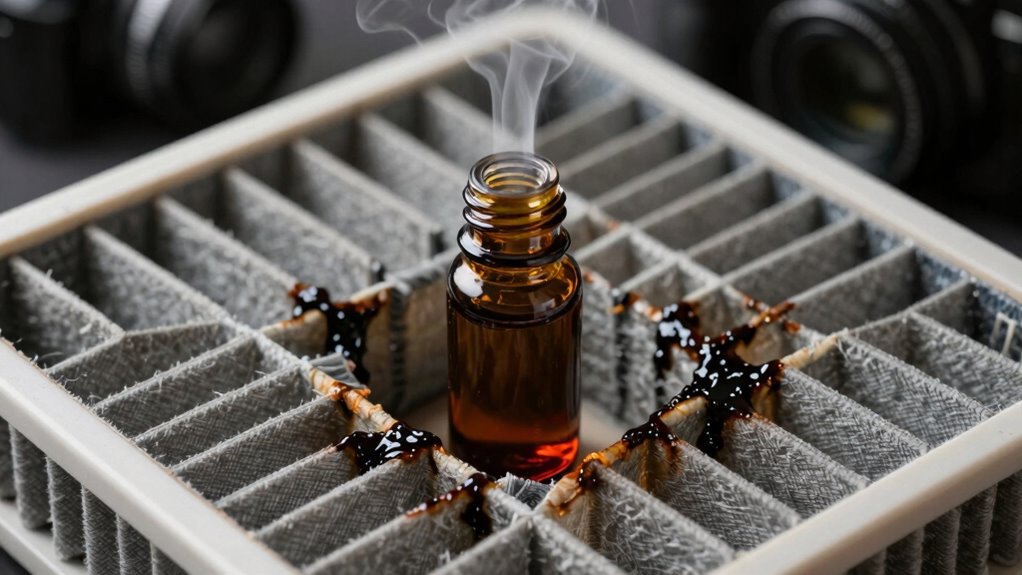
Essential oils can sometimes cause visible damage to your air filter, making it important to recognize the signs early. If your filter’s lifespan shortens unexpectedly or you notice a persistent oil residue, these could indicate damage. Damaged filters often appear clogged or discolored, with a greasy film that’s hard to remove. Check for unusual odors or reduced airflow, which signal that essential oils have compromised the filter’s integrity. Being aware of caregiving challenges like this can help you maintain a safe environment for your loved ones.
Can Diffusing Essential Oils Harm Your Respiratory Health?
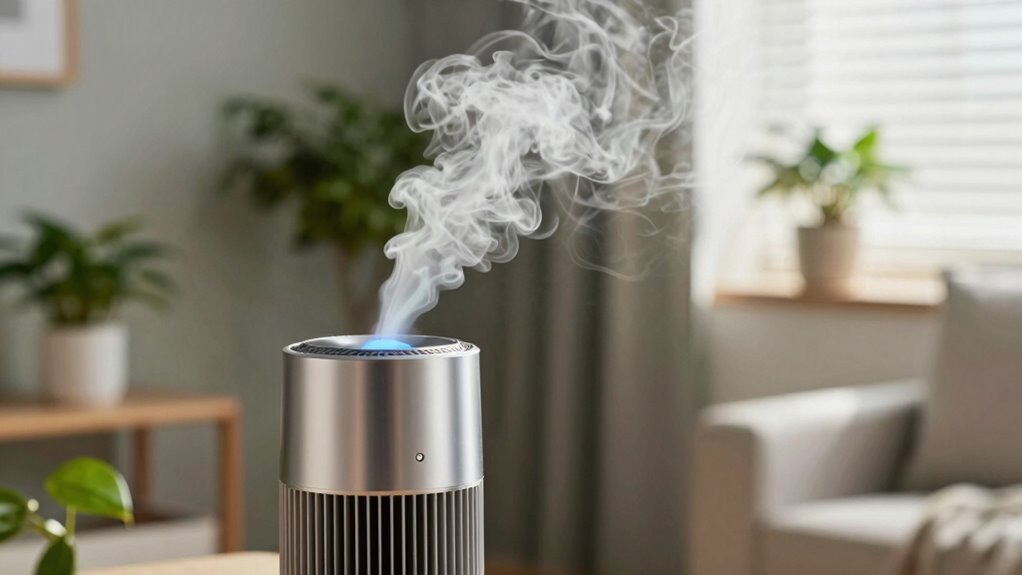
While using diffusers to enjoy the aroma of essential oils can create a calming environment, it’s important to contemplate how they might affect your respiratory health. Some essential oils can trigger reactions if you have essential oil allergies, leading to coughing, wheezing, or shortness of breath. Additionally, diffusing oils that contain synthetic fragrances may worsen respiratory issues or irritate sensitive lungs. If you have pre-existing respiratory conditions or are prone to allergies, diffusing essential oils could exacerbate symptoms. It’s essential to be cautious and monitor your response when introducing new oils into your space. Always choose high-quality, pure oils and diffuse in well-ventilated areas to reduce potential risks to your respiratory health. Furthermore, understanding respiratory reactions associated with diffusing certain oils can help you make safer choices.
What Are Safe Ways to Use Essential Oils Indoors?
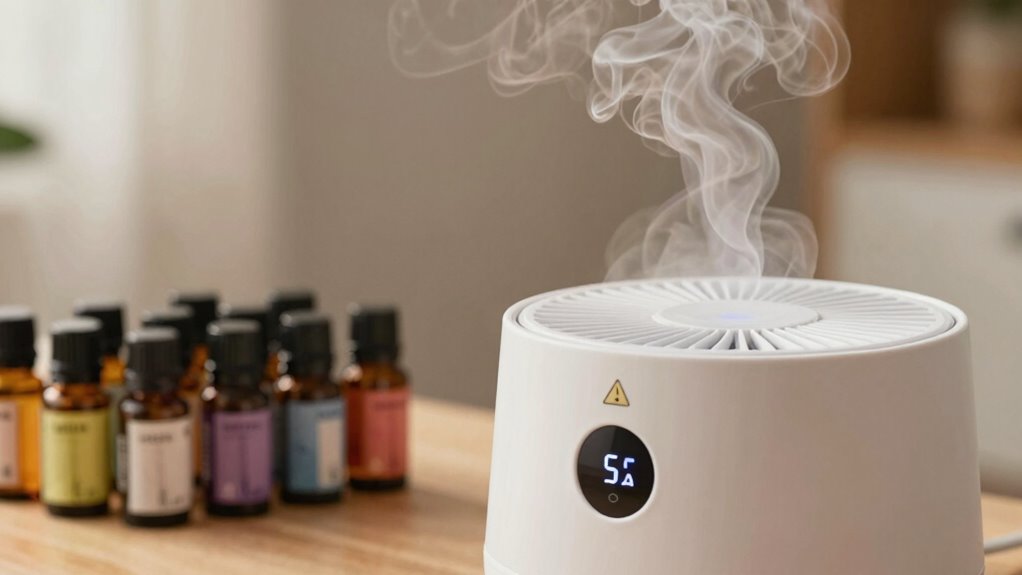
To guarantee you enjoy the benefits of essential oils safely indoors, you should choose appropriate application methods and follow best practices. Start with proper oil dilution to prevent overwhelming your space or irritating your respiratory system. Never apply undiluted oils directly to the skin or surfaces. When diffusing, consider diffuser placement carefully—place it on a stable surface away from walls, curtains, or areas where it could be knocked over. Keep the diffuser in well-ventilated rooms and avoid overdiffusing; a few drops of oil and intermittent use are usually enough. Regularly clean your diffuser to prevent mold and buildup. Additionally, be mindful of your air quality, as essential oils can impact indoor air if not used properly. By following these tips, you can enjoy the aromatic benefits of essential oils safely without risking adverse reactions or air quality issues.
How Do Different Air Filter Materials Handle Essential Oils?
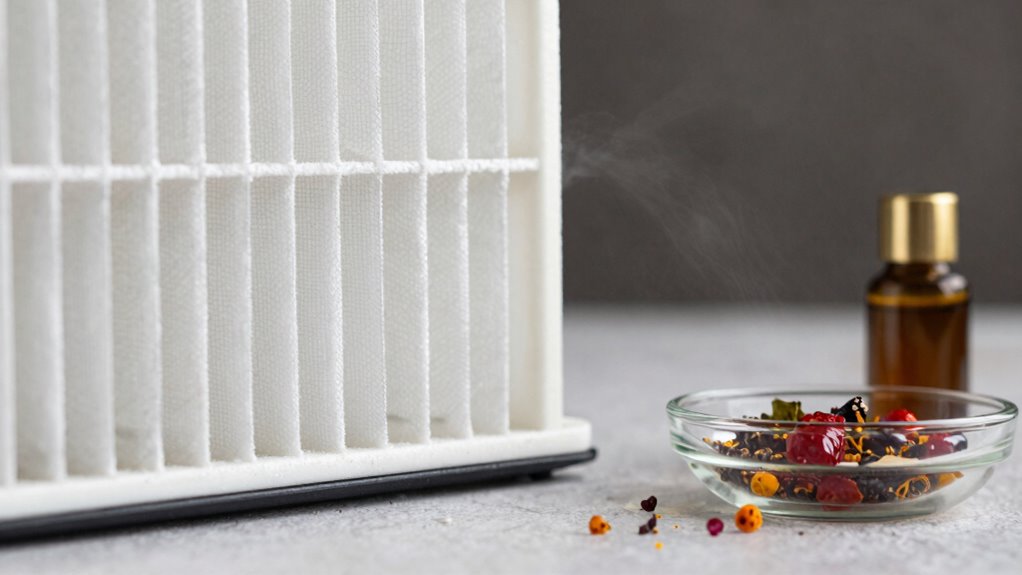
Different air filter materials respond uniquely to essential oils, affecting their ability to capture and neutralize airborne particles. Some filter materials, like activated carbon, excel at oil absorption, effectively trapping oils and reducing odors. HEPA filters, on the other hand, primarily target particles but may struggle with essential oils that can clog or degrade their fibers over time. Fiberglass filters are less effective because they lack oil absorption properties, allowing oils to pass through or settle on the surface. Synthetic filters can vary, depending on their composition, with some resistant to oil buildup. Understanding filter capabilities and the way each material handles essential oils helps you choose the right filter for your needs and prevents potential damage caused by oil accumulation.
What Should You Do if You Experience Respiratory Issues From Essential Oils?
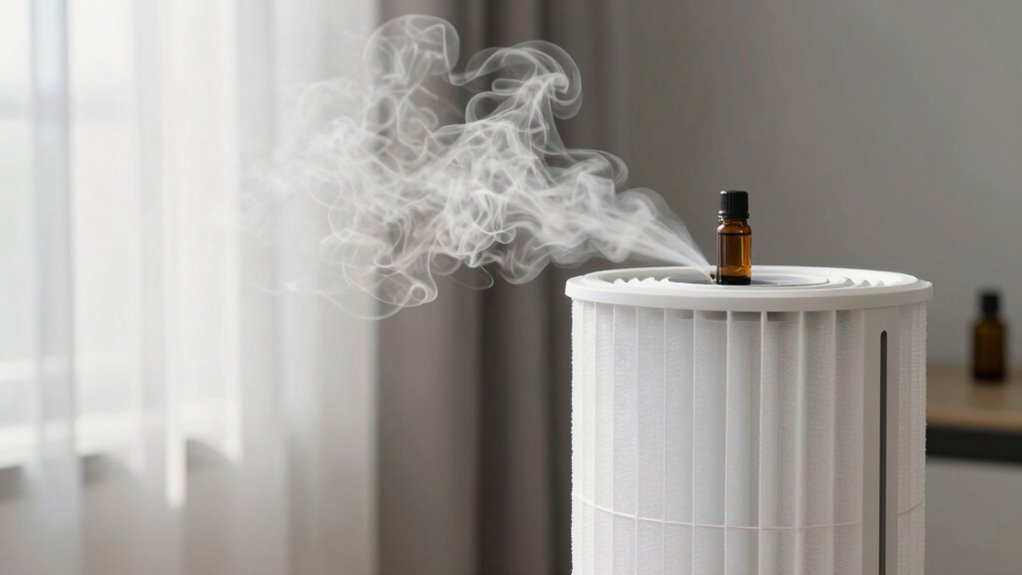
If you notice any difficulty breathing or irritation after using essential oils, stop using them immediately. It’s important to seek medical advice to address your symptoms and guarantee your safety. Don’t ignore respiratory issues; prompt action can prevent more serious problems.
Seek Medical Advice
When you notice respiratory issues after using essential oils, it’s imperative to seek medical advice promptly. Respiratory symptoms can indicate a serious reaction, so don’t ignore them. Be clear about your exposure to essential oils and how they were diffused, as this helps healthcare providers assess the situation accurately. If you experience persistent coughing, wheezing, or shortness of breath, visit a healthcare professional immediately. Remember, aromatherapy safety is essential, and oil diffusion methods can sometimes trigger adverse reactions. Avoid trying to treat symptoms yourself with over-the-counter remedies without medical guidance. Prompt medical attention ensures you get the appropriate treatment and helps prevent further complications. Your health should always come first—don’t delay if symptoms worsen or fail to improve.
Discontinue Use Immediately
As soon as you notice respiratory issues after using essential oils, you should stop using them immediately. Continuing to inhale or apply them can worsen your symptoms. Remove any diffusers, air filters, or products containing essential oils from your environment. Instead of relying on DIY remedies that might not be safe or effective, focus on calming your breathing and seeking medical advice if symptoms persist. During recovery, consider using fragrance alternatives like unscented candles or natural plant-based air purifiers that don’t trigger your symptoms. Avoid strong scents until your respiratory health improves. Remember, your safety comes first—discontinuing use at the first sign of trouble helps prevent further complications and ensures you get the appropriate treatment.
Frequently Asked Questions
Are There Specific Essential Oils That Are Safer to Use With Air Filters?
Yes, you can choose safe oils like lavender, chamomile, or eucalyptus, as they tend to produce fewer volatile compounds that might clog filters or cause reactions. Always dilute essential oils properly and use them in moderation. Avoid oils with strong, pungent scents or known irritants, as their volatile compounds can damage filters or compromise air quality. Testing small amounts first helps guarantee safety and avoids potential issues.
How Often Should I Replace or Clean My Air Filter After Diffusing Oils?
You should replace or clean your air filter every 4 to 6 weeks after diffusing oils to maintain ideal Air filter lifespan. Diffusing essential oils can cause Oil residue buildup, which clogs filters and reduces efficiency. Regularly check for visible buildup or decreased airflow, and clean or replace the filter as needed. This proactive approach helps prevent damage and keeps your indoor air fresh and healthy.
Can Essential Oils Cause Long-Term Damage to HVAC Systems?
Essential oils *can* cause long-term damage to your HVAC system if you’re not careful, threatening its lifespan like a ticking time bomb. Over time, oil buildup can clog filters and damage components, drastically reducing HVAC longevity. To protect your system, make certain of oil compatibility, use minimal diffusing, and clean or replace filters regularly. Ignoring this could turn your trusted HVAC into a costly, non-functioning relic.
Are Certain Air Filter Materials More Resistant to Essential Oil Damage?
Certain air filter materials are more resistant to essential oil damage. Look for filters with high-quality, oil-resistant filter material, such as electrostatically charged synthetic fibers or metal mesh filters. These materials are less likely to degrade or clog when exposed to essential oils. Always check the manufacturer’s specifications for oil resistance, and avoid using filters made from porous or natural fibers that can absorb oils and deteriorate over time.
What Signs Indicate My Air Quality Is Deteriorating From Oil Diffusion?
If your air quality declines, you’ll notice unusual odors or a persistent chemical smell, which are common oil diffusion symptoms. You might also experience increased dust or allergens circulating, and your filters may become clogged or emit a strange scent. These signs indicate that oil diffusion is affecting your air quality. To improve the situation, reduce essential oil use near filters and ensure proper ventilation to mitigate oil buildup.
Conclusion
To keep your indoor air safe and healthy, don’t put all your eggs in one basket. While essential oils and air filters might seem like a perfect pair, they can backfire if you’re not careful. Stay informed, use oils sparingly, and pay attention to how your equipment reacts. It’s better to be safe than sorry—your lungs and your air filter will thank you for it.
Halloween Picks
halloween
As an affiliate, we earn on qualifying purchases.