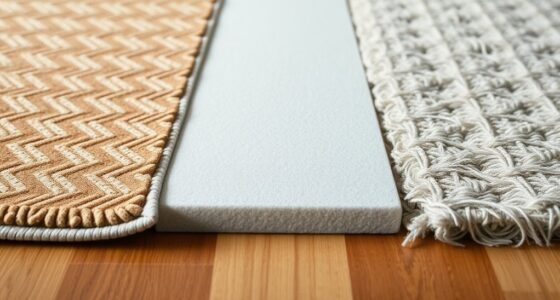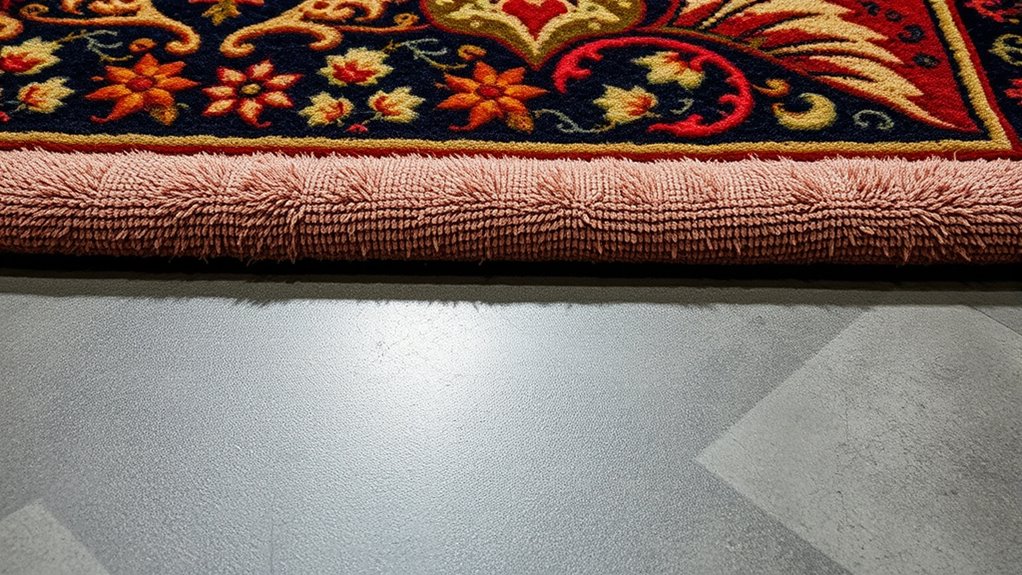

To protect your basement rugs from moisture, you should install a quality moisture barrier such as polyethylene sheets or liquid waterproofing membranes. This barrier prevents ground moisture from seeping upward and damaging your rugs, mold, or mildew. Proper installation and regular inspections are key to maintaining its effectiveness long-term. If you want to learn which barriers work best and how to install them correctly, continue exploring the options available.

Get furniture and decor delivered free — and shop member deals
- Fast, free delivery on millions of items
- Access to Prime Big Deal Days deals on October 6–7
- Prime Video, Amazon Music and more included
Key Takeaways
- Moisture barriers block ground moisture, preventing it from seeping into rugs and causing damage or mold growth.
- Selecting durable, compatible materials like polyethylene or liquid membranes ensures effective protection for basement rugs.
- Proper installation—covering the entire area, sealing seams, and extending walls—maximizes barrier effectiveness.
- Regular inspections and maintenance help detect and repair damage, maintaining continuous moisture protection.
- Combining barriers with proper ventilation reduces humidity, further safeguarding rugs from moisture-related deterioration.
Understanding Moisture Problems in Basement Environments
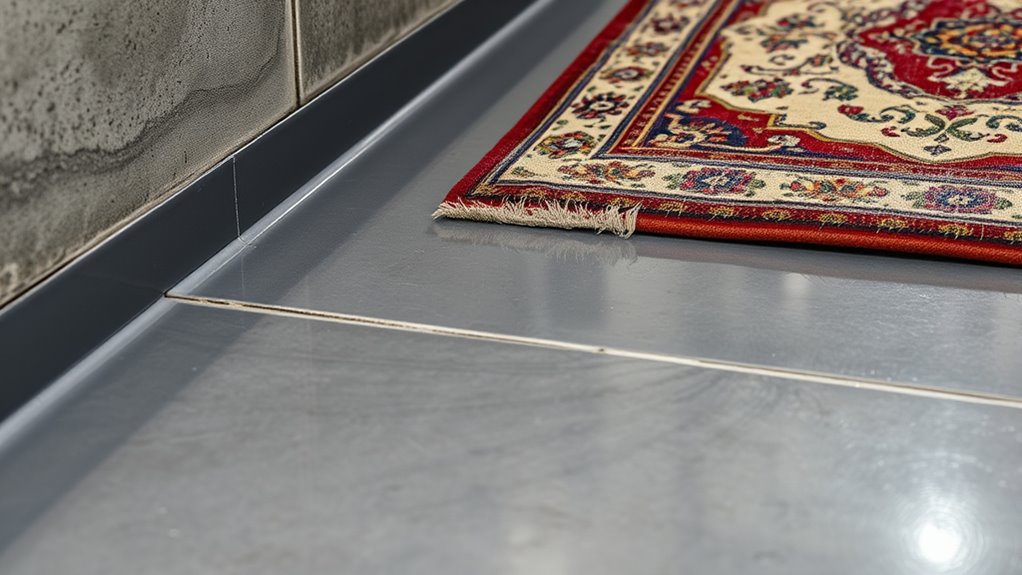
Basements are prone to moisture issues because they are often in direct contact with the ground, which naturally contains water. This exposure makes humidity control essential to prevent excess moisture buildup. Poor ventilation strategies can trap damp air, leading to mold growth and musty odors. To keep moisture levels in check, you should improve airflow with vents or exhaust fans, especially in humid seasons. Using a dehumidifier can help maintain consistent humidity, reducing the risk of condensation and dampness. Proper ventilation not only removes excess moisture but also helps circulate fresh air, preventing stale, damp environments. Additionally, understanding how filtration systems can capture allergens and fine dust helps in maintaining a healthier basement environment. By understanding how moisture enters and persists, you can implement effective humidity control measures, creating a drier, healthier basement. Implementing moisture barriers on basement floors and walls can further prevent ground moisture from seeping in and causing damage or dampness. Moreover, selecting appropriate construction materials can significantly reduce the likelihood of moisture problems over time. Incorporating modern moisture detection technology can also assist in early identification and mitigation of potential issues.
Types of Moisture Barriers Available for Basements
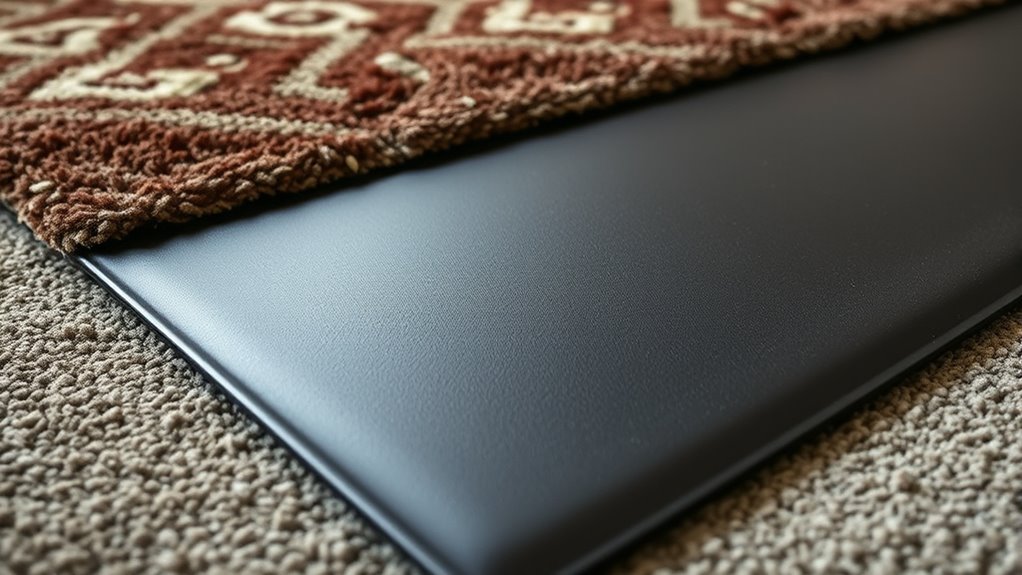
When choosing a moisture barrier for your basement, you have several options tailored to different needs and budgets. Each type offers unique benefits and considerations:
- Polyethylene Sheets – Affordable and easy to install, these come in various thicknesses and color options, making them versatile.
- Liquid Waterproofing Membranes – Applied as a coating, they provide seamless protection but can be more costly.
- Rubberized Asphalt – Durable and flexible, ideal for high-moisture areas, with moderate cost considerations.
- Vapor Barriers with Reinforced Fabric – Combine strength with ease of installation, usually available in different colors and at a mid-range price.
Your choice depends on your budget, aesthetic preferences, and specific moisture issues in your basement.
How Moisture Barriers Work to Protect Your Rugs
Moisture barriers work by blocking water from reaching your rugs, keeping them dry and safe. They create a protective layer that prevents moisture from seeping through the floor. As a result, your rugs stay in good condition and last longer. Regular inspection of the barrier ensures it remains effective against moisture infiltration, especially as new AI security challenges emerge that could compromise their integrity. Additionally, maintaining high vibrational energy around your space can support the overall protection of your belongings. Proper installation and periodic checks are essential to ensure the barrier remains intact and continues to provide optimal defense against water damage.
Barriers Block Moisture
Ever wonder how moisture barriers keep your rugs safe from water damage? They work by blocking moisture from seeping through the concrete and into your basement. Here’s how they do it:
- They reduce vapor transmission, preventing water vapor from reaching your rugs. HEPA filter technology can help improve indoor air quality, reducing pollutants that might contribute to mold growth. Incorporating moisture control methods enhances the effectiveness of these barriers. Using essential oils with antimicrobial properties may also support a healthier environment.
- They help control humidity levels, creating a drier environment.
- They form a barrier that stops ground moisture from rising.
- They act as a shield, minimizing the risk of mold and mildew growth.
- Additionally, they contribute to a stable indoor environment by managing moisture levels effectively for a farmhouse bedroom.
Prevents Rug Damage
By blocking ground moisture from reaching your basement, moisture barriers directly protect your rugs from water damage. Without this barrier, rugs can warp, stain, or develop mold, ruining their appearance and durability. With a moisture barrier in place, you can choose from various rug color options and decorative rug patterns that match your style, knowing they’ll stay beautiful longer. Protecting your investment means your rugs remain vibrant and intact, preserving the comfort and aesthetic of your space.
| Rug Style | Emotional Impact |
|---|---|
| Bright, bold colors | Uplift your mood every day |
| Elegant patterns | Create a welcoming, stylish home |
| Soft textures | Feel cozy and relaxed |
| Unique designs | Express your personal taste |
Factors to Consider When Choosing a Moisture Barrier
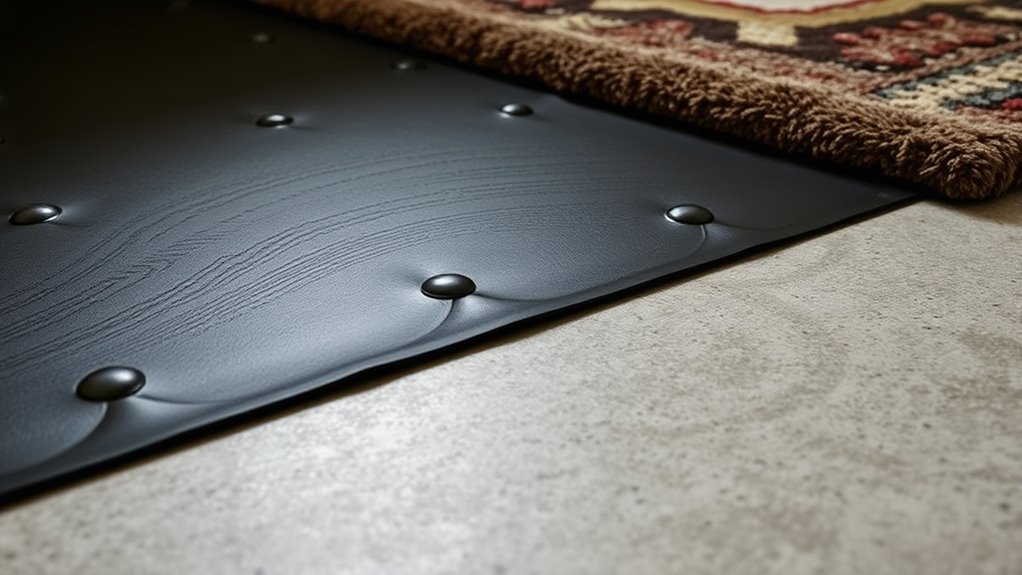
When choosing a moisture barrier, you need to consider how effective the material is at blocking moisture and whether it suits your specific needs. Compatibility with your installation area is also vital to guarantee a proper fit and long-lasting protection. By focusing on these factors, you’ll pick a barrier that works best for your space. Ensuring the use of a shower base that complements your moisture barrier can further enhance your bathroom’s waterproofing. Additionally, understanding the exfoliating properties of certain materials can help in selecting a barrier that promotes a cleaner and more durable surface over time. Incorporating remotely hosted hackathons can provide innovative solutions for waterproofing challenges by engaging diverse teams in creative problem-solving. Selecting a moisture barrier made from engineered materials designed to withstand environmental conditions can significantly improve its longevity and performance.
Material Effectiveness
How do you determine if a moisture barrier will effectively protect your space? First, evaluate its material durability to ensure it withstands prolonged exposure to moisture without tearing or degrading. Next, consider barrier flexibility; a flexible barrier adapts easily to surface contours and prevents gaps. Third, check for resistance to punctures or tears, which can compromise protection. Fourth, verify that the material is compatible with your flooring and other materials in your basement. A high-quality moisture barrier combines strong material durability with ample barrier flexibility, providing reliable protection against moisture intrusion. Additionally, ensuring the barrier has proper installation techniques can significantly enhance its effectiveness in keeping your basement dry and your rug protected over time. Incorporating advanced moisture protection methods can further improve resilience and extend the lifespan of your barrier. Proper ventilation also plays a vital role in reducing moisture buildup and ensuring the barrier functions optimally. Understanding how to select the right moisture barrier involves considering material properties, which directly impact its performance and longevity.
Installation Compatibility
Choosing a moisture barrier that fits your installation setup is essential for effective protection. You need to factor in installation compatibility to guarantee the barrier works seamlessly with your existing flooring and foundation. Some barriers are designed for specific applications, so verify if the product can handle vapor transmission rates typical of basement environments. Proper installation prevents gaps or overlaps that could compromise protection against moisture. Additionally, check if the barrier is compatible with your rug type and subfloor, whether it’s concrete or wood. Ensuring the barrier’s flexibility and ease of installation can save time and reduce errors. Considering the material compatibility of the moisture barrier with your subfloor and flooring materials is crucial to ensure long-term effectiveness. It is also beneficial to evaluate the attention to detail during installation, as meticulous placement reduces the risk of moisture intrusion. Ensuring the barrier provides adequate vapor transmission control, especially in areas prone to high humidity, is vital for maintaining a dry basement environment. Ultimately, selecting a moisture barrier that aligns with your installation needs guarantees ideal vapor transmission control and long-term protection for your rugs and basement space.
Installation Tips for Effective Moisture Barrier Use
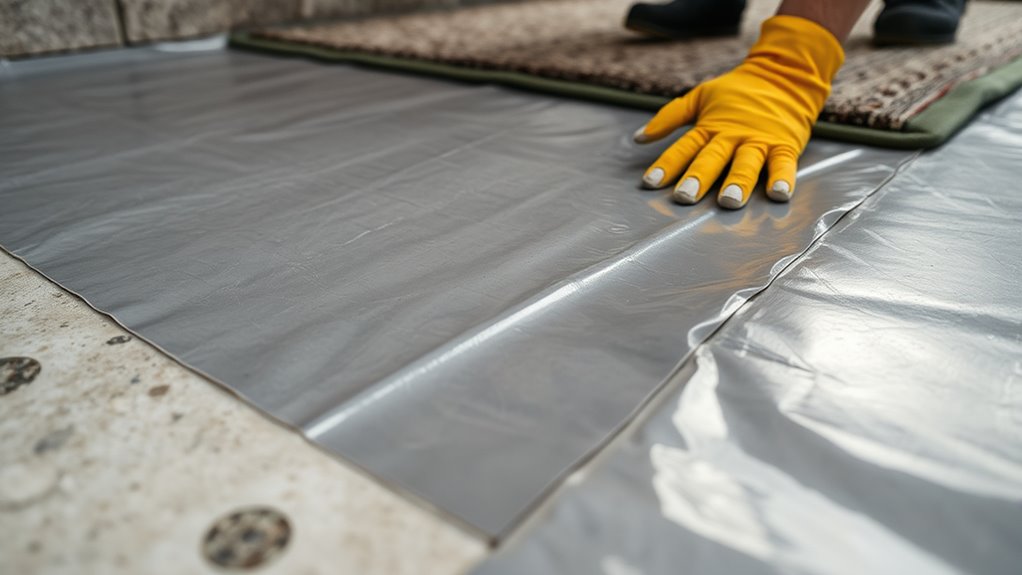
Proper installation is crucial to ensuring your moisture barrier performs effectively. To do this, focus on proper barrier placement and sealing techniques. First, lay the barrier flat on a clean, dry surface, avoiding wrinkles or folds. Second, ensure the barrier extends at least 6 inches up the walls, sealing it securely to prevent moisture entry. Third, use a high-quality sealant along all seams and edges to reinforce the barrier. Fourth, avoid cutting or puncturing the barrier during installation; if necessary, patch holes with compatible tape or adhesive. Proper barrier placement minimizes gaps, while effective sealing techniques prevent moisture intrusion. Taking the time to install carefully ensures your moisture barrier protects your basement rug investment long-term.
Maintaining and Inspecting Your Moisture Barrier Over Time
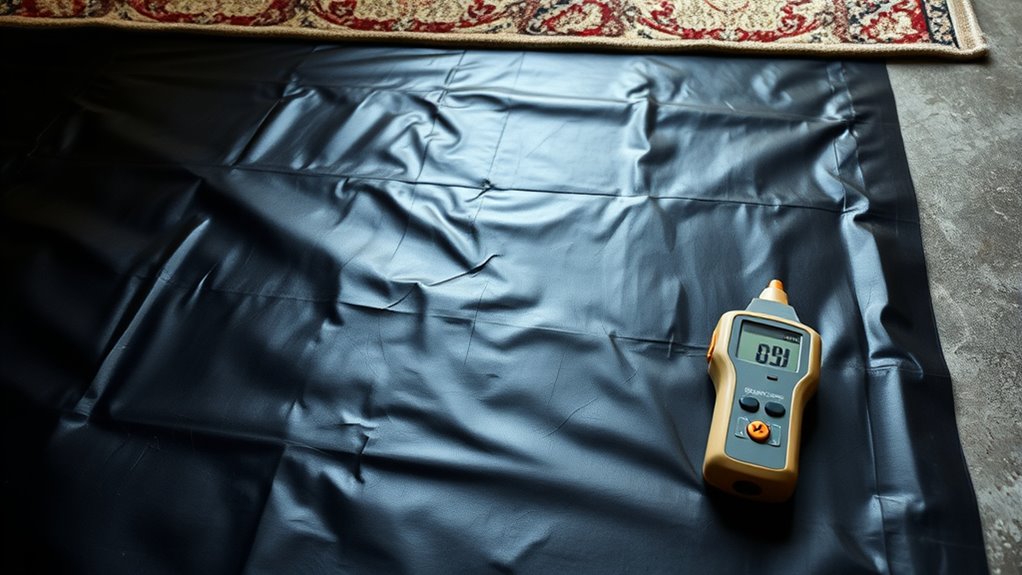
Regularly inspecting your moisture barrier is essential to guarantee it continues to protect your basement effectively. Conduct routine inspections at least twice a year, especially after heavy rains or flooding. Look for signs of damage, tears, or gaps that could compromise its integrity. Moisture testing helps identify hidden issues; use a moisture meter to check for dampness beneath the barrier or in nearby walls. If you notice any moisture intrusion or deterioration, repair or replace the barrier promptly. Keeping the barrier in good condition prevents mold growth, odor, and structural damage to your rugs and basement. Consistent maintenance ensures your moisture barrier remains a reliable line of defense against basement moisture problems over time.
Frequently Asked Questions
How Often Should I Replace My Basement Moisture Barrier?
You should replace your basement moisture barrier every 10 to 15 years, depending on its condition. Regular maintenance is key, so inspect it annually for tears, mold, or damage. Follow installation tips carefully when installing or replacing to make sure it’s effective. A good maintenance schedule includes cleaning it and checking for moisture issues regularly, helping to prolong its lifespan and keep your basement dry and protected.
Are There Eco-Friendly Moisture Barrier Options Available?
Thinking about greener choices, you’ll find eco-friendly moisture barrier options that use eco-friendly materials and biodegradable solutions. These options help you protect your basement rugs while respecting the environment. Many brands now offer sustainable products made from recycled or natural fibers, reducing your carbon footprint. By choosing these eco-conscious barriers, you’re making a positive impact, ensuring your space stays dry without compromising your commitment to sustainability.
Can Moisture Barriers Be Installed Over Existing Rugs?
You can install a moisture barrier over existing rugs, but you need to consider rug compatibility first. Not all barriers work well with thick or plush carpets, so check manufacturer guidelines. For smooth installation, ensure the surface is clean and flat, and use proper tools. Follow installation tips like overlapping seams and sealing edges to prevent moisture intrusion. This way, you protect your space effectively without removing your current rug.
What Are the Signs of Moisture Barrier Failure?
Back in the day, folks relied on good instincts, but now you need signs of moisture barrier failure. If you notice persistent dampness, mold, or a musty smell, your vapor transmission isn’t doing its job. High humidity control issues can lead to water seepage, and if you see peeling or bubbling under your rug, it signals moisture is getting through. Keep an eye on these signs to protect your space.
How Do I Prevent Mold Growth Beneath the Moisture Barrier?
To prevent mold growth beneath a moisture barrier, you should prioritize mold prevention and barrier maintenance. Regularly inspect the barrier for tears or gaps, and repair any damage promptly. Keep the area well-ventilated and control humidity levels below 60%. Use a dehumidifier if needed, and ensure proper drainage around your home. Proper barrier maintenance combined with moisture control creates an effective defense against mold growth underneath your rugs.
Conclusion
By choosing the right moisture barrier, you create a hidden shield beneath your rugs, guarding your basement from unseen dampness. Imagine your space as a cozy, dry sanctuary where your rugs stay vibrant and fresh, even when the basement below threatens to seep moisture. Regular inspections and proper installation keep this barrier strong, ensuring your home remains a warm, inviting haven. Protect your investment and enjoy the peace of mind that comes with a dry, comfortable basement retreat.
Halloween Picks
halloween
As an affiliate, we earn on qualifying purchases.