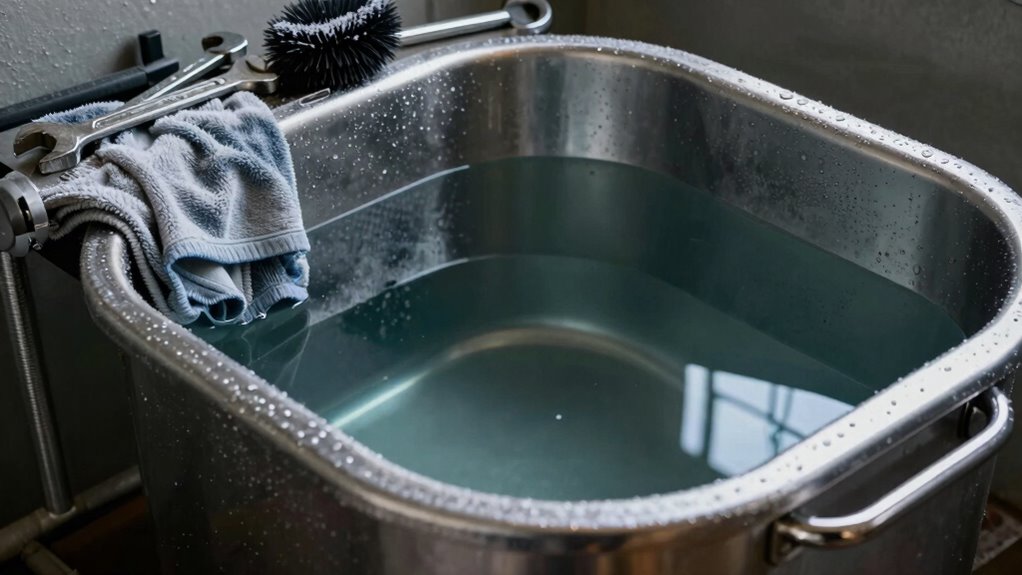
One maintenance step many people skip when setting up their cold plunge is regular water testing and basin cleaning. Skipping these tasks can lead to chemical imbalances, cloudy water, and bacteria growth, which damage the system and compromise safety. To keep your plunge working well and safe, you need to check pH and sanitizer levels regularly, clean filters, and scrub the basin. If you want to know the full maintenance routine, keep exploring these essential tips.
Key Takeaways
- Many skip regular water testing, risking chemical imbalance and water quality issues.
- Neglecting filter cleaning or replacement can lead to debris buildup and system damage.
- Overlooking basin scrubbing weekly allows algae and bacteria to proliferate.
- Failing to monitor and adjust pH and sanitizer levels causes cloudiness and irritation.
- Skipping routine maintenance prevents early detection of issues, leading to costly repairs later.
Why Regular Cleaning Keeps Your Cold Plunge Working Its Best
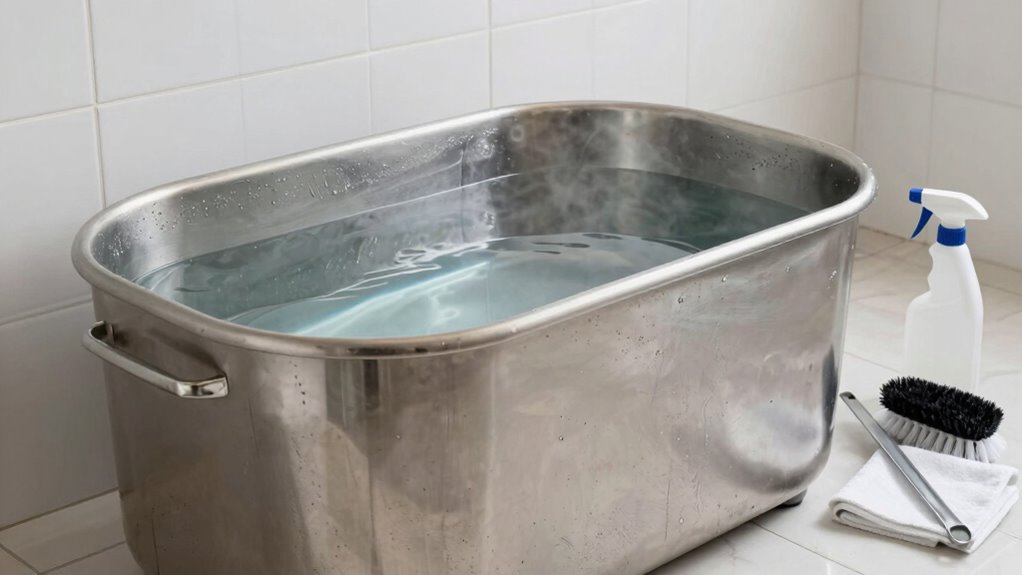
Regular cleaning is essential to keep your cold plunge functioning properly and to guarantee a safe, enjoyable experience every time you use it. Maintaining proper water chemistry is key; imbalanced pH levels or contaminants can cause skin irritation and damage the system. Regularly checking water chemistry ensures the water stays clear, safe, and comfortable. Equally important is filter maintenance; a clean filter efficiently removes debris, algae, and bacteria, preventing buildup that can clog the system. Neglecting these tasks can lead to poor water quality, increased wear on your equipment, and costly repairs. Incorporating connected equipment and apps can help monitor water quality in real-time, making maintenance easier and more effective. By establishing a routine for cleaning and filter upkeep, you ensure your cold plunge remains in ideal condition, extending its lifespan and providing a hygienic, invigorating experience each time you dip in.
How to Properly Sanitize Your Cold Plunge in Simple Steps
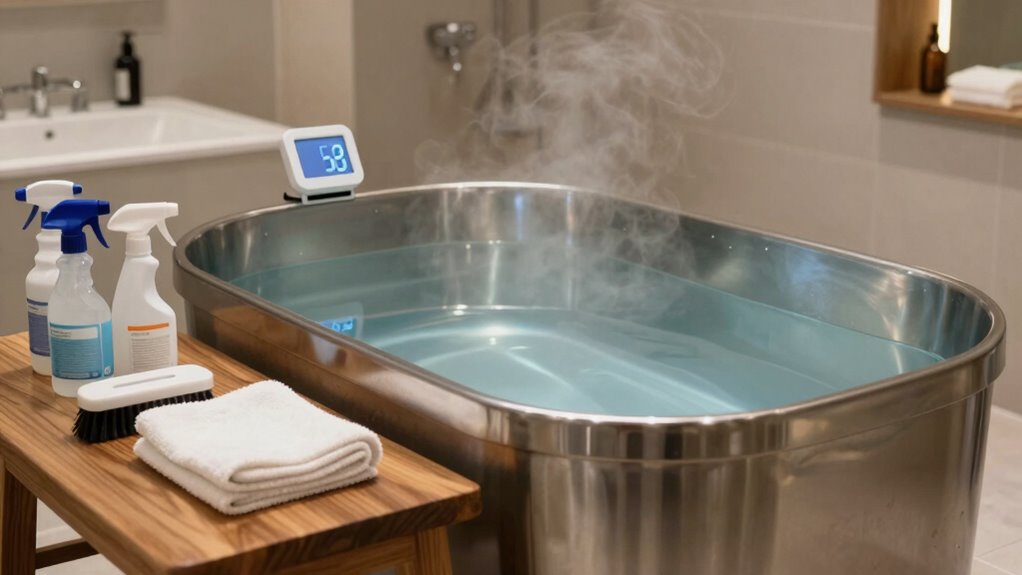
Keeping your cold plunge clean is essential for safety and performance. You should follow a regular cleaning routine and choose safe sanitizers to prevent bacteria buildup. Let’s look at simple steps to make certain your cold plunge stays sanitized and ready for use. Regularly inspecting and cleaning filters will help maintain optimal water quality, especially when considering air quality considerations that impact overall hygiene.
Regular Cleaning Routine
To guarantee your cold plunge stays clean and safe to use, you should establish a consistent sanitizing routine. Regular cleaning helps maintain water filtration and keeps the chemical balance in check. Start by draining and scrubbing the basin weekly, removing any debris or algae buildup. Check and adjust pH levels to prevent corrosion or scaling. Use appropriate cleaning agents that won’t harm your equipment. Incorporate simple tools like BTU and CADR quick‑calculators to assess the effectiveness of your filtration and purification efforts. Keeping a regular schedule ensures your cold plunge remains hygienic and safe, reducing the risk of bacteria and maintaining ideal water quality.
Use Safe Sanitizers
After cleaning your cold plunge basin, applying a safe sanitizer is key to ensuring your water remains hygienic. Use appropriate pool chemicals designed for cold water to kill bacteria and prevent algae growth. Follow the manufacturer’s instructions for dosing, and always add sanitizer after filtering or water testing. Regular water testing helps you maintain proper sanitizer levels, preventing over or under-chlorination. This process is essential for sustainable cloud solutions and maintaining water quality. Be cautious with chemicals, and avoid mixing different pool chemicals, which can create dangerous reactions. Consistently sanitizing your cold plunge not only protects your health but also extends the lifespan of your equipment. Remember, proper water testing and the right pool chemicals are essential for maintaining a clean, safe, and inviting cold plunge.
Common Mistakes That Can Damage Your Water Quality
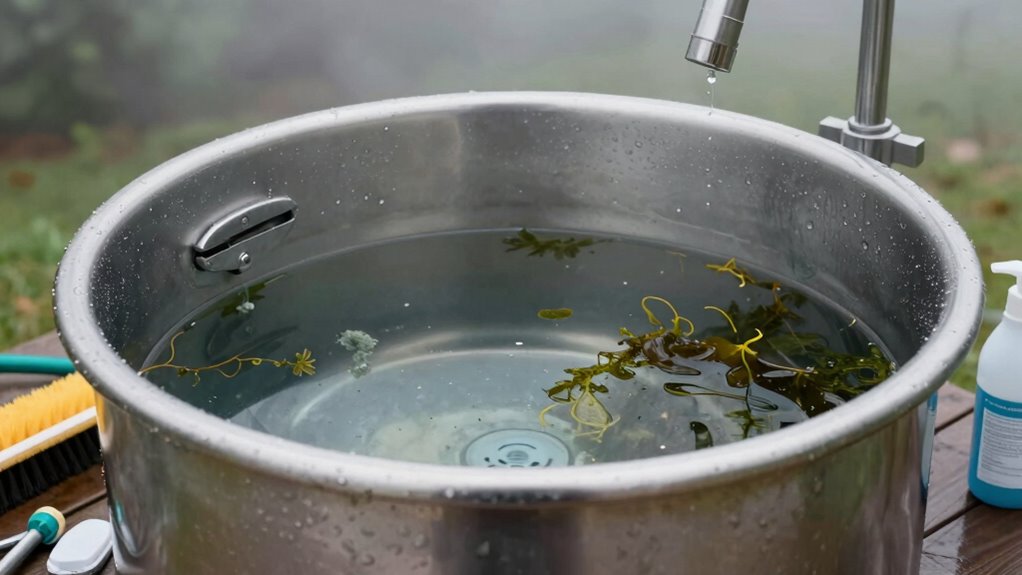
One of the biggest mistakes you can make is neglecting regular water testing, which can lead to unnoticed chemical imbalance and filter neglect. When you ignore testing, harmful bacteria and algae can thrive, compromising water quality. A chemical imbalance, like improper pH or sanitizer levels, can cause cloudy water, irritation, and equipment damage. Filter neglect worsens these issues by allowing debris and contaminants to circulate, making it harder to maintain clean water. Failing to monitor and adjust chemical levels or clean your filter regularly creates a cycle of poor water quality. Additionally, neglecting to use essential oils for water maintenance can help support overall water health and clarity. Avoid these mistakes by testing your water frequently and ensuring your filter functions properly. Staying vigilant helps prevent damage, keeps your cold plunge safe, and maintains an enjoyable experience.
How Often Should You Clean and Maintain Your Cold Plunge?

Regular water testing helps identify chemical imbalances and filter issues that can harm water quality. To keep your cold plunge safe and functional, follow a consistent maintenance schedule. Typically, you should clean and inspect your setup at least once a week. This includes draining and scrubbing the basin, checking the filter, and refilling with fresh water. Regular water testing guarantees proper chemical levels, preventing bacteria growth and odor. Consider these key tasks:
Regular weekly water testing and cleaning keep your cold plunge safe and odor-free.
- Test water chemistry weekly
- Clean the basin thoroughly
- Replace or clean filters regularly
- Refill with fresh water as needed
- Contrast ratio impacts the perceived sharpness and clarity of images, making it an important factor in maintaining visual quality.
Tips for Keeping Water Safe, Odor-Free, and Fresh
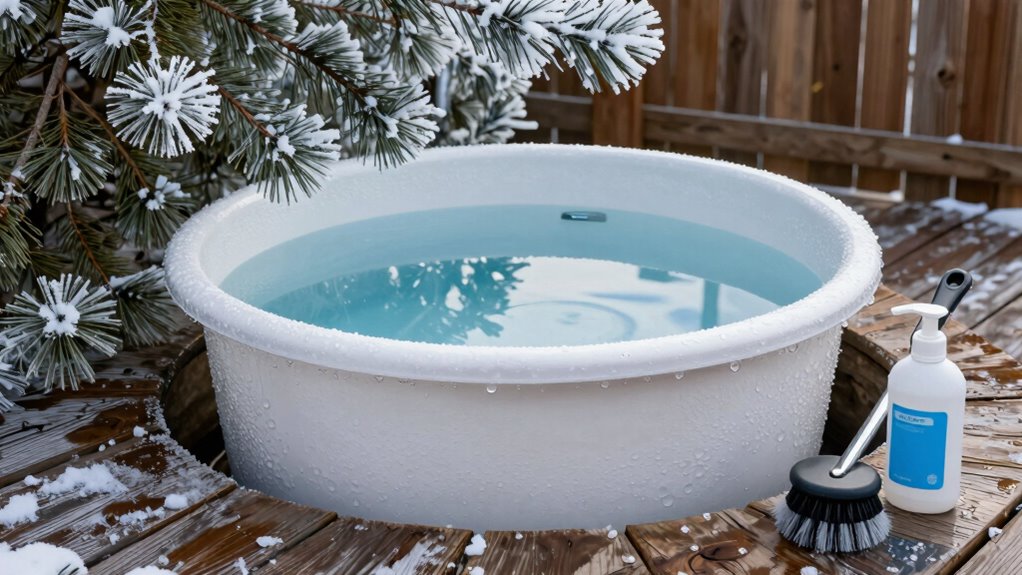
Keeping your cold plunge water safe, odor-free, and fresh requires consistent attention to water chemistry and cleanliness. Regularly check your water filtration system to ensure it’s functioning properly, removing debris and contaminants. Maintaining the correct chemical balance is essential; test the water frequently and adjust pH levels, sanitizer, and other chemicals as needed. Proper filtration and chemical balance work together to prevent bacteria buildup and eliminate foul odors. Avoid neglecting these steps, as unbalanced water chemistry can lead to cloudy, smelly water and potential health risks. Keep a routine of monitoring and adjusting your water treatment to ensure your plunge remains clean, safe, and inviting. Consistent upkeep will extend the life of your setup and provide a more enjoyable experience. Additionally, understanding pool terminology helps you troubleshoot issues more effectively and ensure your system operates optimally.
Troubleshooting Water Problems That Won’t Go Away
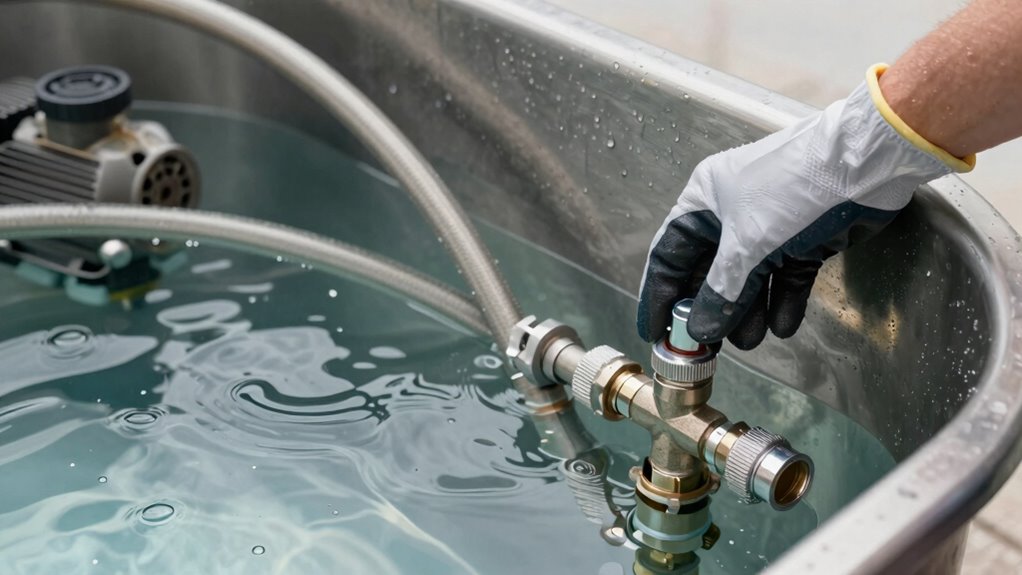
When persistent water problems occur in your cold plunge, troubleshooting becomes essential to restore clarity and safety. First, check for pH imbalance, as it can cause cloudy water and skin irritation. Adjust the pH levels with pH increasers or decreasers to maintain a balanced range. Second, if chlorine alternatives aren’t working, consider whether your sanitizer system needs reinforcement or replacement. Third, inspect filters and circulation pumps; dirty filters or poor circulation can cause water quality issues. Finally, regularly test water parameters and clean the basin thoroughly. Here are some tips to troubleshoot effectively:
Check pH, clean filters, and test regularly to keep your cold plunge water clear and safe.
- Balance pH levels regularly
- Use effective chlorine alternatives
- Clean filters and check circulation
- Test water frequently for clarity and safety
- Consider the impact of air quality on water maintenance, as poor air quality can introduce contaminants that affect water clarity and safety.
Frequently Asked Questions
Can I Use Household Cleaning Products in My Cold Plunge?
You shouldn’t use household cleaners in your cold plunge because they can introduce chemical risks. These products often contain harsh chemicals that aren’t designed for immersion pools and could cause skin irritation or damage the equipment. Instead, use cleaning solutions recommended by the manufacturer to guarantee your cold plunge stays safe and sanitary. Skipping proper cleaning can lead to bacteria buildup or corrosion, so always follow proper maintenance steps.
What’s the Best Way to Prevent Algae Growth?
To prevent algae growth, prioritize proper water circulation and regular cleaning. Consistently run your cold plunge’s pump to keep water moving smoothly, discouraging algae buildup. Add algaecide as directed, and keep the water balanced with appropriate pH and sanitizer levels. Periodically shock the water and scrub the sides to stop algae from starting. Staying diligent with these steps guarantees clear, clean, and algae-free immersion every time.
How Do I Know if My Sanitizer Is Effective?
You can tell if your sanitizer is effective by regularly testing your water with a reliable water testing kit. Keep an eye on the sanitizer levels; they should stay within the recommended range. If tests show low sanitizer levels or if the water appears cloudy or has an odor, it’s a sign you need to add more sanitizer. Consistent testing and maintaining proper sanitizer levels guarantee your plunge stays clean and safe.
Are There Signs Indicating My Cold Plunge Needs Professional Repair?
If your cold plunge needs professional repair, watch for diagnostic indicators like persistent foul odors, inconsistent temperature regulation, or unusual noises from the unit. Repair signs also include water leaks, error messages on the control panel, or failure to turn on altogether. If you notice any of these issues, it’s best to call a professional promptly to prevent further damage and guarantee your cold plunge operates safely and effectively.
How Can I Reduce the Frequency of Deep Cleanings?
Did you know that proper chemical balance can extend your cold plunge’s cleaning cycle by up to 50%? To reduce deep cleaning frequency, focus on maintaining the correct chemical levels regularly and keeping up with filter maintenance. These steps prevent buildup of bacteria and debris, minimizing the need for intensive cleanings. Consistent monitoring guarantees your plunge stays hygienic longer, saving you time and effort in the long run.
Conclusion
Think of your cold plunge as a loyal friend—you need to care for it regularly to keep it happy and healthy. Skipping maintenance is like ignoring a small leak that eventually floods your day. By staying consistent with cleaning and sanitizing, you’re not just preserving water quality—you’re ensuring every dip refreshes your body and mind. Don’t let neglect turn your oasis into a troublemaker; give your plunge the attention it deserves.