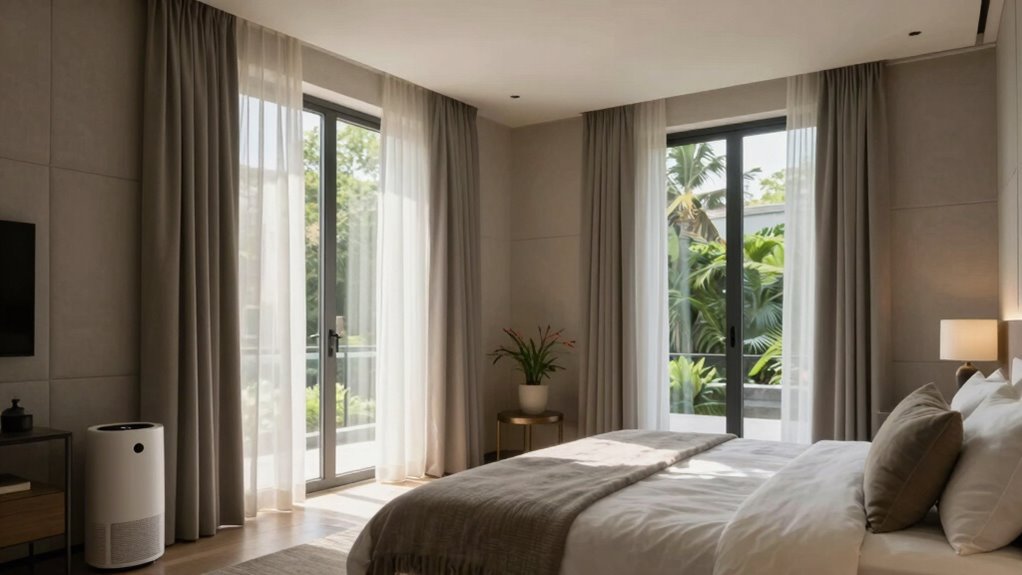

To create a healthier luxury bedroom, choose eco-friendly materials like organic cotton, bamboo, and sustainably sourced wood to improve air quality and reduce toxins. Incorporate smart, adjustable lighting that aligns with your circadian rhythms, and use soft, warm illumination in the evening to promote better sleep. Add natural, sound-absorbing textiles and eco-conscious insulation to minimize noise. By making thoughtful, responsible choices, you’ll craft a tranquil sanctuary—discover how to elevate your space even further.

Get furniture and decor delivered free with Prime
- Fast, free delivery on millions of items
- Prime Video, Amazon Music and more included
- Member-only deals all year
Key Takeaways
- Use eco-friendly, VOC-free materials for bedding, furniture, and decor to improve indoor air quality and promote a healthier environment.
- Incorporate adjustable, circadian rhythm-aligned lighting with automation for relaxing, sleep-friendly illumination.
- Install high-quality, eco-conscious soundproofing solutions like natural fiber insulation and acoustic panels to reduce noise disturbances.
- Integrate natural air purifiers with toxin-free filters to ensure clean, fresh indoor air.
- Balance lighting, sound, and air quality controls through smart technology for a harmonious, restful sanctuary.

Creating a healthier luxury bedroom starts with intentional design choices that prioritize your well-being without sacrificing elegance. When aiming to improve air quality, you should focus on integrating eco-friendly materials that are free from harmful chemicals and volatile organic compounds (VOCs). Opt for natural fibers like organic cotton, linen, or bamboo for bedding and upholstery, which not only feel luxurious but also contribute to better indoor air quality. Choose furniture made from sustainably sourced wood or recycled materials, ensuring your space remains both beautiful and environmentally responsible. These eco-friendly materials help reduce indoor toxins, creating a healthier environment for restful sleep. Incorporating eco-friendly materials further supports sustainable living practices and minimizes environmental impact. Additionally, selecting products with low or no VOC emissions can significantly improve indoor air safety.
Prioritize eco-friendly, toxin-free materials for a luxurious, healthier bedroom environment.
Lighting plays a vital role in shaping a relaxing atmosphere, and smart lighting systems give you precise control over your bedroom’s ambiance. By incorporating adjustable, dimmable lights, you can tailor the lighting to your natural circadian rhythms, promoting better sleep and overall well-being. Smart lighting also allows you to automate warm, soft illumination during evening hours, reducing blue light exposure that can interfere with melatonin production. With voice-controlled or app-based systems, you can effortlessly adjust your lighting without disrupting your sleep or comfort. These systems often come with features like sunrise simulation, gradually brightening your room in the morning to help you wake naturally and peacefully. Including lighting control systems can enhance your ability to create a truly personalized environment that supports your health.
Soundproofing is another essential aspect of creating a peaceful environment. Use high-quality, eco-friendly insulation materials in your walls and ceilings to dampen external noise. Incorporate plush, natural fiber rugs and heavy drapes made from sustainable fabrics to absorb sound within the room. Consider installing acoustic panels that blend seamlessly with your decor, further minimizing disruptive noises. These choices help you maintain a tranquil atmosphere, ensuring that outside sounds don’t disturb your rest. Employing soundproofing techniques can also improve sleep quality by reducing ambient disturbances. Using sound-absorbing materials like eco-friendly acoustic panels can further enhance the room’s acoustic environment and improve overall air quality.
In addition to managing air, light, and sound, pay attention to the overall sensory environment. Use natural, toxin-free air purifiers with eco-friendly filters to keep the air fresh. Combine these with smart lighting and soundproofing to craft a space that’s not only luxurious but also genuinely restorative. Every element should work in harmony to support your health, allowing you to unwind and recharge in a bedroom that balances elegance with well-being. When you make these deliberate, thoughtful choices, your luxury bedroom becomes a sanctuary that nurtures your body, mind, and environment.
Products Worth Considering

Levoit Core 400S-P Smart Air Purifier for Large Rooms

Levoit Core 600S-P Smart Air Purifier for Large Rooms

Philips Hue White and Color Ambiance Smart Retrofit Recessed LED Downlights, 5/6-Inch, 4-Pack
As an affiliate, we earn on qualifying purchases.
Frequently Asked Questions
How Can I Improve Indoor Air Quality Naturally?
You can improve indoor air quality naturally by adding indoor plants like snake plants or pothos, which filter toxins and release oxygen. Additionally, use air purifiers to remove dust, pollen, and pollutants effectively. Keep your space well-ventilated by opening windows daily, and avoid smoking or using harsh chemicals. Combining plants with air purifiers creates a healthier environment, ensuring cleaner, fresher air for a more relaxing bedroom.
What Are the Best Lighting Options for Sleep?
Think of your bedroom lighting as a gentle sunset guiding you to sleep. Opt for soft, warm lighting fixtures and sleep-friendly bulbs that mimic natural twilight. Avoid harsh, blue-toned lights in the evening, as they can disrupt melatonin production. Instead, choose dimmable lamps that create a cozy, calming environment. This setup helps signal to your body that it’s time to wind down, promoting restful, uninterrupted sleep.
How Do I Minimize Noise Pollution in My Bedroom?
To minimize noise pollution in your bedroom, you can use soundproofing techniques like adding heavy curtains, sealing gaps around windows and doors, and installing acoustic panels. Consider investing in noise-canceling devices, such as white noise machines or earplugs, to block out residual sounds. These strategies work together to create a peaceful environment, helping you sleep better and wake refreshed.
Are There Specific Materials That Enhance Air Quality?
You might believe that all materials are equal, but research shows non-toxic materials truly enhance air quality. Using natural, low-emission options like bamboo, organic cotton, and untreated wood reduces harmful VOCs. Air purifiers also play an essential role in filtering out pollutants, creating a healthier environment. Choosing these specific materials and devices can transform your bedroom into a sanctuary of clean, fresh air, supporting your overall well-being.
How Can Smart Technology Improve Bedroom Acoustics?
Smart technology can markedly improve your bedroom acoustics by integrating smart speakers and acoustic panels. You can use smart speakers to control background noise levels, play calming sounds, or even mask disruptive noises. Acoustic panels absorb excess sound, reducing echoes and creating a quieter environment. Together, these tools help you customize your bedroom’s soundscape, making it more relaxing and conducive to restful sleep.
Conclusion
Think of your bedroom as a peaceful harbor, where air, light, and sound are the gentle winds guiding you to rest. When you craft your space with care, you create a sanctuary that nurtures your well-being—an oasis amid life’s storms. By prioritizing these elements, you build a haven that refreshes your mind and body each day. Embrace this design journey, and let your bedroom become your personal lighthouse of health and tranquility.