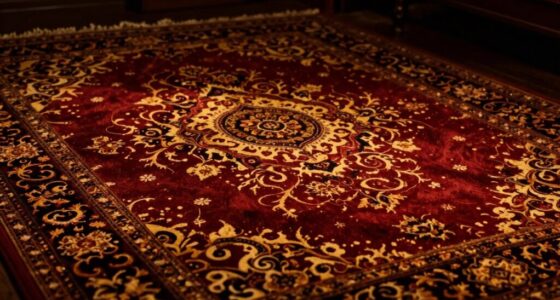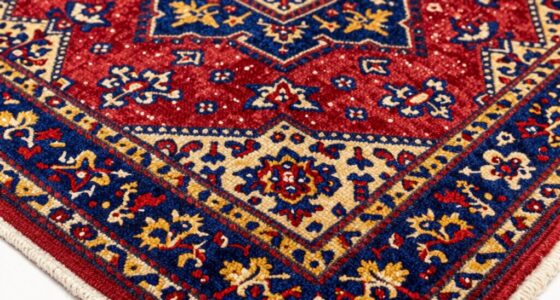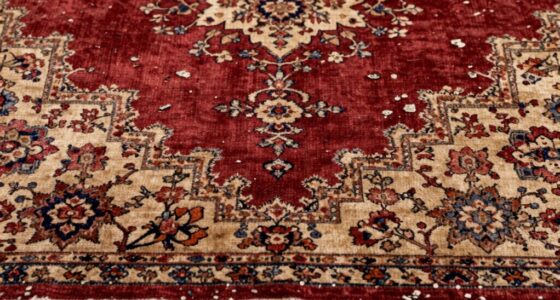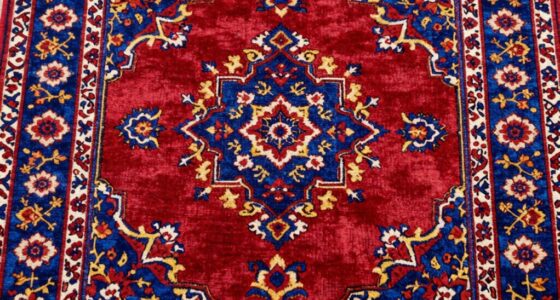
The border scale of a rug reveals a lot about its craftsmanship and style. Large, elaborate borders often indicate high-quality work, cultural richness, and artistic sophistication. Narrower or simpler borders tend to be more modern or utilitarian, focusing attention on the central design. Pay attention to how the border complements the pattern and colors—this shows the designer’s intent and skill. To discover more about what border scale says about a rug’s overall beauty and meaning, keep exploring.

Get furniture and decor delivered free — and shop member deals
- Fast, free delivery on millions of items
- Access to Prime Big Deal Days deals on October 6–7
- Prime Video, Amazon Music and more included
Key Takeaways
- Larger, ornate borders often indicate higher craftsmanship and a luxurious, sophisticated design.
- Narrow or minimal borders suggest a modern, utilitarian, or understated aesthetic.
- Elaborate border motifs reflect cultural richness and artistic skill, signaling traditional elegance.
- The balance between border size and central pattern reveals the designer’s intent and design harmony.
- Bold color contrasts in expansive borders typically denote more complex, sophisticated rug craftsmanship.
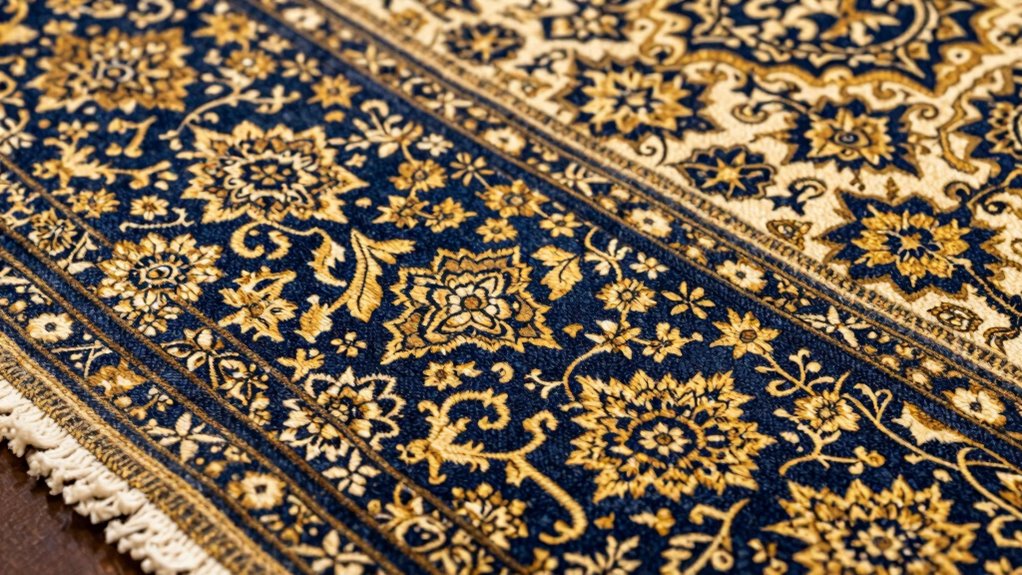
Have you ever wondered how the border scale influences the overall look of a rug? When you look at a rug, the border acts as a frame, setting the tone for the entire piece. The size of this border isn’t just a design choice; it’s a reflection of the rug’s sophistication and the skill behind its creation. A larger border often draws your eye outward, emphasizing the overall pattern and creating a sense of balance. Conversely, a narrower border tends to keep the focus centered on the main design, making the rug appear more intricate and detailed within the limited frame. The border scale also directly impacts color harmony. When the border is expansive, it allows for more bold color contrasts that can make the rug appear more dramatic or vibrant. Smaller borders might rely on subtler shades that blend seamlessly into the main pattern, fostering a more harmonious and unified look. Additionally, the border scale can influence how the rug interacts with its surrounding space, affecting the overall room aesthetic. Recognizing the cultural or historical context of a rug can provide further insight into its border design choices. Understanding the traditional motifs and their placement can also shed light on the cultural significance behind the border’s design.
Pattern complexity and border scale are closely interconnected. Rugs with complex, detailed central patterns often feature narrower borders to prevent the design from feeling overwhelming. This design choice maintains clarity and ensures each element stands out without competing for attention. On the other hand, a larger border can accommodate more elaborate motifs or repeated patterns, giving the rug an overall sense of grandeur. The scale of the border can also indicate the cultural or historical context of the rug. Traditionally, more ornate borders with intricate designs and larger scales are associated with luxurious, high-quality craftsmanship. They signal a level of artistic skill that appeals to collectors and connoisseurs who appreciate fine details. Meanwhile, simpler borders with minimal scale are often found in more utilitarian or modern designs, emphasizing practicality over ornate decoration.
In essence, the border scale serves as a visual cue that guides your perception of the rug’s artistry. A well-balanced border complements the central pattern, creating a cohesive aesthetic that feels deliberate and refined. When you evaluate a rug, pay attention to how the border’s size and design influence the overall impression. It tells you whether the rug aims for a bold statement or subtle elegance. The border’s scale, combined with the color harmony and pattern complexity, reveals the level of craftsmanship and the stylistic intent behind the piece. Recognizing the importance of border scale and design can help you select pieces that truly reflect your style and appreciation for artistry. Whether you’re purchasing a rug for its decorative appeal or its cultural significance, understanding the role of border scale helps you appreciate the craftsmanship and the message the designer intended to convey.
As an affiliate, we earn on qualifying purchases.
Frequently Asked Questions
How Is Border Scale Measured in Rug Design?
You measure border scale in rug design by comparing the border’s width to the overall size of the rug, focusing on pattern balance. A well-proportioned border complements the central design, often achieving color harmony through balanced hues. Larger borders can emphasize craftsmanship, while smaller ones highlight intricate details. By observing these proportions, you gauge the rug’s design sophistication, ensuring the border enhances the overall aesthetic without overpowering the central pattern.
Does Border Scale Influence Rug Durability?
Border scale can influence rug durability, especially when combined with border scale and color contrast, as larger borders may withstand wear better. Additionally, border scale and cultural symbolism often dictate the thickness and material choice, impacting longevity. A well-balanced border scale enhances not only aesthetic appeal but also structural integrity, making the rug more resilient over time. So, paying attention to these factors helps guarantee your rug lasts longer.
Can Border Scale Affect the Rug’s Overall Value?
You might find that a well-balanced border scale enhances your rug’s value, especially when it complements color harmony and cultural symbolism. When the border’s proportion aligns with the overall design, it creates a cohesive look that appeals to collectors and buyers. This subtle harmony can elevate perceived craftsmanship, making your rug more desirable and valuable. Coincidentally, paying attention to border scale can truly reflect your appreciation for intricate design details.
Are Larger Borders More Traditional or Modern?
Larger borders often lean toward traditional designs, emphasizing symmetry and intricate patterns, but they can also appear in modern rugs with bold color contrast. The key is how the border’s symmetry complements the central design, creating harmony. If the border’s scale dominates, it tends to evoke a classic style, whereas smaller borders with sharp contrast might give a modern, minimalist feel. Your choice depends on the overall look you’re aiming for.
How Does Border Scale Relate to Rug Size?
You’ll instantly notice that border scale dramatically shifts with rug size—bigger rugs often sport larger borders, making a bold statement, while smaller ones feature tiny, intricate borders. The border color and pattern also grow more prominent or subtle depending on size, emphasizing the overall design. This dynamic interplay creates a balanced, eye-catching look, showing how border scale complements rug size to enhance your room’s style.
Conclusion
Understanding border scale can truly open your eyes to a rug’s design sophistication. When you pay attention to the details, you’ll see the difference between a simple pattern and a masterful creation. It’s like finding a needle in a haystack, but once you know what to look for, you’ll be able to spot high-quality craftsmanship with ease. So, don’t judge a rug by its cover; let the border scale reveal its true character.
Fall Picks
fall essentials
As an affiliate, we earn on qualifying purchases.