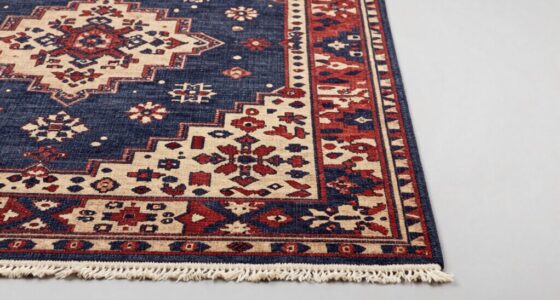
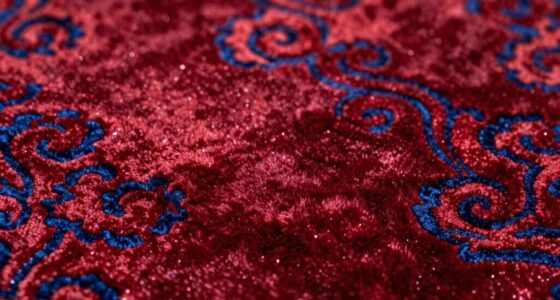
When a rug is labeled hand-knotted in fine-rug collecting, it means artisans have carefully tied each individual knot by hand onto a foundation, making each piece unique and highly detailed. This meticulous craftsmanship reflects regional techniques, cultural stories, and centuries of tradition, ensuring durability and artistry. Recognizing what makes a rug hand-knotted helps you appreciate its cultural significance and value. To explore more about what sets these rugs apart, keep exploring this rich craftsmanship.

Get furniture and decor delivered free — and shop member deals
- Fast, free delivery on millions of items
- Access to Prime Big Deal Days deals on October 6–7
- Prime Video, Amazon Music and more included
Key Takeaways
- Hand-knotted indicates the rug is made by artisans tying each knot individually, ensuring high craftsmanship and uniqueness.
- It reflects regional techniques and motifs, embodying cultural heritage and traditional craftsmanship.
- Hand-knotting enhances durability and intricate design detail, increasing the rug’s value and collectibility.
- The process involves significant labor, making hand-knotted rugs more authentic and premium than machine-made alternatives.
- Recognizing hand-knotting adds cultural and artistic significance, elevating the rug’s status as a collectible piece.

If you’re passionate about fine rugs, understanding what makes a hand-knotted piece so valuable is essential. When you hear the term “hand-knotted,” it points to a specific level of rug craftsmanship that sets these rugs apart from machine-made alternatives. This process involves artisans meticulously tying individual knots of wool, silk, or other materials onto a foundation of warp and weft threads. Each knot is crafted by hand, making every rug a unique work of art. This labor-intensive method not only produces intricate patterns and detailed designs but also ensures durability and a sense of authenticity that machine-made rugs can’t replicate. As a collector, appreciating the skill involved in hand-knotting helps you recognize the true value behind these pieces.
Beyond the craftsmanship, the cultural significance of hand-knotted rugs is profound. These rugs often originate from specific regions, carrying with them stories, traditions, and histories that span generations. When you acquire a hand-knotted rug, you’re not just adding a decorative item to your collection; you’re embracing a piece of cultural heritage. Different regions have distinctive knotting techniques, motifs, and color palettes that reflect their history, beliefs, and environment. For example, Persian rugs are renowned for their elaborate medallions and floral patterns, while Turkish knots showcase a different style rooted in their own cultural narratives. Recognizing these regional differences enhances your understanding of regional craftsmanship, deepening your connection to the rug. Appreciating the intricacy of the knotting process reveals the level of dedication and skill that goes into each piece, further elevating its value. The time and effort involved in hand-knotting also contribute significantly to the rug’s collectible appeal, making it a prized addition to any collection. Understanding these nuances deepens your connection to the rug, transforming it from a mere object into a vessel of cultural expression.
As an affiliate, we earn on qualifying purchases.
Frequently Asked Questions
How Can I Verify if a Rug Is Genuinely Hand-Knotted?
To verify if a rug is genuinely hand-knotted, start with rug dye analysis; natural dyes often indicate authenticity. Next, measure the knot density by counting knots per square inch—higher density suggests quality craftsmanship. Examine the back of the rug for uneven or irregular knots, which is typical of hand-knotting. These steps help distinguish a truly hand-knotted rug from machine-made imitations.
What Tools Are Used to Identify Hand-Knotting in Rugs?
You examine the rug closely with your eyes and a magnifying glass, focusing on the tiny knots. You look for tools like a jeweler’s loupe or a magnifying glass to spot the intricate knotting, checking for consistent dyeing techniques and knot density. These tools help you see the craftsmanship, revealing whether each knot is hand-tied or machine-made, as you visualize the tightly woven, vibrant patterns that only skilled artisans create.
Does Hand-Knotting Affect a Rug’s Durability?
Yes, hand-knotting generally makes a rug more durable because skilled knotters use strong, natural fibers that withstand wear better than synthetic dyes or machine-made patterns. While synthetic dyes and machine-made patterns might look appealing, they can sometimes weaken the rug’s overall strength and longevity. Hand-knotting adds to the rug’s resilience, ensuring it lasts longer even with daily use, thanks to meticulous craftsmanship and quality materials.
Are There Different Knotting Techniques Across Regions?
Like fingerprints, regional styles shape knotting variations that make each rug unique. You’ll find that different regions, such as Persia, Turkey, and India, use distinct knotting techniques, reflecting their cultural and artistic traditions. These variations influence the rug’s appearance and durability. So, as you explore, recognize that regional styles tell a story through knotting techniques, adding depth and character to every piece you admire.
How Does Hand-Knotting Influence a Rug’s Value?
Hand-knotting greatly boosts a rug’s value because it reflects superior craftsmanship quality and meticulous attention to detail. Higher knot density indicates more knots per square inch, making the rug denser and more durable, which collectors highly prize. This intricate process takes time and skill, elevating the rug’s overall artistry and rarity. As a result, hand-knotted rugs often command premium prices in the market.
Conclusion
When you understand that a hand-knotted rug involves hours of meticulous craftsmanship, you appreciate its true value. Did you know that hand-knotting can take hundreds of hours for a single rug? This dedication guarantees each piece is unique and durable. So, when you invest in a hand-knotted rug, you’re not just buying a beautiful decoration—you’re preserving centuries of artistry and tradition. It’s a timeless treasure worth cherishing.
Fall Picks
fall essentials
As an affiliate, we earn on qualifying purchases.