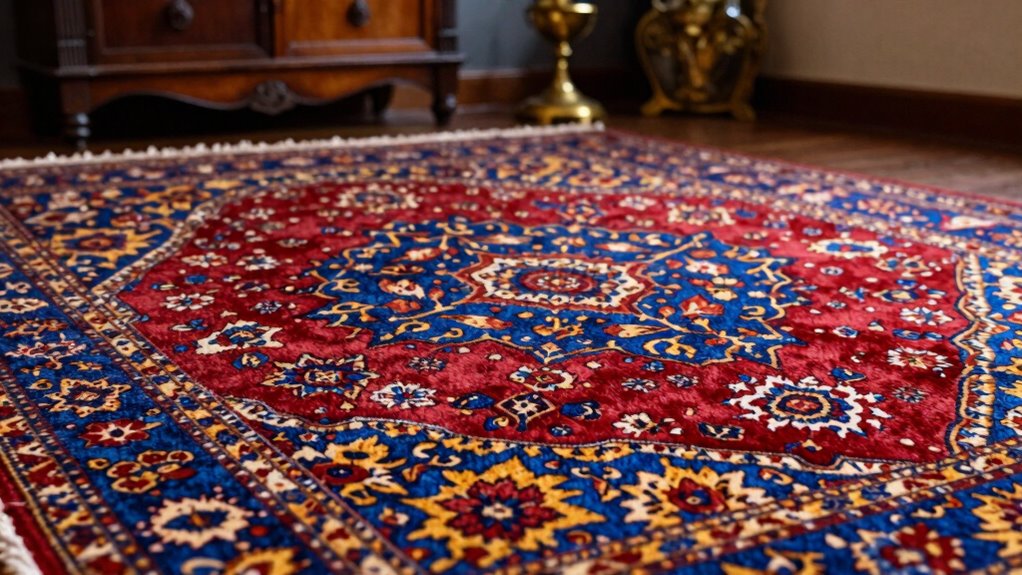

Provenance adds value when it’s verified, clear, and credible, showing the rug’s authentic origins and history. It boosts buyer confidence and can considerably increase the rug’s worth, especially if linked to reputable regions or makers. However, dubious or fabricated stories don’t add value; they can raise doubts and reduce appeal. To learn how to spot genuine provenance and avoid pitfalls, continue exploring more about what makes a rug’s history trustworthy.
Key Takeaways
- Verified provenance significantly boosts rug value by confirming authenticity and enhancing buyer confidence.
- Transparent, well-documented history acts as a trust signal, increasing desirability and market price.
- Vague or questionable provenance can decrease value by raising doubts about authenticity.
- Provenance aligned with reputable regions or makers adds prestige and market appeal.
- Overly detailed or dubious histories may harm credibility and diminish rug worth.
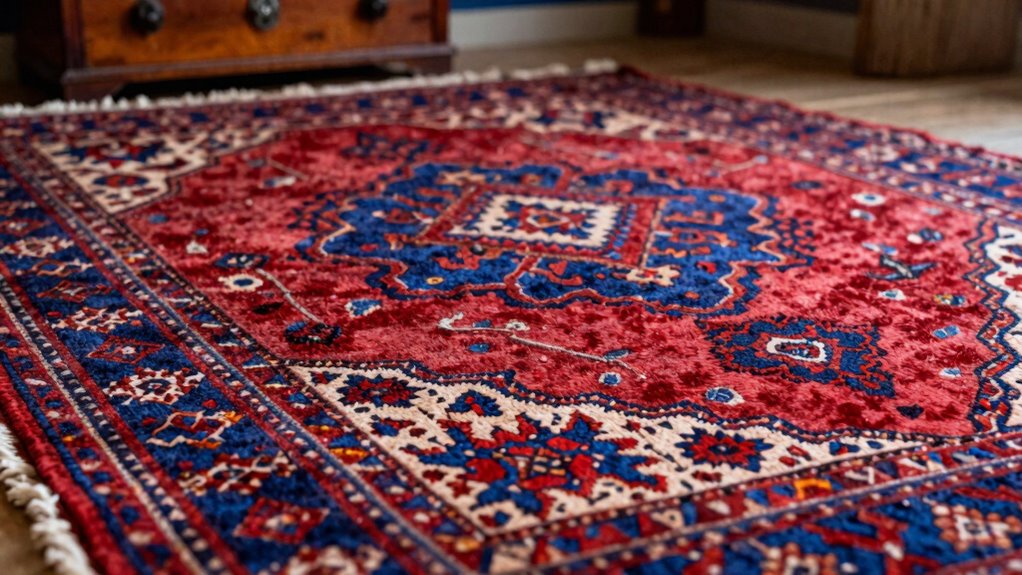
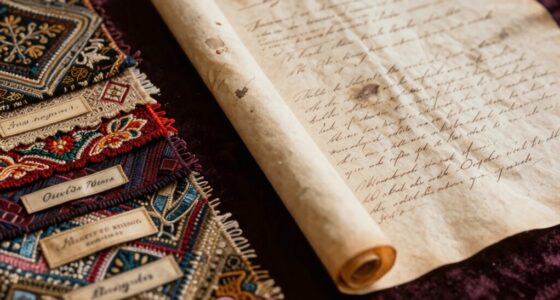
Have you ever wondered how the history behind a rug influences its worth? When it comes to rug provenance, what really matters is understanding how certain details—like antique authenticity and market reputation—play a role in determining value. If a rug is genuinely antique, with verified origins and age, its authenticity can greatly boost its worth. Collectors and buyers see antique rugs as more than just decorative items; they’re pieces of history, and that history adds a layer of desirability. But it’s vital to differentiate between genuine antique authenticity and rugs that merely appear old. Provenance that confirms a rug’s age and origin, backed by documentation or expert appraisal, can dramatically elevate its market value. Without this verification, a rug’s supposed antiquity might be questioned, limiting its appeal and price. Additionally, market reputation can influence how a rug is perceived in terms of quality and desirability. Market reputation is another key factor. If a rug comes from a well-regarded maker, region, or era known for high-quality craftsmanship, it’s perceived as more valuable. For instance, a Persian rug from a renowned village with a long-standing tradition in rug-making instantly carries a premium. The market has a collective memory, so rugs associated with reputable origins tend to attract serious buyers willing to pay higher prices. Conversely, if a rug’s provenance is murky or its reputation in the marketplace isn’t solid, its value can suffer—even if it’s antique. Buyers often rely on trusted sources, expert appraisals, or documented histories to gauge a rug’s legitimacy and worth. Recognizing authenticity verification as a key element can further clarify the significance of provenance in valuation. Clear provenance can also help prevent fakes or forgeries, which are a concern in the rug market. Furthermore, documentation and expert appraisal are essential tools in ensuring the credibility of a rug’s provenance. When provenance is well-established, it can also serve as a safeguard against potential forgeries, which can otherwise deceive even seasoned collectors. However, provenance doesn’t always add value. Sometimes, it can be a double-edged sword. Overly detailed or dubious histories might raise questions about authenticity or provenance fabrications, which can diminish a rug’s market reputation. Buyers today are increasingly savvy; they want transparency and verifiable stories. A well-documented provenance that confirms antique authenticity and aligns with market reputation can make a rug stand out and command a premium. But an uncertain or inconsistent history might do more harm than good, leading to skepticism and a lower price.
Verified provenance and genuine antique status significantly enhance a rug’s value and desirability.
In the end, provenance acts as a kind of trust signal. When it’s clear, verified, and aligns with recognized market reputation, it markedly enhances a rug’s value. But if it’s vague or questionable, it can do little more than add confusion. Your goal should be to seek out rugs with strong, authentic provenance that’s supported by credible evidence—because that’s what truly adds to their worth.
As an affiliate, we earn on qualifying purchases.
Frequently Asked Questions
How Can I Verify a Rug’s Provenance Authenticity?
To verify your rug’s provenance authenticity, start by examining authenticity markers like labels, certificates, or known seller histories. Use forgery detection techniques, such as inspecting weaving patterns, dyes, and wear consistent with age. Consult experts or appraisers who can assess these details accurately. Research the rug’s origin and compare it with documented provenance. Taking these steps helps guarantee your rug’s history is genuine, boosting confidence in its authenticity.
Does Provenance Affect the Rug’s Age or Origin?
Oh, the grand mystery—provenance doesn’t magically rewrite a rug’s age or origin, but it does sprinkle some historical context and cultural significance into the story. You see, knowing where a rug comes from adds depth, yet the actual age and origin are determined by fibers, dyes, and weaving techniques. So, while provenance can elevate its allure, it doesn’t actually change the rug’s authentic roots or chronological age.
Can Provenance Increase a Rug’s Resale Value Significantly?
Yes, provenance can substantially boost a rug’s resale value when it carries historical significance or is linked to notable owners or events. Your buyers often trust the story behind the piece, increasing collector trust. Provenance validates authenticity, making the rug more desirable. However, it doesn’t automatically inflate value unless the provenance adds meaningful context or rarity, making it a worthwhile investment for discerning collectors.
What Details Are Included in a Provenance Document?
A provenance document is like a treasure map, revealing the rug’s journey through time. It includes details such as the rug’s origin, previous owners, exhibition history, and any restorations. By providing its historical context and artistic significance, this record helps you understand its story and authenticity. Knowing these details allows you to appreciate the rug’s unique history, elevating its value beyond just its physical beauty.
Is Provenance More Important for Antique or Contemporary Rugs?
Provenance is more important for antique rugs because it highlights their historical significance and authenticity, adding to their value. For contemporary rugs, modern craftsmanship and artistic significance matter more, as their origins are recent and less tied to history. While provenance can enhance the story behind an antique, it’s less critical for modern pieces, which rely more on design quality and craftsmanship for their appeal and worth.
Conclusion
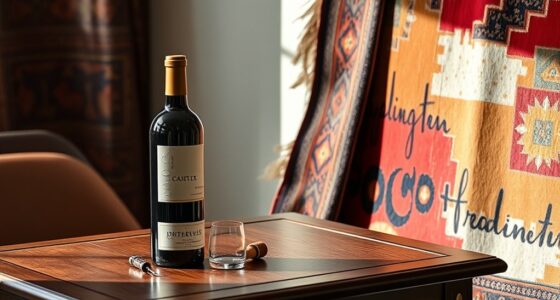
Knowing a rug’s provenance can add a layer of story and authenticity, but it’s not the be-all and end-all for value. Sometimes, a well-crafted piece from the 19th century can fetch more than a newer, branded rug with a famous history. Think of it like a vintage bottle of wine—you might pay a premium, but the craftsmanship and character matter more than the label. In the end, it’s your eye and heart that make the rug truly special.