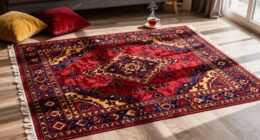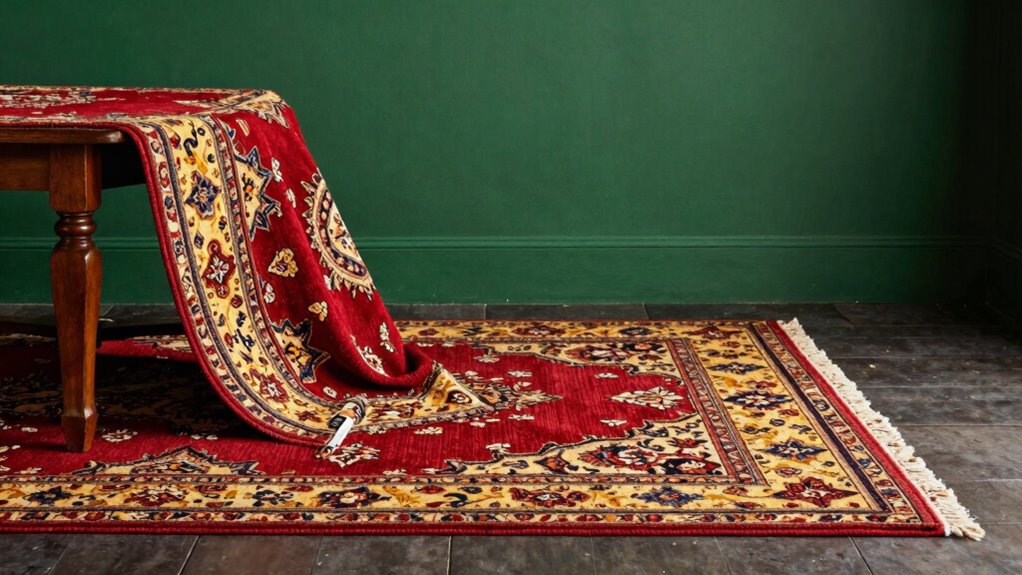

To decide if your rug should go on the floor or the wall, consider your room’s style and the mood you want to create. Floor rugs are great for defining areas, adding warmth, and grounding furniture, making a space feel cozy. Wall-mounted rugs or tapestries work well to add visual interest, showcase craftsmanship, or serve as art pieces. Keep exploring to discover the perfect placement that enhances your decor and personal style.

Get furniture and decor delivered free — and shop member deals
- Fast, free delivery on millions of items
- Access to Prime Big Deal Days deals on October 6–7
- Prime Video, Amazon Music and more included
Key Takeaways
- Determine whether the rug’s purpose is to anchor furniture and create a cozy zone or to serve as a decorative art piece.
- Use floor rugs to define seating or dining areas; opt for wall-mounted rugs to add texture or visual interest to walls.
- Consider the room’s overall style and desired atmosphere—warmth and comfort favor floor rugs, while bold statements suit wall hangings.
- Assess the size and placement; appropriately scaled rugs create balance whether on the floor or as wall art.
- Match the rug’s texture, color, and design with the space’s decor to enhance harmony and visual impact.

Placing a rug correctly can instantly elevate your space, but knowing where and how to position it makes all the difference. When deciding whether a rug belongs on the floor or the wall, you’re fundamentally considering its role as a decorative accent and how it contributes to space definition. Rugs on the floor are classic choices—they anchor furniture, add warmth, and create cozy zones. They serve as functional decorative accents that can make a room feel more inviting and cohesive. Conversely, wall-mounted rugs or tapestries become art pieces that add texture, color, and personality to your walls.
Choosing the right placement for rugs transforms your space into a warm, stylish, and cohesive sanctuary.
If your goal is to define a specific area, such as a seating or dining space, a floor rug is your best bet. It visually separates that zone from the rest of the room and grounds your furniture, making the space more comfortable. For example, placing a rug under a sofa and coffee table creates a designated living area, emphasizing the arrangement and making the space more inviting. In contrast, if you’re looking to add visual interest or a focal point, hanging a rug or tapestry on the wall can transform the entire room. It acts as a large decorative accent that draws attention upward and adds layers of texture and color to your decor.
Wall-mounted rugs are particularly effective in spaces where you want to make a bold statement or showcase craftsmanship. They can cover an entire wall or serve as a feature behind a bed or mantel. This approach elevates your decor by giving it a gallery-like feel, turning fabric into art. On the other hand, floor rugs are more versatile and practical—they can be easily changed out or repositioned to refresh the look of your room. When choosing between the two, consider the style and impact you want to create. If you want to make a room feel warmer and more inviting, a well-placed floor rug is ideal. But if you want to add a layer of visual interest or highlight a particular wall, hanging a rug or tapestry achieves that goal.
Additionally, understanding color management can help you select rugs that complement your existing decor and enhance the overall harmony of your space. Proper rug placement also plays a crucial role in balancing proportions and creating a cohesive look. For example, an appropriately sized rug can anchor your furniture and prevent the space from feeling disjointed. Being mindful of visual balance ensures that your decor feels harmonious and well-composed. When considering texture contrast, mixing different textures between rugs and other furnishings can add depth and interest to your space. Ultimately, your decision hinges on how you want to use your space and what kind of decorative accents you prefer. Both on the floor or on the wall, rugs serve as expressive elements that can define a room’s personality. Think about the mood you want to set and the style you’re aiming for, then choose the placement that best enhances your space’s overall harmony.
As an affiliate, we earn on qualifying purchases.
Frequently Asked Questions
Can a Rug Be Both on the Floor and on the Wall?
Yes, a rug can be both on the floor and on the wall. This approach showcases versatile decor and turns your space into an artistic expression. You might place a rug on the floor for warmth and texture, then hang a piece of the same or complementary rug on the wall for visual interest. This dual use adds depth, personality, and a creative touch, making your decor both functional and uniquely stylish.
How Do I Clean a Rug That’s Used as Wall Decor?
Think of your wall-mounted rug as a cherished piece of art; handle it with care. To clean it, gently vacuum using a brush attachment to remove dust, symbolizing respect for its display. For deeper cleaning, consult rug cleaning experts or follow specific wall mounting techniques to avoid damage. Avoid harsh chemicals, and always test a small area first. Proper cleaning preserves its beauty, keeping it a meaningful wall decor.
Are There Specific Rug Materials Suitable for Wall Mounting?
You should choose rugs made from durable materials like wool, jute, or silk for wall mounting, as they withstand handling and display better. These materials resist tearing and can handle wall mounting techniques such as secure tacking or hanging with rods. Keep in mind, rug durability guarantees your wall decor stays intact, while proper wall mounting techniques prevent damage and make your display both stylish and secure.
How Do I Prevent Damage When Hanging a Rug on the Wall?
To prevent damage when hanging a rug on the wall, focus on rug safety and proper hanging techniques. Use wall-friendly hardware like picture hooks or tension rods that won’t puncture or distort the fabric. Distribute weight evenly with a padded rod or a fabric sleeve. Additionally, avoid adhesives that could stain or damage the rug. Regularly check the hanging setup to make certain it stays secure and in good condition.
Can a Rug’s Size Influence Its Placement Choice?
Yes, a rug’s size markedly influences its placement choice. Larger rugs work well on the floor, anchoring furniture and defining space, especially in rooms with balanced proportions. Smaller rugs, however, are perfect for wall decor or as accents, particularly in rooms with specific proportions that need visual interest. Consider your room’s size and proportion when choosing a rug’s size, ensuring it complements the space without overwhelming or underwhelming it.
Conclusion
Think of rug placement like a dance—you want every step to feel just right. Whether on the floor or hung on the wall, your choice should reflect your style and space. Trust your instincts and consider the room’s purpose, just as you’d choose the perfect song for a dance. When in doubt, experiment and see what feels most natural, like a gentle breeze guiding your decor decisions. Your perfect rug placement is waiting to be discovered.
Evergreen bestsellers Picks
bestsellers
As an affiliate, we earn on qualifying purchases.