To determine if a rug is investment-grade or decorative, consider its durability, craftsmanship, and cultural background. Investment-grade rugs are made from high-quality materials like wool or silk and are handcrafted with dense knots for long-term use and value appreciation. Decorative rugs focus more on style and might use less durable fabrics or machine production. Understanding your intent will help you choose the right rug; exploring further reveals how to spot these key differences.
Key Takeaways
- Investment-grade rugs are made from high-quality, durable materials like wool or silk, designed for longevity and long-term value.
- They are handmade with dense knots and traditional craftsmanship, often reflecting cultural heritage and regional artistry.
- These rugs are intended as investments or heirlooms, appreciating in value over time with proper care.
- Decorative rugs prioritize aesthetic appeal, using delicate fabrics or modern materials, often lacking the durability of investment pieces.
- Determining intent involves assessing material quality, craftsmanship, cultural significance, and whether the goal is long-term investment or temporary decoration.
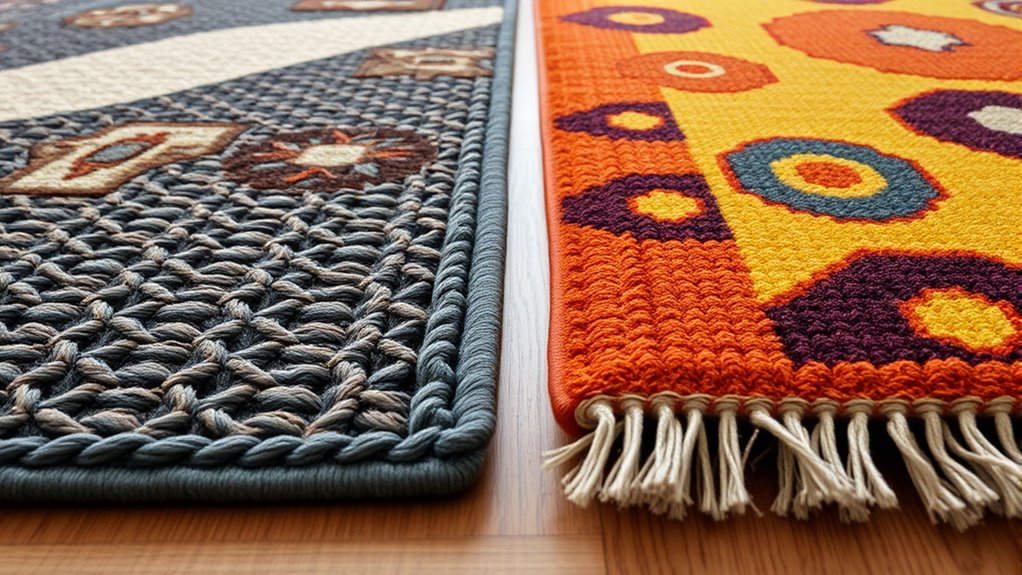
When choosing a rug for your space, understanding the difference between investment-grade and decorative rugs can help you make a smarter decision. One of the key factors to consider is rug durability. Investment-grade rugs are built to last, often crafted from high-quality materials like wool, silk, or antique textiles. They’re designed for longevity, with dense knots and resilient fibers that can withstand years of foot traffic without showing excessive wear. This durability isn’t just about physical resilience; it guarantees that your rug retains its appearance and value over time. On the other hand, decorative rugs might prioritize aesthetic appeal over longevity. They often feature more delicate fabrics or intricate designs that, while beautiful, may not hold up as well under daily use. If you’re looking for a piece that will endure the test of time, investment-grade rugs are typically more suitable, especially in high-traffic areas.
Cultural significance plays an essential role in distinguishing investment-grade rugs from decorative ones. Many investment-quality rugs are handmade in regions with rich textile traditions, such as Persia, Turkey, or India. These rugs often carry cultural stories, symbols, and craftsmanship passed down through generations. When you invest in such a piece, you’re not just acquiring a decorative item—you’re embracing a piece of history. These rugs often feature traditional patterns and motifs that reflect the cultural heritage of their origin, making them more than mere decor; they’re artifacts filled with meaning. Conversely, decorative rugs tend to focus more on current trends or aesthetic styles that may not have deep cultural roots. They might be mass-produced or machine-made, lacking the historical and cultural significance that elevates an investment-grade rug.
Understanding your intent is indispensable before purchasing. If you’re seeking a statement piece that can appreciate in value and carry cultural weight, an investment-grade rug is the way to go. These rugs can become family heirlooms, appreciated for their craftsmanship and story. If your goal is to add visual interest to a space temporarily or to match a specific interior trend, a decorative rug might serve you better. By considering rug durability and cultural significance, you can align your purchase with your long-term goals, guaranteeing that your choice adds both beauty and value to your home.
Frequently Asked Questions
How Do Rug Prices Vary Across Different Countries?
You’ll notice rug prices vary across countries due to factors like importer regulations, which can add tariffs and fees, raising costs. Regional color schemes also influence prices, as unique or locally popular designs command higher prices. Additionally, local demand, craftsmanship, and availability affect pricing differences. Understanding these factors helps you gauge value, ensuring you make informed purchases whether you’re seeking investment-grade pieces or decorative rugs for your space.
What Are the Environmental Impacts of Rug Production?
Imagine the Earth’s delicate balance teeters on your choice. When producing rugs, you impact the environment through water use and chemical runoff. Opt for rugs made with sustainable sourcing and eco-friendly dyes to lessen this footprint. By choosing eco-conscious options, you help reduce pollution, conserve resources, and promote fair labor practices. Your decision influences not just interior design but also the health of our planet, making your home a part of the solution.
How Can I Authenticate a Rare or Antique Rug?
To authenticate a rare or antique rug, start with authenticating techniques like examining the knot density, weaving patterns, and material quality. Look for signs of age, such as wear and fading, which indicate authenticity. Provenance verification is essential; check documentation or expert appraisals to trace its history. Consulting a reputable appraiser or rug expert can help confirm its authenticity and value, giving you confidence in your purchase or collection.
What Maintenance Practices Extend Rug Longevity?
Regular cleaning, prompt stain prevention, and careful rotation extend your rug’s longevity. You should vacuum at least once a week to remove dirt and debris, reducing wear. Address spills immediately to prevent stains from setting, and use protective pads under heavy furniture. Rotate your rug every few months to ensure even wear and fading. These practices keep your rug looking vibrant and preserve its value for years to come.
Are There Specific Brands Known for Investment-Grade Rugs?
You should look into luxury brands known for investment-grade rugs, such as Safavieh, Christofle, and Tabriz. These brands offer exclusive collections crafted with high-quality materials and expert craftsmanship, making them ideal for investment purposes. Their rugs often carry a reputation for durability and timeless appeal, guaranteeing your investment appreciates over time. Always verify authenticity and provenance to make certain you’re investing in genuine, high-value pieces.
Conclusion
Ultimately, understanding your intent transforms your rug choice from a mere decor to a dedicated investment. Whether you seek the sturdy stability of investment-grade rugs or the decorative delight of design-focused pieces, clarity creates confidence. By discerning desire from decoration, you dictate your dollar’s destiny. Make mindful moves, master your motives, and mold your space with purpose. Because when you decide with discernment, your rug’s value multiplies—making your home a haven of harmony and high worth.