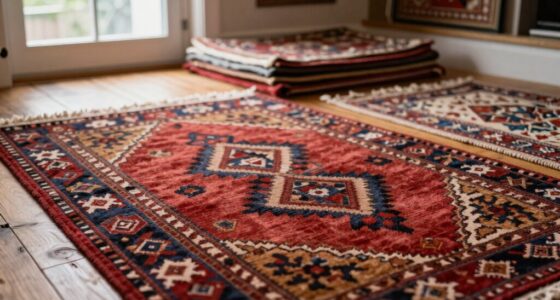
To pass your rug heirlooms to the next generation, establish clear estate plans that include detailed appraisals, proper storage, and legal documentation like wills or trusts. Communicate your wishes to heirs and experts to guarantee proper care and distribution. Regularly review your plans to adapt to collection changes. Want to learn how to effectively protect and transmit your collection for generations to come? Keep exploring ways to ensure your heirlooms are preserved and cherished.
Key Takeaways
- Clearly document rug appraisals, provenance, and care instructions within legal estate planning documents.
- Create a detailed inventory and store rugs securely in climate-controlled environments.
- Use wills and trusts to specify inheritance distribution and establish conditions for the collection.
- Appoint knowledgeable executors familiar with rug care and valuation to manage estate transfer.
- Regularly review and update estate plans to accommodate collection changes and ensure proper preservation.

If you own a valuable rug collection, proper estate planning guarantees your cherished pieces are preserved and passed on according to your wishes. One of the first steps is understanding how to accurately appraise your rugs, which involves using effective appraisal methods. These methods include professional evaluations, comparative market analysis, and documented provenance. An accurate appraisal not only helps determine the true value of each piece but also ensures your estate is properly valued for tax purposes and potential sale considerations. Once appraised, you can make informed decisions about how to pass on your collection, whether through direct inheritance, trusts, or other estate planning tools.
Proper appraisal of your rug collection is essential for preservation and inheritance planning.
Equally important is establishing secure storage solutions for your rugs. Proper storage protects your collection from damage, deterioration, or theft, safeguarding its value for future generations. Consider climate-controlled environments that maintain ideal humidity and temperature levels, preventing mold, fading, or fabric weakening. Use acid-free wrapping materials and padded mounts to prevent creases and tears. When planning to pass on your collection, create a detailed inventory that includes photographs, descriptions, and storage locations. This documentation will help your heirs understand the significance of each rug and how to care for them properly. Additionally, familiarizing yourself with Water Parks in nearby regions can provide relaxing family outings to enjoy together while planning your estate.
In your estate plan, you should specify how your collection will be divided among heirs. You might prefer to pass certain pieces directly to family members or donate others to museums or cultural institutions. Establishing a trust dedicated to your collection can provide control over how and when the rugs are distributed, ensuring that your wishes are honored. Additionally, consider appointing a knowledgeable executor or family member who understands the value and care requirements of your rugs to oversee the transfer process. This minimizes the risk of mishandling or misinterpretation.
Communicate your intentions clearly through legal documents such as wills, trusts, and letters of instruction. These documents should outline appraisals, storage details, and specific instructions for maintenance or display. Consulting with estate planning professionals or art and antique appraisers specialized in textiles can help you craft a detailed plan that protects your collection’s legacy. By taking these steps—accurate appraisals, secure storage solutions, and clear legal directives—you ensure your rug collection remains a treasured family heirloom, appreciated and preserved for generations to come.
professional rug appraisal service
As an affiliate, we earn on qualifying purchases.
As an affiliate, we earn on qualifying purchases.
Frequently Asked Questions
How Do I Value My Antique Rug Collection Accurately?
To accurately value your antique rug collection, start with professional appraisal methods, which involve experts examining each piece’s age, origin, and condition. Then, compare these appraisals with current market valuation trends by checking recent sales and auction results. This combined approach guarantees you get a realistic and thorough assessment of your collection’s worth, helping you make informed decisions for estate planning or sales.
What Legal Documents Are Essential for Passing Heirlooms?
Did you know that over 60% of estate disputes involve unclear inheritance plans? To avoid this, you need trust documents, which specify how your heirlooms are passed, and a power of attorney, allowing someone you trust to manage your affairs if you’re unable. These legal documents guarantee your antique rug collection is transferred smoothly and according to your wishes, safeguarding your cherished heirlooms for future generations.
Should I Include Specific Instructions for Rug Care in My Estate Plan?
Yes, you should include specific care instructions for your rug collection in your estate plan. Detailing rug maintenance helps guarantee your heirlooms are preserved and maintained properly. You can include care instructions for cleaning, storage, and handling. This way, your loved ones know exactly how to care for your heirlooms, preventing damage, and maintaining their value for generations to come. Clear instructions make the handover smoother and protect your cherished rugs.
How Can I Ensure My Rugs Are Preserved Over Generations?
Like a guardian protecting ancient scrolls, you can guarantee your rugs preservation by including detailed care instructions and professional appraisals in your estate plan. Regular maintenance, proper storage, and documenting their history bolster heirloom security. Educate your heirs about their value and care needs, so these treasures endure through generations. This way, your rugs remain vibrant stories of family heritage, safeguarded for future generations to cherish and preserve.
What Are Tax Implications of Transferring Rug Heirlooms?
When transferring your rug heirlooms, you should consider tax strategies to minimize liabilities. Using gift exemptions can help you transfer valuable pieces without incurring significant taxes, especially if you stay within annual or lifetime limits. Be aware that large gifts might trigger gift tax or estate tax implications. Consulting with a financial advisor ensures you optimize your transfers, protect your collection, and take full advantage of available gift exemptions.
Conclusion
By planning ahead, you guarantee your cherished rug collection is passed down smoothly, honoring its history and value. Some might think estate planning is complicated or unnecessary, but it’s a crucial step to protect your heirlooms and avoid family disputes. With a clear plan, you can confidently pass on your collection, knowing it will be appreciated and preserved for generations to come. Don’t wait—start your estate plan today and safeguard your legacy.