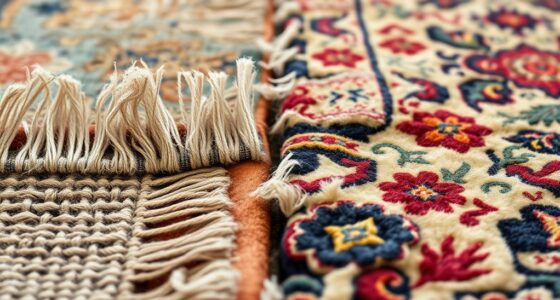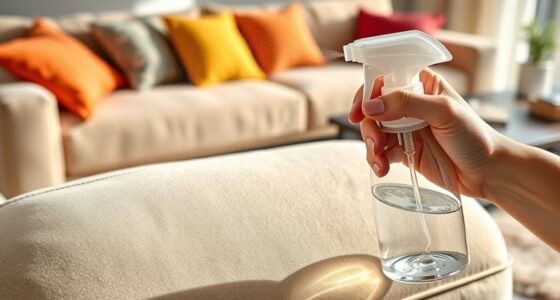

To reduce dust before it settles into textiles and upholstery, keep your windows and doors closed during windy days and use doormats to catch dirt. Remove shoes when entering, wash bedding and curtains regularly, and opt for dust-resistant fabrics. Maintain humidity levels between 30-50% with dehumidifiers, guarantee proper air circulation, and regularly vacuum with HEPA filters. Consistent cleaning and environmental controls will help keep dust at bay—continue to explore more effective tips.
Key Takeaways
- Use air purifiers with HEPA filters to capture airborne dust before it reaches textiles and upholstery.
- Regularly vacuum with HEPA filter vacuums to remove dust from carpets, furniture, and hidden areas.
- Keep windows and doors closed during windy days to prevent outdoor dust from entering and settling.
- Use dust-resistant fabrics for upholstery and curtains to minimize dust accumulation.
- Maintain indoor humidity levels between 30-50% to inhibit dust mites and reduce dust settling on textiles.
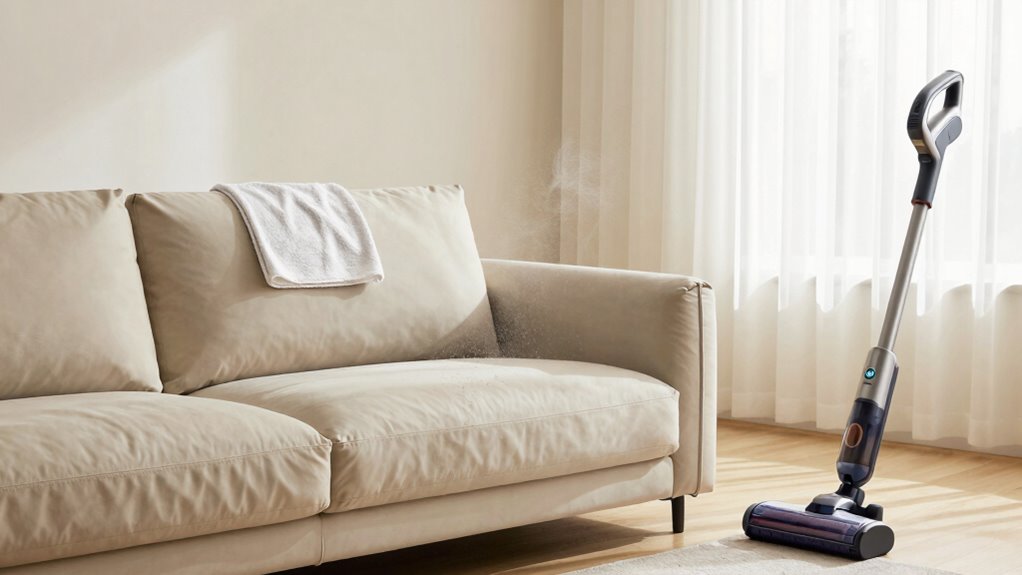
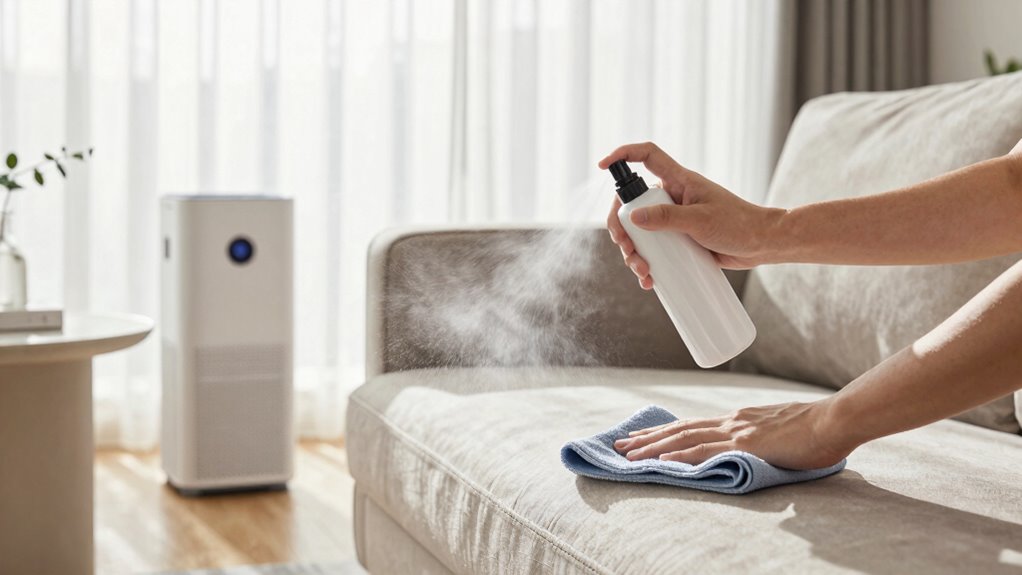
Are you tired of constantly battling dust in your home? Dust can settle quickly into textiles and upholstery, making your space look dirty and feeling less comfortable. The good news is, you can take effective steps to reduce dust before it even has a chance to settle into fabrics and furniture. One of the most practical ways is to incorporate air purifiers into your daily routine. These devices filter out airborne particles, including dust mites, pet dander, and other allergens, helping to improve the overall air quality. When used consistently, air purifiers can significantly cut down the amount of dust circulating in your home, preventing it from settling into textiles and upholstery. Pairing this with regular cleaning creates a powerful defense against dust buildup. Regularly dusting with a damp cloth traps particles rather than just spreading them around, and vacuuming with a high-efficiency particulate air (HEPA) filter vacuum ensures you’re removing dust from carpets and furniture rather than redistributing it.
In addition to these measures, it’s essential to pay close attention to the sources of dust in your home. Keep windows and doors closed on windy days to prevent outdoor dust from blowing inside. Use doormats at entrances to catch dirt and dust from shoes before it gets tracked around. Remove shoes when entering your home, and encourage other household members to do the same. Regularly wash bedding, curtains, and cushion covers to eliminate dust mites and accumulated dust. These textiles are often hidden reservoirs of dust, and frequent washing can prevent them from becoming breeding grounds. You might also consider choosing washable fabrics and materials that are easier to clean and less likely to trap dust. Additionally, maintaining a proper humidity level helps inhibit dust mites and mold growth, which are common contributors to dust in textiles. Proper ventilation and air circulation are crucial in dispersing indoor airborne particles and reducing dust levels, so ensuring your home is well-ventilated can be highly beneficial. Ensuring good air circulation can also help reduce indoor dust levels by improving air circulation and removing airborne particles more effectively. Moreover, choosing dust-resistant fabrics for upholstery and curtains can further minimize dust accumulation over time.
Maintaining a clean environment is key, but it doesn’t have to be exhausting. Establish a routine cleaning schedule that targets high-traffic areas and surfaces prone to dust accumulation. Use microfiber cloths that attract dust instead of just dispersing it into the air. Don’t forget to clean behind furniture and under beds, as these spots tend to gather dust over time. Keeping humidity levels low—ideally between 30-50%—also helps reduce dust mites and mold, which contribute to dust in textiles. Using a dehumidifier can make a big difference in maintaining these levels.

Shark Upright Vacuum Cleaner | Navigator Lift-Away Deluxe | Pet Hair, Carpet & Hard Floor Cleaning | Upholstery & Crevice Tool | HEPA Filter | Swivel Steering | Large Dust Cup Capacity | Blue | NV360
- Powerful Multi-Surface Suction: Cleans carpets and hard floors effectively
- Lift-Away for Above-Floor Cleaning: Detachable pod for stairs and furniture
- Pet Hair Removal: Specialized tools for pet hair cleanup
As an affiliate, we earn on qualifying purchases.
As an affiliate, we earn on qualifying purchases.
Frequently Asked Questions
Can Air Purifiers Effectively Eliminate Dust in All Rooms?
Air purifiers can considerably reduce dust, but they don’t eliminate it completely in all rooms. Many people believe Air purifier myths, thinking they remove all dust, but they mainly target smaller dust particle size. To maximize effectiveness, choose a purifier with a HEPA filter and use it consistently. Keep in mind, regular cleaning and proper ventilation also help reduce dust buildup, ensuring a healthier environment in every room.
How Often Should I Clean My HVAC Filters to Reduce Dust?
Ever wondered how to keep dust from lurking in every corner? You should clean your HVAC filters every 30 to 60 days to maintain *ideal* dust trapping efficiency. Regularly changing or cleaning them extends the air filter lifespan and ensures your system works effectively. Skipping this step lets dust settle into textiles and upholstery, making your space less clean and more allergenic. Stay proactive for a fresher, healthier home.
Are Natural Remedies Better Than Commercial Dust Repellents?
Natural remedies like herbal remedies and essential oils can be effective alternatives to commercial dust repellents. You might find that herbal remedies, such as eucalyptus or lavender, naturally repel dust and improve air quality. Essential oils like lemon or tea tree not only freshen your space but also help reduce dust buildup. They’re safer for your home and environment, and you can easily customize blends to suit your preferences.
Does Humidity Level Impact Dust Accumulation on Textiles?
Yes, humidity levels impact dust accumulation on textiles. When humidity is too low, dust particles easily become airborne and settle on surfaces. Conversely, proper humidity control, ideally around 40-50%, reduces dust adhesion by keeping particles from sticking to fabrics and upholstery. Maintaining ideal humidity creates a less hospitable environment for dust, making cleaning easier and helping textiles stay cleaner longer.
What Are the Best Vacuuming Techniques for Dust Removal?
Think of your vacuum as a trusty knight battling dust dragons. To maximize dust trapping, start by vacuuming in slow, overlapping strokes, ensuring you cover every corner. Regular vacuum maintenance keeps it in top shape, preventing dust buildup inside. Use attachments for edges and upholstery, and don’t forget to empty the canister or replace the bag frequently. This approach keeps dust at bay and your textiles cleaner longer.
Conclusion
By staying proactive, you prevent dust from settling like stubborn snow on a porch. Think of your home as a clean canvas—you’re the artist sweeping away dust before it becomes a permanent stain. Regular dusting, vacuuming, and air purifying create a shield that keeps your textiles and upholstery cleaner longer. Just like a gardener tends to delicate plants daily, your consistent effort guarantees a healthier, dust-free space you’ll love coming home to.