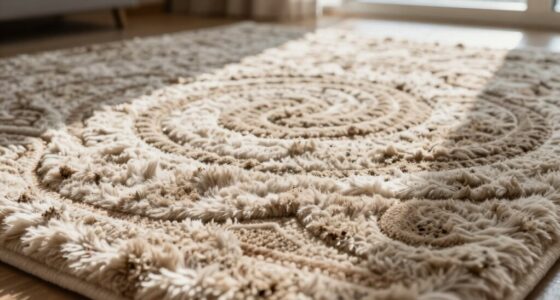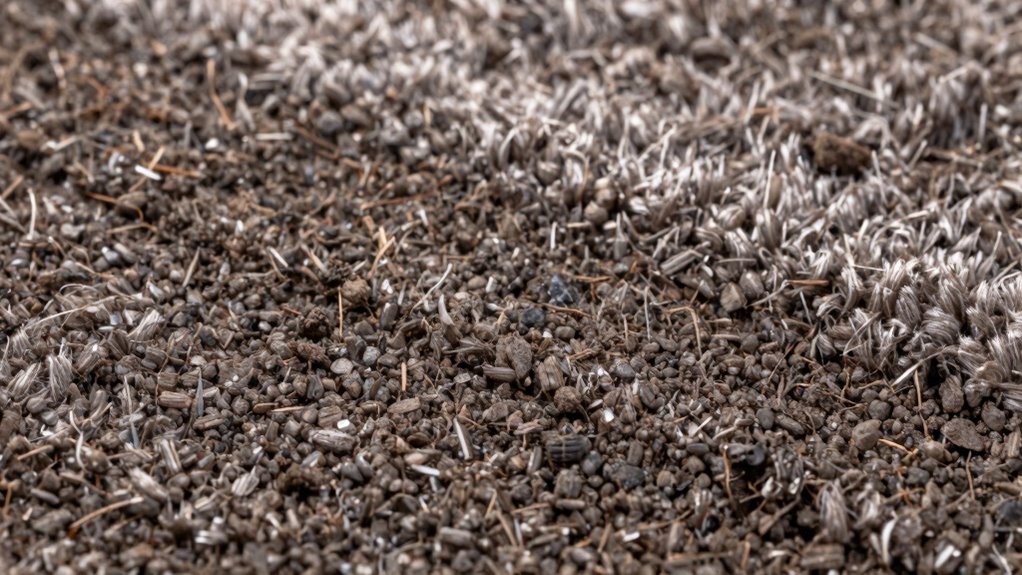

Surface soil is loose dirt that sits on your rug’s fibers and can be easily removed with light vacuuming. Embedded grit, on the other hand, is ground-in dirt trapped deep within the fibers and backing, making it harder to remove. If left unattended, embedded grit causes fibers to wear down faster and can lead to fraying. To keep your rug looking its best, knowing the difference helps you choose the right cleaning methods—more details ahead.

Get furniture and decor delivered free — and shop member deals
- Fast, free delivery on millions of items
- Access to Prime Big Deal Days deals on October 6–7
- Prime Video, Amazon Music and more included
Key Takeaways
- Surface soil rests loosely on fibers and is easily removed with light vacuuming.
- Embedded grit is ground-in dirt trapped deep within fibers and backing, requiring deep cleaning.
- Surface soil can be removed with regular vacuuming, while embedded grit needs steam cleaning or shampooing.
- Left unremoved, embedded grit accelerates fiber wear and rug deterioration over time.
- Proper identification of soil types guides effective cleaning techniques and prolongs rug lifespan.
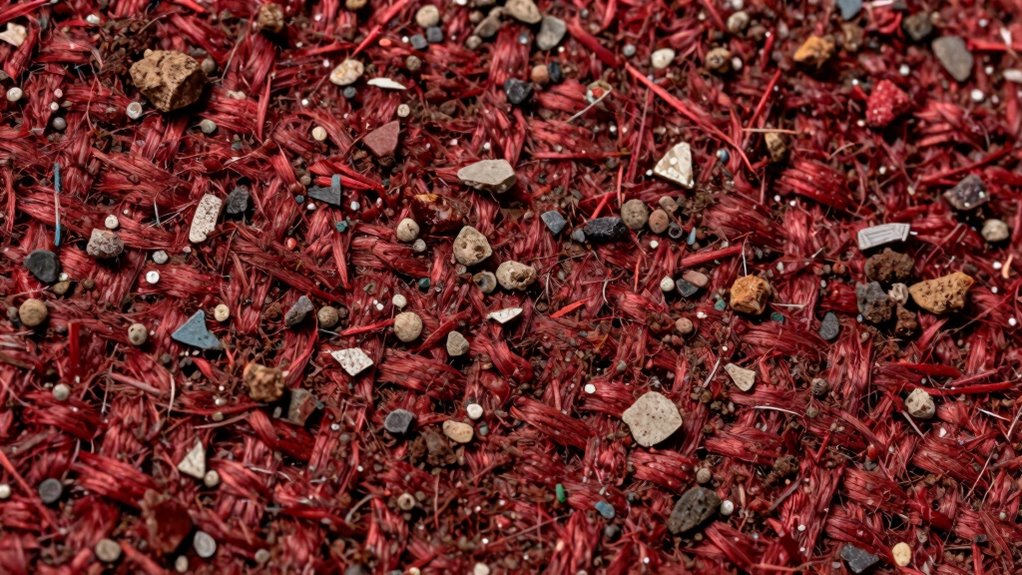
Rugs often look clean at first glance, but beneath the surface, they can harbor significant amounts of soil and embedded grit that are hard to see. This hidden dirt isn’t just a cosmetic issue; it can affect your health and the longevity of your rug. Understanding the difference between surface soil and embedded grit is key to maintaining a clean and safe environment. Surface soil sits loosely on top of the fibers and can often be removed with light vacuuming. Embedded grit, on the other hand, is ground-in dirt that’s trapped deep within the rug’s fibers and backing. This stubborn dirt can cause fibers to wear down faster, leading to fraying and deterioration over time.
When it comes to cleaning techniques, knowing what type of soil you’re dealing with influences your approach. Surface soil is relatively easy to remove—regular vacuuming with a high-quality cleaner usually does the trick. However, embedded grit requires more attention and specific cleaning techniques. You might need to use a combination of deep cleaning methods, such as steam cleaning or shampooing, to loosen and lift the dirt from deep within the fibers. It’s important to follow safety precautions during these processes, like ensuring proper ventilation and using cleaning products suited to your rug type, to avoid damaging the fibers or exposing yourself to harmful fumes. Proper understanding of soil types can help you select the most effective cleaning methods and prevent damage. Additionally, knowing the composition of your rug’s fibers can influence the cleaning approach, as some materials may require specialized care. Regular maintenance that targets soil buildup can also prevent the need for more intensive cleaning sessions.
Safety precautions are essential when tackling embedded grit because improper cleaning can cause irritations or damage. Always check your rug’s care label before using any cleaning technique. If you’re uncertain, testing a small, hidden area first can prevent costly mistakes. When using machines like steam cleaners, follow the manufacturer’s instructions carefully, and don’t oversaturate the rug, as excess moisture can lead to mold or mildew growth. Wearing gloves and masks can also protect you from airborne dust and allergens stirred up during cleaning. Additionally, understanding the types of soil involved can help you choose the most effective cleaning method and avoid unnecessary damage. Regular maintenance combined with thorough deep cleaning can significantly prolong the life of your rug. Recognizing the impact of soil accumulation can motivate you to maintain a consistent cleaning routine and protect your investment in quality rugs.
As an affiliate, we earn on qualifying purchases.
Frequently Asked Questions
How Often Should I Deep Clean My Rug to Remove Embedded Grit?
You should deep clean your rug every 12 to 18 months to effectively remove embedded grit. Regular vacuuming, ideally once a week, helps maintain your rug and prevents dirt from settling deep. This routine is essential for good rug maintenance, as it minimizes the buildup of surface soil and embedded grit. Deep cleaning guarantees your rug stays fresh, extends its lifespan, and keeps your space looking clean and inviting.
Can Embedded Grit Damage My Rug Fibers Over Time?
Yes, embedded grit can damage your rug fibers over time. Grit penetration causes constant friction as foot traffic moves across the surface, gradually weakening and fraying fibers. If you don’t remove the grit regularly through deep cleaning, it can lead to fiber damage, reducing your rug’s lifespan and appearance. To protect your investment, make sure you clean your rug often enough to prevent grit buildup from causing long-term harm.
What Tools Are Best for Removing Surface Soil From Rugs?
Imagine a busy household where daily foot traffic quickly coats rugs with surface soil. You should use a vacuum with strong suction and a beater bar to effectively lift this dirt. Regular cleaning, at least weekly, maintains vacuum effectiveness and prevents soil buildup. A high-quality upright vacuum or canister model with adjustable settings works best, ensuring surface soil is removed thoroughly without damaging fibers, keeping your rug looking fresh longer.
Does the Type of Rug Affect Grit Accumulation?
Yes, the type of rug affects grit accumulation. Rug materials like wool or synthetic fibers influence grit adhesion; natural fibers tend to trap more dirt and grit, making cleaning harder. Low-pile or tightly woven rugs resist grit buildup better. Regular vacuuming helps reduce surface grit, but understanding your rug’s material guides you in choosing the best cleaning methods to prevent embedded grit and maintain its appearance and longevity.
Are There Preventive Measures to Reduce Grit Buildup in Rugs?
Want to keep your rugs looking fresh longer? Preventive maintenance is key—regular vacuuming helps with grit prevention before it embeds deeply. Use doormats at entry points to trap dirt and grit, and encourage shoes-off policies inside. Consider professional deep cleaning periodically to remove embedded grit. Isn’t it worth the effort to maintain the beauty and longevity of your rugs? These simple steps make a big difference in grit buildup reduction.
Conclusion
Just like a well-tended garden needs careful attention to both its surface and roots, maintaining your rug involves addressing surface soil and embedded grit alike. If you neglect one, dirt can take hold, much like weeds choking a garden’s beauty. Regular cleaning and deep vacuuming are your tools, ensuring your rug remains pristine and vibrant. Remember, the health of your space depends on tending both what you see and what’s hidden beneath, as any gardener knows well.
Fall Picks
fall essentials
As an affiliate, we earn on qualifying purchases.