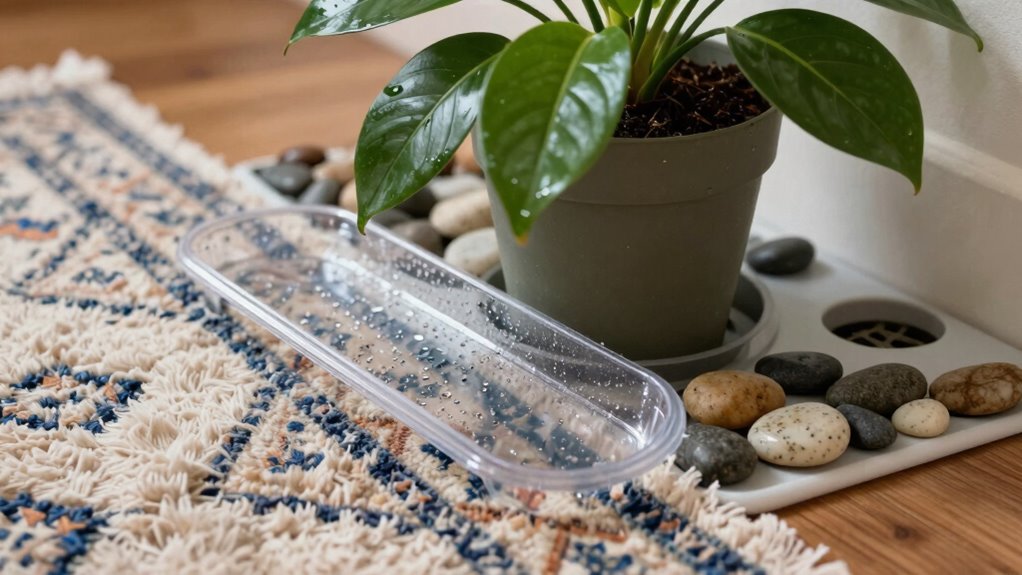

To protect your rugs from indoor plant moisture and soil, guarantee your pots have proper drainage holes or add trays with built-in saucers to catch excess water. Elevate your plants using stands or risers, keeping them above the rug surface. Use saucers or waterproof liners to contain soil and prevent spills. Regularly check drainage systems and clean them to avoid blockages. Want to learn more about keeping your indoor space clean and safe? Keep exploring for detailed tips.

Get furniture and decor delivered free with Prime
- Fast, free delivery on millions of items
- Prime Video, Amazon Music and more included
- Member-only deals all year
Key Takeaways
- Use planters with drainage holes and place them on trays or saucers to catch excess water.
- Elevate plants on stands or risers to prevent soil and moisture contact with rugs.
- Line pots with waterproof liners to contain soil and reduce spills during watering.
- Regularly check and clean drainage trays to prevent blockages and leaks.
- Employ proper watering techniques to minimize overwatering and soil runoff.
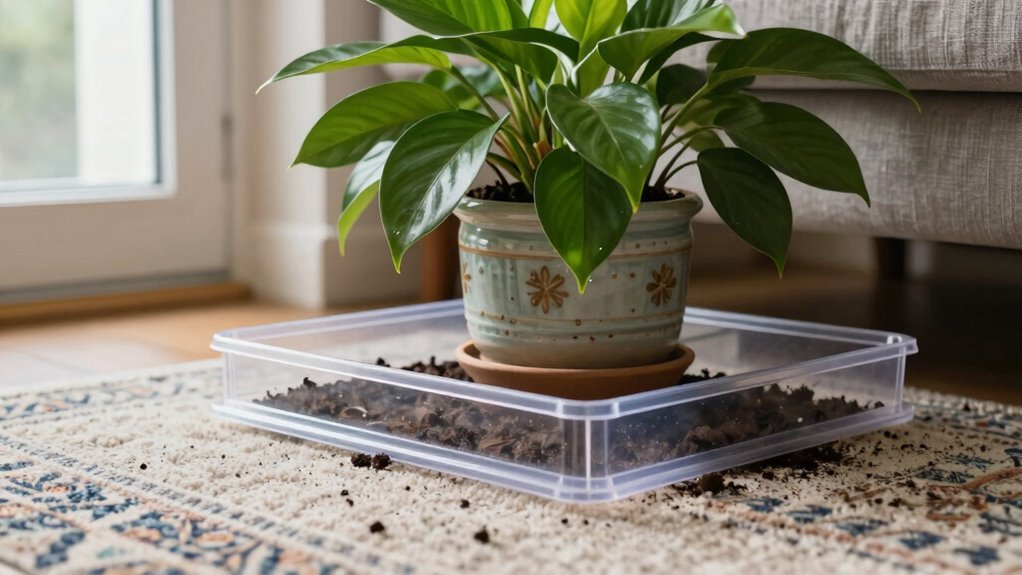
Indoor plants can bring beauty and freshness to your home, but their moisture and soil pose a risk to your rugs. To keep your floors protected, you need to focus on two key aspects: plant drainage and soil containment. Proper plant drainage ensures excess water doesn’t pool around the roots, which can cause leaks or spills that stain your rug. When selecting planters, choose ones with drainage holes. These allow water to escape naturally, preventing overwatering and reducing the chance of soil runoff. If your planter doesn’t have drainage holes, consider adding some or use a tray with a built-in saucer to catch excess water before it seeps onto your rug.
Choose planters with drainage holes or add trays to prevent water spills onto your rugs.
Soil containment is just as vital. You want to prevent soil from escaping the pot and falling onto your rug, especially during watering or when moving plants. Using a saucer or tray underneath each plant is a simple way to contain soil and moisture. For added protection, place a layer of gravel or small stones at the bottom of the tray before setting the pot on top. This not only helps with drainage but also acts as a barrier, keeping soil from splashing out. Additionally, you can use a waterproof plant liner inside the pot, which creates a barrier between the soil and the planter’s exterior, minimizing spills and leaks. Ensuring proper watering practices can further reduce excess moisture and soil spillage.
Another effective method is to elevate your plants off the rug. Use plant stands or risers to lift pots slightly, giving you better access to drainage trays and making it easier to clean any stray soil or water. Elevating your plants also helps improve air circulation around the pots, which benefits plant health and reduces moisture buildup. Regularly checking and maintaining your drainage systems guarantees they function properly, preventing accidental leaks that could damage your rug. Understanding the importance of plant drainage and soil containment can make a significant difference in preserving your flooring. Proper air circulation is also crucial for maintaining healthy indoor plants and reducing excess moisture around your plants.
Incorporating these practices not only protects your rugs but also promotes healthier plants. Proper plant drainage and soil containment are simple yet powerful strategies to keep your indoor garden looking great without risking your flooring. By paying attention to how water and soil are managed, you create a cleaner, safer environment, and your rugs stay pristine. Taking these steps might require some initial effort, but they pay off by preventing stains, mold, and the hassle of cleaning soil or water damage. Keep your indoor plants thriving while your rugs remain vibrant and intact, simply by focusing on effective drainage and soil containment.
indoor plant drainage tray with saucer
As an affiliate, we earn on qualifying purchases.
As an affiliate, we earn on qualifying purchases.
Frequently Asked Questions
Can Using a Drip Tray Prevent Moisture Damage Effectively?
Yes, using a drip tray can effectively prevent moisture damage when combined with waterproof barriers. It catches excess water from your plants, reducing humidity around your rug. To enhance protection, regularly empty and clean the tray. Additionally, controlling humidity levels in your space helps prevent mold and mildew. This simple step guarantees your rug stays dry and damage-free, keeping your indoor plant setup both healthy and attractive.
What Are the Best Rug Materials Resistant to Moisture?
Imagine a rainstorm on a sunlit day; your rug needs to withstand both elements. Synthetic fibers excel here, resisting moisture and drying quickly—ideal for humid indoor spots. Wool, while known for durability, provides natural resistance against moisture, but requires proper care. Choose synthetic fibers for a low-maintenance, moisture-resistant rug or opt for wool if you want a durable, natural option that handles humidity better than many other materials.
How Often Should I Clean My Rug to Prevent Soil Buildup?
You should clean your rug at least once a week to prevent soil buildup, pet hair, and allergens. Regular vacuuming removes surface dirt and keeps allergens from settling deeper into the fibers. For thorough cleaning, consider deep cleaning every few months, especially if you have pets or allergies. This routine helps maintain a healthier environment, reduces odors, and preserves your rug’s appearance over time.
Are There Specific Plants That Cause Less Soil Spillage?
Some plants cause less soil spillage because they have sturdier root systems and require less watering, reducing soil runoff. To further prevent mess, use plant drip trays and soil containment methods, especially with plants prone to spilling soil or water. Consider choosing low-maintenance plants like succulents or cacti, which tend to have less soil spillage. These precautions help keep your rugs clean and free from soil or moisture damage.
What Are Natural Remedies to Remove Soil Stains From Rugs?
To remove soil stains from rugs naturally, start by blotting the spill to absorb excess soil. Use a mixture of equal parts white vinegar and water, applying it gently to the stain. Let it sit for a few minutes, then blot again. This remedy helps break down soil without harming your rug. Remember, proper plant drainage reduces soil spillage, and choosing plants with less soil absorption minimizes future stains.
Conclusion
Now that you’re armed with these tips, your rugs can stay pristine even as your indoor jungle thrives. Imagine your beautiful carpet as a noble knight, bravely guarding your home’s treasure—your decor—while sneaky soil and moisture try to invade. With just a little effort, you’ll keep this fierce protector spotless, avoiding the chaos of muddy footprints and soggy messes. Because nothing says “interior success” like a rug that’s as dry and flawless as your houseplants are lush.
Halloween Picks
halloween
As an affiliate, we earn on qualifying purchases.