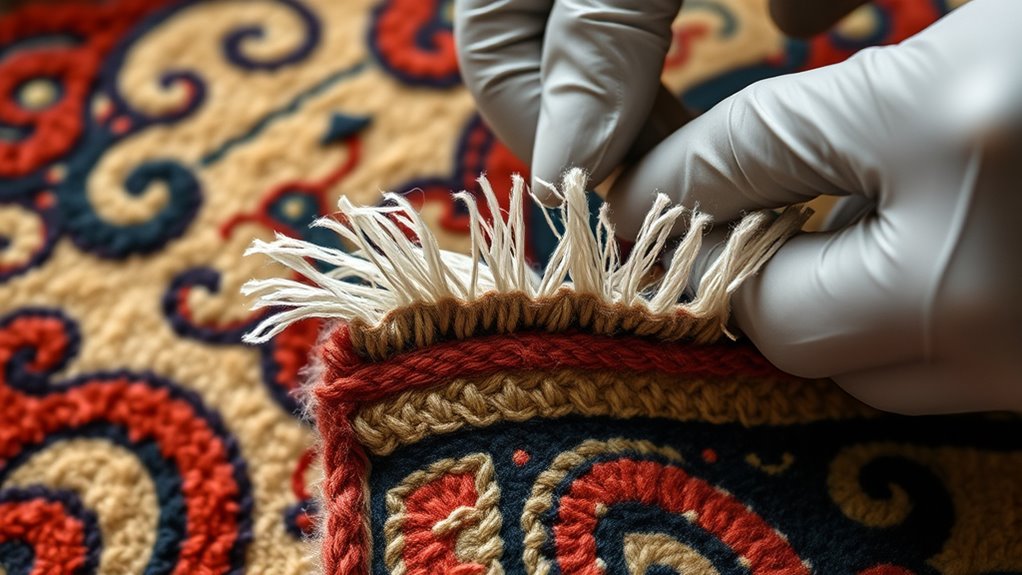

To prevent rug fringe damage, handle it gently and avoid pulling or walking on it. Regularly inspect for frays and use a rug pad in high-traffic areas to reduce friction. Clean the fringe carefully with mild detergent and avoid soaking it or using harsh chemicals. If you notice unraveling or loose threads, secure them promptly with needle and matching thread. Staying vigilant and caring for your fringe will keep it looking fresh and intact—discover more tips below.
Key Takeaways
- Regularly vacuum fringe gently, avoiding aggressive suction or beater bars to prevent fraying.
- Handle fringes minimally and avoid pulling or walking on them to reduce wear and tear.
- Use rug pads in high-traffic areas to minimize friction and protect fringes from damage.
- Repair small frays promptly with needle and matching thread to prevent further unraveling.
- Keep fringes clean with mild, natural cleaners and avoid excessive soaking or harsh chemicals.
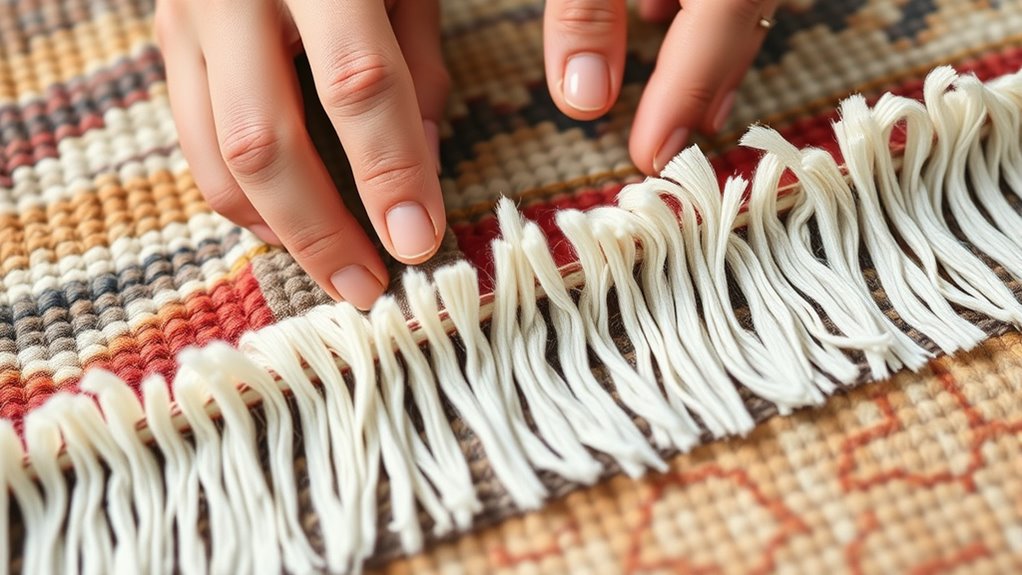
Rug fringe damage is a common issue that can quickly ruin the appearance of your rug if left unaddressed. The fringe acts as a decorative and protective border, but it’s vulnerable to wear, tear, and dirt. To keep your rug looking its best, you need to understand how to prevent damage and perform effective fringe repair when necessary. One of the first steps is regular fringe cleaning. Gently vacuum the fringe to remove dust and debris, but avoid using a beater bar or aggressive suction, which can pull or fray the fibers. Hand-washing the fringe with mild detergent can also help maintain its integrity and appearance. When cleaning, be careful not to soak the fringe excessively, as excess water can weaken the fibers and cause fraying. Additionally, proper fringe maintenance can extend the life of your rug’s border and keep it looking pristine.
In addition to cleaning, pay attention to how you handle your rug to prevent damage. Avoid walking on the fringe or pulling at it, as this can lead to unraveling or fraying. If your rug is placed in a high-traffic area, consider using a rug pad to reduce friction that accelerates wear. When it comes to fringe repair, it’s best to act promptly at the first signs of damage. Small frays or loose threads can be secured with a needle and matching thread to prevent further unraveling. If the damage is more extensive, you might need to reweave or replace sections of the fringe. In some cases, seeking professional help is advisable, especially if you’re unsure about how to perform fringe repair correctly.
Maintaining the integrity of your rug’s fringe also involves avoiding harsh chemicals and aggressive cleaning methods that can weaken the fibers. Always opt for gentle, natural products and be cautious when using water. If you notice staining or dirt buildup, a mild cleaning solution applied carefully can restore the fringe’s appearance without causing damage. Additionally, protect the fringe from pets or children who might pull or chew on it, as this can lead to significant damage. Regular inspection is key—by catching small issues early, you can perform minor fringe repairs before they turn into costly replacements.
Frequently Asked Questions
Can I Repair Damaged Rug Fringes Myself?
Yes, you can do a DIY repair on damaged rug fringes. Start by carefully untangling and trimming frayed fibers, then consider fringe replacement if the damage is extensive. Use a hot glue gun or sewing needle and thread to reattach loose fringe or replace missing sections. With patience, you can restore your rug’s appearance and extend its life without professional help. Just follow step-by-step instructions for best results.
How Often Should I Clean Rug Fringes?
You should clean your rug fringes at least once a month to keep them looking their best. Regular fringe cleaning helps prevent dirt buildup and maintains their appearance. During fringe maintenance, gently shake out loose debris and use a mild detergent if needed. Avoid harsh scrubbing to prevent damage. Consistent fringe cleaning and proper care will prolong the life of your rug’s fringes and keep your entire rug looking fresh and vibrant.
Are Synthetic Fringes More Durable Than Natural Ones?
Synthetic fringes are generally more durable than natural ones because of their synthetic durability. You’ll find that synthetic fibers resist fraying and tearing better, making them ideal for high-traffic areas. In contrast, natural fringes tend to be more fragile and prone to damage from regular use. If you want long-lasting fringes that require less maintenance, synthetic options are a smarter choice, especially if durability is your priority.
What Tools Are Best for Fringe Restoration?
You should use a fine needle or a sewing pin for fringe restoration, as these tools help you perform precise work. To preserve fringe color and maintain its appearance, focus on gentle handling and proper fringe knotting techniques. Carefully re-knot loose fibers and secure frayed edges, ensuring the fringe remains vibrant and intact. These tools and techniques allow you to effectively restore your rug’s fringe while preserving its original beauty.
Does Sunlight Cause More Fringe Damage?
Sunlight degradation can cause more fringe damage over time, leading to fringe discoloration and weakening of fibers. When your rug is exposed to direct sunlight, UV rays break down the natural fibers, making the fringe more susceptible to tearing and fading. To protect your rug, avoid prolonged sun exposure or use window coverings. This simple step helps preserve the fringe’s integrity and keeps its appearance vibrant for longer.
Conclusion
To keep your rug’s fringe looking fresh, stay proactive with regular gentle cleaning and avoid rough handling. Repair small tears before they worsen, and protect your rug from heavy furniture. Think of your rug as a delicate dance partner—you don’t want to trip over each other’s steps. When you give it the care it deserves, your rug will stand the test of time, shining like a diamond in the rough.