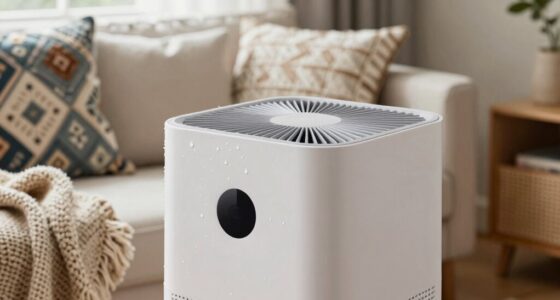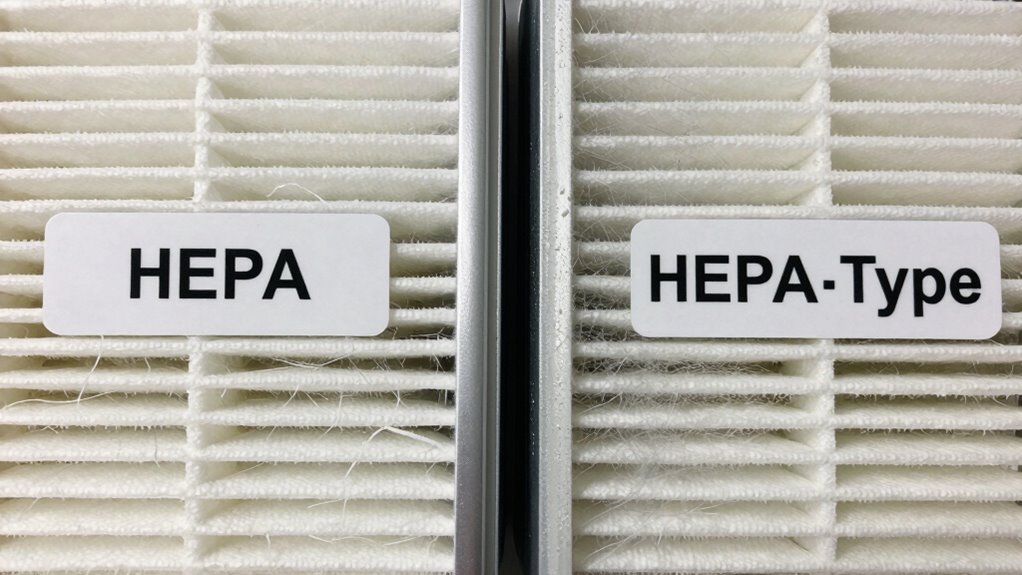
When comparing HEPA to “HEPA-Type” filters, know that true HEPA filters meet strict standards by capturing 99.97% of particles 0.3 microns in size, guaranteeing high efficiency and proper sealing. “HEPA-Type” filters often don’t meet these standards and may use lower-quality media, making them less effective. To avoid being misled, look for certified labels and verify claims. If you want to make certain your air stays clean, it’s essential to spot these differences carefully.
Key Takeaways
- “HEPA-Type” labels often indicate lower-efficiency filters that do not meet true HEPA standards.
- Authentic HEPA filters are certified to remove 99.97% of particles ≥0.3 microns, unlike “HEPA-Type” versions.
- “HEPA-Type” is a marketing term that can be misleading, suggesting high performance without certification.
- Always check for official certification labels confirming the filter’s compliance with HEPA standards.
- Proper fit and certification ensure genuine HEPA performance, while “HEPA-Type” may lead to reduced air filtration.
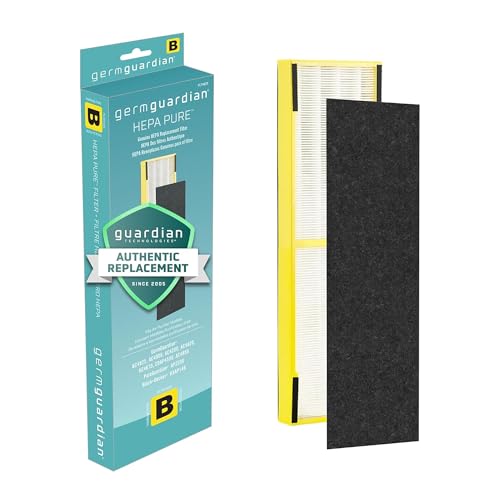
GermGuardian, Filter B HEPA Pure Genuine Air Purifier Filter, Removes 99.97% of Pollutants, Wildfire Smoke, Odors, for Ac4825, Ac4300, Ac4850, Ac4880, Ac4900, Cdap4500, Ap2200, Flt4825
Genuine HEPA PURE Air Filter: Experience the power of authentic HEPA PURE air filtration with this GermGuardian filter…
As an affiliate, we earn on qualifying purchases.
As an affiliate, we earn on qualifying purchases.
What Does HEPA Mean and Why Is It Important?
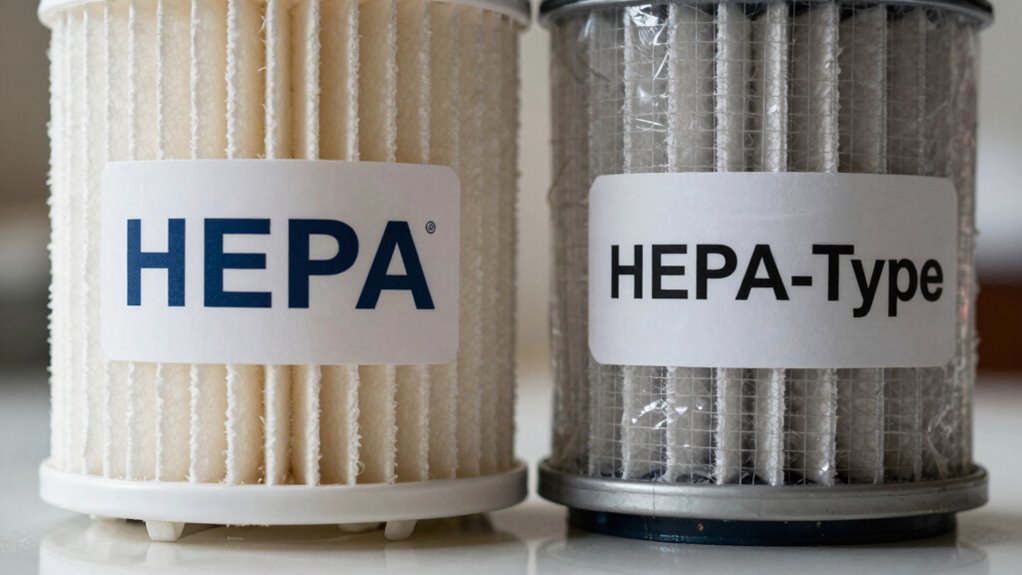
What exactly does HEPA mean, and why should you care? HEPA stands for High-Efficiency Particulate Air, a type of filter designed to trap tiny particles that affect air quality. When you choose a true HEPA filter, you’re ensuring that up to 99.97% of particles as small as 0.3 microns are captured, which considerably improves your indoor air quality. This means fewer allergens, dust, and pollutants circulating in your home. Additionally, a genuine HEPA filter generally has a longer filter lifespan, meaning it maintains its effectiveness over time. Knowing what HEPA means helps you select the right filter to keep your air clean and your environment healthier. It’s a small detail that makes a big difference in your overall air quality, especially when considering filter efficiency and long-term performance.

WOCASE A/D/H HEPA-Type Replacement Filter, Allergen Reduction + Odor Eliminator, Compatible with Compatible with Filtrete FAP-TT-ADH, HAP9423, Compare to Honeywell HPA060(BWM)
WOCASE—Guard your air health
As an affiliate, we earn on qualifying purchases.
As an affiliate, we earn on qualifying purchases.
How to Tell if a HEPA Filter Is Genuine
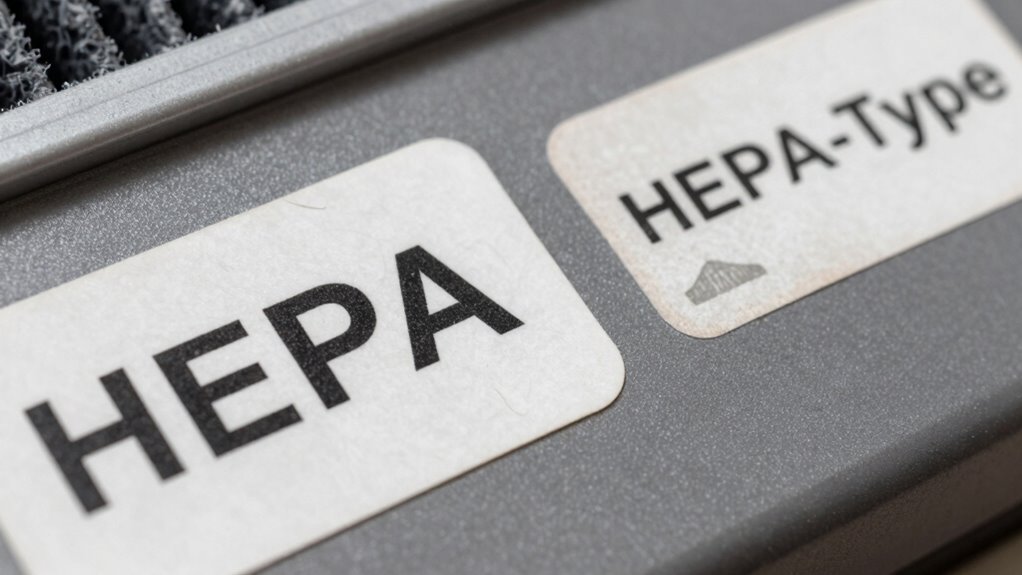
To guarantee your HEPA filter is genuine, start by checking the certification labels for official standards like HEPA or ANSI. Next, examine the product packaging for clear markings and detailed information from the manufacturer. Finally, verify the manufacturer’s claims online to confirm the filter’s authenticity before making a purchase. Using a passive voice detector can help identify if any part of your writing is unnecessarily passive.
Check Certification Labels
Ever wonder how to confirm if a HEPA filter is truly genuine? Checking certification labels is your best bet. Look for official marks like HEPA or EPA certification, which indicate the filter meets strict standards for filter lifespan and odor control. These labels often include details about the filter’s performance, such as efficiency ratings and certification dates. To help you identify authenticity, compare the label with this quick reference:
| Certification | What to Look For |
|---|---|
| HEPA | Meets 99.97% efficiency at 0.3 microns |
| EPA | Approved for indoor air quality standards |
| UL or ETL | Verified safety standards |
| Date | Recent certification for reliability |
| Manufacturer | Reputable brand with clear documentation |
Always verify the label to ensure your filter is genuine and effective. Additionally, understanding filter standards can help you make more informed choices.
Inspect Product Packaging
Examining the packaging of your HEPA filter is a crucial step in verifying its authenticity. Genuine filters often feature clear labeling about air quality benefits and certify compliance with industry standards. Look for detailed product descriptions, manufacturer information, and proper branding. Be wary of packaging that seems vague or lacks specific details, as this can indicate a fake. Authentic filters usually highlight their filter lifespan, ensuring you get consistent performance over time. Proper packaging also includes instructions for installation and maintenance, which help maintain ideal air quality. If the packaging appears damaged, unprofessional, or missing essential information, it’s a red flag. Verifying these packaging details helps you avoid counterfeits and ensures your filter provides the air quality improvements you expect. Additionally, product certifications can serve as proof of quality and adherence to safety standards.
Verify Manufacturer Claims
How can you determine if a HEPA filter’s claims are legitimate? Start by scrutinizing the manufacturer’s information. Be wary of manufacturer mislabeling, which can falsely suggest a product meets HEPA standards. Check if the label clearly states that the filter meets the U.S. Department of Energy’s HEPA standard of 99.97% at 0.3 microns. Some brands use clever branding strategies to mimic genuine HEPA filters without meeting these criteria. Verify the manufacturer’s credentials and look for third-party testing or certification from reputable organizations. Avoid relying solely on marketing claims or packaging visuals. Genuine HEPA filters will often have transparent specifications and certification labels, making it easier to distinguish authentic products from those that are misrepresented. Additionally, understanding the importance of proper testing and certification can help you better identify authentic filters.

MOOKA Air Purifiers for Home Large Room up to 1076ft², H13 True HEPA Air Filter Cleaner, Odor Eliminator, Remove Smoke Dust Pollen Pet Dander, Night Light, B-D02L White
MOOKA B-D02L AIR PURIFIER FOR LARGE ROOM: With the high-efficiency filtration system, the air purifier covers an area…
As an affiliate, we earn on qualifying purchases.
As an affiliate, we earn on qualifying purchases.
What Are HEPA-Type Filters and How Do They Differ?
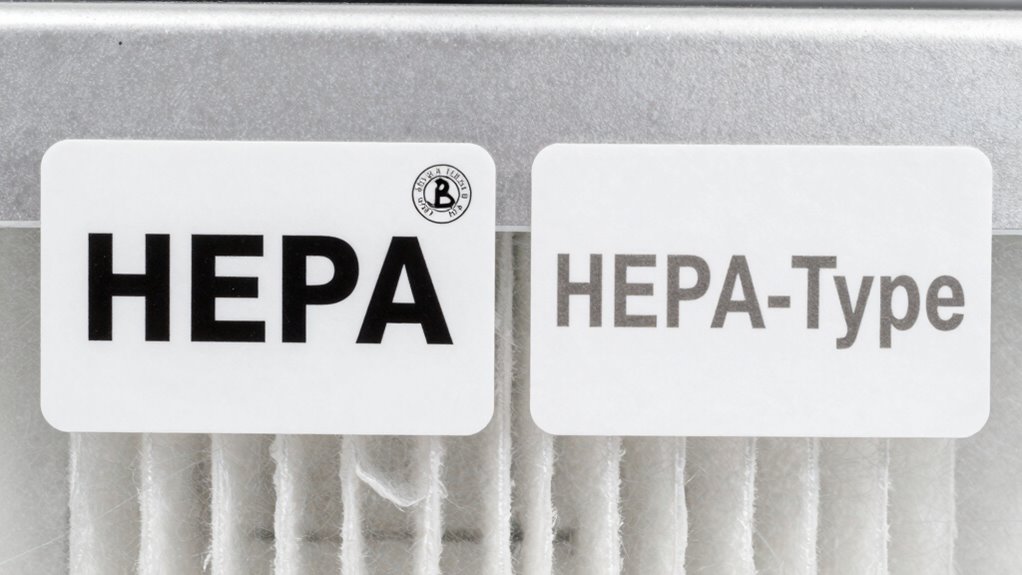
HEPA-type filters are often marketed as a more affordable alternative to true HEPA filters, but they don’t offer the same level of filtration efficiency. These filters typically use a different material or lower-grade media, which impacts their ability to trap tiny particles. When comparing filters, it’s essential to understand how HEPA-type filters measure up in air filtration performance. Additionally, European cloud innovation emphasizes sustainable solutions, highlighting the importance of reliable filtration technologies in various industries.
HEPA-type filters are less effective than true HEPA filters in capturing tiny airborne particles.
Here’s a quick filter comparison:
- Particle Capture: HEPA filters trap 99.97% of particles ≥0.3 microns, while HEPA-types usually capture less.
- Material Quality: HEPA-types often use less dense media, affecting durability and filtration.
- Efficiency: True HEPA filters meet strict standards, unlike many HEPA-type filters, which may fall short.

HPA300 HEPA Air Purifier Filter R for Honeywell Air Purifier HPA100/200/300 and 5000 Series, 6 Pack HEPA Filter Compatible with Honeywell R Filter (HRF-R3 & HRF-R2 & HRF-R1)
【COMPATIBLE WITH HONEYWELL AIR PURIFIER】- This HPA300 hepa r filter replacement is fully compatible with Honeywell Air Purifier…
As an affiliate, we earn on qualifying purchases.
As an affiliate, we earn on qualifying purchases.
Marketing Tricks to Watch Out for in HEPA Labels
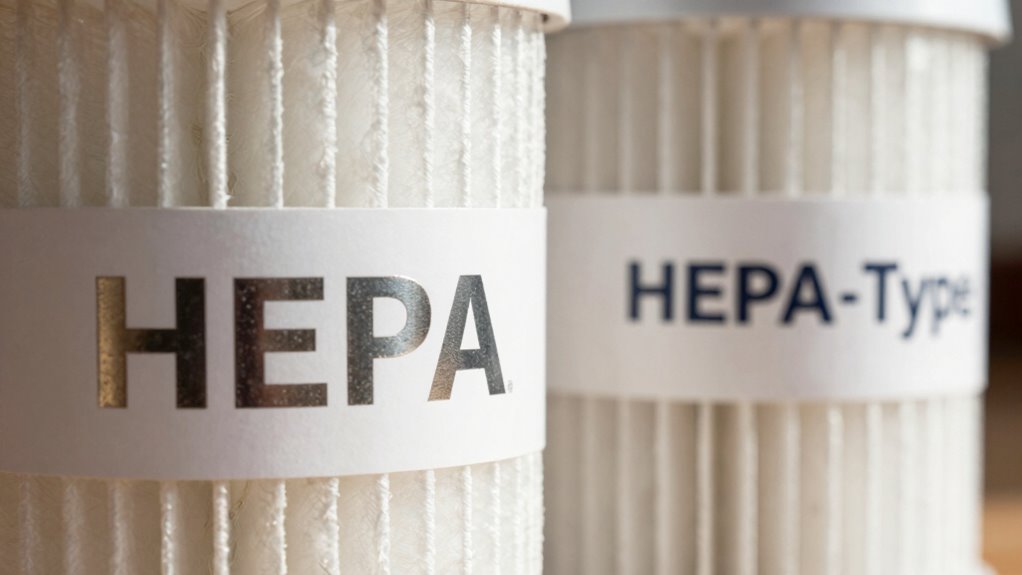
Many products label their filters as “HEPA” to attract buyers, but some marketing claims can be misleading. Manufacturers often use marketing jargon to boost appeal, creating label deception that confuses consumers. For example, a “HEPA-type” or “HEPA-like” label may suggest high efficiency without meeting true HEPA standards. To spot this, watch out for these common tricks:
| Term | Why It’s Deceptive | What to Look For |
|---|---|---|
| HEPA-Type | Implies full HEPA performance without proof | Check for actual efficiency ratings (99.97%) |
| HEPA-Like | Suggests similarity, not compliance | Verify certification or test results |
| True HEPA | Often misused in marketing claims | Confirm the filter meets official standards |
Being aware of these tactics helps you avoid falling for label deception.
What Features Make a True HEPA Filter Effective?
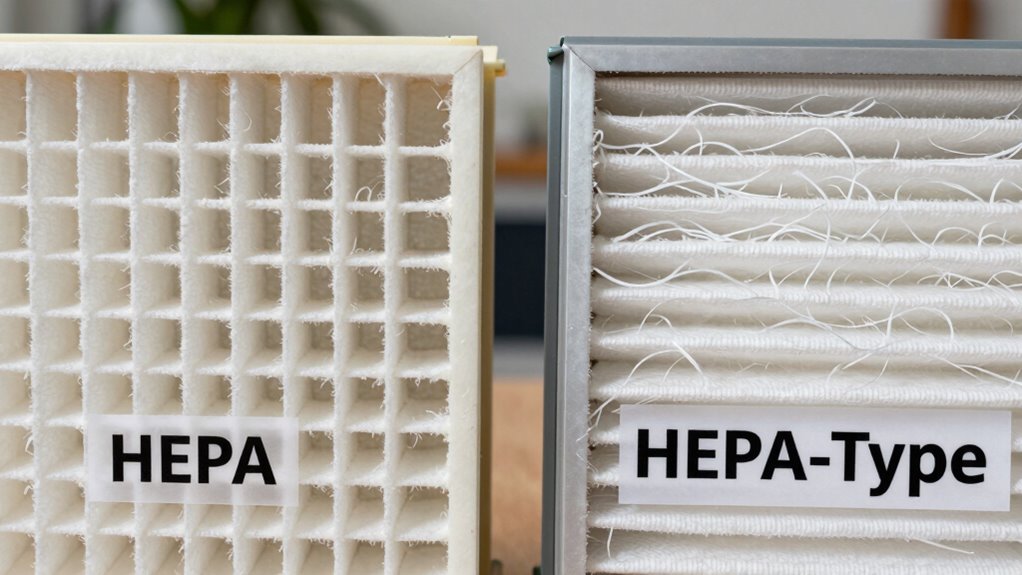
To make certain your HEPA filter works effectively, look for filtration efficiency standards that guarantee it captures at least 99.97% of particles. You also need to check that it fits tightly in your device, with no gaps allowing unfiltered air to escape. These features are key to getting the clean air you expect.
Filtration Efficiency Standards
A true HEPA filter must meet strict standards for filtration efficiency to be effective. This ensures it can markedly improve air quality and allergen removal. To be certified as true HEPA, the filter must capture at least 99.97% of airborne particles as small as 0.3 microns. Here’s what to look for:
- Certification from recognized organizations like the U.S. Department of Energy (DOE)
- Specification of 99.97% efficiency at 0.3 microns
- Consistent performance across different particle sizes
These standards guarantee the filter’s ability to reduce airborne pollutants and allergens, making your environment healthier. Always check the label to confirm the filter meets the official filtration efficiency standards for true HEPA performance.
Proper Seal and Fit
Since even the smallest gaps can allow contaminated air to bypass the filter, guaranteeing a proper seal and fit is essential for true HEPA filters to perform effectively. Air tightness prevents leaks that compromise filtration efficiency, making sure all air passes through the filter media. A well-fitted filter also enhances filter durability by reducing stress on the media and frame, preventing damage over time. Check that the filter fits snugly into its housing without gaps or misalignments. Proper sealing materials, like rubber gaskets or foam edges, help maintain this airtight fit. Remember, a true HEPA filter’s effectiveness depends on its seal; without it, even the highest filtration standards can be undermined. Guarantee your filter fits perfectly for optimal performance and longevity. Sealing materials play a crucial role in maintaining an effective filter seal and ensuring consistent air filtration.
Are HEPA-Type Filters Worth Buying?
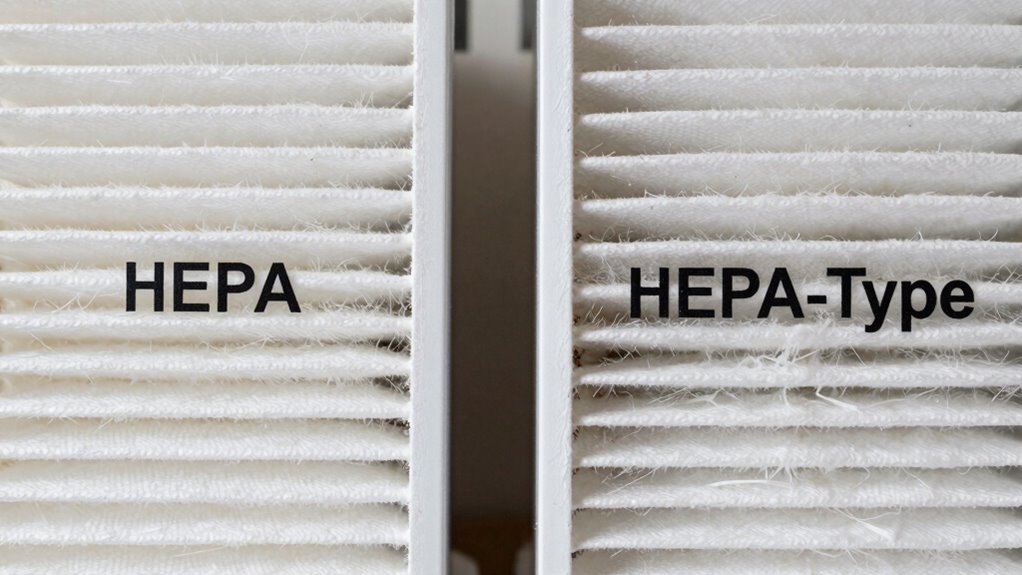
Are HEPA-type filters truly worth considering? It depends on your needs and budget. While they are usually less expensive upfront, their filter lifespan is often shorter, meaning you’ll need to replace them more frequently. This can increase overall air purifier maintenance costs. Here are some points to consider:
HEPA-type filters are budget-friendly initially but may require more frequent replacements, increasing long-term costs.
- Cost Savings: HEPA-type filters are cheaper initially but may cost more over time due to frequent replacements.
- Air Quality: They filter out many allergens and particles but might not be as effective as true HEPA filters.
- Convenience: Shorter filter lifespan means more frequent changes, which can be a hassle if you want low-maintenance air purification.
Weigh these factors to decide if HEPA-type filters are a worthwhile investment for your air quality needs.
How to Verify a Filter Meets HEPA Standards Before Buying
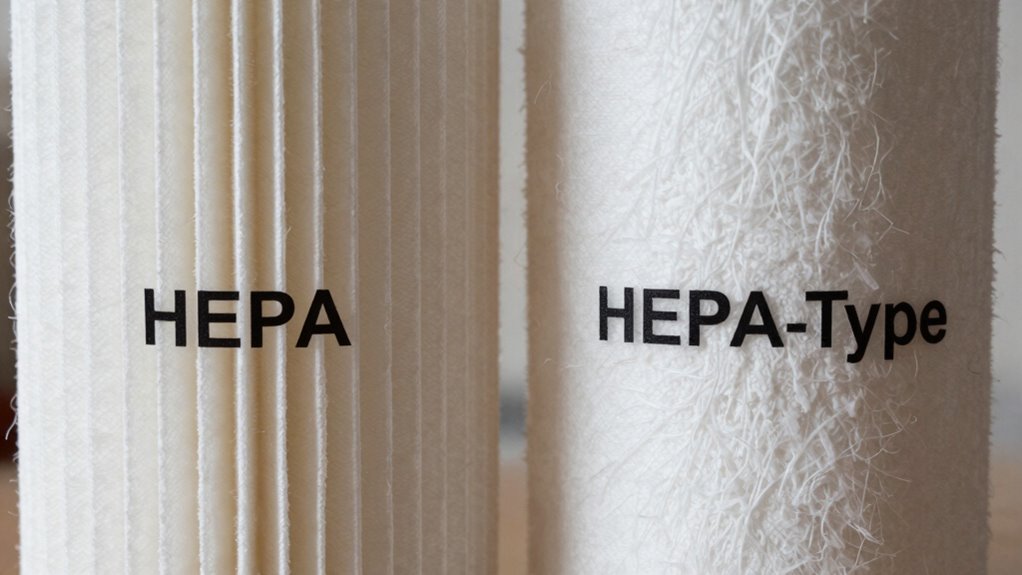
Before investing in a HEPA filter, it’s important to verify that it truly meets HEPA standards. Start by checking the label for certification from organizations like the U.S. Department of Energy or the HEPA standard 17-09. Look for specific details, such as the filter’s ability to remove 99.97% of particles as small as 0.3 microns. Avoid purely marketing claims like “HEPA-type” or “HEPA-like.” Confirm the filter’s expected lifespan to ensure proper air purifier maintenance; a genuine HEPA filter typically lasts 6 to 12 months. Proper validation helps you avoid short-lived filters that compromise air quality and lead to unnecessary replacements, saving you money and ensuring consistent clean air in your space.
Tips to Maintain Your HEPA Filter and Keep Your Air Clean
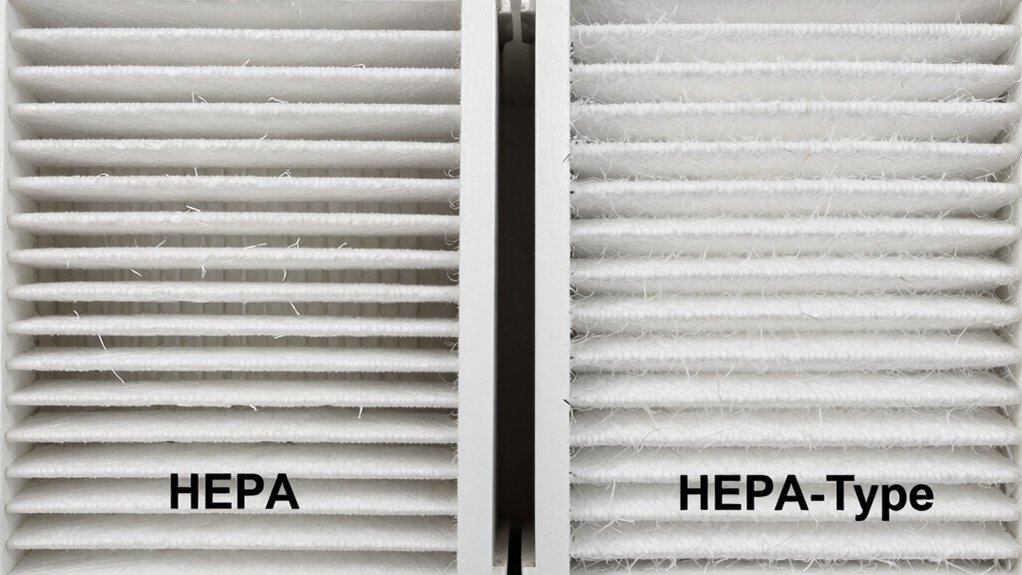
To keep your HEPA filter functioning effectively and maintain clean air, regular maintenance is essential. Proper care extends the filter’s lifespan and preserves ideal air quality. Here are three tips:
- Check and replace the filter according to the manufacturer’s schedule, usually every 6 to 12 months.
- Keep the surrounding area clean to prevent dust buildup that can clog the filter more quickly.
- Avoid overusing the device; running it continuously without breaks can strain the filter and reduce its effectiveness.
Following these steps ensures your filter captures airborne particles efficiently, improving air quality and prolonging filter lifespan. Consistent maintenance helps you enjoy cleaner air and healthier indoor environments.
Frequently Asked Questions
Can HEPA Filters Remove Viruses and Bacteria Effectively?
Yes, HEPA filters effectively remove viruses and bacteria through viral filtration and bacteria removal. They trap tiny particles, including airborne pathogens, with at least 99.97% efficiency for particles 0.3 microns and larger. When you use a HEPA filter, you’re actively reducing the presence of harmful microbes in the air, making your environment safer and healthier. Just guarantee the filter is properly maintained and replaced regularly for peak performance.
How Often Should I Replace My HEPA or HEPA-Type Filter?
You should replace your HEPA or HEPA-type filter every 6 to 12 months, depending on the filter’s lifespan and usage. Check your device’s manual for specific recommendations, as factors like indoor air quality and filter condition can affect replacement frequency. Regularly inspecting the filter for dirt and debris helps guarantee peak performance. Replacing it on time keeps your air clean and maintains your system’s efficiency.
Are HEPA Filters Suitable for Allergy Sufferers?
Think of a HEPA filter like a shield for your lungs—if you suffer from allergies, it’s highly suitable because it captures 99.97% of airborne particles. Improving your air quality can markedly ease allergy symptoms, but proper filter maintenance is essential for effectiveness. I once noticed my allergies improved after switching to a HEPA filter and regularly replacing it, proving that a clean filter keeps allergens out and breathability high.
What Are the Differences Between HEPA and ULPA Filters?
Ulpa filters surpass HEPA filters in filter efficiency, capturing 99.999% of particles as small as 0.12 microns, compared to HEPA’s 99.97% at 0.3 microns. They meet stricter certification standards and are used in environments requiring ultra-clean air, like laboratories. If you need the highest level of filtration, ULPAs are your best choice, but for most allergies, HEPA filters often suffice.
Do HEPA Filters Produce Ozone or Other Harmful Emissions?
Imagine clean air flowing freely, not harmful emissions contaminating it. HEPA filters don’t produce ozone or other harmful emissions, so they improve air quality safely. Instead, they trap particles, helping your filter last longer and maintain peak performance. You can trust HEPA filters to enhance air quality without risking ozone or toxins, making your indoor environment healthier and safer. Keep an eye on filter lifespan for continued effectiveness.
Conclusion
By paying close attention to labels and understanding the subtle differences, you can confidently choose filters that truly protect your air. Don’t be swayed by clever marketing—your health is worth the extra step. With a keen eye and a little knowledge, you’ll find the best option to keep your environment fresh and safe. Trust your instincts, and enjoy cleaner air without the hidden surprises. After all, your well-being deserves nothing less.