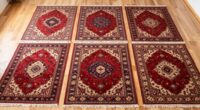
To prevent rug fading without blocking natural light, position your rugs away from direct sunlight or use UV-protective window films and curtains. Rotate your rugs regularly, choose materials like wool or nylon that resist fading, and consider advanced dye treatments or protective coatings for added longevity. Professional cleaning and color preservation options can also help maintain vibrancy. For practical tips on balancing sunlight exposure and protection strategies, discover more ways to keep your rugs colorful longer.
Key Takeaways
- Use UV-protective window films or UV-resistant coatings to block harmful rays while allowing natural light.
- Regularly rotate rugs to ensure even exposure, minimizing uneven fading from sunlight.
- Incorporate sheer curtains or blinds to diffuse sunlight without fully blocking natural illumination.
- Choose high-quality, dyefast materials and treatments designed to resist fading from light exposure.
- Seek professional restoration or protective treatments to enhance color longevity without sacrificing daylight.
How Sunlight Causes Rug Fading: And Why It Matters

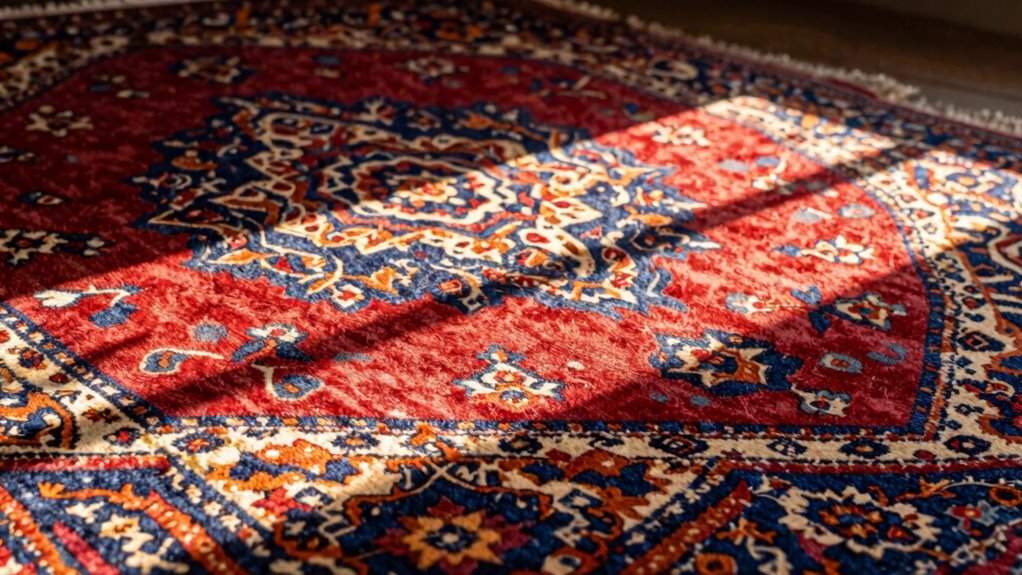
Sunlight causes rug fading because the ultraviolet (UV) rays break down the dye molecules in the fibers. When your rug is exposed to UV radiation, the energy from the sunlight triggers chemical reactions that lead to pigment degradation. This process weakens and discolors the dyes, causing the colors to fade over time. You might notice that areas near windows or in direct sunlight lose their vibrancy faster than shaded sections. UV exposure accelerates the breakdown of dye molecules, making the fading process inevitable if your rug is regularly exposed to sunlight. Understanding this helps you realize why maintaining some shade or covering can protect your rug’s original colors and extend its lifespan. Proper awareness of UV effects is key to preserving your rug’s appearance. To help combat this, using protective coverings or UV-resistant window treatments can significantly reduce the fading caused by sunlight.
Should You Expose Rugs to Sunlight or Keep Them in the Shade?
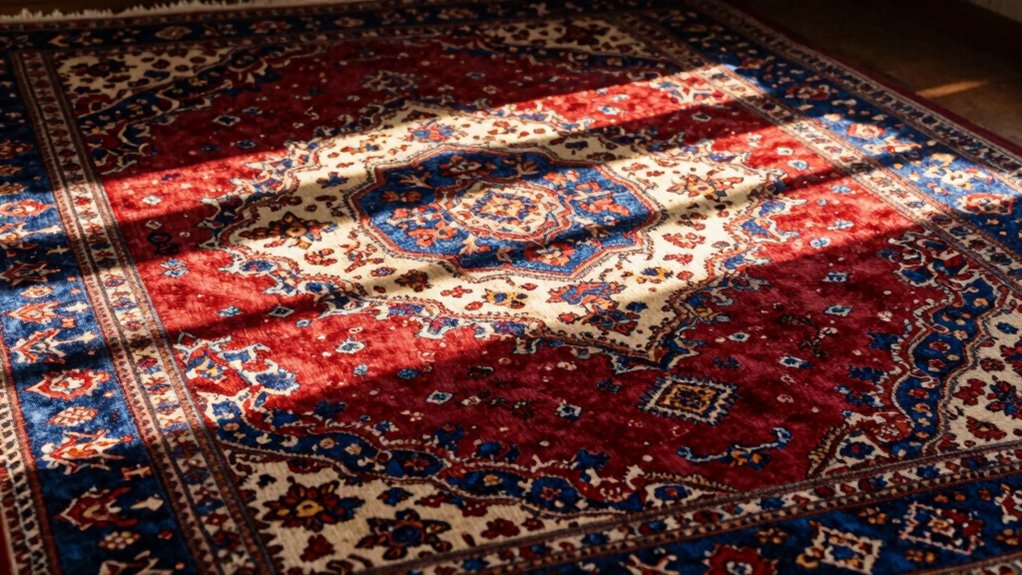
Deciding whether to expose your rug to sunlight or keep it in the shade depends on balancing appearance and longevity. Sun exposure can brighten your space but accelerates fading, while shade preservation helps maintain vibrant colors longer. Consider the rug’s material and color fastness before exposing it to direct sunlight. Use the following table to evaluate your options:
| Goal | Benefits | Drawbacks |
|---|---|---|
| Sun Exposure | Enhances brightness, reduces dust buildup | Faster fading, color loss |
| Shade Preservation | Maintains original colors longer | May make space less lively |
| Balanced Approach | Periodic sun, regular shade | Slight fading over time |
Choose based on your priorities: aesthetics or durability. Adjust exposure accordingly to prolong your rug’s life. Additionally, understanding color fastness can help you make more informed decisions about rug care.
Are Dye Treatments a Good Long-Term Solution for Fading?

Dye treatments may seem like a quick fix, but their durability can vary over time. You might notice colors fading or shifting unexpectedly, which could affect your rug’s appearance. Considering these factors helps determine if dye solutions are a reliable long-term choice for your fading concerns. Additionally, understanding the impact of Free Floating in outdoor settings can influence how well color treatments hold up against environmental exposure.
Durability of Dye Solutions
While dye solutions can initially restore color vibrancy, their long-term durability often comes into question. To assess their effectiveness, professionals conduct colorfastness testing, which measures how well the dye resists fading over time. Dyes with high dye stability maintain their hue after exposure to light, washing, and cleaning. However, not all dyes are equally durable; some tend to fade or wash out after months or years. This inconsistency makes dye treatments less reliable as a permanent solution. If you’re considering dyeing your rug, look for products with proven dye stability and ask about results from colorfastness testing. Additionally, understanding the dye stability of the product can help predict how long the color will last. Remember, even the best dyes may require touch-ups or reapplication to keep your rug looking vibrant over the long haul.
Potential Color Changes
Even the most durable dye solutions can experience noticeable color shifts over time, raising questions about their effectiveness as long-term fixes. Colorfastness issues often surface, causing dyes to fade or change hue after prolonged exposure to sunlight or cleaning. Additionally, dye migration can occur, leading to uneven color distribution or bleeding onto other fabrics. These changes can diminish the rug’s appearance and require costly re-treatments. While dye treatments may initially restore vibrancy, they aren’t always reliable for the long haul. It’s essential to think about that fading from UV exposure can eventually override the benefits of dyeing. Consequently, relying solely on dye treatments without addressing underlying light exposure risks might not provide a permanent solution to rug fading. Sustainable solutions are increasingly important for maintaining long-term color integrity and reducing the need for repeated treatments.
Practical Ways to Protect Your Rugs From Sun Damage
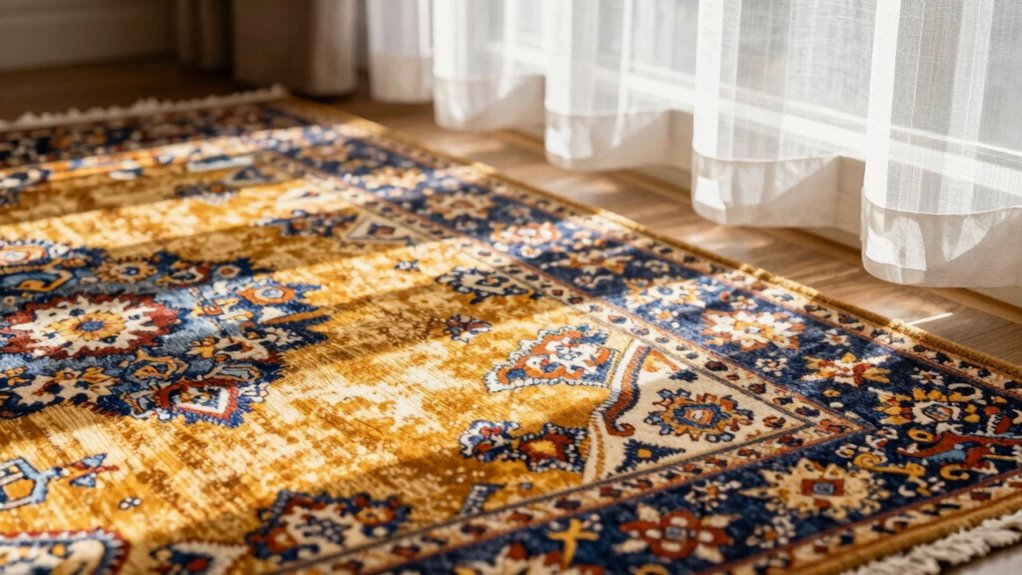
You can safeguard your rugs from sun damage by using window treatments like curtains or blinds to prevent harmful rays. Applying UV-resistant coatings can also help preserve their color and fibers over time. Additionally, rotating your rugs regularly ensures even exposure and minimizes fading spots. To further protect your investment, consider using reliable backup power solutions that maintain consistent indoor lighting, reducing the need to open windows frequently and minimizing sun exposure.
Use Window Treatments
Using window treatments is one of the most effective ways to shield your rugs from harmful sunlight. Selecting the right curtain fabrics can make a big difference; opt for thicker, tightly woven materials like blackout or thermal curtains that block UV rays. The window color also matters—darker or neutral shades absorb more light, reducing exposure, while lighter colors reflect sunlight and may offer less protection. When choosing curtains, consider layers or adding a lining for extra UV defense. Properly installed window treatments can be adjusted throughout the day to limit direct sunlight, preserving your rug’s colors and fibers. Additionally, understanding UV protection can help you select the most effective window coverings. By customizing your curtain choices, you can enjoy natural light without the risk of fading, keeping your rugs vibrant for years to come.
Apply UV-Resistant Coatings
Applying UV-resistant coatings is a practical way to protect your rugs from sun damage, especially in areas with direct sunlight. A UV coating creates a protective layer that absorbs or reflects harmful ultraviolet rays, preventing them from penetrating the fibers. This treatment helps preserve the color and integrity of your rug over time. You can find spray-on or brush-on UV coatings designed specifically for textiles, making application straightforward. Before applying, verify the rug is clean and dry. Use even strokes to cover the entire surface, paying close attention to edges. Once the coating dries, it forms a durable protective layer that reduces fading caused by sunlight exposure. Additionally, UV protection can be incorporated into your home maintenance routine to further prolong your rug’s lifespan. This simple step can notably extend your rug’s lifespan without sacrificing natural light in your space.
Rotate Rugs Regularly
To protect your rugs from sun damage, rotating them regularly is an effective strategy. This simple step promotes proper rugs maintenance and helps prevent uneven fading. By shifting your rug’s position every few months, you distribute exposure to sunlight more evenly, reducing the risk of color loss in one area. Regular rotation also allows you to inspect your rug for signs of wear or damage, making it easier to address issues early. This proactive approach preserves the rug’s original hues and enhances its longevity. Keep in mind that consistent rugs maintenance isn’t just about cleaning; it’s about safeguarding your investment. Understanding sunlight exposure can help you make informed decisions about rug placement and protection. With regular rotation, you maintain vibrant colors and extend your rug’s lifespan without sacrificing natural light or comfort in your space.
Best Rug Materials for Resist Fading From Sunlight
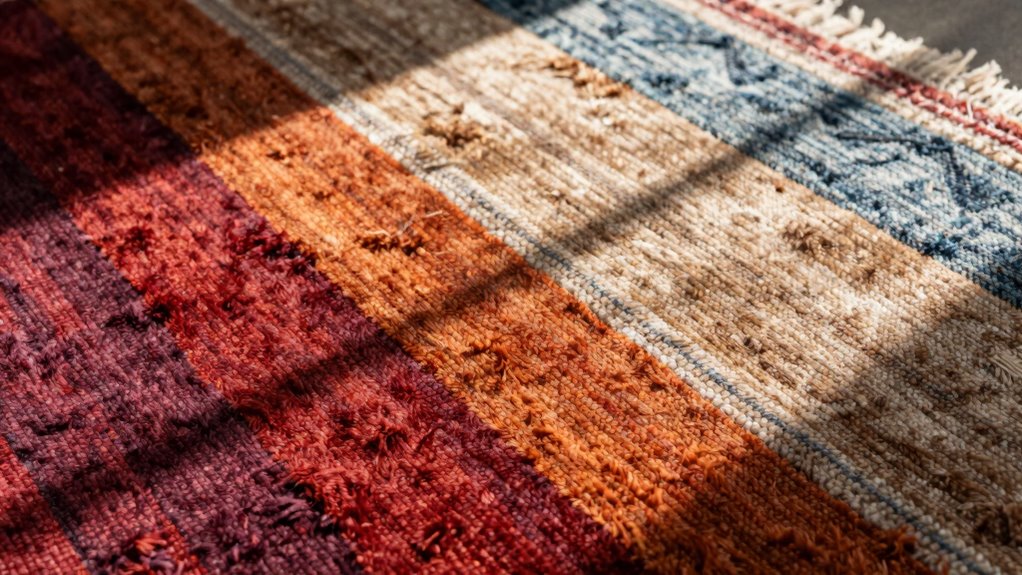
When selecting a rug that can withstand sunlight without fading, choosing the right material is essential. Look for options with high fiber resilience and made from colorfast fabrics, which resist UV damage and maintain vibrant hues over time. Materials like wool are naturally durable and resistant to fading due to their dense fibers. Synthetic fibers such as nylon and polyester also excel because they’re engineered for colorfastness and durability. Additionally, silk rugs with special treatments can offer some resistance, though they’re more delicate. Consider these options:
- Wool with natural resilience
- Nylon and polyester fibers
- Treated silk fabrics
- Synthetic blends designed for UV resistance
Using vetted materials ensures your rug stays colorful longer, even in sunlit spaces, without sacrificing style or quality.
New Technologies and Products to Keep Rug Colors Bright
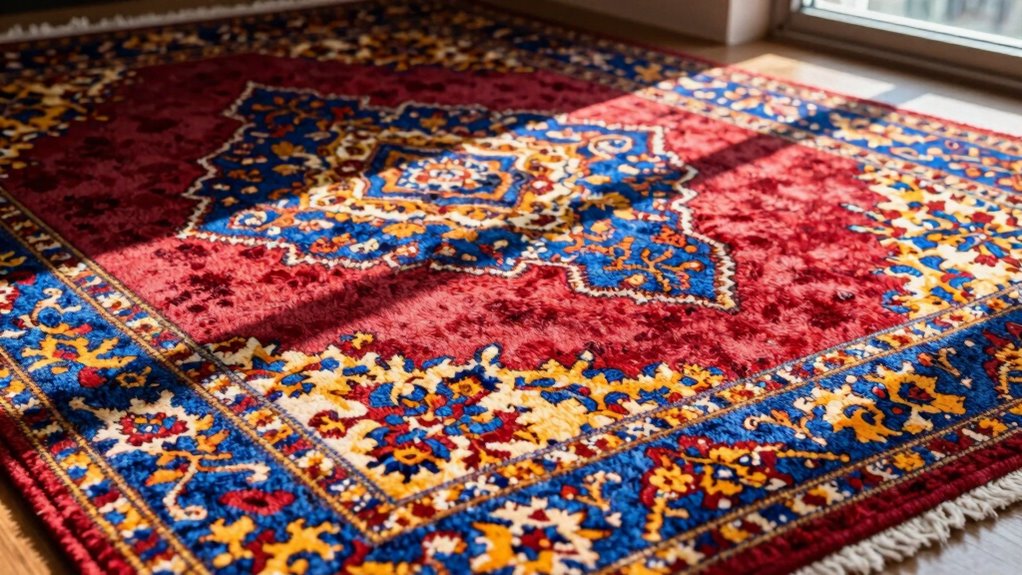
Advancements in textile technology have led to innovative products designed to preserve rug colors even in intense sunlight. One key development is advanced dye technology, which involves using dyes that resist fading and maintain vibrancy over time. These dyes are formulated to withstand UV exposure without losing their intensity. Additionally, UV protective coatings are now applied to rugs during manufacturing or as a treatment after placement. These coatings create a barrier that blocks harmful ultraviolet rays, preventing sunlight from degrading the dyes. Some products combine both approaches, offering enhanced longevity for your rugs. By choosing rugs with these modern treatments or applying protective products yourself, you can enjoy bright, colorful rugs without sacrificing style or worrying about fading from sunlight exposure.
When to Call in Professionals to Save Faded Rugs
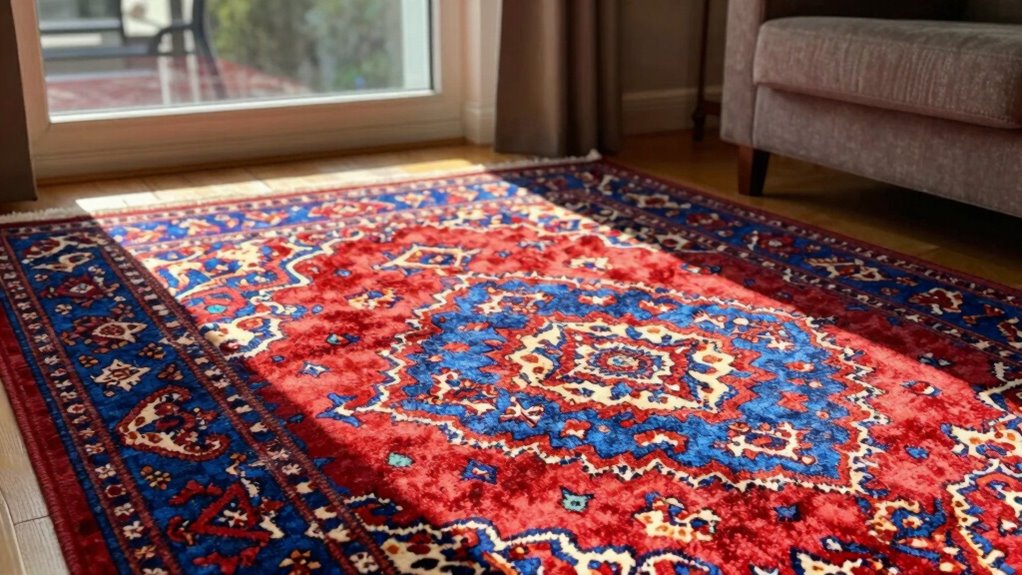
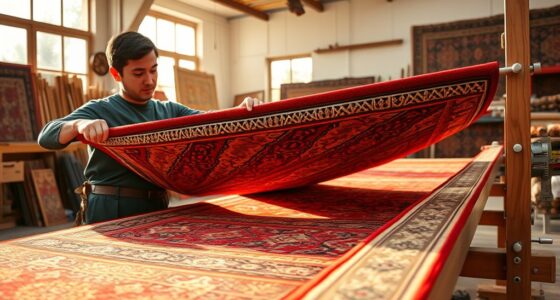
Faded rugs that no longer brighten your space may require professional help if DIY methods haven’t restored their original vibrancy. When rug cleaning and stain removal attempts fall short, it’s time to call in experts. Professionals can assess whether the fading is permanent or treatable with specialized techniques. They use advanced tools to deep-clean and safely restore color, preventing further damage. Consider seeking help if you notice:
- Persistent stains that refuse to lift
- Significant color loss despite cleaning efforts
- Visible wear or discoloration in high-traffic areas
- Faded patches that compromise your rug’s look
Professional intervention can save your rug from deterioration, ensuring it remains a vibrant focal point without risking more damage. Trust the experts when DIY methods don’t cut it.
How to Balance Sunlight and Protective Measures for Your Rugs
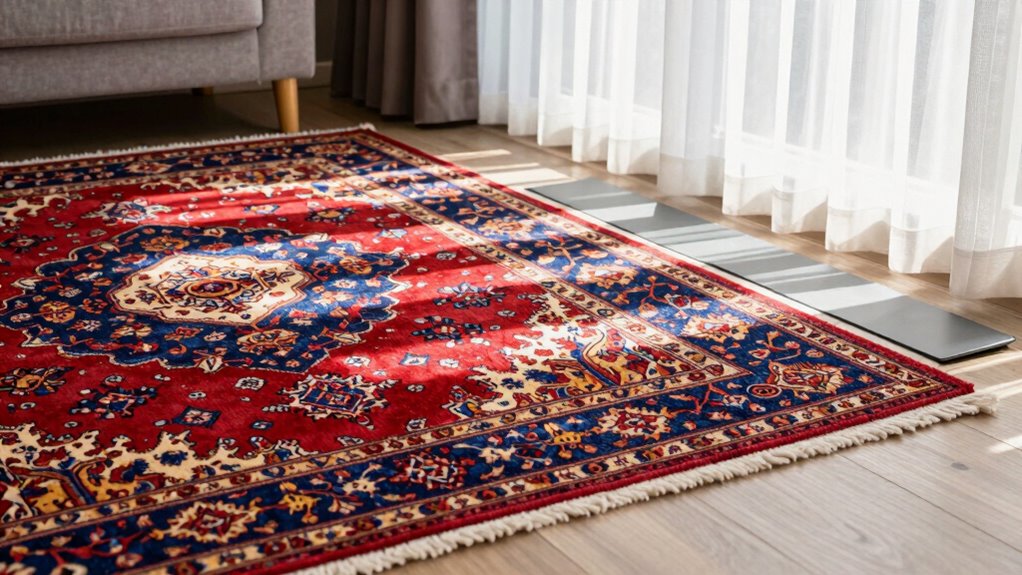
Balancing sunlight exposure and protective measures is essential to keep your rugs looking vibrant and fresh. Sunlight management involves controlling how much direct sunlight hits your rug, preventing fading while still allowing natural light to brighten your space. Proper rug placement is key—position your rug away from windows or use furniture to shield it from intense rays. Consider using sheer curtains or UV-protective window films to filter sunlight without sacrificing brightness. Rotating your rug regularly ensures even exposure, reducing uneven fading. Combining these strategies helps you enjoy natural light without sacrificing your rug’s color. By consciously managing sunlight and choosing suitable rug placement, you can preserve your rug’s beauty while maintaining a warm, inviting atmosphere in your home.
Frequently Asked Questions
Can Certain Rug Patterns Hide Fading Better Than Others?
You’ll find that certain rug patterns, especially those with busy designs or intricate details, better hide fading through pattern camouflage and color masking. Florals, abstract patterns, or multicolored motifs distract the eye from any fading spots. Avoid solid or overly simple designs, as they make fading more noticeable. Choosing rugs with these patterns helps keep your space looking fresh, even as sunlight or wear gradually impact the colors.
Are There Natural Remedies to Restore Faded Rug Colors?
You can try natural dyes for DIY restoration to revive faded rug colors. Mix ingredients like indigo, turmeric, or madder root to create a dye bath, then carefully re-dye affected areas. While this method works best on natural fibers, always test a small section first. Natural dyes are eco-friendly and gentle, helping restore vibrancy without harsh chemicals, giving your rug a fresh look while respecting its original beauty.
How Often Should I Rotate Rugs to Prevent Uneven Fading?
You should rotate your rugs every 6 to 12 months to promote even fading and maintain their appearance. Regular rug maintenance, including rotation, helps prevent uneven fading caused by sunlight or foot traffic. By consistently changing their position, you ensure Fading prevention and prolong the vibrant colors. Keep an eye on high-exposure areas and rotate more frequently if those spots experience intense sunlight or heavy use, optimizing your rug’s lifespan.
Do Certain Room Environments Accelerate Rug Fading?
Think of your rug as a delicate flower that blooms differently in each environment. High UV exposure from sunlight and fluctuating humidity levels can accelerate fading, like a flower wilting under harsh conditions. Rooms with lots of windows or poor humidity control expose your rug to more UV rays and moisture, speeding up color loss. Keep blinds closed and maintain steady humidity to help your rug stay vibrant longer.
Is It Safe to Use Commercial Stain Removers on Faded Rugs?
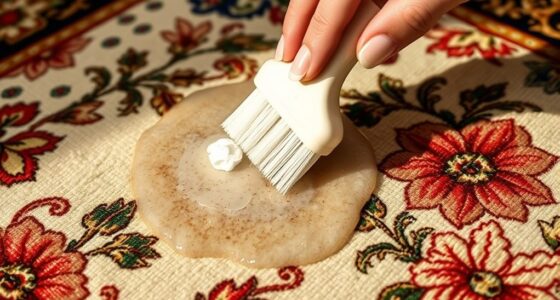
Using commercial stain removers on faded rugs isn’t always safe, as chemical cleaning products can damage fibers or cause further fading. Always check stain remover safety labels and test a small, hidden area first. If you’re unsure, opt for gentle, natural cleaning methods instead. This helps preserve your rug’s color and texture without risking additional damage from harsh chemicals.
Conclusion
Like a painter guarding their masterpiece, you can preserve your rug’s vibrant colors without locking it away in darkness. By balancing sunlight and protection—much like a gardener tending delicate blooms—you ensure your space remains lively and inviting. With the right choices, you’ll keep your rug’s story bright and beautiful, much like a sunrise that never fades, proving you don’t have to choose between brightness and preservation.