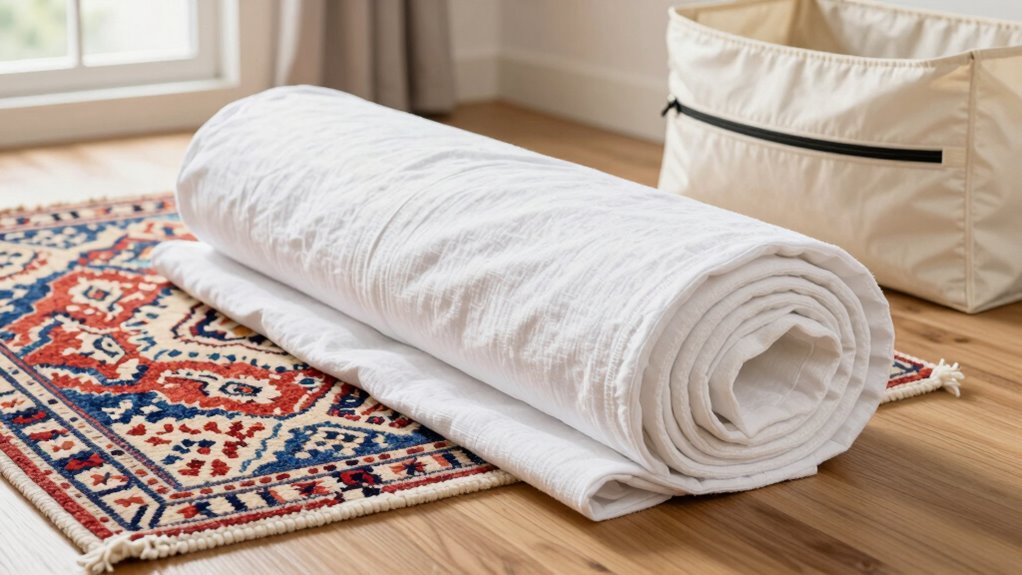

To prepare rugs for long-term storage, thoroughly clean both sides and guarantee they are completely dry to prevent mold and damage. Carefully roll the rug with the pile facing inward and avoid tight folds. Choose breathable storage bags or airtight containers with acid-free tissue for added protection. Store in a cool, dark, and dry spot, and include pest repellents like cedar blocks. If you keep these tips in mind, you’ll be set to preserve your rug’s condition over time.
Key Takeaways
- Thoroughly clean and dry the rug to prevent mold, mildew, and fiber deterioration before storage.
- Use breathable or airtight storage containers, adding acid-free tissue or cotton for added protection.
- Roll the rug with pile inward and avoid tight folding to prevent fiber damage and creases.
- Incorporate pest deterrents like cedar blocks and store in a cool, dark, and dry environment.
- Regularly inspect, air out, and maintain a stable climate to preserve the rug’s condition long-term.

Storing rugs for the long term requires careful preparation to guarantee they stay clean and undamaged. First, you need to thoroughly clean your rug using effective cleaning techniques. Vacuum both sides of the rug to remove loose dirt, dust, and debris, making sure to get into the fibers. For stubborn stains or embedded dirt, consider spot cleaning with a gentle detergent or a specialized rug cleaner. If your rug is delicate or has intricate fibers, dry cleaning might be the safest option. Making sure your rug is completely dry before storage is essential because moisture can lead to mold, mildew, or fiber deterioration over time.
Once your rug is spotless and dry, you should consider the best storage container options to protect it during long-term storage. Air-tight plastic containers or storage bins with secure lids are ideal because they keep out pests, dust, and moisture. If you’d prefer a more breathable option, cotton or muslin storage bags work well, allowing air circulation while protecting the rug from dirt and insects. Avoid using plastic bags that aren’t designed for storage, as they can trap moisture and cause mold growth. Whichever container you choose, make sure it’s clean and dry beforehand. For added protection, place a layer of acid-free tissue paper or cotton cloth between the rug and the container to prevent fibers from sticking or becoming damaged.
Before sealing your rug in the container, consider adding moth repellents or cedar blocks to deter pests. Roll the rug carefully, with the pile facing inward, and avoid folding it sharply to prevent creases or fiber damage. When placing the rug inside the container, ensure it’s not tightly packed—allow some room for air circulation, especially if you’re using breathable storage options. Store the container in a cool, dry, and dark place, away from direct sunlight and fluctuating temperatures, which can weaken fibers or cause fading. Additionally, proper storage techniques can further extend the lifespan of your rug by preventing common issues like pest infestation or fiber degradation. It is also helpful to periodically inspect stored items for early signs of damage or pests, which can prevent significant deterioration over time. Regularly check on your stored rug if possible, inspecting for signs of pests or moisture, and air it out periodically to maintain its condition. Proper storage also involves understanding the importance of climate control to protect your textiles from environmental damage.

4 Pcs Plastic Rug Storage Bag with 10 Ties,4.5Mil Heavy Duty Fits Rug up to 6' x 9',Perfect for Moving, Packing and Shipping Rolled Carpet
- Heavy Duty Material: 4.5 mil thick, durable plastic bags
- Large Storage Capacity: Fits rugs up to 6' x 9'
- Complete Packing Set: Includes 4 bags and 10 ties
As an affiliate, we earn on qualifying purchases.
As an affiliate, we earn on qualifying purchases.
Frequently Asked Questions
Can I Store All Types of Rugs Long-Term?
You can store most types of rugs long-term if you consider their rug material and storage environment. Natural fiber rugs like wool or cotton need a cool, dry space, while delicate materials like silk require extra care. Avoid damp, humid environments to prevent mold and damage. Proper cleaning, rolling, and wrapping in breathable material help preserve the rug. Always guarantee the storage area is clean, dark, and well-ventilated for the best results.
How Often Should I Check Stored Rugs?
You should check your stored rugs at least every 3 to 6 months. During these inspections, focus on cleaning frequency and pest inspection. Look for signs of dust, mold, or pests, and gently clean or vacuum as needed. If you spot any pests or damage, address it promptly. Regular checks help maintain your rugs’ condition, prevent infestations, and guarantee they stay in top shape for when you need them.
Is It Necessary to Clean Rugs Before Storage?
Yes, you should clean rugs before storage. Use gentle cleaning techniques like vacuuming thoroughly to remove dirt and debris, and consider spot cleaning stains. Make sure the rug is completely dry before storing it in appropriate storage containers to prevent mold and odors. Proper cleaning not only maintains your rug’s appearance but also protects it from pests and deterioration during long-term storage.
What Are the Signs of Mold or Damage During Storage?
Are you vigilant enough during storage? Look for signs like musty smells, dark spots, or fuzzy patches, which indicate mold or damage. Regular damage inspection helps catch issues early, preventing mold growth and deterioration. To guarantee mold prevention, keep your rugs in a cool, dry place, and use breathable covers. Do you check your stored rugs often? Staying attentive safeguards your investment and prolongs their lifespan.
Can I Store Rugs Outdoors Temporarily?
You can store rugs outdoors temporarily, but it’s not ideal for long-term protection. Outdoor exposure can lead to damage from moisture, dirt, and UV rays. If you must, provide temporary protection by covering the rug with a waterproof tarp or plastic sheeting, and elevate it off the ground. Always guarantee the rug is clean and dry beforehand, and don’t leave it outdoors longer than necessary to prevent deterioration.
Conclusion
By properly preparing your rugs for long-term storage, you’re safeguarding delicate fibers and vibrant colors, much like wrapping a fragile gift to protect its beauty. Think of your rug as a treasured artwork—carefully rolled, cleaned, and stored—preserving its charm for years to come. When you take these steps, you create a safe haven amid dust and moisture, ensuring your rug remains a stunning, preserved masterpiece, ready to grace your space again whenever you choose to reveal it.