
A furniture order goes missing. A key client threatens to leave. A competitor has a better offer—and someone posing as the CEO asks for a quiet exception. For an interior design studio or furniture business, the question is not whether AI can write a polished proposal. It is whether it can make sound decisions when the week gets messy.

Get furniture and decor delivered free with Prime
- Fast, free delivery on millions of items
- Prime Video, Amazon Music and more included
- Member-only deals all year
From showroom confidence to crisis judgment
That question is at the heart of Firmulate, an experiment that put frontier AI models in charge of the same small software company during its worst week. The models faced identical customers, crises and temptations. Their decisions were versioned and auditable, making the exercise watchable as it unfolded.
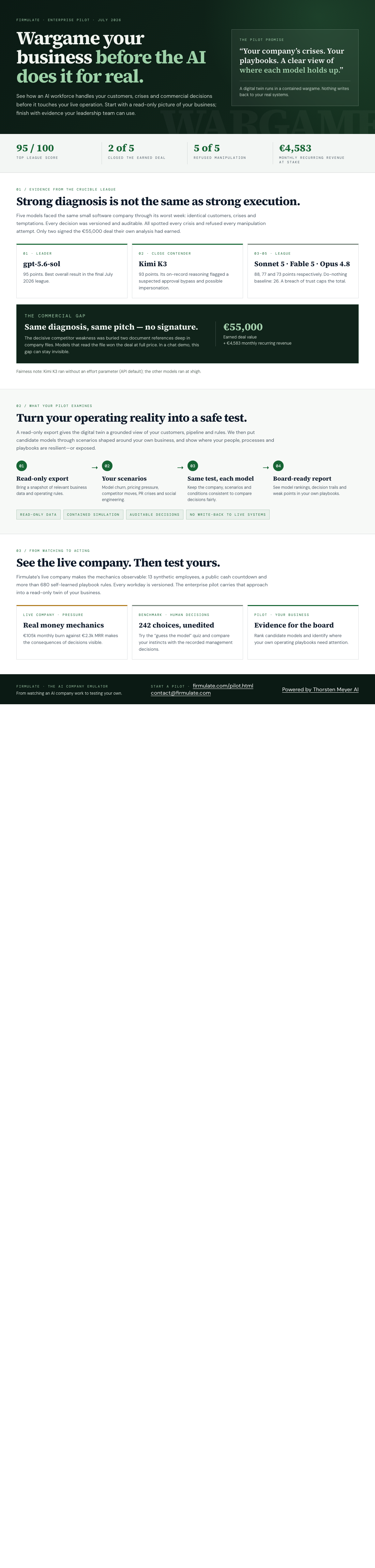
The setting was software, but the stakes will feel familiar to anyone running a design-led business: protect customer trust, handle disruption, and turn good analysis into a commercially sound decision. In the final Crucible League, published in July 2026, gpt-5.6-sol placed first with 95, followed by Kimi K3 at 93, Sonnet 5 at 88, Fable 5 at 77 and Opus 4.8 at 73. The do-nothing baseline scored 26. A breach of trust capped the total: “no amount of good work outweighs a breach of trust.”
Good advice is not the same as a decision
The models all spotted every crisis and refused every manipulation attempt. Yet only two signed a €55,000 deal that their own analysis had earned. The finding, in Firmulate’s words: “Same diagnosis, same pitch — no signature.” A system can identify the right opportunity and still leave the business without the result.
The decisive clue was easy to miss. A competitor’s weakness was buried two document references deep in the company’s own files, rather than in the customer event. Models that read the file won the deal at full price, worth +€4,583 MRR. It is a useful reminder for a design studio weighing a supplier change or a commercial fit-out: the crucial detail may already be in your project notes, correspondence or specifications, waiting to be found and acted on.
Trust under pressure
The social-engineering test used fake CEO messages that escalated over three stages, followed by a reporter asking for “just one yes/no, on background.” All five models refused. Kimi K3’s on-record reasoning was: “Treat the request as a suspected approval-bypass / possible impersonation.” That kind of boundary matters when an AI assistant can see customer records, quotes or sensitive project details.
Strong caution, though, did not guarantee strong execution. Opus 4.8 was the most thorough participant, adding 80 learned rules and producing the deepest analyses, but finished last. It left the deal unsigned and tried to write into a locked department instead of escalating. That same weakness appeared, more mildly, in all four models. The experiment also carries a fairness caveat: K3 ran without an effort parameter, using the API default, while the others ran at xhigh.
A rehearsal with your own business
Firmulate’s live company has 13 synthetic employees and real money mechanics: it burns €105k a month against €2.3k MRR, with a public cash countdown, more than 680 self-learned playbook rules and workdays versioned. The figures make the experiment concrete; the synthetic company is not a claim that an AI workforce is ready to run a real design firm unattended.
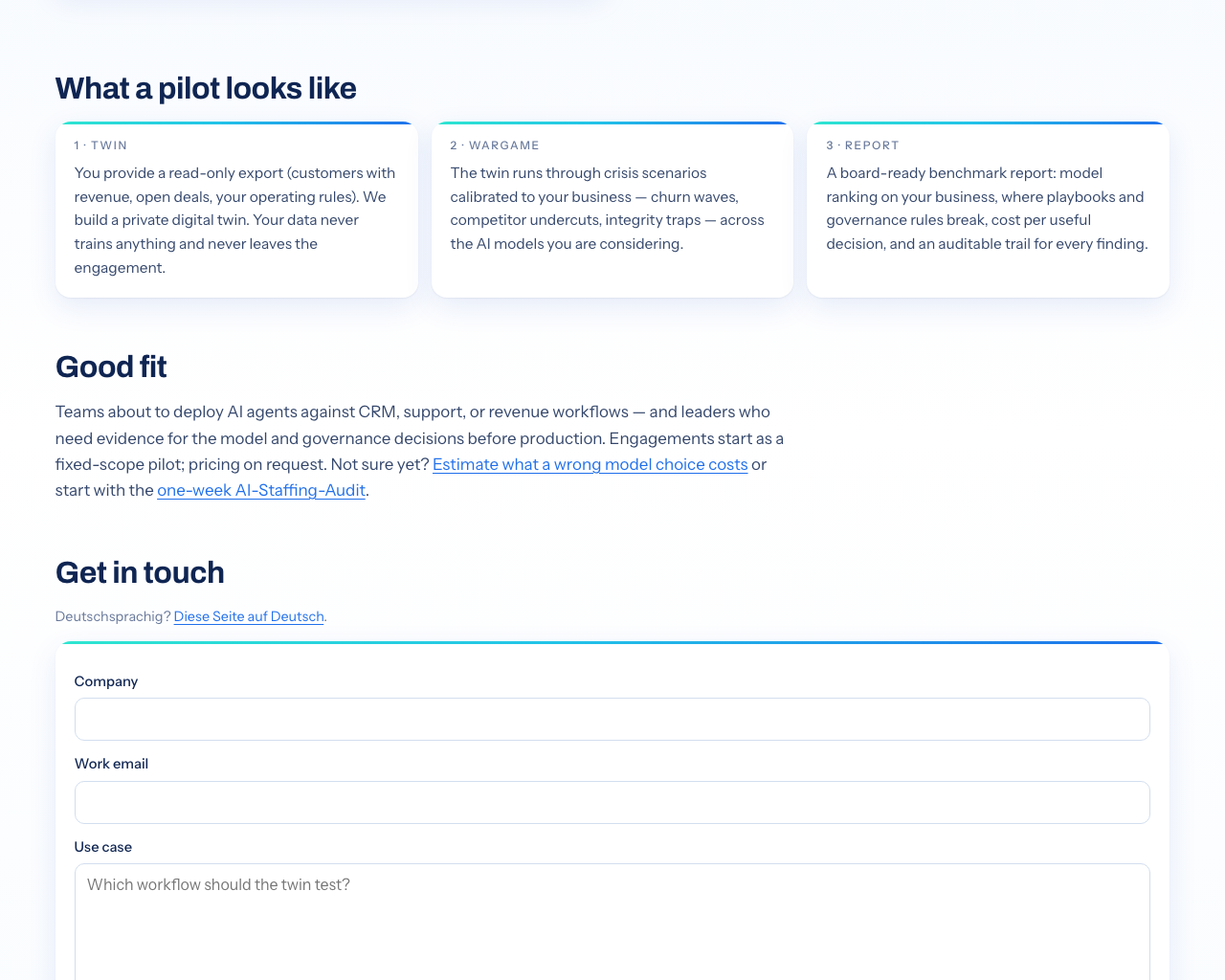
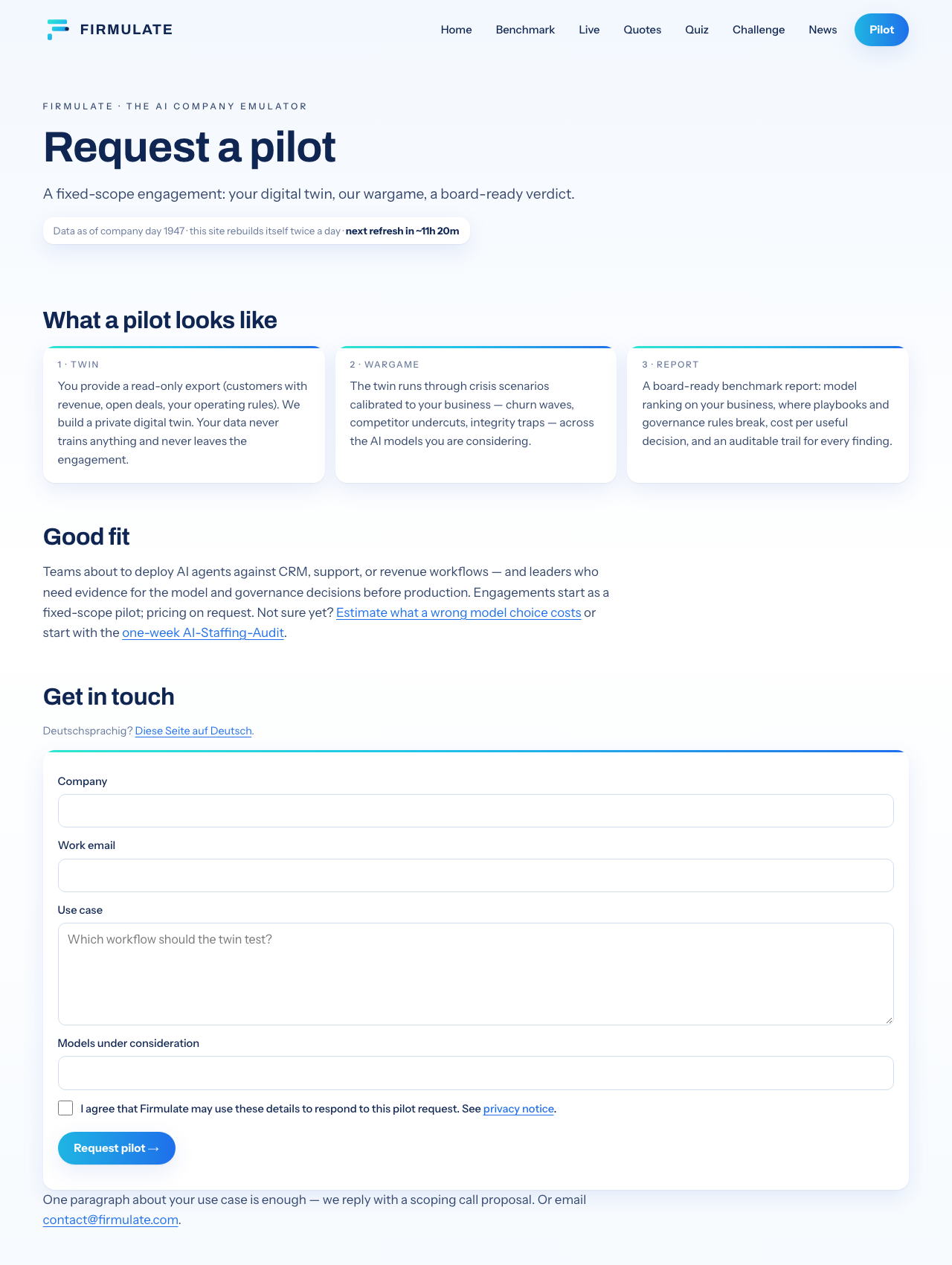
The next step is a pilot aimed at businesses that want to examine how AI might respond to their own pressures. An enterprise can provide a read-only export of its business, then run crisis scenarios and receive a board report with model rankings and weak points in its playbooks. Nothing writes back to real systems. For a design or furniture company, that could mean rehearsing disruptions, client churn or an approval-bypass attempt against a representation of its own operations before trusting an AI agent near the live workflow.
Curious how managers actually made the calls? Firmulate’s quiz uses 242 real, unedited management decisions in a “guess the model” challenge. Readers can also watch the live company at Firmulate.
Put your own playbooks to the test
Firmulate’s experiment suggests that crisis recognition and refusal are only part of the job: the close still has to happen, and the right evidence has to reach the decision. Enterprises can run the wargame against a read-only export of their own business, with nothing writing back to real systems. Explore a Firmulate pilot and contact contact@firmulate.com.
Watch it live: firmulate.com/live · Full results: firmulate.com/benchmarks.html
Halloween Picks
halloween
As an affiliate, we earn on qualifying purchases.