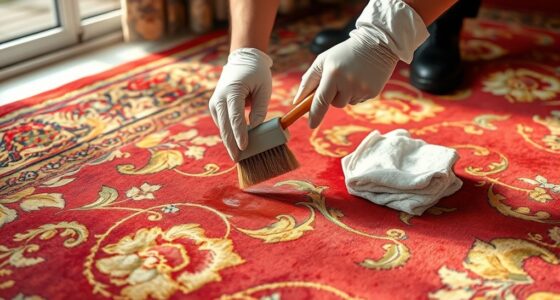
To practice ethical cleaning, choose products with natural ingredients like lemon, vinegar, or essential oils that avoid harsh chemicals. Supporting fair trade brands ensures artisans and farmers are paid fairly and work safely. Look for transparency and certifications that verify ethical sourcing. You can also make your own eco-friendly cleaners with simple ingredients like baking soda and citrus peel. Keep exploring to discover more ways to clean effectively while upholding your values.

Get furniture and decor delivered free with Prime
- Fast, free delivery on millions of items
- Prime Video, Amazon Music and more included
- Member-only deals all year
Key Takeaways
- Choose cleaning products with natural ingredients like lemon, vinegar, or essential oils to avoid harsh chemicals.
- Support brands with fair trade certification that ensure fair wages and ethical working conditions for artisans.
- Read labels carefully and prioritize transparency to verify sourcing practices and ingredient integrity.
- Make DIY natural cleaners using simple ingredients like baking soda and citrus peels to reduce chemical use and packaging waste.
- Opt for affordable, ethically-made cleaning options that align with sustainable and fair trade principles.

Have you ever wondered if your cleaning habits align with your values? It’s a question worth asking, especially as more people become conscious of the impact their choices have on the environment and the communities behind the products they use. Switching to cleaning products with natural ingredients is a great start. These products avoid harsh chemicals that can irritate your skin, harm the environment, and contribute to health issues over time. Instead, they rely on plant-based extracts and minerals that are effective yet gentle. When choosing these products, look for labels that highlight natural ingredients—such as lemon, vinegar, baking soda, or essential oils—so you can clean your home without compromising your principles.
Moreover, supporting fair trade products adds an extra layer of ethical responsibility to your cleaning routine. Fair trade certification ensures that the artisans and farmers behind the ingredients or finished products are paid fairly and work in safe conditions. This means your purchase helps sustain small-scale producers and promotes equitable trade practices. By opting for fair trade cleaning supplies, you’re not just keeping your home clean; you’re actively contributing to better livelihoods for those who create the products. It’s a way to guarantee your cleaning routine doesn’t unintentionally perpetuate exploitation or environmental degradation.
Choosing products with natural ingredients and fair trade certification is more than just a personal preference—it’s a reflection of your commitment to ethical living. When you read labels, prioritize transparency and certifications that verify the product’s integrity. This might mean seeking out brands that openly share their sourcing practices or that partner directly with fair trade cooperatives. Doing so empowers you to make informed decisions that align with your values, ensuring your cleaning habits support sustainable practices rather than harmful ones.
In addition, you can take it a step further by making your own cleaning solutions at home. Many natural ingredients like vinegar, baking soda, and citrus peel are inexpensive, effective, and eco-friendly. Not only does this reduce your reliance on chemically laden products, but it also minimizes packaging waste. By integrating these simple ingredients into your routine, you actively participate in reducing your carbon footprint and avoiding products that may have been produced under questionable conditions.
Furthermore, choosing products with transparent fee structures and low-cost options can help you stay within your budget while maintaining your ethical standards. Ultimately, ethical cleaning isn’t about perfection; it’s about making consistent, conscious choices. When you prioritize natural ingredients and fair trade, you’re doing more than cleaning your home—you’re supporting a more just and sustainable world. And every time you make a thoughtful purchase or switch to a homemade solution, you reinforce your commitment to living in harmony with your values.
natural cleaning products with essential oils
As an affiliate, we earn on qualifying purchases.
As an affiliate, we earn on qualifying purchases.
Frequently Asked Questions
Are Natural Cleaning Products as Effective as Synthetic Ones?
Yes, natural cleaning products can be just as effective as synthetic ones. They use biodegradable ingredients and plant-based formulations that break down easily and clean effectively. When you choose products with these natural ingredients, you avoid harsh chemicals while still achieving a thorough clean. Plus, these products are safer for your family and the environment, making them a smart, ethical choice for cleaning around your home.
How Can I Identify Truly Ethical and Eco-Friendly Brands?
You can identify truly ethical and eco-friendly brands by checking for certifications or labels that emphasize plant-based ingredients and fair trade sourcing. Research their transparency about ingredient sources and manufacturing practices. Look for brands that prioritize sustainability, avoid harsh chemicals, and support local artisans. Reading reviews and visiting their websites often reveals their commitment to ethical standards, ensuring you’re choosing products aligned with your values.
Do Ethical Cleaning Practices Increase Household Cleaning Costs?
Ethical cleaning practices can slightly increase household cleaning costs, but a cost-benefit analysis often shows long-term savings. While eco-friendly products and artisanship may seem pricier upfront, they reduce hidden expenses like health risks and environmental damage. Plus, they tend to last longer and work more effectively, ultimately balancing out or even lowering overall spending. So, investing in ethical cleaning benefits your budget and the planet in the long run.
How Do I Ensure Artisans Receive Fair Compensation?
You can guarantee artisans receive fair compensation by supporting brands committed to fair wages and artisan support. Investigate their supply chains and certifications, like Fair Trade or similar standards, to verify ethical practices. Purchase directly from artisans or cooperatives when possible, and advocate for transparency. This way, you actively promote fair wages and empower artisans, ensuring their craftsmanship is valued and fairly compensated for their work.
What Certifications Indicate Ethical and Sustainable Cleaning Products?
You should look for certification standards like Green Seal and EcoLogo, which verify that cleaning products meet strict environmental and health criteria. Sustainability labels such as USDA Organic or Fair Trade also indicate ethical practices, including avoiding harsh chemicals and supporting artisans. These certifications guarantee the products are eco-friendly, safe, and ethically produced, helping you make informed choices that prioritize sustainability and social responsibility in your cleaning routine.
Conclusion
Choosing ethical cleaning is like planting seeds of change—you nurture a healthier planet and respect skilled artisans. By avoiding harsh chemicals, you’re watering the roots of sustainability and compassion. Every mindful choice becomes a guiding light, illuminating a future where integrity blooms. Remember, your actions are the compass steering us toward a cleaner, kinder world. Embrace this path, and watch how your everyday decisions become the seeds of a brighter, more ethical tomorrow.
Fall Picks
fall essentials
As an affiliate, we earn on qualifying purchases.