Transitional style blends classic charm with modern simplicity to create a balanced, inviting space. You’ll choose furniture that combines vintage-inspired details with sleek, contemporary lines, using neutral tones accented by muted colors like dusty pink or earthy green. Incorporate timeless fixtures like brass or bronze with modern shapes, and select accessories that harmonize traditional charm with minimalist design. If you want to craft a space that feels effortlessly sophisticated, exploring these elements further will reveal how to achieve perfect harmony.
Key Takeaways
- Combine vintage-inspired furniture with sleek, modern lines for a balanced transitional look.
- Use neutral color palettes accented with muted hues to create harmony and warmth.
- Incorporate classic materials like brass or bronze in fixtures alongside contemporary shapes.
- Pair traditional craftsmanship with minimalist designs for a sophisticated yet inviting atmosphere.
- Select accessories and décor that blend vintage charm with modern aesthetics for cohesive styling.
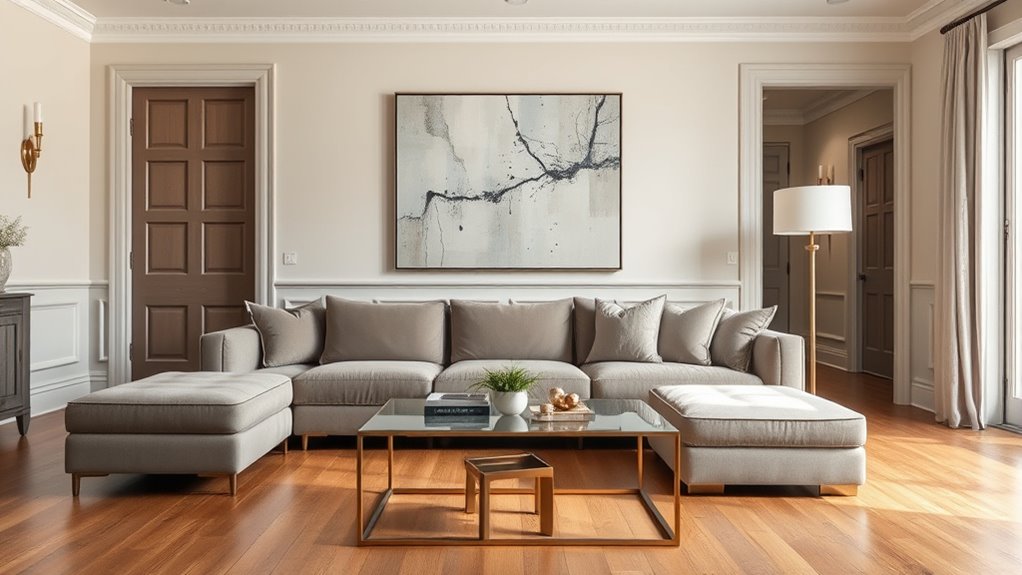
Have you ever wondered how to blend classic elegance with modern simplicity? Shifting between these styles might seem tricky at first, but with the right approach to furniture selection and color palettes, you can create a space that feels both timeless and fresh. When choosing furniture, aim for pieces that balance traditional craftsmanship with sleek, contemporary lines. Think of a plush, tufted sofa paired with clean-lined coffee tables or vintage-inspired armchairs with minimalist legs. The key is to select furniture that isn’t overly ornate but still carries a touch of sophistication, allowing it to serve as a bridge between the old and the new. Opt for neutral tones or muted shades in your furniture to keep the look cohesive and calming, making it easier to incorporate various styles seamlessly. Incorporating timeless design principles ensures your space remains stylish for years to come.
Blend traditional craftsmanship with sleek lines for a timeless, modern space.
Color palettes play a pivotal role in achieving the transitional style. You want colors that are versatile and soothing, yet rich enough to add depth and interest. Soft neutrals like beige, taupe, and warm grays serve as excellent base colors. These shades create a neutral canvas that allows your furniture and accessories to stand out without overwhelming the space. To add warmth and personality, incorporate accent colors such as muted blues, dusty pinks, or earthy greens. These hues provide subtle pops of color that complement both traditional and contemporary elements. When selecting a color palette, avoid overly bright or bold tones that can clash with the understated elegance of the style. Instead, aim for a harmonious blend that feels welcoming and refined.
Lighting is another essential aspect that ties the transitional look together. Choose fixtures that combine classic materials like brass or bronze with modern shapes—think of a chandelier with clean lines or sleek table lamps with traditional bases. This mix reinforces the balanced aesthetic you’re aiming for. Additionally, accessories such as rugs, artwork, and decorative objects should follow the same principle—pairing vintage-inspired details with contemporary designs to create visual interest without clutter.
Ultimately, creating a transitional space involves careful curation. Your furniture selection and color palettes should work together to produce a cohesive look that feels effortless yet sophisticated. By sticking to neutral tones and choosing furniture that balances traditional charm with contemporary minimalism, you’re well on your way to mastering this style. It’s about striking that perfect harmony where classic meets modern, resulting in a space that’s both inviting and stylish.
Frequently Asked Questions
How Do I Choose the Right Balance Between Classic and Modern Elements?
You should focus on achieving design harmony by balancing classic and modern elements thoughtfully. Start with a neutral palette and incorporate timeless elegance through furniture or accessories that have clean lines or ornate details. Mix textures and materials carefully, ensuring neither style overpowers the other. Trust your instincts, and don’t be afraid to experiment. The right balance creates a space that feels both welcoming and sophisticated, reflecting your personal style seamlessly.
What Are Common Color Palettes for Transitional Interiors?
You’ll find that common color palettes for transitional interiors feature neutral tones and muted hues. Think soft beiges, warm grays, and creamy whites that create a calming backdrop. These colors seamlessly blend classic and contemporary elements, offering a timeless yet fresh look. You can add pops of muted blues, greens, or taupe for subtle contrast. The goal is to maintain a balanced, harmonious space that feels both inviting and sophisticated.
How Can I Update My Traditional Furniture With Contemporary Accents?
Did you know 65% of homeowners mix antique furniture with modern art? To update your traditional pieces, start by adding contemporary accents like sleek lighting or abstract artwork. Incorporate modern elements such as geometric rugs or minimalist accessories to refresh your space. Keep your antique furniture as focal points while balancing them with clean-lined, contemporary touches. This blend creates a fresh, stylish look that feels both timeless and current.
What Accessories Best Complement a Transitional Style?
You should choose accessories like decorative rugs that add texture and color, balancing classic and modern elements. Statement lighting, such as sleek chandeliers or contemporary pendant lights, enhances the space’s aesthetic. Incorporate these accessories thoughtfully, ensuring they complement your furniture’s style. By blending decorative rugs with eye-catching lighting, you create a cohesive shift that feels both timeless and fresh, elevating your home’s overall design.
How Do I Create a Cohesive Look With Mixed Design Elements?
Oh, so you want a cohesive look with mixed design elements? Just pretend you’re a style diplomat! Start by choosing a unifying color palette, then add decorative wall art that bridges classic and modern. Statement lighting acts like the political envoy, tying everything together. Balance ornate pieces with sleek furniture, and you’ll effortlessly create harmony. Who knew blending could be so diplomatic? Your space will look seamless and stylish in no time!
Conclusion
As you embrace the transitional style, remember it’s like a whispered story between past and present, inviting timeless elegance into your space. Imagine your home as a bridge—an elegant arch connecting tradition’s warm embrace with modern’s sleek allure. By blending these elements, you create a sanctuary that’s both familiar and fresh, much like a well-loved novel that feels new with each reading. Let this style be your canvas, where history and innovation dance in perfect harmony.