TL;DR
Interior designers Phoebe Hollond and Natasha Lyon describe using split artworks to conceal televisions when they are not in use. The panels meet to display a single decorative image and pull apart to reveal the TV, offering a design-led alternative to leaving a screen exposed.
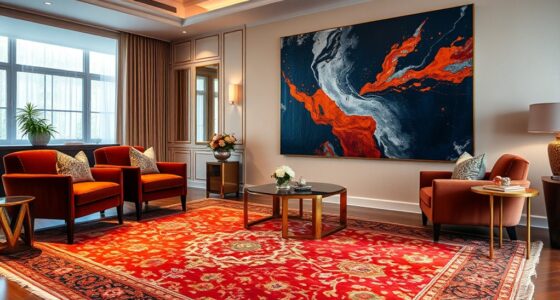
Interior designers Phoebe Hollond and Natasha Lyon are using split-canvas artworks to cover wall-mounted televisions, letting homeowners display a joined image when the screen is off and pull the panels apart to watch. The approach treats the TV as something that can be concealed without giving up access to it, combining a practical cover with a prominent piece of room decor.

Get furniture and decor delivered free with Prime
- Fast, free delivery on millions of items
- Prime Video, Amazon Music and more included
- Member-only deals all year
In the designs described, two or more panels meet over the television to form an artwork. When the screen is needed, the panels move apart to reveal it. The source describes Hollond’s installation as a bifold design using a celestial map, while Lyon collaborated with Paris-based artist Andrea Mongenie on eight bespoke artworks that function together as a TV cover.
The projects are custom design solutions, not a reported mass-market product launch. The source does not give prices, dimensions, installation details or technical specifications, and it does not say whether the panels are manually operated or use a particular track or mechanism. The practical arrangement will depend on the room and the television being covered.
Both designers have also explored other ways of hiding screens. Hollond said she has made furniture with an automated lift that raises and lowers a TV. Lyon described previous solutions including a bifold cabinet, large artwork that slides across a media unit, and tapestry wall hangings. The split-panel approach is distinguished by making the cover itself a composed artwork rather than simply putting the screen behind furniture.
Hide the TV in a joined artwork
Split panels meet to display one decorative image, then pull apart to reveal the television. Designers present the approach as a custom way to keep a screen out of sight when it is not in use.
How the panels work
The artwork closes over a wall-mounted TV and separates when the screen is needed.
Panels meet to form a single decorative image over the screen.
Pull the panels apart to watch.
Two custom examples
The projects show different artistic approaches to concealing a screen.
Celestial map
Phoebe Hollond used a bifold design featuring a celestial map.
Eight bespoke works
Natasha Lyon collaborated with Paris-based artist Andrea Mongenie on artworks designed to function together as a TV cover.
Other ways to hide a screen
Designers also described approaches that move or cover the television in different ways.
| Approach | How it conceals the TV |
|---|---|
| Lift furniture | Raises and lowers the screen |
| Bifold cabinet | Folds over the screen |
| Sliding artwork | Moves across a media unit |
| Tapestry | Hangs over the screen |
| Split artwork | Parts to reveal the TV |
What to plan before commissioning
The source gives no standard specifications, so practical details depend on the room and project.
- Confirm the screen size and artwork format.
- Plan where the panels will move and how they will be mounted.
- Ask about cost, installation, cable access and ventilation.
Turning a Screen Into a Display
The idea addresses a familiar design problem: a large black screen can dominate a living room even when it is not being used. A cover that doubles as wall art allows the screen to disappear from view while keeping the wall visually finished. For homeowners who want a less technology-focused room, the panels offer a change in appearance without requiring them to remove the television.
The designers also connect concealment with the experience of using a room. Lyon said she considers mental health alongside functionality in her work and described the ability to shut out noise and distractions as a motivation for the design. That is her design rationale, not evidence that covering a TV produces a particular health benefit. The reported projects show how a decorative feature can support a preference for having screens out of sight when they are not in use.
There is a trade-off: the solution requires space for panels to open and a design suited to the screen and wall. Bespoke artwork and moving hardware may also involve additional cost and planning, though the source provides no figures. The approach is best understood as a custom interior-design option, rather than a standard fix for every room.
Products Worth Considering

Shark HydroVac MessMaster Cordless Wet Dry Vacuum and Mop Combo, AW261

eufy E25 Robot Vacuum and Mop with HydroJet Roller Mop

Levoit Core 600S-P Smart Air Purifier for Large Rooms
As an affiliate, we earn on qualifying purchases.
Other Ways to Conceal TVs
Designers have used several approaches to make televisions less prominent, including cabinetry, media units, wall hangings and artwork that slides into place. Hollond’s earlier lift furniture hides the screen by moving it vertically, while Lyon’s examples include a cabinet that folds and artwork that slides horizontally. Each option changes how the TV is stored or covered, and each depends on the layout and intended use of the room.
The split-artwork format uses a different visual effect: the separate panels read as one image when closed, then part to expose the screen. Hollond chose a celestial map based on the positions of fixed stars relative to the ecliptic in 1730, according to the source. Lyon’s collaboration with Mongenie involved multiple custom works, with color and personal artistic input central to the project.
These examples were presented as individual design projects. The source does not establish how common the approach is across the interiors industry, or whether a specific manufacturer sells a standardized system. It describes designers’ choices and motivations rather than independently measured consumer demand.
“TVs on the whole are ugly; they are not something you should have on your walls, so why not put them in a TV box and hide them with a piece of art.”
— Phoebe Hollond, Studio Hollond
Costs and Installation Details
The available information does not specify the cost, dimensions or hardware used in either project. It is also unclear how the panels are mounted, whether they move by hand, or whether they require a clear area beside or above the TV. No installation guide or standard product specifications are provided.
The source also does not identify suppliers for the mechanisms or say how the designs affect access to cables, ventilation or the screen for maintenance. Those details would need to be confirmed for any particular home. The designers’ comments about distraction and mental health are personal explanations of their approach, not clinical findings.
Adapting the Idea at Home
The source reports no scheduled product release, industry rollout or next milestone. For now, the approach is presented through the designers’ completed projects and examples of their other TV-concealment work.
Anyone interested in a similar installation would need to discuss the screen’s size, the artwork format, panel movement and wall layout with a designer or supplier before commissioning it. Further information about pricing, mechanisms and installation would be needed to judge how readily the custom designs can be adapted to different homes.
Key Questions
How do split artworks conceal a television?
Separate panels meet over the screen to show a joined artwork. They are pulled apart when the television is needed, according to the projects described.
Are these split-canvas TV covers sold as a standard product?
The source describes custom interior design projects and does not identify a standardized retail product, manufacturer or price.
What artwork did the designers use?
Phoebe Hollond used a celestial map in a bifold design. Natasha Lyon worked with artist Andrea Mongenie on eight bespoke artworks intended to function together as a television cover.
What other methods can hide a TV?
The designers also described lift furniture, bifold cabinets, sliding artwork and tapestry wall hangings. Which option fits depends on the room and the television.
Source: livingetc.com