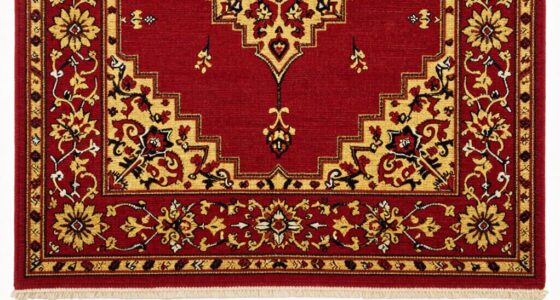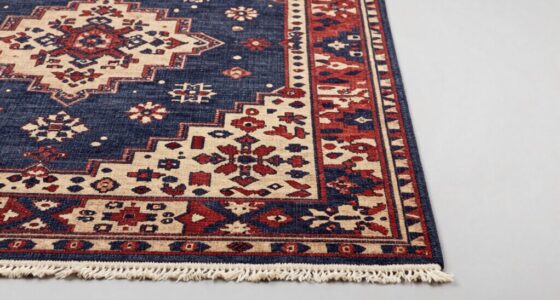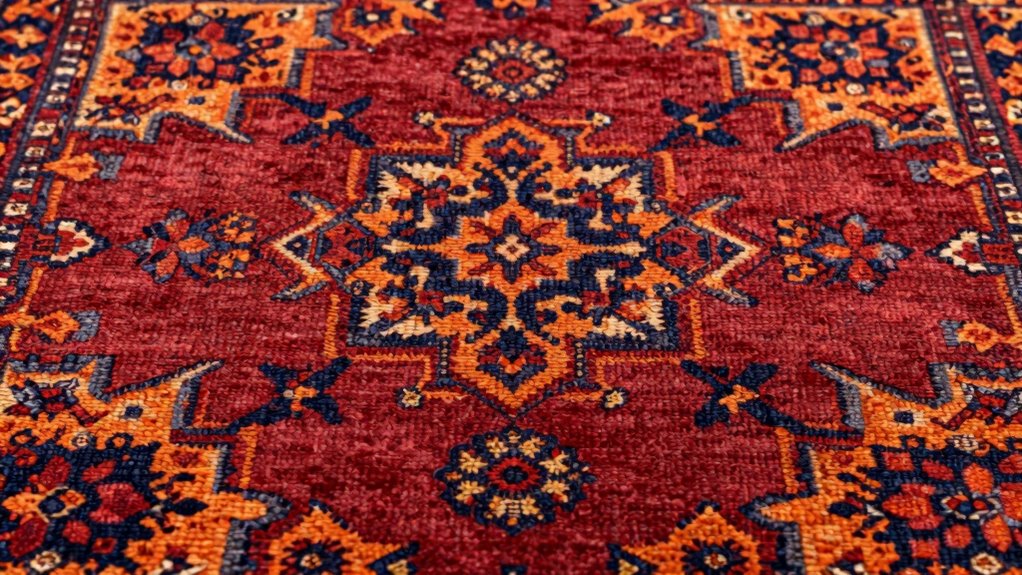

By repeating motifs, you create a rhythmic flow that naturally guides your eye across the rug’s surface. This pattern establishes a sense of order and harmony, making the design more engaging and memorable. The repetition also reflects cultural symbolism, adding deeper meaning to the pattern. As you observe how motifs flow together, you’ll notice how rhythm enhances the overall aesthetic. Keep exploring to understand how craftsmanship and tradition shape these mesmerizing designs.
Listen free for 30 days with Audible
Thousands of audiobooks and originals — cancel anytime.
As an affiliate, we earn on qualifying purchases.
Key Takeaways
- Repeating motifs establish a visual pattern that guides the viewer’s eye smoothly across the rug’s surface.
- The rhythmic placement of motifs creates a sense of order, stability, and harmony in the design.
- Consistent motif repetition introduces a dynamic flow, enhancing the rug’s overall aesthetic appeal.
- It reinforces cultural symbolism and storytelling, embedding tradition through visual continuity.
- The deliberate repetition showcases craftsmanship, adding a lively, pulsating energy to the design.
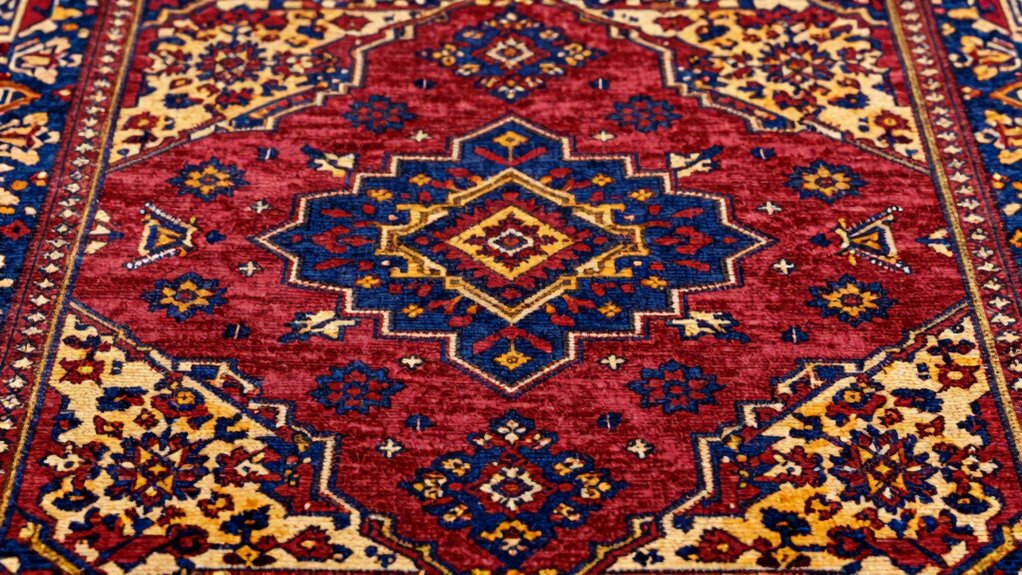
Have you ever noticed how repeating patterns can transform a rug from simple to stunning? It’s the rhythm created by these motifs that draws your eye across the surface, guiding your gaze in a way that feels both dynamic and harmonious. When you examine a rug with repeating designs, you’re experiencing more than just decoration; you’re witnessing a visual language filled with textile symbolism and cultural influences. These motifs often carry meaning, representing beliefs, stories, or traditions that have been passed down through generations. The repetition amplifies these symbols, making them more prominent and memorable, so they resonate deeply with viewers.
Repeating patterns in rugs create a rhythmic, meaningful tapestry that guides the eye and deepens cultural storytelling.
The rhythm in rug design isn’t just about aesthetics—it’s about storytelling. When you see a pattern repeated regularly, it creates a sense of order and continuity that can evoke feelings of stability and comfort. This rhythm is intentionally crafted, often reflecting cultural influences that shape the overall motif choices. For example, certain geometric patterns may be rooted in ancient traditions, symbolizing concepts like eternity or protection, while floral motifs might represent fertility or paradise. As you observe these repeating elements, you’re engaging with a cultural narrative that has been woven into the fabric of the rug. Recognizing these cultural influences helps deepen your appreciation for the craftsmanship involved. Additionally, the regional styles often influence how these motifs are interpreted and appreciated.
When you look closely at a rug with repeating motifs, you can appreciate the craftsmanship behind it. The deliberate repetition of certain symbols or shapes isn’t accidental; it’s a conscious choice meant to establish rhythm and meaning. The cultural influences are woven into these decisions, reflecting the history and identity of the community or region it originates from. This design continuity also helps unify the overall aesthetic of the piece, making it more visually appealing. Moreover, understanding the artistic techniques used in creating these motifs can reveal the skill and tradition passed down through generations. Ultimately, these repeating motifs do more than decorate—they create a visual heartbeat, a rhythmic pulse that makes the rug mesmerizing and alive in its own right. Recognizing the cultural and historical context of these motifs enhances your understanding of their significance and the artistry involved.
As an affiliate, we earn on qualifying purchases.
Frequently Asked Questions
How Do Different Motifs Influence the Overall Mood of a Rug?
Different motifs set the mood of your rug through their color symbolism and shapes. Bright, warm colors in floral motifs evoke energy and warmth, while cool tones in geometric patterns create calmness. Repeating motifs generate rhythm, guiding your eye smoothly across the design. You’ll feel more lively or relaxed depending on whether the motifs are playful, symmetrical, or abstract, shaping the overall atmosphere of your space.
Can Repeating Motifs Be Used to Tell a Story in Rug Design?
Yes, you can use repeating motifs to tell a story in rug design. By incorporating narrative symbolism, you create visual storytelling that guides the viewer through a meaningful journey. Repeating motifs emphasize key elements, making the story clear and engaging. As you design, think about symbolic patterns that represent themes or legends, allowing the rug to become a woven narrative that captures attention and conveys cultural or personal stories.
What Cultural Significance Do Specific Motifs Hold in Rug Patterns?
You should know that specific motifs hold deep cultural significance, often symbolizing beliefs, history, and values through their symbolic meanings. Regional influences shape these patterns, reflecting local traditions and environments. When you see motifs like floral designs or geometric shapes, they often tell stories or convey protection, fertility, or spirituality. Recognizing these cultural symbols helps you appreciate the rich heritage woven into every rug, making it more meaningful and unique.
How Does Scale Affect the Rhythm Created by Motifs?
Think of scale variation as a musical crescendo that energizes your rug’s rhythm. When motifs are large, they command attention like a soloist, creating a bold, dynamic flow. Smaller motifs, repeated consistently, form a gentle, steady heartbeat. By playing with scale variation, you control the rhythm’s tempo, making your rug lively or calming. Repetition of motifs at different scales crafts a visual melody that guides the viewer’s eye smoothly across the design.
Are Certain Motifs More Suitable for Modern Versus Traditional Rugs?
Certain motifs work better in modern rugs, especially those with contemporary interpretations that emphasize minimalism or abstract forms. Traditional rugs often feature motifs rooted in historical symbolism, such as floral or geometric patterns, that evoke cultural heritage. You’ll find that modern designs tend to simplify or stylize motifs, while traditional rugs preserve detailed, symbolic elements. Choosing the right motif depends on whether you want a sleek, contemporary look or a connection to cultural history.
Conclusion
By now, you see how repeating motifs weave rhythm into rug design, turning patterns into visual music. Each repetition, like a heartbeat, guides your eye and stirs emotion. Remember, “Rome wasn’t built in a day,” and neither is a perfect rug. Embrace the process, and let the motifs’ harmony reflect your passion. In every thread, find the rhythm that makes your creation truly alive.
Flea & tick season Picks
flea and tick prevention
As an affiliate, we earn on qualifying purchases.