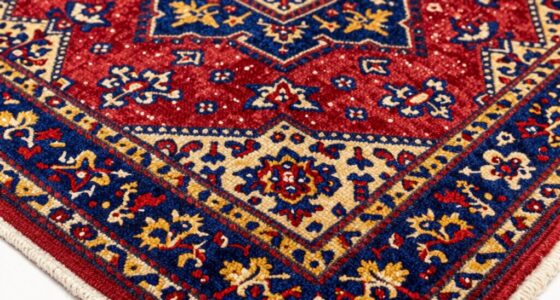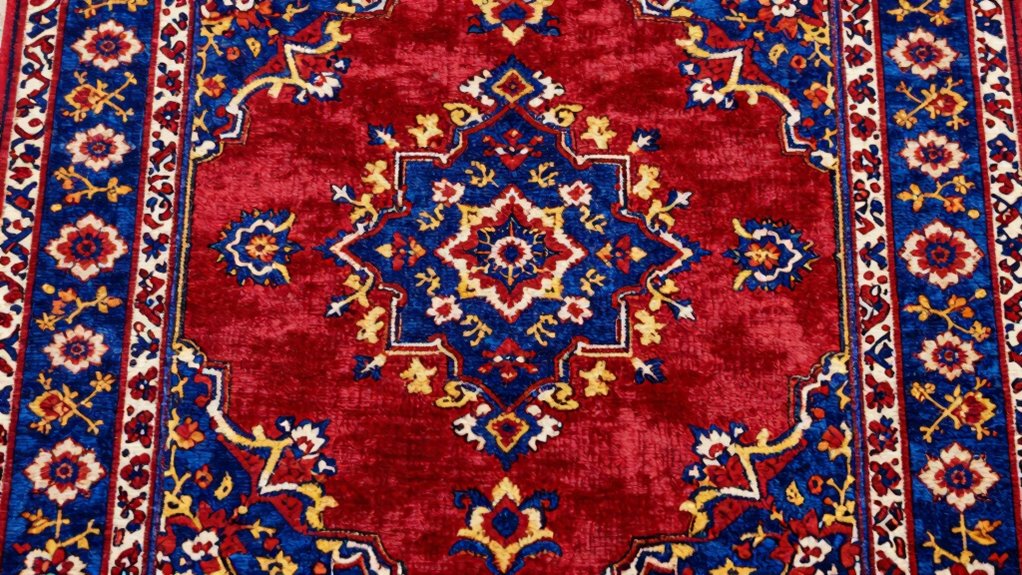

Rug medallions are powerful symbols of cultural identity and artistry. They serve as striking focal points that reflect rich histories, spiritual beliefs, and local traditions. The shapes and motifs often symbolize concepts like unity, protection, or divine beauty, depending on the style—whether Persian, Turkish, or Central Asian. Carefully crafted geometric patterns create harmony and rhythm, forging deeper meaning. If you keep exploring, you’ll discover how each design tells a unique story grounded in tradition.
Key Takeaways
- Rug medallions serve as focal points that symbolize cultural values, spiritual beliefs, and artistic traditions across different regions.
- The shapes and motifs of medallions reflect specific cultural symbols, conveying messages of protection, unity, or divine beauty.
- Geometric patterns maintain harmony and rhythm, with design variations indicating regional styles like Persian, Turkish, or Central Asian.
- Medallions often represent natural elements, sacred symbols, or stories, emphasizing cultural identity and historical significance.
- The layered symbolism and craftsmanship of medallions add depth, sophistication, and cultural storytelling to traditional rugs.
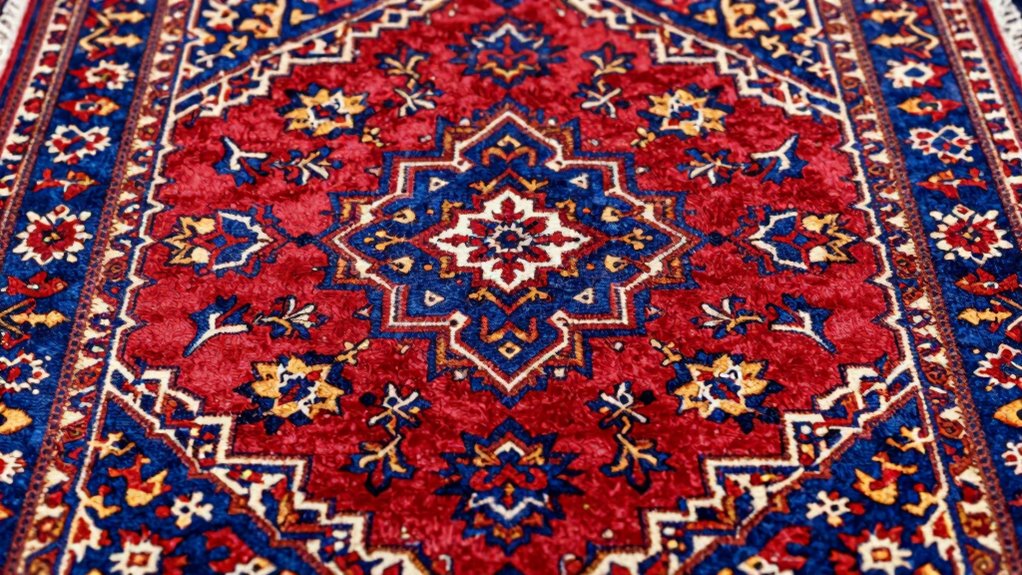
Rug medallions are a striking focal point that can elevate the style of any traditional space. When you look at a rug with a medallion, you’re not just appreciating its beauty—you’re also glimpsing into a rich history of symbolism and artistry. The medallion often serves as the centerpiece, drawing your eye and anchoring the overall design. These motifs are more than decorative; they carry medallion symbolism rooted in cultural and spiritual meanings, representing concepts like unity, eternity, or protection. You might notice that in many cultures, the medallion’s shape and motifs are selected deliberately to convey a specific message or to invoke certain energies.
Beyond symbolism, the medallion’s design often incorporates geometric patterns, which are fundamental to many traditional rug styles. These patterns aren’t random—they’re carefully crafted to create harmony and rhythm within the design. You’ll see symmetrical shapes, repeated motifs, and intricate borders that frame the central medallion, all contributing to a balanced and cohesive look. The geometric patterns serve both aesthetic and symbolic purposes, guiding the eye inward and outward while also embodying cultural beliefs about order and harmony. geometric patterns are a key element that reflects the mathematical precision and cultural significance embedded in traditional craftsmanship. Additionally, the use of symmetry in these designs enhances their visual appeal and cultural meaning.
In various traditional styles, the medallion’s shape can differ markedly. Persian rugs, for example, often feature a central floral or star-shaped medallion, symbolizing paradise and divine beauty. Turkish rugs may showcase a more angular, geometric medallion, emphasizing strength and stability. Indian and Central Asian designs sometimes include medallions that resemble sacred symbols or stylized natural elements, reflecting spiritual beliefs and local traditions. Regardless of the specific style, the medallion’s geometric patterns and symbolism work together to tell a story, evoke emotions, and create a sense of timelessness.
When you choose a rug with a medallion, you’re selecting more than just a decorative piece—you’re integrating a piece of cultural history into your space. The intricate geometric patterns and the layered symbolism of the medallion add depth and meaning, making your home feel both sophisticated and rooted in tradition. Whether placed in a formal living room or a tranquil study, a rug medallion acts as a visual anchor, inviting admiration and conversation. Its design connects you to centuries of craftsmanship, where every pattern and symbol was chosen with intention, to bring beauty, purpose, and cultural significance into your environment.
As an affiliate, we earn on qualifying purchases.
Frequently Asked Questions
How Are Rug Medallions Chosen for Specific Interior Designs?
You choose rug medallions for your interior design based on medallion placement and color coordination. Consider placing the medallion as a focal point in the room’s center to anchor your space. Match its colors with your furniture, walls, or accessories for harmony. If your decor is bold, select a medallion with subtle hues; for a more vibrant look, pick a medallion with contrasting colors to make it stand out.
Do Medallions Influence the Overall Value of a Rug?
While medallion symbolism often adds cultural depth, it can also influence a rug’s value, especially with intricate rug pattern variations. A well-crafted medallion demonstrates craftsmanship and authenticity, boosting the rug’s desirability. Conversely, simpler designs might appeal to minimalist tastes but generally hold less value. Ultimately, the medallion’s uniqueness and cultural significance impact how much a rug is worth, making it a key factor in evaluating its overall value.
Can Medallions Be Customized to Match Personal Symbols?
Yes, medallions can be customized to match your personal symbolism through a custom design process. You can work with artisans to incorporate specific symbols, motifs, or colors that hold personal significance, making your rug uniquely yours. This customization allows you to express your individual style and meaning, blending traditional craftsmanship with your personal story. It’s an excellent way to create a meaningful, one-of-a-kind piece that reflects your identity.
How Do Medallions Affect the Perceived Size of a Rug?
Medallions can make a rug appear larger or smaller depending on their size and placement. If you choose a large, centered medallion with bold colors, it draws the eye inward and can give the illusion of a bigger space. Color symbolism and cultural significance also influence perception; vibrant medallions can energize a room, while intricate designs add depth, making the rug feel more expansive and dynamic.
Are Medallions More Common in Certain Geographic Regions?
Yes, medallions are more common in certain regions like Persia, Anatolia, and Central Asia, reflecting regional symbolism and cultural significance. You’ll find intricate, centralized medallions in Persian rugs, symbolizing spiritual or cosmic themes. In Anatolian styles, medallions often emphasize territorial identity, while Central Asian designs highlight tribal symbolism. Recognizing these regional patterns helps you appreciate the cultural stories woven into each rug, making them more meaningful and unique.
Conclusion
Imagine walking into a room where a vibrant Persian rug’s medallion captures your gaze, telling a story of centuries-old craftsmanship. When you choose a medallion design, you’re not just adding beauty—you’re connecting with history and culture. For instance, a homeowner once felt a deep sense of pride displaying a medallion rug, knowing it represented tradition and artistry. Embrace these symbols, and let them add meaning and personality to your space.