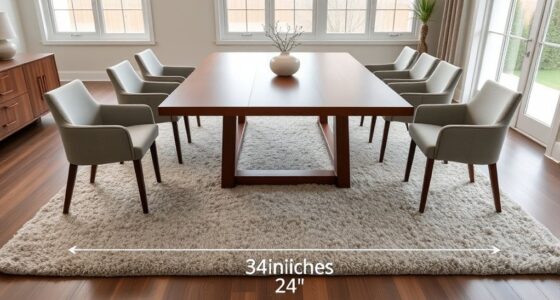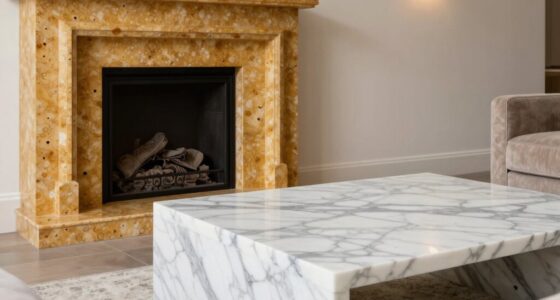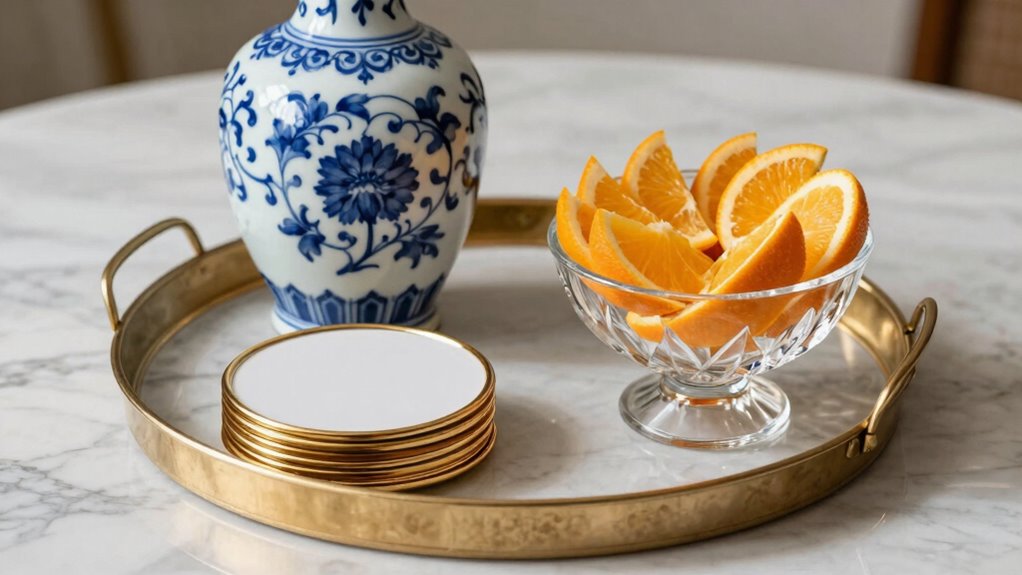

You need scale discipline for decorative trays and objects to create a balanced, cohesive display. When items are too small or too large relative to each other or the surface, the arrangement feels awkward or cluttered. Proper scale guarantees each piece complements the others and fits well in the space. Paying attention to size, proportion, and visual weight helps you craft an attractive vignette. Keep exploring to discover how mastering scale can elevate your styling skills.
Key Takeaways
- Proper scale ensures decorative trays and objects complement each other without appearing out of proportion.
- Maintaining scale creates a balanced visual harmony, preventing overwhelming or underwhelming displays.
- Consistent scale enhances overall cohesion and makes arrangements look intentional and polished.
- Scale discipline avoids clutter and visual imbalance, ensuring each piece serves its purpose effectively.
- Correctly scaled objects elevate surface styling into a refined, harmonious vignette.
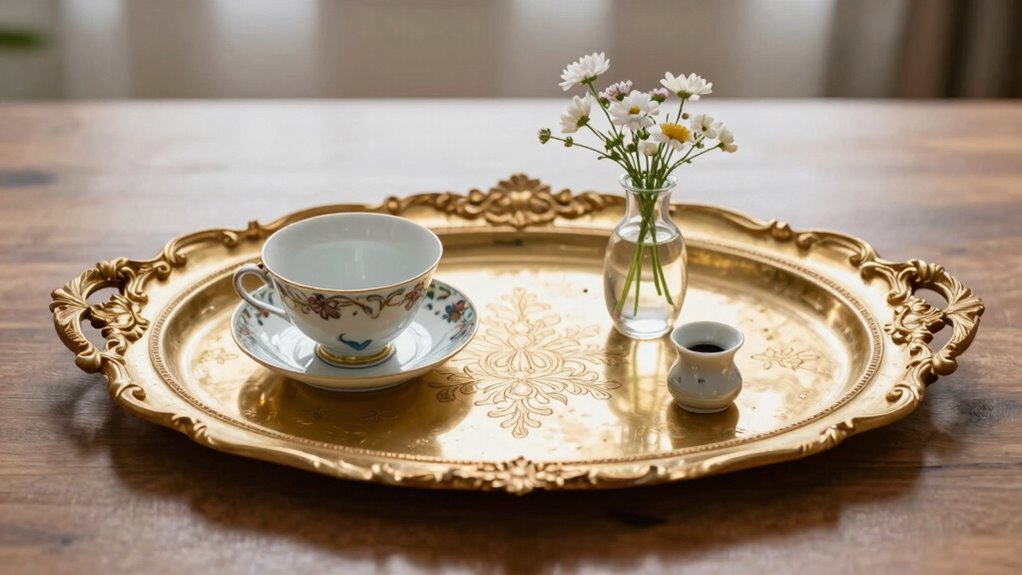
Decorative trays and objects can instantly elevate a space, but only if you pay attention to scale. When you’re arranging these items, size matters. An oversized tray with tiny accessories can look out of place, while a small tray overwhelmed by large objects can feel awkward. The key is striking the right balance so that each piece complements the overall harmony of your decor. This is where scale discipline becomes essential. You want your tray and objects to be proportionate to the surface they sit on and to each other. If the tray is too small for a large coffee table, it can seem lost or insignificant. Conversely, a tray that’s too big on a narrow side table can feel overpowering. Understanding the right scale helps create a cohesive look, anchored by visual harmony. Paying attention to scale discipline ensures that your arrangement feels intentional and well-balanced. Color coordination plays a significant role in achieving this balance. When selecting objects for your tray, pick colors that work well together and with the surrounding space. You don’t need everything to match perfectly, but a unified color palette ensures your display feels intentional and polished. For example, if your sofa has cool tones, choose accessories that echo those hues, creating a cohesive flow. If you prefer a more vibrant look, select contrasting shades that stand out but still complement each other. The goal is to avoid cluttered or disjointed appearances by maintaining a sense of visual cohesion through color choices. When colors are well-coordinated, your display looks curated rather than chaotic, which enhances the overall aesthetic. Material contrast is equally important. Mixing textures and finishes adds depth and interest, preventing your arrangement from feeling flat or monotonous. Pair smooth ceramics with textured fabrics, shiny metals with matte woods, or glass with rougher materials. This contrast draws the eye and highlights each piece’s unique qualities. Additionally, understanding Material contrast can help you develop a more dynamic and engaging display. Incorporating scale awareness into your design process further ensures that each object complements the others and contributes to a balanced composition. Being mindful of visual weight can also help in balancing different elements and avoiding visual imbalance. When you pay attention to both material contrast and scale, your display gains visual complexity without seeming cluttered or disorganized. Ultimately, the discipline of scale, combined with thoughtful color coordination and material contrast, transforms a simple tray into a stylish focal point. You’re not just filling space—you’re creating a curated vignette that reflects your style. Keep in mind that every piece should serve a purpose, be proportional, and contribute to the overall harmony. When you master scale discipline, your decorative objects become powerful tools for elevating your interior design, making every surface look intentional and refined.
As an affiliate, we earn on qualifying purchases.
Frequently Asked Questions
How Do I Determine the Right Size for Decorative Trays?
To determine the right size for decorative trays, consider the proportion principles and aim for visual harmony. Measure your space and existing furniture to guarantee the tray complements rather than overwhelms. A tray that’s too large can look bulky, while one that’s too small may seem insignificant. Balance is key, so choose a size that enhances your decor without dominating the area, creating a cohesive and pleasing display.
Can Mixing Scales Create Visual Clutter?
Did you know that mixing scales intentionally can create a mesmerizing scale illusion? However, if not managed carefully, it can lead to visual clutter, disrupting the overall harmony. When you combine different-sized objects, aim for a balanced approach to maintain visual harmony. Carefully selecting varying scales, rather than random mixing, helps you achieve a deliberate scale illusion without overwhelming your space, keeping it both interesting and cohesive.
What Materials Work Best for Large Decorative Objects?
For large decorative objects, materials like ceramic, metal, or wood work best because they combine durability with aesthetic versatility. Ceramic offers a refined look, while metal provides strength and modern appeal. Wood adds warmth and texture. Your choice depends on the style you want to achieve and the object’s placement. Prioritize materials that are durable enough to withstand handling and versatile enough to complement various decor styles.
How Do Scale Differences Affect Room Balance?
Scale differences are like a mismatched puzzle piece, disrupting your room’s visual harmony. If objects are too large or small compared to their surroundings, they can overshadow or get lost, ruining the focal point. To maintain balance, you need to contemplate scale carefully, ensuring each piece complements the others. Proper scale helps your space feel cohesive and inviting, guiding the eye naturally and creating a pleasing, harmonious environment.
Are There Style Guidelines for Proportional Decor?
Yes, there are style guidelines for proportional decor. You should aim for color harmony to create a cohesive look, balancing bold and neutral shades. Incorporate texture contrast to add visual interest without overwhelming the space. When selecting decor, consider size proportionally; larger pieces should complement smaller accents. This balance guarantees your space feels harmonious and well-designed, avoiding clutter or imbalance, and creating a pleasing environment.
Conclusion
Think of your decorative objects as a garden’s blooms. Just as too many bright flowers can overwhelm a space, cluttered scales disrupt harmony. When you practice scale discipline, you’re tending a balanced garden—each piece complements, not competes. Remember, beauty isn’t just in the individual bloom but in the overall landscape. Keep your decor’s scale in check, and you’ll create a space that feels as inviting and graceful as a well-tended garden.