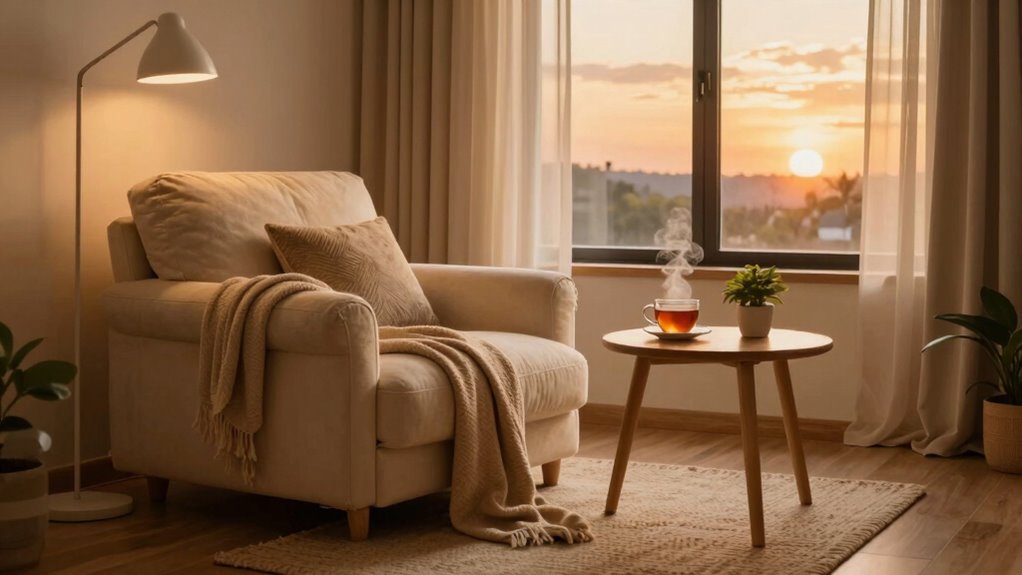

To build a better wind-down space in your living room, focus on creating a cozy, clutter-free zone with soft, warm lighting like table lamps or string lights. Choose plush seating and add cushions or throws for comfort. Incorporate calming elements like plants, candles, or artwork, and use natural materials to connect with nature. Make sure the space is versatile and accessible for relaxing activities. Keep exploring for more tips on transforming your space into a true sanctuary.

Get furniture and decor delivered free — and shop member deals
- Fast, free delivery on millions of items
- Access to Prime Big Deal Days deals on October 6–7
- Prime Video, Amazon Music and more included
Key Takeaways
- Use soft, warm lighting like dimmable lamps and string lights to create a calming ambiance.
- Incorporate plush seating with cushions and throws for maximum comfort and relaxation.
- Keep the area tidy and add soothing elements such as plants, candles, or artwork to enhance tranquility.
- Ensure the space is versatile with accessible essentials for reading, listening, or meditating.
- Focus on natural materials and personalized touches to foster a peaceful, retreat-like atmosphere.
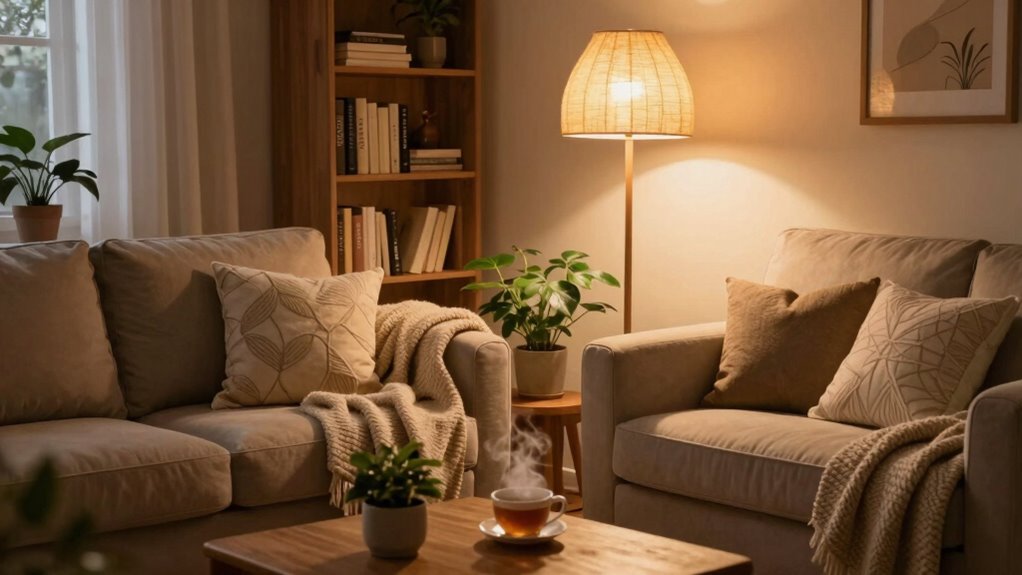
Creating a dedicated wind-down space in your living room can transform how you relax after a busy day. This area should feel inviting and calming, a place where you can disconnect from daily stresses. To achieve this, start by focusing on ambient lighting. Bright, harsh lights can make it hard to unwind, so opt for soft, warm lighting instead. Use table lamps, string lights, or dimmable fixtures to create a gentle glow that soothes your eyes and sets a peaceful mood. Avoid overhead fluorescents or bright white bulbs that can feel clinical or overstimulating. Instead, think about layering your lighting, combining different sources to produce a cozy, adaptable environment that you can adjust depending on your mood.
Create a calming retreat with soft, layered lighting to help you unwind after busy days.
Next, pay attention to your seating. Comfortable seating is pivotal because it encourages you to settle in and relax fully. Choose plush armchairs, a cozy sofa, or even floor cushions if that suits your style. The key is to select furniture that supports a relaxed posture and invites you to stay awhile. Add cushions and throws to enhance comfort and create a tactile sense of coziness. Your goal is to make this space feel like a retreat, where you look forward to spending time. When your seating is inviting, you’re more likely to unwind thoroughly and make this area a regular part of your relaxation routine.
In addition to lighting and seating, consider decluttering the space. A cluttered environment can increase stress and distract you from relaxing. Keep the area tidy by removing unnecessary items, and consider adding calming elements like plants, candles, or artwork that promote tranquility. These touches can elevate the atmosphere, making your wind-down space feel more personalized and serene. Incorporate elements that appeal to your senses, such as soft textures or soothing scents, to deepen the calming effect. Incorporating natural materials can also enhance the overall sense of harmony and promote a connection to nature, further supporting your relaxation.
Finally, make sure your wind-down space is versatile enough to cater to your preferences. Whether you want to read, listen to music, meditate, or simply lounge, your space should adapt easily. Use side tables, shelves, or storage baskets to keep your relaxation essentials close at hand. When your environment is thoughtfully designed with ambient lighting, comfortable seating, and a clutter-free layout, you’ll find it easier to segue from a hectic day to a peaceful evening. Incorporating biodiversity-friendly elements like natural materials or plant life can also enhance tranquility and connection to nature, further supporting your relaxation. Over time, this dedicated corner becomes your sanctuary—a place where you can truly unwind and recharge.
dimmable table lamps for living room
As an affiliate, we earn on qualifying purchases.
As an affiliate, we earn on qualifying purchases.
Frequently Asked Questions
What Are the Best Colors for a Calming Wind-Down Area?
For a calming wind-down area, choose soothing palettes with tranquil tones like soft blues, gentle greens, and warm neutrals. These colors promote relaxation and help you unwind after a long day. You might also incorporate muted shades or pastel hues to create a serene environment. By selecting tranquil tones, you foster a peaceful atmosphere perfect for relaxation, making your living room a true sanctuary for rest.
How Can I Incorporate Technology Without Disrupting Relaxation?
You can incorporate technology into your wind-down space by using smart lighting, which allows you to adjust brightness and color to create a calming atmosphere. Noise-canceling devices help block out distractions, fostering relaxation. Keep technology subtle by hiding wires and choosing sleek, unobtrusive devices. Limit screen time before bed and opt for voice-controlled lighting or sound systems to avoid disruptions, ensuring your space remains peaceful and inviting.
What Common Mistakes Should I Avoid When Designing This Space?
Did you know that clutter can increase stress levels by up to 40%? When designing your wind-down space, avoid common mistakes like poor lighting ambiance and clutter buildup. Use soft, warm lighting to create a calming atmosphere, and manage clutter with storage solutions. These steps help you maintain tranquility, preventing distractions that can disrupt your relaxation. Keep it simple and organized, and your space will become an effortless retreat.
How Do I Personalize the Space for Different Family Members?
You personalize the space by incorporating personalized decor that reflects each family member’s preferences. Ask everyone what calming elements they enjoy, like favorite colors, artwork, or cozy blankets. Use versatile furniture and display items that resonate with different tastes. By blending these personal touches into the overall design, you create a relaxing environment tailored to each person, making the wind-down space inviting and comforting for everyone.
What Budget-Friendly Ideas Can Enhance My Wind-Down Zone?
To enhance your wind-down zone affordably, focus on simple DIY projects like creating cozy pillow covers or hanging string lights for soft ambiance. Incorporate affordable decor such as candles, plants, or artwork from thrift stores. Rearranging furniture for a more inviting layout also helps. These budget-friendly ideas make your space more relaxing without breaking the bank, creating a serene environment perfect for unwinding after a long day.
Conclusion
Creating a cozy wind-down space in your living room isn’t just about comfort—it’s about crafting a sanctuary where stress melts away like snow under the sun. When you design this retreat, you’re not just arranging furniture; you’re weaving a haven for peace and relaxation. So, indulge in these small changes and watch your worries drift off, as if carried by a gentle breeze. After all, your perfect unwind spot awaits—ready to embrace you whenever you need it.
Fall Picks
fall essentials
As an affiliate, we earn on qualifying purchases.