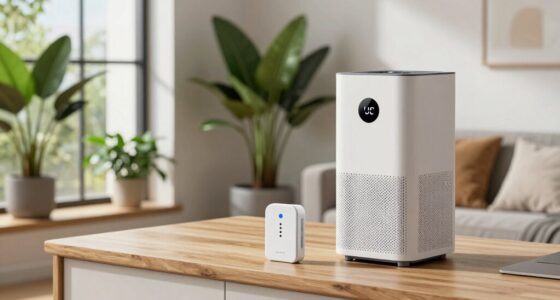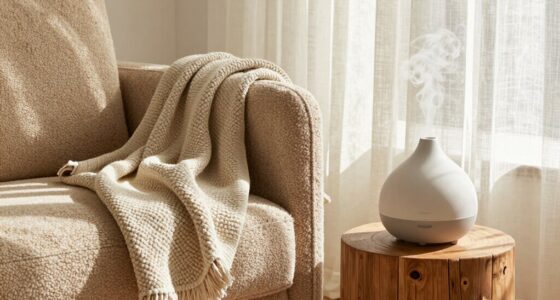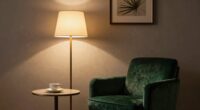
To reduce harsh reflections in wellness spaces, focus on controlling lighting by using soft, diffused, or dimmable lights to prevent glare. Choose matte or textured surface finishes and avoid shiny materials that reflect easily. Arrange furniture thoughtfully to avoid facing reflective surfaces directly, and incorporate soft materials like rugs, fabric dividers, and plants to break up reflections and soften acoustics. Implementing these strategies will help you create a calming environment — and there’s more to discover as you continue exploring.
Key Takeaways
- Use soft, diffused lighting and dimmable fixtures to minimize glare and harsh reflections.
- Incorporate matte or textured finishes on surfaces to diffuse light and reduce shininess.
- Position shiny surfaces away from seating and activity areas to prevent direct reflections.
- Add acoustic panels, rugs, and fabric-covered furnishings to absorb sound reflections and improve ambiance.
- Strategically arrange furniture and decor to break up reflective surfaces and foster a calm environment.
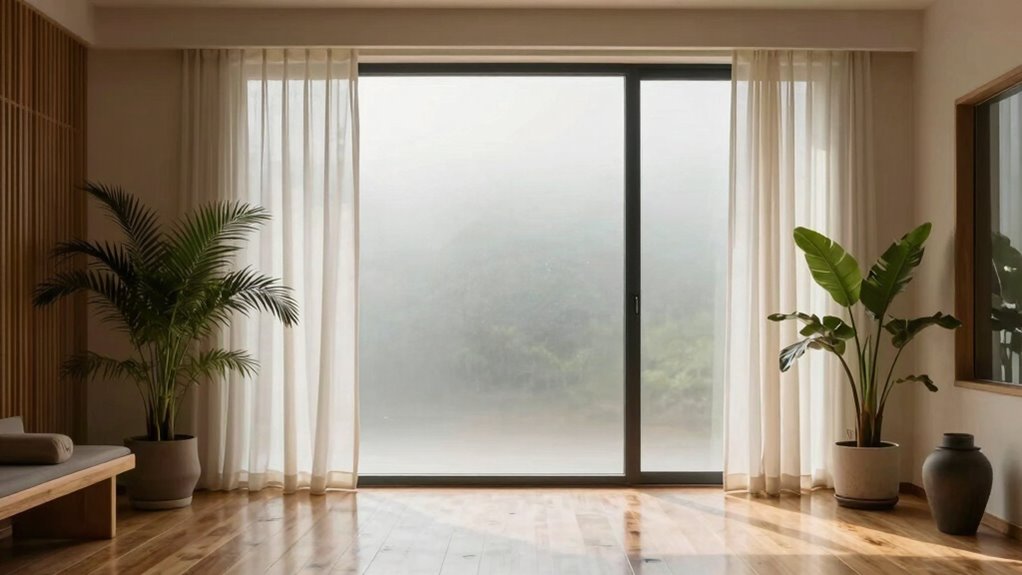
Have you ever wondered how wellness spaces influence your sense of calm and self-awareness? The environment around you plays a critical role in shaping your mood and relaxation levels. One key aspect to contemplate is how reflections can create distractions or even discomfort, breaking your focus and undermining the purpose of the space. To prevent harsh reflections, you need to think carefully about how light interacts with surfaces. Proper lighting control is essential, allowing you to soften or diffuse light sources so they don’t produce glaring reflections on mirrors, windows, or shiny surfaces. Installing dimmable lights or using indirect lighting options helps create a gentle glow that promotes tranquility. Strategic placement of light fixtures ensures that light hits surfaces at angles that minimize reflections, helping you maintain a sense of calm.
Thoughtful lighting and surface choices reduce reflections, fostering calm and focus in your wellness space.
Along with lighting control, acoustic treatment plays an important role in reducing unwanted reflections that bounce around the room. Hard surfaces like glass, tile, or polished wood tend to amplify sound reflections, which can cause echoes and make the space feel noisy or chaotic. Installing soft materials such as acoustic panels, fabric-covered wall coverings, or plush rugs can absorb sound waves and dampen reflections. These materials not only improve sound quality but also contribute to a more soothing atmosphere. By controlling both the visual and auditory reflections, you create an environment where your focus remains on your breathing, meditation, or gentle movements without constant visual distractions or auditory disturbances. Additionally, understanding how surface finishes influence reflection can help you choose materials that diffuse light more effectively, further enhancing your space’s serenity. Incorporating light diffusion techniques can help distribute light evenly and reduce glare, making the space more harmonious. Being mindful of the surface texture of your furnishings and decor can also significantly impact how light interacts within the room, helping to create a softer and more tranquil environment.
Furthermore, selecting appropriate materials for furniture and decor can help in managing reflection levels and maintaining the calming ambiance. You should also pay attention to the placement of furniture and decorative elements. Avoid positioning shiny surfaces directly facing seating or activity areas, as these are likely to produce reflections that interfere with your experience. Instead, opt for matte or textured finishes that diffuse light rather than reflect it directly. Similarly, strategic use of plants or fabric dividers can break up reflective surfaces and add a layer of visual softness that contributes to the overall feeling of serenity.
Incorporating these elements into your wellness space requires a thoughtful approach, but the results are worth it. By managing lighting control effectively and investing in acoustic treatment, you can markedly reduce harsh reflections. The goal is to craft an environment that feels natural, calming, and conducive to self-awareness. When reflections are minimized, your mind can settle more easily, and you can immerse yourself fully in relaxation or mindfulness practices. This careful attention to detail transforms your space into a sanctuary where every element supports your well-being and inner peace.
As an affiliate, we earn on qualifying purchases.
Frequently Asked Questions
Can Plants Help Reduce Reflections in Wellness Areas?
Yes, plants can help with reflection control in wellness spaces. By strategically placing plants near reflective surfaces, you can soften harsh reflections and diffuse light, creating a more calming environment. Opt for larger, leafy plants or those with textured foliage to break up reflections effectively. Proper plant placement not only improves aesthetics but also enhances the overall serenity of the space, making it more inviting and comfortable.
What Materials Are Best for Minimizing Glare?
You should choose materials with matte finishes and incorporate acoustic treatments like soft wall panels or ceiling tiles to minimize glare. Matte surfaces absorb light rather than reflect it, reducing harsh reflections. Acoustic treatments help diffuse light and sound, creating a calmer environment. Opt for non-reflective paints and fabrics, and avoid glossy or shiny materials. These choices work together to create a soothing wellness space with minimal glare and enhanced comfort.
How Does Lighting Placement Affect Reflections?
Lighting placement greatly impacts reflections in wellness spaces. By adjusting lighting angles, you can control how light hits surfaces, reducing harsh reflections. Position lights at angles that direct illumination away from reflective surfaces, like mirrors or glass, to minimize glare. Proper reflection control involves avoiding direct lighting into reflective surfaces and using diffused or indirect light sources. This approach creates a calming atmosphere, ensuring comfort and focus during wellness activities.
Are There Specific Colors That Reduce Visual Distractions?
You should choose soft, muted colors like pale blues, gentle greens, or warm neutrals to reduce visual distractions. These colors, based on color psychology, promote calmness and enhance visual comfort, helping clients feel more relaxed. Avoid bright, highly saturated hues that can be overstimulating. Using a balanced color palette creates a soothing environment, minimizes harsh reflections, and supports a peaceful wellness space where clients can unwind effectively.
How Often Should Reflective Surfaces Be Cleaned to Prevent Glare?
You should clean reflective surfaces regularly, ideally once a week, to maintain mirror maintenance and prevent excessive glare. Consistent cleaning helps control reflections and reduces harsh glare that can disrupt wellness environments. Use a soft, lint-free cloth and a gentle cleaner to avoid streaks. By keeping surfaces clean, you guarantee a calm, inviting atmosphere while minimizing unwanted reflections that could distract or discomfort clients.
Conclusion
By softening harsh reflections, you turn your wellness space into a tranquil lake, mirror-like yet gentle on the eyes. When you tame those glare-prone surfaces, you create a sanctuary where calm flows like a gentle breeze, inviting relaxation and mindfulness. Think of reflections as fleeting shadows—controllable and fleeting. With mindful choices, you craft an environment that feels more like a soothing escape than a mirrored maze, guiding your clients toward serenity with every glance.