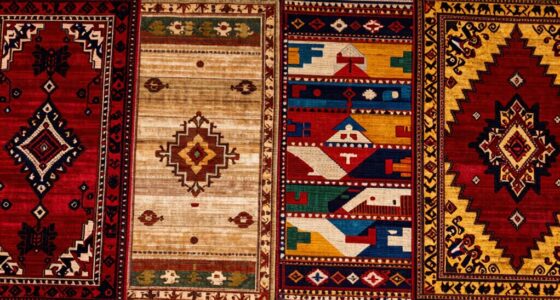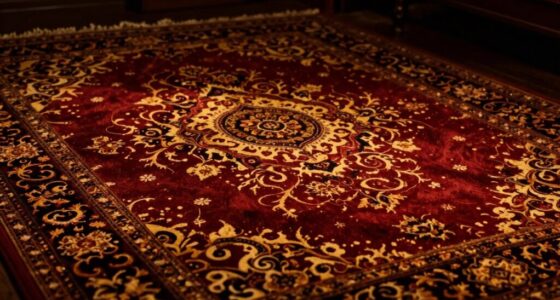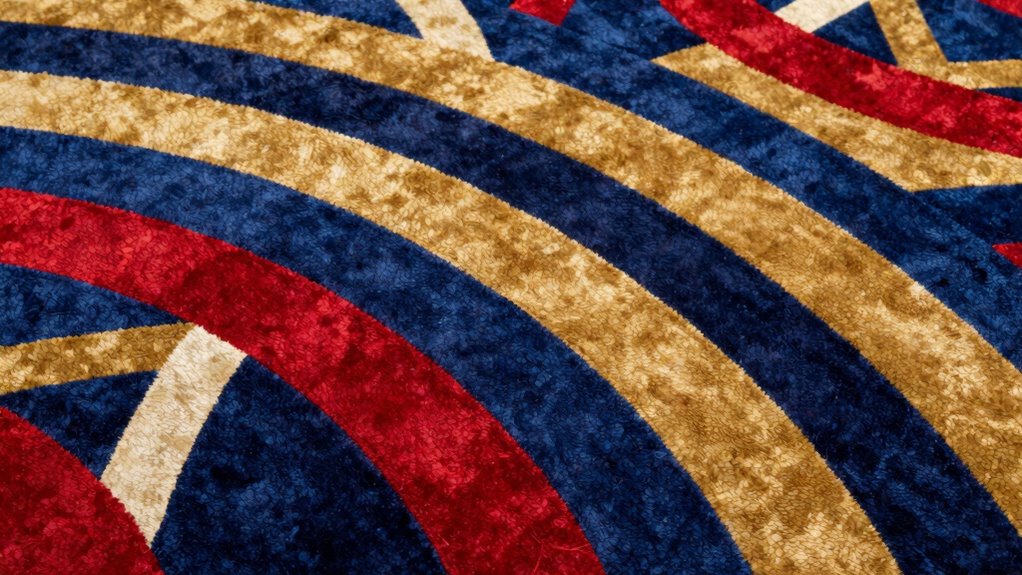

To understand curvilinear versus geometric rug designs, look at the patterns’ shapes and flow. Curvilinear styles feature flowing, rounded lines that often represent natural elements like water, wind, or growth, emphasizing harmony and spirituality. In contrast, geometric designs use straight lines, angles, and repeated shapes like diamonds or triangles to symbolize stability, order, and cultural beliefs. Recognizing these differences helps reveal the cultural stories behind each pattern—if you keep exploring, you’ll uncover even more insights.
Key Takeaways
- Identify flowing, rounded lines and floral motifs as characteristic of curvilinear designs.
- Look for straight lines, angles, and repeated geometric shapes like diamonds or triangles in geometric patterns.
- Recognize that curvilinear patterns often symbolize natural elements and spiritual harmony.
- Note that geometric patterns typically convey order, stability, and mathematical principles.
- Understanding cultural symbolism behind motifs enhances appreciation of both styles’ historical and cultural significance.
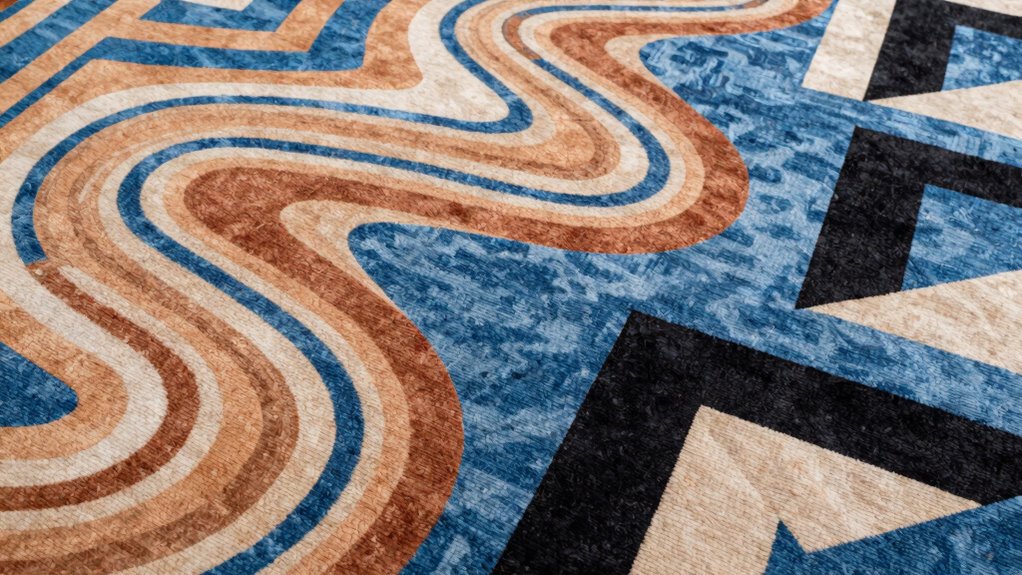
Have you ever wondered what makes a rug truly stand out? It’s often the design, the patterns, and the underlying meaning that catch your eye. When you start to explore rug design, you’ll notice that there are two main styles: curvilinear and geometric. Understanding these styles isn’t just about aesthetics; it’s about grasping the textile symbolism and cultural influences that shape each pattern. Curvilinear designs feature flowing, rounded lines that seem to dance across the surface. These patterns often symbolize natural elements like water, wind, or growth, reflecting a culture’s spiritual connection to nature. For example, many Persian rugs incorporate floral motifs and swirling vines, which are deeply rooted in their textile symbolism. These designs serve as visual stories, emphasizing harmony and beauty, often carrying meanings passed down through generations. They reveal how a culture views the world, blending artistry with tradition.
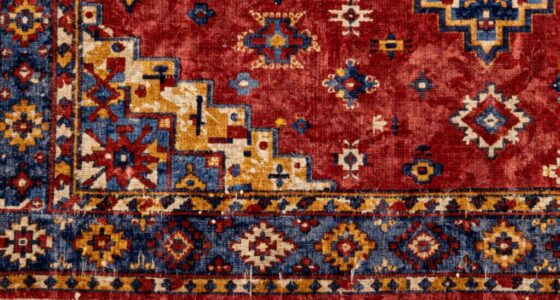
On the other hand, geometric rug designs rely on straight lines, angles, and repeated shapes. These patterns evoke a sense of order, stability, and logic, often inspired by mathematical principles or daily life. Many Central Asian and Anatolian rugs feature bold, repeating geometric motifs like diamonds, triangles, or hexagons. These shapes are not random; they reflect cultural influences where symbolism plays a key role. For instance, certain symbols might represent protection, fertility, or spiritual beliefs. Recognizing the textile symbolism behind each pattern can deepen your understanding of their cultural significance. Additionally, understanding the cultural influences that shape these designs can deepen your appreciation for their historical context. Exploring the design elements can also reveal how artisans express their cultural identity through patterns and motifs. Moreover, the artistic techniques used in creating these patterns often carry their own symbolic meanings, adding another layer of cultural significance. Appreciating these design principles can help you distinguish authentic craftsmanship from mass-produced imitations.
While curvilinear and geometric designs differ in appearance, both are deeply rooted in their cultural influences and textile symbolism. Curvilinear patterns tend to convey a sense of fluidity and natural harmony, often reflecting spiritual beliefs about growth and life cycles. Geometric patterns, in contrast, emphasize structure, order, and the importance of mathematical harmony, often embodying cultural ideals of stability and protection. When you look at a rug, consider not just its visual appeal but also what it might symbolize within its cultural context. Recognizing these design elements helps you appreciate the artistry and history woven into each piece. By understanding how textile symbolism and cultural influences shape rug design, you gain a richer perspective that transforms a simple decorative item into a meaningful cultural artifact.
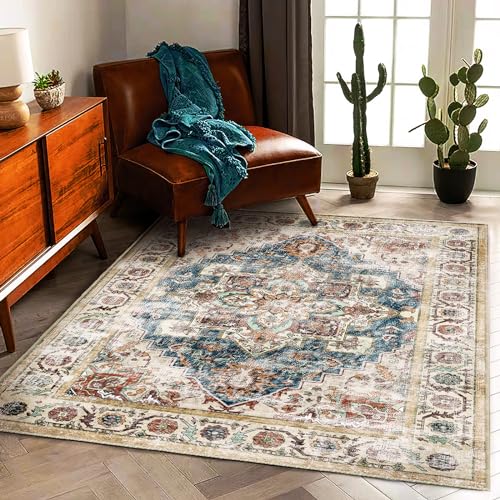
CHAMPLANT Washable Area Rug 5'x7' for Living Room Retro Beige Blue Boho Chic Medallion Distressed Design Indoor Non-Slip Large Persian Oriental Accent Throw Rug for Kitchen Bedroom Office Carpet
- Design Style: Retro beige and blue medallion pattern
- Material: High-quality faux wool fibers
- Softness: Soft as cotton, comfortable underfoot
As an affiliate, we earn on qualifying purchases.
As an affiliate, we earn on qualifying purchases.
Frequently Asked Questions
How Do Curvilinear and Geometric Designs Affect Room Ambiance?
Curvilinear and geometric rug designs profoundly influence your room’s ambiance. Curvilinear patterns add softness, creating a cozy, inviting atmosphere with texture contrast and fluidity. Geometric designs bring a modern, structured vibe, emphasizing material variety and clean lines. Both styles set distinct moods—curvilinear for warmth and comfort, geometric for sleek sophistication—allowing you to shape your space’s personality through texture contrast and material variety.
Can Mixed Rug Designs Create Visual Confusion?
Yes, mixing rug designs can create visual confusion if you’re not careful. To avoid this, consider pattern symbolism—choose patterns that complement or contrast intentionally—and use material contrast to highlight differences without overwhelming the space. When you balance these elements thoughtfully, mixed designs can add dimension and interest, making your room lively. But if patterns clash or materials compete, it might lead to a chaotic look, so plan your combination carefully.
Which Design Style Is More Versatile for Different Interiors?
You’ll find geometric rug designs more versatile for different interiors because they offer clean lines and pattern contrast that complement various styles. Curvilinear patterns add texture variation and softness, making them ideal for more relaxed or traditional spaces. If you want adaptability, go for geometric designs—they easily blend with modern, classic, or eclectic decor. Curvilinear rugs work best when you want to introduce a touch of organic flow and subtle texture.
How Do Rug Patterns Influence the Perception of Space?
Rug patterns influence how you perceive space by using pattern symbolism and color psychology. Curvilinear designs create a sense of flow and softness, making a room feel more spacious and inviting. Geometric patterns add structure and energy, which can make a space seem more dynamic. Bright colors can enhance openness, while darker shades add coziness. By choosing patterns and colors thoughtfully, you shape the mood and perceived size of your space effectively.
Are There Cultural Differences in Curvilinear and Geometric Rug Patterns?
Yes, there are cultural differences in curvilinear and geometric rug patterns. You’ll notice that certain regions favor specific styles due to cultural symbolism and regional variations. For example, Middle Eastern rugs often feature intricate curvilinear motifs symbolizing spiritual beliefs, while Central Asian designs lean toward bold geometric patterns representing tribal identity. These differences reflect each culture’s history, values, and artistic traditions, making each rug uniquely meaningful.
Conclusion
Now that you can spot the flowing curves of a curvilinear rug or the sharp angles of a geometric one, your eye becomes a guide through a vibrant tapestry of design. Imagine walking across a lush, winding river or stepping onto a mosaic of precise, colorful tiles—each rug style offers a unique journey. With this knowledge, you’re ready to choose the perfect rug that transforms your space into a mesmerizing visual story.