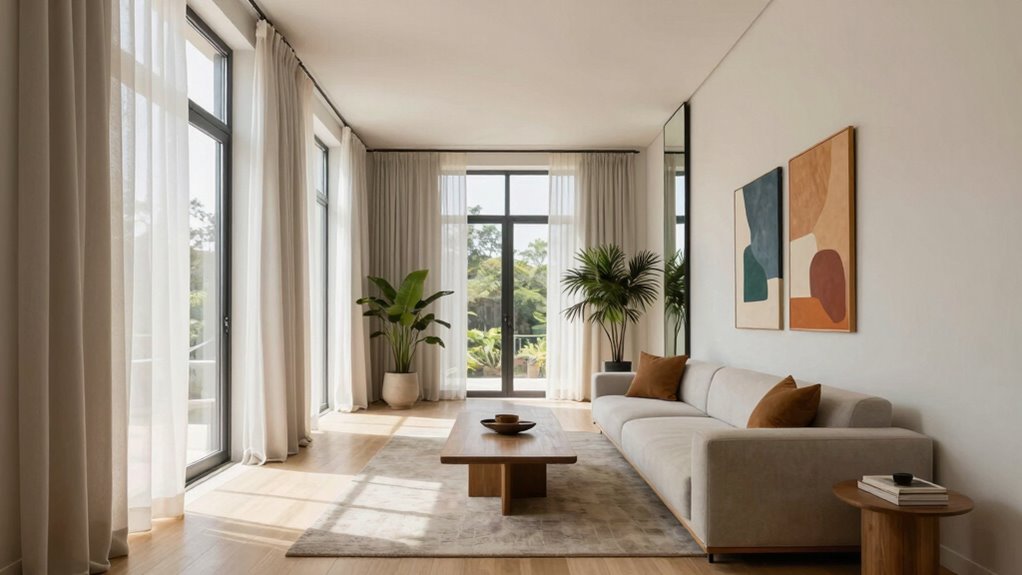
To style your long, narrow living room effectively, focus on light, neutral colors and add pops of your favorite hues through accessories. Place seating towards the center and choose scaled furniture that doesn’t overwhelm the space. Use rugs to define zones and add visual balance, while mirrors and strategic lighting create an airy feel. Keep clutter in check with vertical storage options. Stay tuned for more tips to make your space feel open and inviting from end to end.
Key Takeaways
- Use light, neutral colors with pops of accent hues to visually open up the space and add personality.
- Arrange furniture centrally and choose appropriately scaled, sleek pieces to prevent overcrowding.
- Define zones with rugs and furniture placement, maintaining visual balance and proper proportions.
- Incorporate vertical lighting and mirrors to enhance height and reflect light, creating an airy feel.
- Maximize storage with vertical solutions and keep clutter out of sight for a clean, spacious environment.
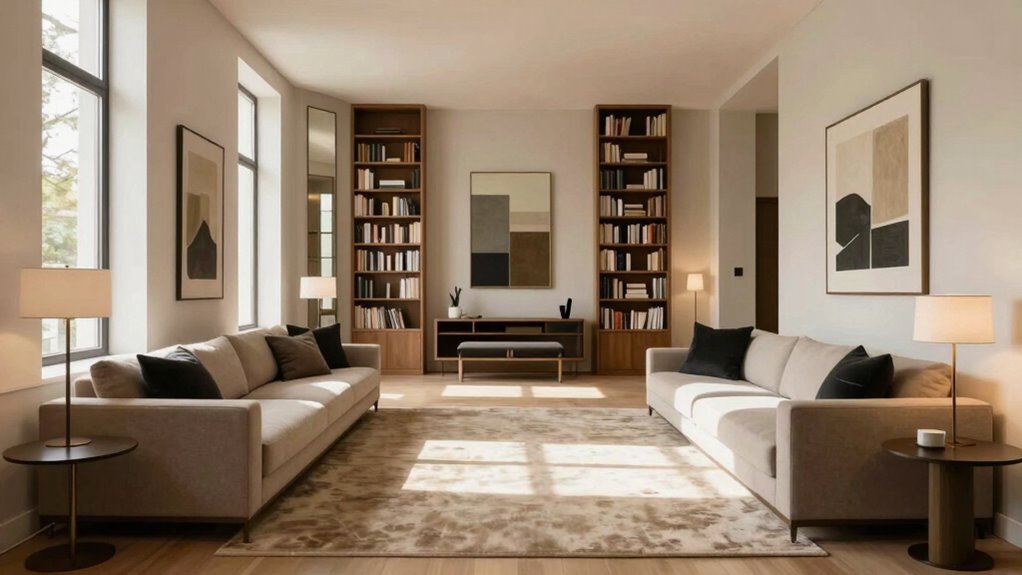
Long, narrow living rooms can be challenging to style, but with the right design strategies, you can create a space that feels inviting and functional. The key lies in carefully choosing your color schemes and thoughtfully arranging your furniture. When it comes to color, opt for light, neutral shades like soft grays, beiges, or pastel tones. These colors help open up the space, making it feel larger and less cramped. You can add pops of color through accessories like pillows, artwork, or rugs to introduce personality without overwhelming the room. Avoid dark, heavy hues that tend to make a narrow space feel even more confined.
Light, neutral colors open up narrow living rooms, creating an inviting and spacious atmosphere.
Furniture placement plays a *pivotal* role in maximizing your living room’s potential. Instead of lining everything along the walls, consider placing your sofa or main seating piece toward the center of the room. This creates a natural focal point and encourages conversation. Keep your furniture scaled appropriately—oversized pieces can dominate the space and make it feel cluttered. Instead, choose sleek, multi-functional furniture that fits without overwhelming the room. For example, a slim-profile sofa paired with narrow side tables keeps the pathway clear, enhancing the sense of openness.
To further improve the flow, position your furniture to define different zones within the room, such as a seating area and a small workspace or reading nook. Use rugs to anchor these zones visually, which also adds warmth and texture. When arranging furniture, leave enough space between pieces to allow for easy movement. This prevents the room from feeling cramped and helps the eye travel effortlessly through the space. Incorporating visual balance can also help create a more harmonious and less cluttered appearance. Additionally, paying attention to spatial proportions ensures that each piece contributes to a balanced layout and avoids overcrowding. Incorporating proportional furniture is especially important in narrow spaces to maintain harmony and comfort. Using scale-aware furniture choices can further enhance the perception of room size and flow. Moreover, considering light and reflection can significantly impact how open and airy the space feels.
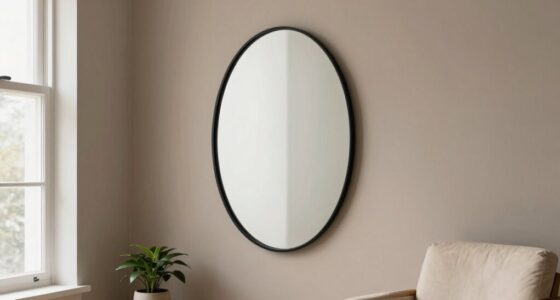
Lighting is another *essential* element that impacts how spacious your living room feels. Incorporate a mix of ambient, task, and accent lighting to brighten the room evenly. Wall-mounted fixtures or tall, narrow lamps can save space and add vertical interest, drawing the eye upward and emphasizing height. Mirrors are also powerful tools; strategically placed, they reflect light and create the illusion of a larger space.
Finally, keep clutter to a minimum and utilize vertical storage options to maximize floor space. Shelves, tall cabinets, or wall-mounted units help keep your belongings organized and out of sight. With these styling moves—smart color choices, strategic furniture placement, and thoughtful lighting—you can transform your long, narrow living room into a welcoming, functional haven that feels much more spacious than it actually is.
slim profile sofa for narrow living room
As an affiliate, we earn on qualifying purchases.
As an affiliate, we earn on qualifying purchases.
Frequently Asked Questions
How Can I Make a Narrow Living Room Appear Wider?
To make your narrow living room appear wider, you should focus on vertical accents and mirror placement. Use tall, slim furniture to draw the eye upward, creating the illusion of height. Place mirrors strategically across from windows or open spaces to reflect light and expand the room visually. These techniques help break up the length, making your space feel more open and inviting without overcrowding.
What Colors Work Best to Open up a Long Space?
Light, neutral shades like soft beige, pale gray, or creamy whites open up your space, making it feel larger and more inviting. Bright colors reflect more light, enhancing the sense of openness. Color psychology reveals these hues promote calm and spaciousness. Use an accent wall in a slightly darker tone to add depth without shrinking the room. This contrast draws the eye, balancing openness with visual interest, perfect for long, narrow living rooms.
How Should I Arrange Furniture for Optimal Flow?
To optimize your living room’s flow, arrange furniture to create clear pathways, ensuring traffic flow isn’t obstructed. Position larger pieces against the walls to maximize space, and keep seating areas centered around a focal point like a fireplace or TV. Use rugs to define zones, and avoid cluttering the middle of the room. This setup encourages easy movement and makes your narrow space feel more open and inviting.
Which Lighting Options Enhance Narrow Room Dimensions?
You can make your space feel more expansive by choosing layered lighting and statement fixtures. Layered lighting adds depth and warmth, while statement fixtures draw the eye upward, emphasizing height and width. Opt for wall sconces, slim floor lamps, or pendant lights to enhance your narrow room’s dimensions. These choices create visual interest and make the space feel more open, inviting, and balanced, even in a long, narrow layout.
Are There Specific Rugs That Suit Narrow Living Rooms?
Yes, you should choose area rugs with elongated shapes, like runners or narrow rectangular designs, to suit your narrow living room. Opt for rug patterns that add visual interest without overwhelming the space, such as subtle geometric or linear patterns. These choices help define zones and create the illusion of more room, making your narrow space feel cozy yet spacious.
Conclusion
With these styling moves, your long, narrow living room transforms into a seamless flow of comfort and style. Picture sunlight streaming across well-placed furniture, creating inviting zones that beckon you to relax and unwind. By playing with mirrors, strategic furniture placement, and light colors, you’ll craft a space that feels open and vibrant. Soon, your narrow room will become a cozy corridor of personality, guiding you effortlessly through a beautifully styled sanctuary you’ll love coming home to.