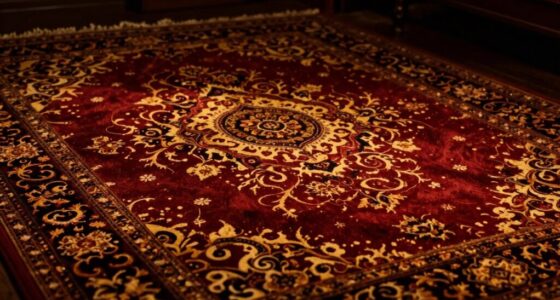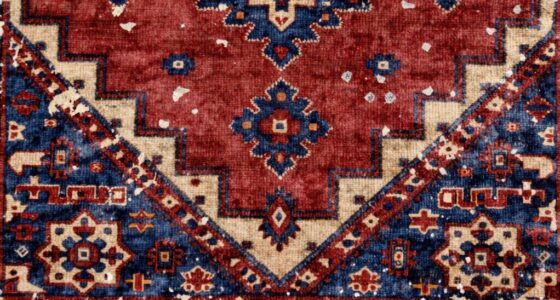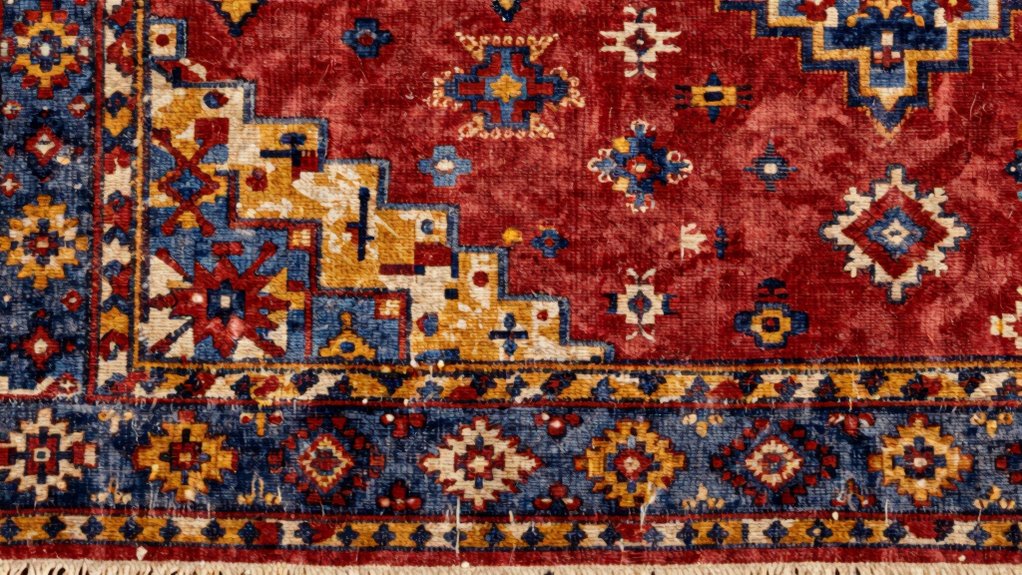

To spot pattern distortion in old rugs, you should study authentic designs and compare multiple examples to recognize symmetrical motifs and precise alignments. Look for irregularities like misaligned patterns, inconsistent dye shades, or uneven pile lengths, which can indicate repairs or tampering. Understand the cultural meanings behind symbols and motifs to detect alterations. As you continue exploring and practicing, you’ll develop a keen eye for subtle deviations and signs of authenticity.

Get furniture and decor delivered free with Prime
- Fast, free delivery on millions of items
- Prime Video, Amazon Music and more included
- Member-only deals all year
Key Takeaways
- Study authentic rugs from various regions to understand standard pattern symmetry and motifs.
- Compare multiple examples to identify inconsistencies and subtle deviations in design.
- Learn to recognize signs of restoration, such as misaligned motifs and uneven dye shades.
- Examine rugs under different lighting to reveal hidden repairs or pattern distortions.
- Engage with experts and authoritative guides to deepen knowledge of craftsmanship and cultural symbolism.
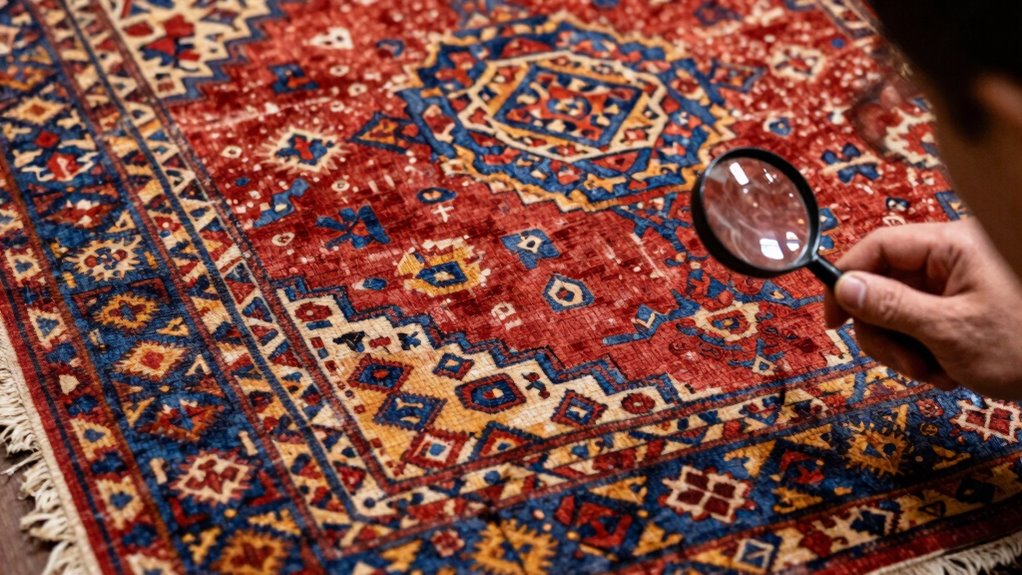
If you want to become skilled at identifying authentic old rugs, learning to spot pattern distortion is essential. Authentic rugs often feature intricate, symmetrical designs that reflect their cultural origins and craftsmanship. When these patterns become distorted, it can indicate repairs, restorations, or even that the rug isn’t as old as it appears. Recognizing these subtle deviations requires a keen eye and understanding of both restoration techniques and cultural symbolism embedded in the design. Restoration techniques, such as patchwork or re-weaving, often leave telltale signs—misaligned motifs, inconsistent dye shades, or uneven pile lengths—that disrupt the original pattern’s harmony. By observing these inconsistencies, you learn to differentiate between genuine wear and modern intervention.
Spot pattern distortions to distinguish authentic old rugs from repairs or modern interventions.
Understanding the cultural symbolism woven into old rugs also helps you spot pattern distortion. Many traditional designs carry specific meanings—geometric shapes, motifs, or color combinations that symbolize beliefs, histories, or social status. When these symbols are distorted or altered, it may suggest the rug has undergone repairs or that parts have been replaced, which can diminish its authenticity. For example, a pattern that traditionally uses a specific color palette might suddenly feature an unusual hue, hinting at recent dyeing or patching. Recognizing these subtle cues deepens your appreciation of the rug’s origins and helps you assess its authenticity more accurately.
Learning to identify pattern distortion involves studying a variety of authentic rugs from different regions and periods. Pay close attention to the symmetry and repetition of motifs, and compare these details across multiple examples. You’ll start noticing how certain patterns are meticulously crafted, with precise alignments, and how deviations can signal underlying issues. Practice examining rugs in different lighting conditions, as shadows and color variations can reveal repairs or alterations that aren’t immediately visible. Over time, your familiarity with traditional design elements and craftsmanship techniques will sharpen your ability to detect subtle distortions that indicate a rug’s true age and authenticity. Developing this skill also involves understanding restoration techniques, which can help you identify signs of tampering or repair. Additionally, gaining knowledge about cultural symbolism embedded in designs can guide your interpretation of pattern inconsistencies. Engaging with expert appraisals and authoritative guides will further enhance your skills, offering insights into the nuances of authentic craftsmanship.
Finally, developing this skill requires patience and continuous learning. Engage with experts, attend appraisals, and read authoritative guides on restoration techniques and cultural symbolism. Each new piece you examine enhances your understanding, making you more confident in your assessments. Ultimately, mastering pattern distortion recognition helps you build a collection of genuine old rugs that are both valuable and culturally significant, ensuring you preserve the integrity of these ancient textiles.
antique rug pattern analysis guide
As an affiliate, we earn on qualifying purchases.
As an affiliate, we earn on qualifying purchases.
Frequently Asked Questions
What Tools Do Experts Use to Examine Old Rugs?
You use specialized tools like a magnifying glass or a jeweler’s loupe to closely examine old rugs. Experts also perform dye analysis to identify authentic or modern colors, which helps reveal pattern distortions. Additionally, they measure knot density to assess craftsmanship and authenticity. These tools help you spot subtle signs of wear, repairs, or pattern inconsistencies, ensuring you accurately evaluate the rug’s age, origin, and value.
How Long Does It Typically Take to Become Proficient?
Like a seasoned sailor reading the stars, you’ll master pattern distortion in about two to three years. Your journey involves studying historical weaving techniques and dye analysis, which act as your celestial charts. With patience and practice, you’ll recognize subtle shifts and anomalies. Over time, your eye becomes attuned, and patterns reveal their secrets, guiding you through the complex tapestry of old rugs with confidence and precision.
Can Pattern Distortion Indicate a Rug’s Authenticity?
Yes, pattern distortion can indicate a rug’s authenticity. When you examine rugs for authenticity markers, you look for consistent pattern flow and symmetry, which genuine antique rugs typically exhibit. Pattern consistency helps you distinguish between authentic pieces and forgeries or repairs. If you notice irregularities or distortions that seem unnatural, it might signal the rug isn’t genuine or has been altered. Your keen eye for these details guarantees you spot authentic, high-quality rugs.
Are There Specific Regions Known for More Pattern Distortions?
You’ll find more pattern distortions in rugs from regions with diverse weaving styles and strong cultural influences, like the Caucasus or Central Asia. These areas often have intricate, handcrafted designs that reflect local traditions, but may also include intentional or unintentional distortions due to regional weaving techniques. By studying these regional styles, you can better identify authentic pieces and recognize when pattern distortions are part of the cultural expression rather than flaws.
How Often Should a Collector Re-Evaluate a Rug’s Pattern?
Think of your rug as a living artwork that needs regular check-ups. You should re-evaluate its pattern every few years, especially if you’re considering rug restoration or suspect subtle distortions. Pattern analysis helps spot changes early, preserving its value and beauty. Frequent inspections ensure you detect any distortions quickly, maintaining the rug’s integrity. Regular reviews make sure your collection remains authentic and well-preserved over time.
Conclusion
As you continue to study and observe, you’ll find yourself gently attuned to subtle shifts and whispers in rug patterns. Over time, your eye will naturally catch the delicate nuances that hint at age or repair, guiding you with quiet confidence. Remember, every detail tells a story—sometimes hidden, sometimes softly revealed. Trust your growing intuition, and let the silent language of the patterns softly lead you toward deeper understanding and appreciation.
Halloween Picks
halloween
As an affiliate, we earn on qualifying purchases.