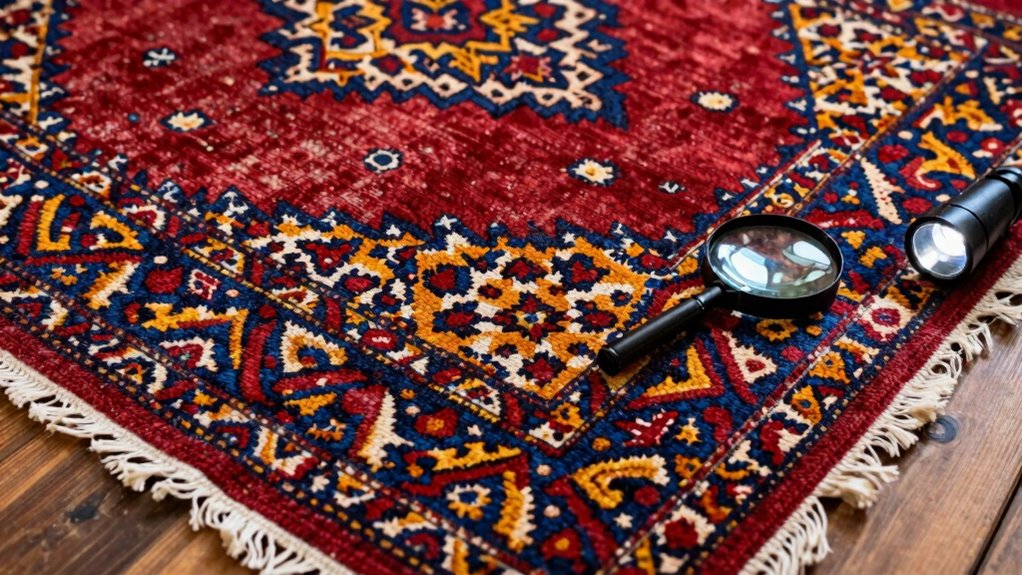

Before bringing a rug back from storage, carefully inspect it for signs of damage like frayed edges, discoloration, or worn spots. Check the entire surface, underside, and fringe for pests, holes, or larvae. Verify the backing and foundation are stable and look for mold, mildew, or musty odors. Lightly vacuum and consider professional cleaning if needed. Taking these steps helps protect your rug’s value and longevity—keep going to discover more essential tips.

Get furniture and decor delivered free with Prime
- Fast, free delivery on millions of items
- Prime Video, Amazon Music and more included
- Member-only deals all year
Key Takeaways
- Inspect for visible damage, frayed edges, discoloration, or worn spots that may have occurred during storage.
- Check for signs of pests such as holes, larvae, webbing, or shed skins.
- Ensure the rug’s backing and foundation are stable, with no loose threads or deterioration.
- Look for mold, mildew, or musty odors indicating moisture issues.
- Perform light vacuuming and consider professional cleaning to remove dirt, dust, and odors.
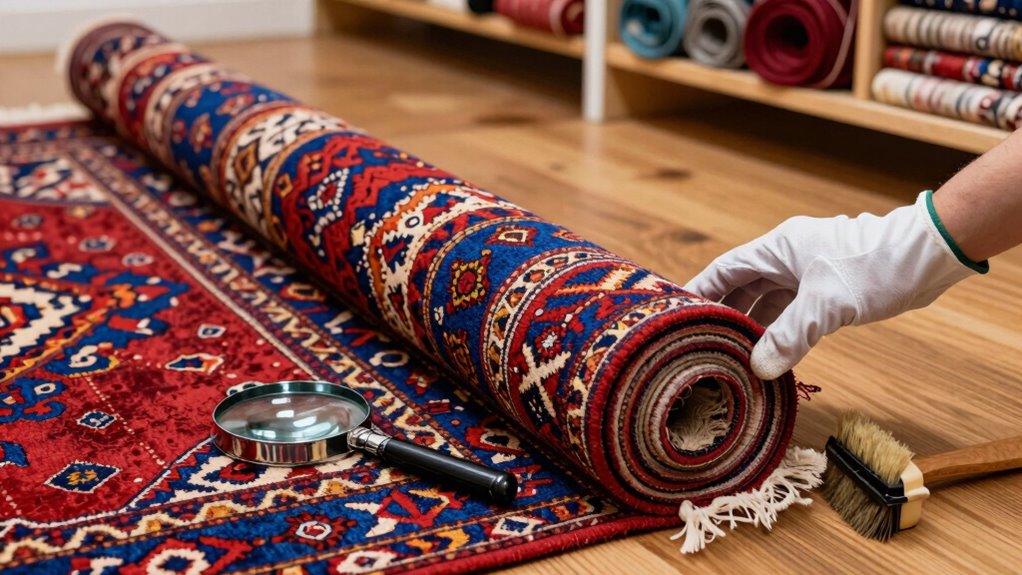
Bringing a rug back from storage requires careful inspection to guarantee it’s ready to be placed in your home. You want to confirm that it’s been properly maintained and that no issues will compromise its beauty or longevity. Start by examining the rug’s overall condition. Look for any signs of damage, such as frayed edges, worn spots, or discoloration. If it’s an antique piece, prioritize antique preservation techniques to keep its value intact. Antique rugs are delicate, and improper handling can diminish their worth, so handle it gently and document any existing imperfections for future reference.
Carefully inspect antique rugs for damage, discoloration, and wear to preserve their value and beauty before bringing them home.
Next, focus on pest inspection. Storage areas can sometimes harbor pests like moths, beetles, or carpet worms, which can cause extensive damage if left unchecked. Carefully inspect the entire surface of the rug, paying close attention to the underside, edges, and fringe. Look for any signs of pest activity, such as tiny holes, larvae, shed skins, or webbing. If you notice anything suspicious, consider consulting a professional for a thorough pest treatment before bringing the rug into your living space. This step is vital because pests can quickly spread to other household textiles, creating larger problems down the line.
As you continue your inspection, check the rug’s backing and foundation for stability. A sturdy, well-maintained backing indicates the rug has been preserved properly. If you see loose threads or areas where the backing is deteriorating, you might need to have it repaired before it’s displayed. Also, look for signs of mold or mildew, especially if the storage environment was humid. Musty odors are often a telltale sign, and if you detect any, it’s important to clean and dry the rug thoroughly, possibly with professional help, to prevent further deterioration. Regularly examining biodiversity factors in storage environments can help prevent pest infestations and damage. Additionally, understanding the material composition of your rug can guide appropriate cleaning methods and care routines. Incorporating proper storage techniques can significantly extend the lifespan of your rug and protect it from future issues. Furthermore, consulting experts on antique preservation can ensure your valuable pieces are maintained correctly over time.
Finally, consider cleaning and deodorizing the rug before placing it in your home. Light vacuuming can remove dust and debris, but deep cleaning might be necessary for more significant dirt or odors. If the rug is heavily soiled or stained, hire a professional experienced in antique preservation to perform a gentle, effective cleaning. Doing this reduces the risk of introducing dirt or pests into your living space and restores the rug’s appearance. By taking these steps—checking for damage, inspecting for pests, confirming structural integrity, and cleaning—you’ll help preserve your rug’s beauty and value, making it a cherished part of your home for years to come.
As an affiliate, we earn on qualifying purchases.
Frequently Asked Questions
How Long Should a Rug Be Stored Before Bringing It Out?
You should store a rug for at least six months to guarantee it’s properly preserved, especially if it’s made of delicate materials. During this time, check storage container options like breathable fabric covers or airtight bins to prevent moisture and pests. Rug material considerations matter—natural fibers need more ventilation. After this period, inspect your rug thoroughly before bringing it out, making sure it’s clean, dry, and free of pests.
What Are the Best Storage Conditions for Rugs?
You should store rugs in a cool, dry environment with low humidity to prevent mold and mildew. Keep storage areas well-ventilated and avoid damp spaces. Regularly check for pests like moths or carpet beetles, and use pest prevention methods such as cedar blocks or mothballs. Make certain the rug is rolled or folded carefully, and avoid direct sunlight to maintain its quality. Proper storage conditions keep your rug fresh and protected.
Can Stored Rugs Develop Mold or Pests?
Think of your stored rug as a garden—without proper care, mold and pests can take over. Yes, stored rugs can develop mold or pests if conditions aren’t ideal. To prevent this, focus on mold prevention by keeping the rug dry and well-ventilated, and implement pest control measures like regular inspections and using natural repellents. These steps guarantee your rug stays fresh and damage-free when you bring it out of storage.
How Do I Prevent Color Fading During Storage?
To prevent color fading during storage, you should focus on color preservation and dye stability. Keep the rug out of direct sunlight, as UV rays can weaken dyes over time. Store it in a cool, dry place with consistent temperature and humidity levels. Avoid using harsh chemicals or cleaning agents. Properly rolled or wrapped, the rug’s colors stay vibrant longer, maintaining its beauty and value.
Should I Professionally Clean a Rug Before Storing It?
Sure, you should definitely get your rug professionally cleaned before storage—think of it as giving your textile a spa day. Rug cleaning removes dirt, stains, and pests, ensuring it’s fresh and mold-free. Follow storage tips like rolling, wrapping in breathable fabric, and avoiding damp areas. This way, your rug stays pristine, vibrant, and ready to impress once you unroll it again.
Conclusion
Before bringing your rug home, taking a quick check guarantees it’s clean and damage-free. Some might worry it’s just extra effort, but a little prep now saves you headaches later. By inspecting for stains, pests, or tears, you prevent costly repairs or replacements down the line. Trust me, a thorough look means you’ll enjoy your beautiful rug safely and confidently—so don’t skip this step. It’s worth it for peace of mind and a stunning, well-maintained addition to your space.
Halloween Picks
halloween
As an affiliate, we earn on qualifying purchases.