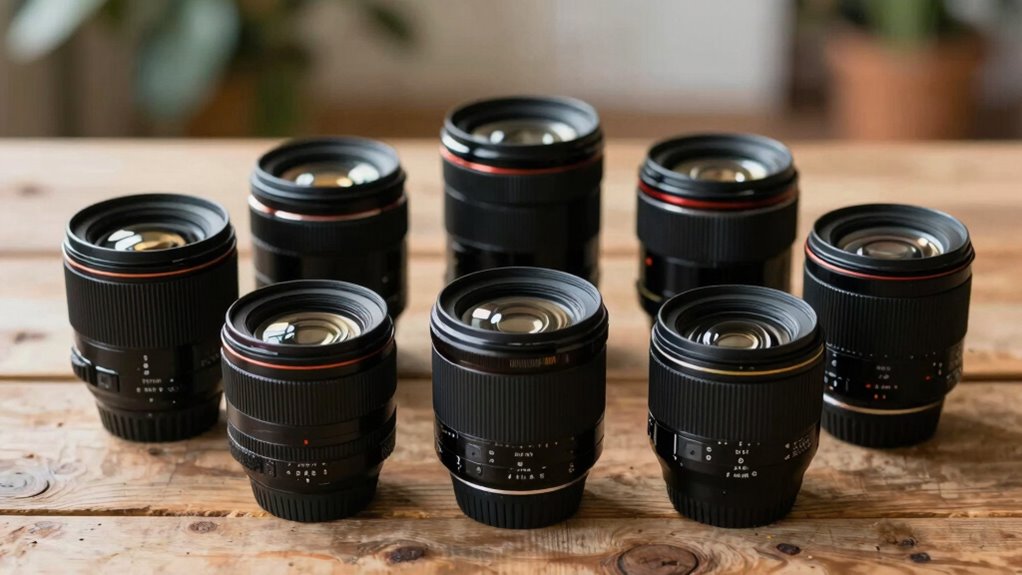

Starting with the right camera lens can make a big difference in your photography experience. For beginners, choosing a lens that offers versatility, ease of use, and good image quality is essential. The Canon EF 50mm f/1.8 STM stands out as an excellent all-around choice for its affordability and sharpness, while the VILTROX 27mm F1.2 offers impressive low-light performance for more creative shots. However, many beginner lenses come with tradeoffs—some lack autofocus, others are limited in focal length or build quality. Keep reading to find out which options best match your needs and budget.

Get furniture and decor delivered free with Prime
- Fast, free delivery on millions of items
- Prime Video, Amazon Music and more included
- Member-only deals all year
Complete the kit


Key Takeaways
- The best beginner lenses balance affordability with good image quality and ease of use.
- Prime lenses like the Canon EF 50mm f/1.8 provide sharp images but lack zoom flexibility.
- Wide-angle options like the VILTROX 27mm F1.2 are great for creative shots in low light.
- Kit lenses are versatile but often compromise on image quality and aperture size.
- Autofocus varies significantly across options, impacting usability for quick shots or video.


| camera lenses for beginner | Focal Length | Autofocus |
|---|---|---|
| Meike 55mm F1.4 APS-C Auto Foc | 55mm | Yes |
| EF 85mm f1.8 Portrait Lens | — | — |
| VILTROX 27mm F1.2 Lens for Son | 27mm (40mm equivalent) | Yes |
| Canon EOS Rebel T7 DSLR Camera | — | 9-point AF |
| VILTROX 35mm F1.7 E Mount Auto | 35mm | — |
| Canon EF 50mm f/1.8 STM Lens f | 50mm | — |
More Details on Our Top Picks
Meike 55mm F1.4 APS-C Auto Focus Prime Lens for Sony E Mount Mirrorless Cameras
This Meike 55mm F1.4 stands out for its exceptional low-light performance and high-quality images, making it ideal for newcomers eager to explore portraiture and artistic shots. Compared with the VILTROX 35mm F1.7, it offers a brighter aperture, which helps in dim conditions and creates smooth background blur. Its autofocus is notably quick, reducing camera shake during handheld shooting, but it’s strictly limited to Sony E-mount APS-C cameras, which could be restrictive for those considering other brands. The lack of image stabilization means users might need a steady hand or tripod in challenging light. Its higher price for a prime lens reflects its premium build and optical clarity, but this can be a consideration for budget-conscious beginners.
Pros:- Excellent low-light performance with a bright f/1.4 aperture
- Sharp images with smooth background blur
- Fast autofocus reduces camera shake
Cons:- Limited compatibility to Sony E-mount APS-C cameras
- No image stabilization included
- Higher price point for a prime lens
Best for: Beginners with Sony APS-C mirrorless cameras who want versatile low-light capabilities and sharp images
Not ideal for: Photographers using other systems or those seeking a budget-friendly starter lens, as it’s specialized and costly
- Compatibility:Sony E mount APS-C
- Focal Length:55mm
- Aperture:f/1.4
- Autofocus:Yes
- Elements:8 elements in 11 groups
- Port:Type-C for firmware updates
Our verdict“This lens is best suited for Sony APS-C beginners who prioritize image quality and low-light shooting, despite its limited compatibility.”
EF 85mm f1.8 Portrait Lens – MF for Canon EOS Rebel T8i/T7i/T7/T6i/T5/T3i/T3/T2i/XSi/XS/SL3/SL2/T100/90D/80D/70D/50D/5D Mark IV/6D II/7D II/1D X III II-Manual Focus DSLR Cameras Lenses(EF/EF-S Mount)
This EF 85mm f/1.8 manual focus lens is designed for photographers eager to master focus control and achieve artistic portraits. Unlike autofocus options, it demands precise manual adjustments, which can be a barrier for quick shots but offers unparalleled creative flexibility. Compared to autofocus lenses like the Canon EF 50mm f/1.8 STM, this model provides more deliberate focus control, ideal for learning the craft. Its high-quality optics and smooth aperture blades produce beautiful bokeh, perfect for portrait work. However, the absence of autofocus can slow down spontaneous shooting and might be frustrating for beginners unfamiliar with manual focus techniques. Its compatibility with many Canon DSLR models makes it versatile, but the learning curve is steeper.
Pros:- Excellent control for artistic focus and portrait shots
- High-quality optics with charming bokeh
- Durable build and wide compatibility with Canon DSLRs
Cons:- No autofocus, requiring manual focus skills
- Slower shooting process for dynamic scenes
- Steeper learning curve for beginners unfamiliar with manual focus
Best for: Beginners interested in developing manual focusing skills and portrait photography on Canon DSLRs
Not ideal for: Those seeking quick, autofocus-capable lenses for casual or fast-paced shooting environments
Our verdict“Ideal for beginners eager to learn manual focus and create artistic portraits, accepting slower shooting speeds.”
VILTROX 27mm F1.2 Lens for Sony E-Mount Cameras
The VILTROX 27mm F1.2 offers a bright aperture and a natural 40mm equivalent focal length, making it a flexible choice for street, portrait, and everyday photography. Its fast autofocus and close focusing distance support a variety of shooting styles, from detailed macro shots to candid street scenes. Compared with the VILTROX 35mm F1.7, this lens provides a slightly wider perspective and slightly better low-light performance, though it lacks image stabilization, which could be a drawback in handheld situations. Its lightweight design makes it easy to carry, but the absence of stabilization and limited mount compatibility restricts its use to Sony E-mount cameras only. For beginners seeking a capable, all-around prime, it offers a lot of value despite these tradeoffs.
Pros:- Bright F1.2 aperture excellent in low-light
- Versatile 40mm equivalent focal length
- Fast, accurate autofocus with eye and face detection
Cons:- No image stabilization
- Limited to Sony E-mount cameras
Best for: Sony E-mount beginners wanting a versatile, fast prime for everyday and creative shooting
Not ideal for: Those who need built-in stabilization or use other camera mounts, as it’s limited to Sony E-mount
- Aperture:F1.2
- Focal Length:27mm (40mm equivalent)
- Minimum Focusing Distance:0.28m
- Mount Compatibility:Sony E-mount
- Optical Elements:11 groups, 15 elements
- Autofocus:Yes
Our verdict“A well-rounded, bright prime suited for Sony beginners wanting flexibility in low-light and diverse scenes.”
Canon EOS Rebel T7 DSLR Camera Double Zoom Lens Kit with EF-S 18-55mm and EF 75-300mm Lenses
This Canon T7 kit offers a straightforward entry into DSLR photography, combining a 24.1 MP sensor with two versatile zoom lenses. The 18-55mm lens is perfect for general shooting, while the 75-300mm adds telephoto reach for distant subjects, making it ideal for beginners exploring different genres. Its user-friendly interface, combined with built-in Wi-Fi and NFC, simplifies sharing images. Compared to mirrorless options like the Sony lenses, the T7’s optical viewfinder and included lenses make it a more approachable choice for new users unfamiliar with interchangeable lenses. However, it lacks 4K video and has fewer autofocus points, which might limit its performance in fast-paced or detailed scenes. This kit is perfect for those seeking a complete, easy-to-use DSLR setup.
Pros:- High-resolution 24.1 MP sensor for detailed images
- Includes two versatile zoom lenses
- Built-in Wi-Fi and NFC for easy sharing
Cons:- Limited autofocus points compared to higher-end models
- No 4K video recording
- Optical viewfinder covers only 95% of the frame
Best for: Beginners wanting a complete, easy-to-use DSLR kit for general photography and learning the basics
Not ideal for: Advanced photographers or those wanting 4K video and high autofocus precision in fast-action shots
- Sensor:24.1 MP CMOS
- Lenses:EF-S 18-55mm & EF 75-300mm
- Autofocus:9-point AF
- Viewfinder:Optical with 95% coverage
- Video:Full HD 1080p
- Wi-Fi:Yes
Our verdict“A solid starter kit offering versatility and connectivity, suited for beginners learning the fundamentals of DSLR photography.”
VILTROX 35mm F1.7 E Mount Autofocus Prime Lens for Sony E-Mount
The VILTROX 35mm F1.7 offers a classic 53mm equivalent perspective, making it perfect for street, portrait, and travel photography. Its compact size and lightweight build—just 170g—make it highly portable for everyday carry. The fast F1.7 aperture supports low-light shooting and creates a pleasing background separation, similar to the VILTROX 27mm but with a slightly longer focal length for more intimate portraits or street scenes. Autofocus is quick and quiet, supporting both photography and videography. However, the lack of image stabilization and fixed focal length might limit flexibility in certain situations. This lens makes a practical, high-quality choice for Sony E-mount beginners seeking a versatile, portable prime.
Pros:- Bright F1.7 aperture perfect for low-light conditions
- Compact and lightweight design
- Fast, quiet autofocus with smooth operation
Cons:- No image stabilization
- Limited to Sony E-mount cameras
Best for: Beginners on Sony E-mount systems wanting a lightweight, versatile prime for street, portrait, and travel
Not ideal for: Photographers needing zoom capability or stabilization, as it’s a fixed focal length without stabilization
- Focal Length:35mm
- Maximum Aperture:F1.7
- Minimum Aperture:F16
- Focus Type:Auto/Manual
- Focus Distance:0.33m
- Weight:170g
Our verdict“A compact, bright prime suitable for Sony beginners seeking portability and good low-light performance with versatile use cases.”
Canon EF 50mm f/1.8 STM Lens for Canon EOS DSLR Cameras
The Canon EF 50mm f/1.8 STM stands out for its bright f/1.8 aperture, making it an excellent choice for capturing sharp, well-lit portraits and low-light scenes. Unlike the EF 85mm f/1.8, which is more specialized for portraiture, this lens offers greater versatility across different shooting scenarios, including action and nighttime shots. Its near silent STM autofocus is a significant advantage for video beginners, reducing noise during recording. However, its compatibility is limited to Canon EOS DSLR cameras, which may exclude users with mirrorless systems. The minimum focusing distance of 1.15 feet can be restrictive for macro-style close-ups, but for general portrait and low-light use, this lens performs reliably. Compared to kit lenses, its wide aperture delivers a notable improvement in image quality, though it may be less suitable for macro or ultra-close work.
Pros:- Bright f/1.8 aperture ideal for low-light conditions
- Near silent autofocus with STM technology for quiet video recording
- Versatile for portraits, nighttime, and general photography
Cons:- Limited compatibility to Canon EOS DSLR cameras only
- Minimum focusing distance of 1.15 feet restricts macro use
Best for: Beginner photographers using Canon DSLR cameras who want a versatile, affordable lens for portraits, low-light shooting, and casual action photography.
Not ideal for: Mirrorless camera users or those seeking macro capabilities, as the minimum focusing distance is limiting and it’s incompatible with non-Canon DSLR systems.
- Focal Length:50mm
- Maximum Aperture:f/1.8
- Minimum Focusing Distance:1.15 feet (0.35 meter)
- Magnification:0.21x
- Lens Elements:6 elements in 5 groups
- Effective Focal Length:80mm on APS-C, 50mm on full frame
Our verdict“This lens makes the most sense for Canon DSLR beginners who want a bright, affordable all-around lens for portrait and low-light photography.”

How We Picked
I evaluated these camera lenses for beginners based on several key criteria: image quality, affordability, ease of use, autofocus performance, build quality, and versatility. Lenses that offered a good balance of these factors ranked higher, with particular attention paid to those suitable for entry-level photographers. I compared different focal lengths, aperture sizes, and compatibility with popular camera brands. The goal was to identify lenses that would help new users explore photography without overwhelming them with complexity or cost, while still delivering satisfying results.Factors to Consider When Choosing Camera Lenses For Beginners
Choosing the right lens as a beginner involves considering several important factors. First, focal length determines the type of photography you can do—wide-angle lenses are better for landscapes, while primes are ideal for portraits. Second, aperture size impacts low-light performance and depth of field, with larger apertures offering more creative control. Third, compatibility with your camera system and ease of use should guide your choice, especially if you’re just starting out. Additionally, budget constraints often influence whether you opt for kit lenses or invest in higher-quality primes. Understanding these factors can help you avoid common pitfalls like overspending on features you won’t use or choosing a lens that’s incompatible with your camera.Focal Length and Versatility
Focal length shapes what you can photograph and how flexible your lens is. A standard 50mm lens closely mimics human vision and is excellent for portraits and everyday shooting. Wide-angle lenses, like 27mm or 18mm, excel for landscapes and architecture, offering a broad perspective. Prime lenses with fixed focal lengths tend to be sharper and faster, but lack zoom, so consider your preferred shooting style. Kit lenses, typically zooms like 18-55mm, provide versatility but often compromise on maximum aperture and overall image quality. Choosing the right focal length depends on what subjects you plan to shoot most often and how much equipment you want to carry.
Aperture and Low-Light Performance
A larger maximum aperture (represented by a smaller f-number, like f/1.8) allows more light into the lens, making it easier to shoot in low-light conditions and achieve a pleasing background blur. For beginners, a lens with an aperture of f/1.8 or wider provides more creative options and better performance in dim settings. However, lenses with large apertures tend to be more expensive and sometimes larger or heavier. Smaller apertures, like f/3.5 or f/5.6, are common in kit lenses but can limit your ability to shoot in low light or create shallow depth of field. Balance your budget with your lighting needs when selecting aperture size.
Ease of Use and Autofocus
For newcomers, autofocus performance and simplicity can make or break the experience. Some entry-level lenses, like the Canon EF 50mm f/1.8 STM, feature quiet and reliable autofocus, making capturing sharp images easier. Others, especially older or manual focus models, require more skill and patience. Autofocus speed matters if you’re capturing moving subjects or shooting videos. Additionally, a lightweight and compact design enhances portability and handling, especially if you plan to carry your gear for extended periods. Investing in a lens with good autofocus performance can dramatically improve your shooting experience without adding complexity.
Build Quality and Durability
Beginners often underestimate how important build quality is for long-term use. Affordable lenses like the Canon EF 50mm f/1.8 STM are generally lightweight but may lack weather sealing or robust construction. More durable options, such as the VILTROX 27mm F1.2, often feature better materials and protective features, making them suitable for outdoor shooting. Consider where you’ll be shooting—if you plan to shoot outdoors frequently, a lens with weather resistance can save frustration. However, higher durability often comes with increased weight and cost. Striking a balance between portability and durability is key for beginners who want their gear to last.
Price and Compatibility
Budget is a fundamental consideration. Kit lenses are usually bundled with entry-level cameras, offering immediate versatility at a low cost. However, investing in a better prime lens like the Canon EF 50mm f/1.8 STM can significantly improve image quality without a hefty price tag. Compatibility is equally important—ensure the lens fits your camera’s mount system (Canon, Sony, etc.) and supports your camera’s features. Some lenses are designed specifically for crop sensors, while others are full-frame compatible. It’s worth checking if the lens supports your camera’s autofocus and metering systems to avoid surprises later.
Frequently Asked Questions
Should I buy a zoom lens or a prime lens as a beginner?
Choosing between a zoom and a prime lens depends on your shooting style and future plans. Zoom lenses like the 18-55mm are versatile, allowing you to cover multiple focal lengths with a single lens, which is great for learning and general use. Prime lenses, such as a 50mm f/1.8, typically offer better image quality, larger apertures, and are often more affordable. For beginners interested in portrait or low-light photography, a prime lens provides sharper results and more creative control. However, if flexibility is more important initially, a zoom lens can be a practical starting point, with the option to add primes later.
Is a kit lens sufficient for starting out?
Kit lenses like the 18-55mm are often enough to get you started and understand basic photography principles. They are affordable, lightweight, and cover a range of focal lengths suitable for many scenarios, from landscapes to casual portraits. However, kit lenses tend to have narrower apertures and slightly lower image quality compared to dedicated primes. As you progress, you may find yourself wanting sharper images and better low-light performance, prompting an upgrade to higher-quality lenses. For initial learning and experimentation, they are a reasonable choice, but investing in a better lens can significantly improve your results.
How important is autofocus for beginner lenses?
Autofocus is a key feature that can dramatically influence your ease of shooting, especially if you plan to photograph moving subjects or record videos. A reliable, quiet autofocus system removes the need for manual focusing in most situations, making it easier to capture sharp images quickly. Many budget lenses now feature decent autofocus performance, but some older or manual focus models may challenge beginners. Consider how often you’ll shoot action or videos—if frequent autofocus is a priority, choose a lens known for its autofocus speed and accuracy. This can save you frustration and improve your overall experience.
Can I use a lens for both photography and videography?
Many lenses are suitable for both photography and videography, especially those with quiet autofocus motors and smooth focusing rings. Prime lenses like the 50mm f/1.8 often perform well for video due to their sharpness and aperture size. However, some lenses with loud autofocus or jerky zooms can be distracting in videos. If videography is a priority, look for lenses marketed as video-friendly, with features like silent focusing motors and manual focus rings that turn smoothly. Keep in mind that investing in a lens with these features can enhance your video quality without complicating your workflow.
Conclusion
For those just starting out, the Canon EF 50mm f/1.8 STM remains the best overall choice, thanks to its combination of affordability, image quality, and ease of use. If your priority is maximum versatility without breaking the bank, a kit lens like the 18-55mm still makes sense for initial exploration. For hobbyists seeking higher performance, the VILTROX 27mm F1.2 offers excellent low-light capabilities and sharpness. Beginners aiming for portrait photography should consider the EF 85mm f/1.8, while those who want a compact, lightweight option might favor the VILTROX 35mm F1.7. Overall, your choice depends on your specific interests, budget, and future goals in photography.