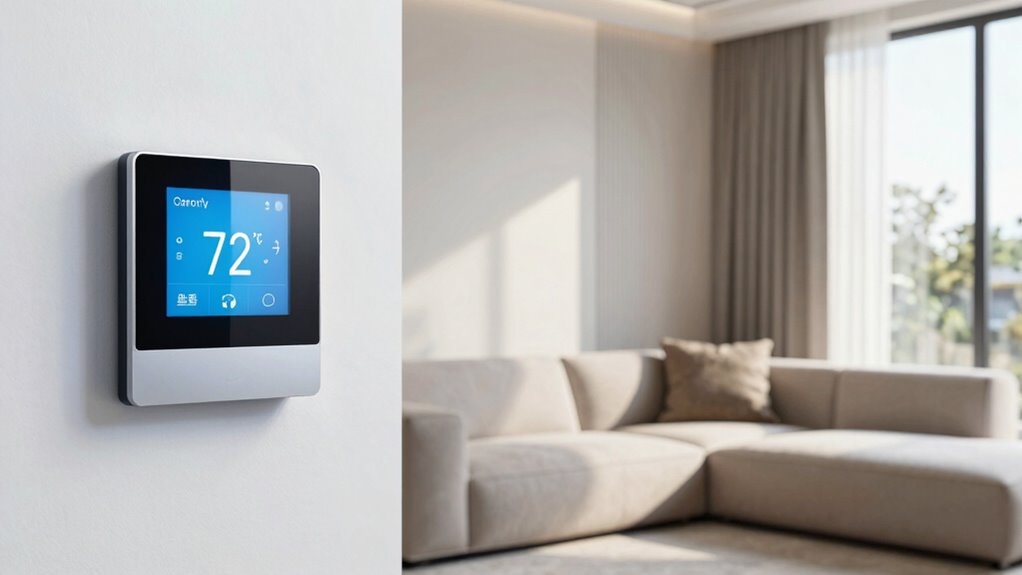
Smart thermostats improve your home’s energy efficiency by automatically adjusting heating and cooling based on your habits, occupancy, and weather patterns. They monitor energy use, optimize schedules, and learn your preferences for personalized comfort. This reduces waste, lowers utility bills, and lessens your environmental footprint. Plus, they offer remote control and automation features for convenience. To discover more ways these devices boost comfort and savings, keep exploring the benefits they provide.
Key Takeaways
- Smart thermostats optimize heating and cooling schedules, reducing energy waste and enhancing overall home comfort.
- They learn user preferences and adapt settings automatically for personalized temperature control.
- Real-time energy monitoring provides insights to identify inefficiencies and further improve efficiency.
- Automated adjustments prevent unnecessary heating or cooling during absences or unoccupied periods.
- Integration with home automation and occupancy sensors maximizes energy savings while maintaining comfort.
How Do Smart Thermostats Save Energy and Reduce Costs?
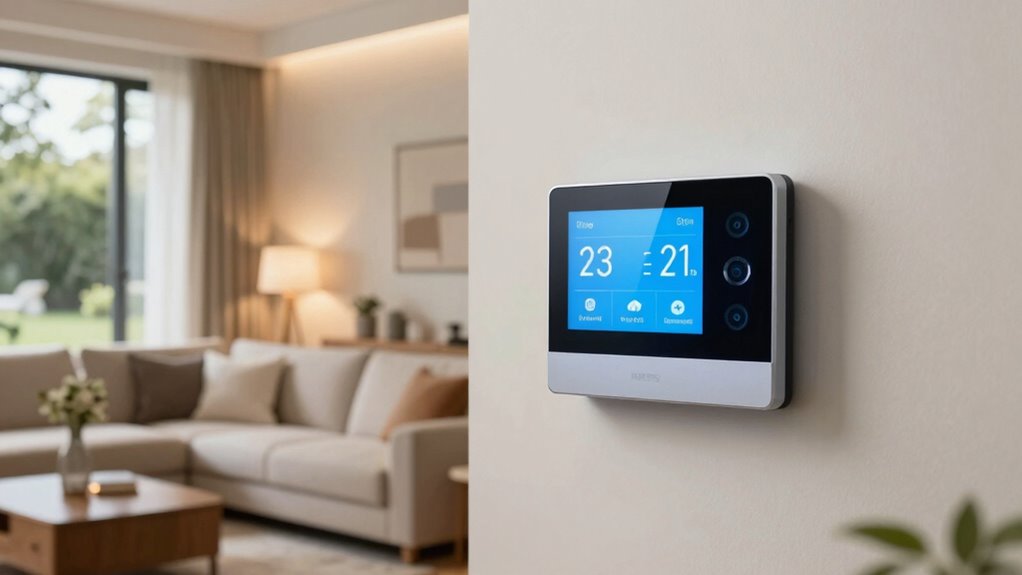
Have you ever wondered how smart thermostats help you save energy and cut costs? They do this through features like energy monitoring, which tracks your heating and cooling patterns to identify inefficiencies. By analyzing this data, the thermostat adjusts settings automatically, reducing unnecessary energy use. Additionally, smart thermostats allow manual control, giving you the ability to set preferences directly when needed. This flexibility helps prevent energy waste by ensuring your home isn’t heated or cooled when it’s not necessary. Over time, these intelligent adjustments lead to lower utility bills and a more efficient home. You can also review energy reports to understand your consumption habits better and make informed decisions to optimize savings further. Leveraging European cloud infrastructure ensures these data analyses are handled securely and sustainably, supporting your energy-efficient goals.
How Can Smart Thermostats Personalize Your Home Comfort?

Smart thermostats personalize your home comfort by learning your preferences and adjusting settings accordingly. Unlike manual controls, which require you to manually change the temperature, these devices adapt automatically to your schedule and habits. If you prefer a warmer living room in the evening or a cooler bedroom at night, the thermostat will recognize these patterns and make adjustments without your intervention. Plus, with remote access, you can control your thermostat from anywhere via smartphone or tablet, ensuring your home is always comfortable when you arrive. This personalization means you don’t have to worry about overheating or cooling an empty house, saving energy and maintaining your preferred comfort level effortlessly. Additionally, understanding home automation technology can help optimize overall energy efficiency and convenience in your household. The result is a more tailored, convenient, and energy-efficient home environment.
How Do Learning Algorithms Help Cut Energy Waste?

Learning algorithms help your smart thermostat save energy by making adaptive temperature adjustments based on your routines. They analyze your usage patterns to predict when you’ll need heating or cooling, reducing waste. By learning from your behavior, the thermostat optimizes comfort while using less energy. This way, it creates a calmer, more organized home by minimizing unnecessary adjustments and maintaining consistent temperatures.
Adaptive Temperature Adjustments
Adaptive temperature adjustments enable thermostats to optimize heating and cooling based on your habits and preferences. They analyze your routines to fine-tune temperature calibration, ensuring your home stays comfortable without wasting energy. The user interface makes it easy to review and modify settings, giving you control over your comfort and efficiency. As the system learns your schedule, it automatically adjusts the temperature, reducing unnecessary heating or cooling when you’re away or asleep. This continuous adaptation helps cut energy waste by preventing over-conditioning. Over time, the thermostat becomes more accurate in maintaining your desired comfort levels, all while saving money on energy bills. By intelligently responding to your habits, adaptive temperature adjustments make your home more energy-efficient without sacrificing comfort. Additionally, understanding home energy integration can help you maximize savings and efficiency with your smart thermostat.
Predictive Usage Patterns
Predictive usage patterns play a key role in reducing energy waste by anticipating your heating and cooling needs before you even adjust the thermostat. Learning algorithms perform energy forecasting and occupancy detection to optimize comfort and efficiency. They analyze past behaviors, time of day, and weather conditions to predict when you’ll need climate adjustments. This proactive approach minimizes unnecessary heating or cooling, saving energy and lowering bills. Additionally, adaptive learning systems continuously refine their predictions based on ongoing data, further enhancing energy savings and comfort.
- Automatically adjusts settings based on your schedule
- Detects when rooms are unoccupied to conserve energy
- Predicts temperature needs during different times of the day
- Learns seasonal variations to fine-tune performance
- Reduces manual thermostat adjustments and waste
Learning From Behavior
By analyzing your daily habits and preferences, learning algorithms can identify patterns in your thermostat usage and adjust settings accordingly. They monitor your behavior to determine when you’re usually home, asleep, or away, helping optimize your comfort while reducing energy consumption. Instead of relying on fixed schedules, these algorithms adapt to your routines, making real-time adjustments that align with your lifestyle. This targeted approach prevents unnecessary heating or cooling during times you’re not present or when your preferences shift. As a result, you waste less energy and lower utility bills. Over time, the system refines its understanding of your behavior, continually improving efficiency. Learning from user behavior allows smart thermostats to deliver personalized comfort and substantial energy savings without sacrificing convenience.
Are Smart Thermostats Worth the Investment?
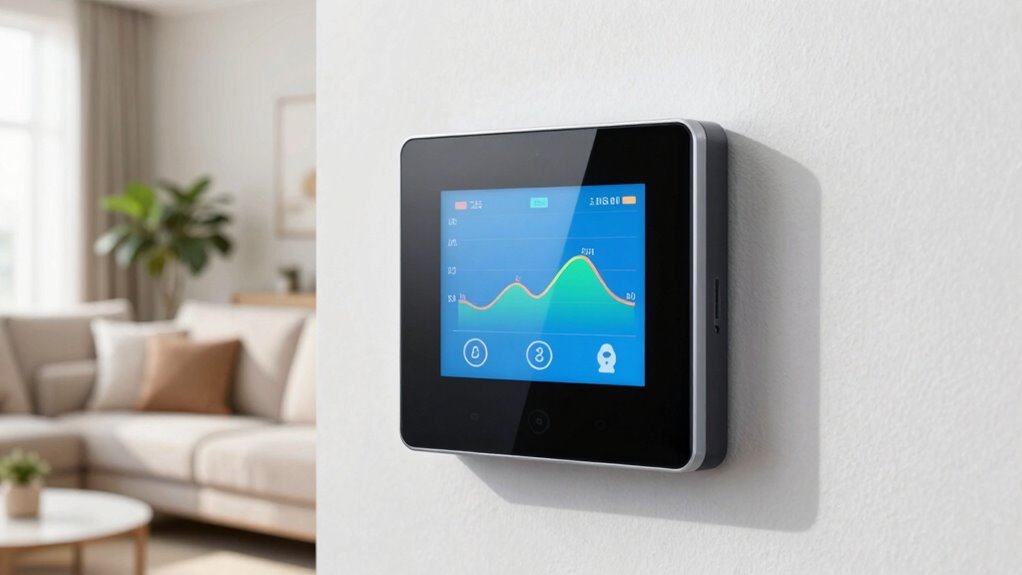
You might wonder if investing in a smart thermostat is truly cost-effective. With the potential for significant energy savings and long-term benefits, it’s worth considering whether the upfront expense pays off. Let’s explore how these devices can save you money over time and improve your home’s efficiency. Additionally, they can contribute to energy conservation, which benefits both your wallet and the environment.
Cost Savings Potential
Smart thermostats can lead to significant cost savings over time, making them a smart investment for many households. By enhancing your energy consumption, they help reduce utility bills without sacrificing comfort. When you use a smart thermostat, you can:
- Automatically adjust temperatures during absences or sleep.
- Schedule heating and cooling for peak efficiency.
- Monitor your energy use in real-time.
- Avoid unnecessary heating or cooling during peak hours.
- Benefit from energy-saving tips and insights.
- Understanding how sound works can help optimize your home’s acoustic comfort and efficiency.
All these features work together to lower your overall energy consumption, translating into lower utility bills month after month. Although the initial investment might seem high, the potential savings on energy costs often outweigh the upfront expense, making smart thermostats a financially wise choice.
Long-Term Benefits
Although the initial cost of installing a smart thermostat may seem high, the long-term benefits make it a worthwhile investment. Over time, you’ll see improved energy conservation and increased user comfort. Smart thermostats learn your schedule and preferences, optimizing heating and cooling to reduce waste and lower utility bills. They also adapt to changes, ensuring consistent comfort without manual adjustments. Plus, many models provide detailed energy reports, helping you identify ways to save further. Here’s a quick comparison: load‑planning tools can assist in estimating your home’s heating and cooling needs to maximize efficiency.
| Benefit | Description | Impact |
|---|---|---|
| Energy conservation | Reduces waste through efficient scheduling | Lowers costs, less environmental impact |
| User comfort | Maintains preferred temperatures automatically | Enhances daily comfort |
| Cost savings | Decreases monthly bills over time | Recoups initial investment |
| Convenience | Remote control and automation | Fits your lifestyle effortlessly |
How to Connect Your Smart Thermostat With Other Smart Devices for Better Savings
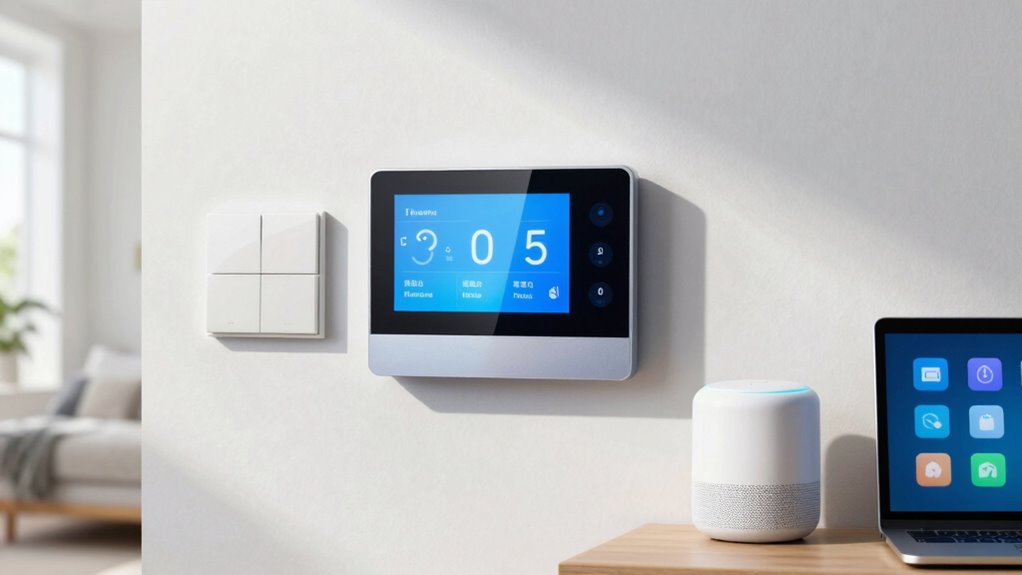
Connecting your smart thermostat with other smart devices can substantially enhance your energy savings by creating a seamless, responsive home environment. To maximize benefits, focus on effective device integration and app customization. This allows your thermostat to communicate with devices like smart lights, window sensors, or occupancy detectors. For example, when a door opens, your system can adjust the temperature accordingly. Use your app to set automations that optimize energy use based on your schedule or preferences. Additionally, integrating voice assistants can make adjustments quick and easy. Consider these tips:
- Link your thermostat with smart lighting systems
- Connect motion sensors for occupancy detection
- Use door/window sensors for temperature adjustments
- Set automated routines in your app
- Enable voice control for instant changes
- Be mindful of privacy policies and cookie preferences to ensure your data is protected during device integration.
What Are the Limitations of Smart Thermostats and When Might They Fall Short?
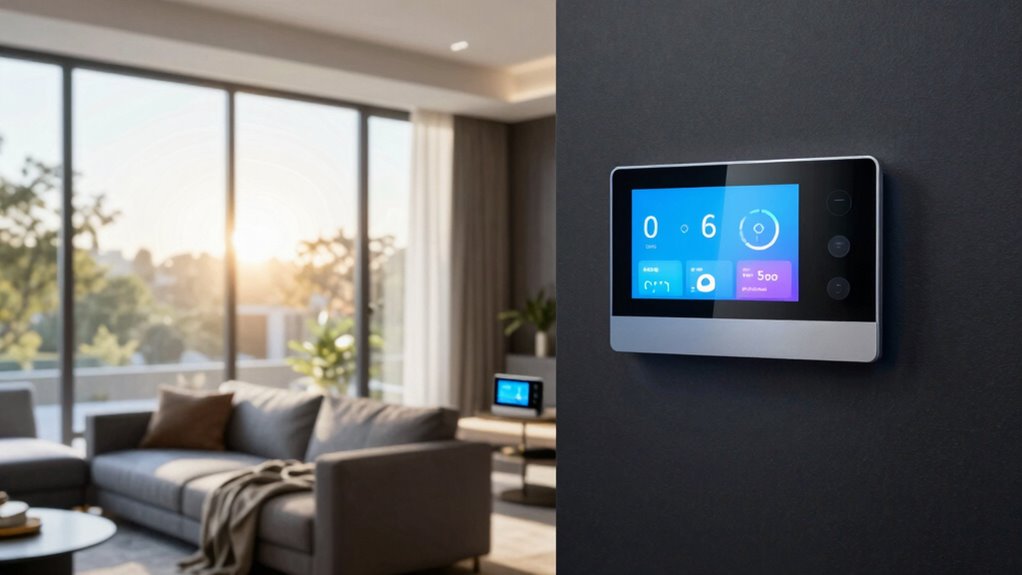
While smart thermostats offer many benefits, they do have limitations that can affect their performance. Hardware limitations, such as sensor accuracy or compatibility issues with your HVAC system, can prevent the thermostat from functioning efficiently. If the device isn’t installed correctly or lacks the necessary features, you might not see the expected energy savings. Additionally, user dependency plays a significant role; if you don’t set up or adjust your thermostat properly, its efficiency diminishes. Over-reliance on automation without regular oversight can lead to discomfort or wasted energy. Sometimes, smart thermostats struggle in extreme weather conditions or complex heating systems, where manual adjustments might be more reliable. Recognizing these limitations helps you manage expectations and optimize your smart thermostat’s performance. Proper installation is crucial for ensuring these devices operate as intended.
Frequently Asked Questions
Can Smart Thermostats Detect Occupancy and Adjust Settings Automatically?
Yes, smart thermostats can detect occupancy and automatically adjust settings. They use occupancy detection features like motion sensors or learning algorithms to identify when you’re home or away. This allows the thermostat to optimize temperature control, saving energy and ensuring comfort. With automatic adjustment, you don’t have to manually change settings, making your home more efficient and responsive to your daily routines.
Are Smart Thermostats Compatible With All Types of Heating and Cooling Systems?
Smart thermostats aren’t compatible with all heating and cooling systems due to compatibility limitations. Before you buy, check if your system supports system integration with the specific thermostat model. Some older or specialized systems may require additional wiring or adapters. To guarantee smooth operation and energy efficiency, verify compatibility upfront, so you avoid installation issues and maximize your smart thermostat’s benefits.
How Secure Is the Data Collected by Smart Thermostats?
Did you know that over 80% of smart thermostat users worry about data security? Your data is generally secure, thanks to data encryption protocols and strict privacy policies. Manufacturers implement encryption to protect your information during transmission and storage. However, it’s essential to review privacy policies carefully, understand what data is collected, and stay updated on security features to guarantee your personal details stay safe and private.
Do Smart Thermostats Require Professional Installation or Can I Install Them Myself?
You can often do a DIY installation of smart thermostats if you’re comfortable with basic wiring and follow the manufacturer’s instructions. However, for complex systems or if you’re unsure, it’s best to seek professional assistance to guarantee proper setup and avoid potential issues. While many models are designed for easy installation, professional help guarantees the thermostat functions correctly and safely, especially with more advanced or incompatible HVAC systems.
What Are Common Troubleshooting Issues With Smart Thermostats?
Did you know that 40% of smart thermostat issues stem from connectivity problems? Common troubleshooting issues include sensor calibration errors, which cause inaccurate temperature readings, and connectivity issues that prevent remote control. To fix these, guarantee your Wi-Fi signal is strong, restart the device, or update firmware. Regularly checking sensor calibration and maintaining your network can keep your smart thermostat running smoothly, guaranteeing ideal comfort and energy savings.
Conclusion
Imagine lowering your energy bills while keeping your home perfectly comfy. A smart thermostat, like the one in Sarah’s house, learns her schedule and adjusts automatically, saving her hundreds annually. While they aren’t perfect, these devices can make a real difference when used wisely. If you want to cut costs and boost efficiency, investing in a smart thermostat is a smart move—just stay aware of its limitations and keep an eye on your settings.