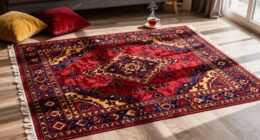
Hand-knotted rugs generally have a smaller carbon footprint because they use natural, sustainable materials like wool and silk and involve low-impact craftsmanship. In contrast, machine-made rugs often rely on synthetic fibers and energy-intensive production methods, increasing their environmental impact. Choosing hand-knotted rugs or opting for eco-friendly materials in factory-made options can make a difference. To discover more about how these differences impact the environment, keep exploring the details below.

Get furniture and decor delivered free — and shop member deals
- Fast, free delivery on millions of items
- Access to Prime Big Deal Days deals on October 6–7
- Prime Video, Amazon Music and more included
Key Takeaways
- Hand-knotted rugs typically have a lower carbon footprint due to sustainable materials and minimal energy use in production.
- Machine-made rugs consume more energy, mainly from industrial machinery and synthetic fiber processing, increasing their environmental impact.
- Natural fibers like wool and silk in hand-knotted rugs are biodegradable, whereas synthetic fibers in factory rugs are petrochemical-based and less eco-friendly.
- Chemical dyes in factory rugs can cause pollution, while hand-knotted rugs often use natural dyes with lower environmental risks.
- Overall, hand-knotted rugs tend to be more sustainable, with a smaller carbon footprint compared to industrial, machine-made alternatives.

When choosing between hand-knotted and machine-made rugs, understanding their environmental impact is essential. One of the key factors to weigh is how each type influences your carbon footprint, which ties directly to the materials used and the manufacturing processes involved. Hand-knotted rugs typically rely on sustainable materials like wool, silk, or natural dyes, which are often sourced responsibly. These materials are biodegradable and less polluting, making them a better choice for eco-conscious consumers. The process of creating a hand-knotted rug is labor-intensive and requires considerable craftsmanship, but it generally involves minimal energy consumption compared to industrial-scale manufacturing. This means fewer greenhouse gases are emitted during production, especially when artisans use traditional, low-impact tools and methods.
In contrast, machine-made rugs are produced through automated manufacturing processes that prioritize speed and mass production. While this can reduce labor costs and increase affordability, it often comes at the expense of environmental sustainability. Many machine-made rugs utilize synthetic fibers like nylon, polypropylene, or polyester, which are derived from petrochemicals. These synthetic materials are not biodegradable and require energy-intensive extraction and processing, contributing to higher carbon emissions. Additionally, the manufacturing process for machine-made rugs involves large-scale machinery that consumes considerable electricity, further increasing their carbon footprint. The use of chemical dyes in many factory-produced rugs can also lead to pollution if waste is not properly managed.
While machine-made rugs may seem more convenient and cost-effective, their production methods tend to be less eco-friendly. The energy-intensive manufacturing and reliance on non-sustainable materials result in a higher overall carbon footprint. On the other hand, hand-knotted rugs, although often more expensive and time-consuming to produce, tend to be more environmentally sustainable. They often utilize renewable, natural materials, and their manufacturing processes typically involve less energy and fewer harmful chemicals. If environmental impact matters to you, opting for hand-knotted rugs made from sustainable materials and traditional methods can dramatically reduce your contribution to climate change.
Ultimately, your choice should depend on your values and priorities. If minimizing your carbon footprint is a priority, understanding the differences in materials and manufacturing processes helps guide your decision. Hand-knotted rugs tend to be more eco-friendly, but if you choose machine-made, look for options that use natural fibers and eco-conscious dyes. By doing so, you can enjoy beautiful, durable rugs while also supporting more sustainable practices.
Frequently Asked Questions
How Does Rug Longevity Impact Overall Environmental Footprint?
Your rug’s longevity substantially impacts its overall environmental footprint. Durable rugs with durability benefits last longer, which means fewer replacements and less waste. By choosing rugs with an extended lifespan, you contribute to sustainability and reduce resource consumption. Prioritizing quality and craftsmanship extends your rug’s lifespan, leading to fewer manufacturing impacts and a smaller ecological footprint over time.
What Are the Water Usage Differences in Rug Manufacturing?
You’ll find that hand-knotted rugs typically use more water during the dyeing process, especially if traditional methods don’t incorporate water recycling. Machine-made rugs often benefit from automated dyeing systems that reuse water, reducing overall usage. If sustainability matters to you, look for rugs produced with water recycling practices, which cut down on water waste and lessen environmental impact.
Do Natural Fibers Have a Lower Carbon Footprint Than Synthetic Ones?
You might think natural fibers always have a lower carbon footprint than synthetic fibers, but it’s more nuanced. Natural fibers like wool and cotton generally produce fewer emissions during production, especially if sustainably sourced. However, synthetic fibers like nylon and polyester often require less water and energy to manufacture, which can lower their overall carbon footprint. So, it’s essential to take into account the entire lifecycle when comparing their eco impacts.
How Do Transportation Emissions Compare for Hand-Knotted Versus Machine-Made Rugs?
Transportation emissions for hand-knotted rugs are generally higher than for machine-made ones because they often ship from farther locations, involving longer shipping distances. You’ll notice that shipping methods also matter; air freight markedly boosts emissions, especially for hand-knotted rugs sent internationally. Conversely, machine-made rugs produced locally or regionally tend to have lower transportation-related emissions. So, where and how your rug travels plays a big role in its overall eco-impact.
Can Recycling or Repurposing Rugs Reduce Their Environmental Impact?
Imagine you’re a modern-day alchemist, turning old into new. Recycling benefits your rugs by reducing waste and conserving resources, while repurposing strategies give them a fresh purpose. You can transform worn rugs into wall art, cushion covers, or even insulation, cutting down on landfill. This eco-conscious approach not only extends your rug’s life but also minimizes environmental impact, making your home greener and more sustainable.
Conclusion
In the end, choosing between hand-knotted and machine-made rugs is like picking between a heartfelt story and a quick read—both have their charm, but one leaves a deeper mark. Hand-knotted rugs tend to have a higher carbon footprint, but their craftsmanship supports sustainability. Machine-made rugs might be easier on the environment, yet they often lack the soul of hand-crafted artistry. Whichever you choose, being mindful makes your impact on the planet as small as a whisper.
Fall Picks
fall essentials
As an affiliate, we earn on qualifying purchases.