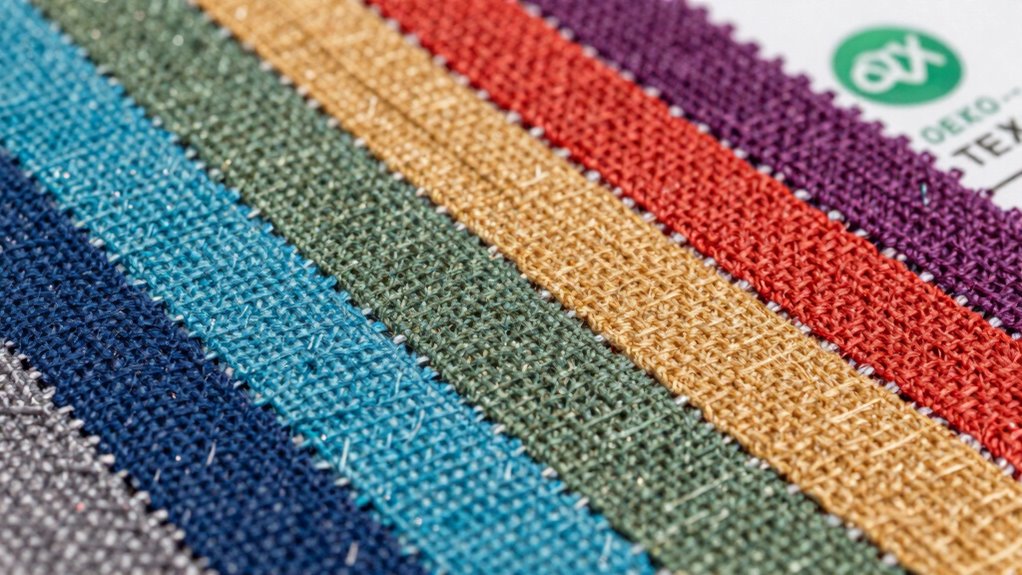

OEKO-TEX certification shows that textiles have been tested for harmful chemicals like dyes, heavy metals, and pesticides, guaranteeing they meet strict safety standards. However, it doesn’t guarantee the fabrics are entirely eco-friendly or sustainable, nor does it cover broader environmental or social factors. It’s mainly about chemical safety, so some risks may still exist. To understand what it truly ensures and its limits, keep exploring the details behind OEKO-TEX standards.

Get furniture and decor delivered free — and shop member deals
- Fast, free delivery on millions of items
- Access to Prime Big Deal Days deals on October 6–7
- Prime Video, Amazon Music and more included
Key Takeaways
- OEKO-TEX certifies textiles as free from certain harmful chemicals, ensuring chemical safety but not overall eco-friendliness.
- It tests for specific substances like dyes, heavy metals, and pesticides, but not all potential contaminants.
- Certification indicates products meet strict chemical standards but does not guarantee sustainability or fair labor practices.
- Labels show certification symbols and batch numbers, confirming testing for harmful substances but not complete hazard elimination.
- OEKO-TEX does not assess environmental impact or resource conservation, offering a safety baseline rather than a comprehensive eco-label.
As an affiliate, we earn on qualifying purchases.
What Is OEKO-TEX Certification and How Does It Work?
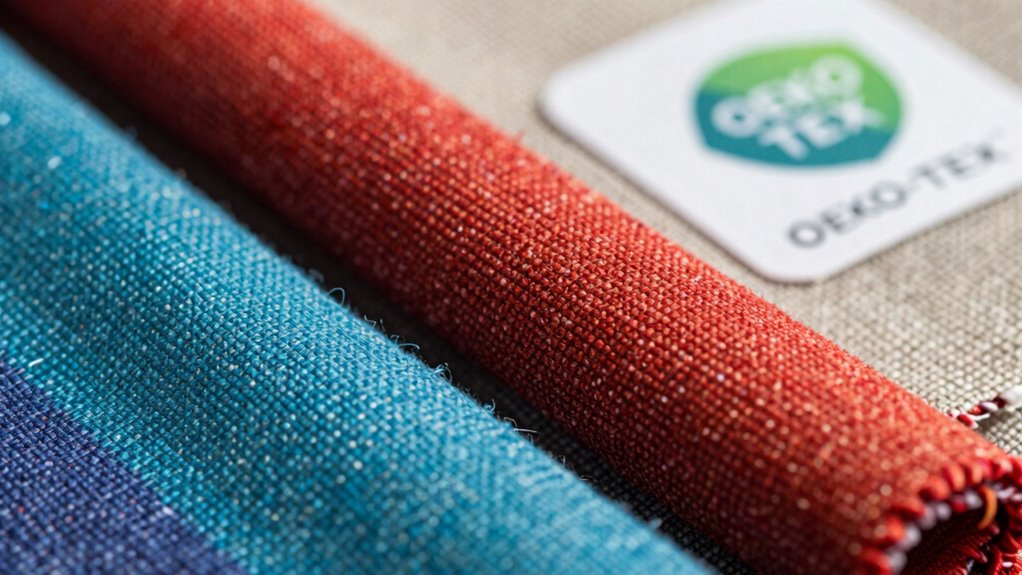
OEKO-TEX certification is a globally recognized standard that guarantees textiles are free from harmful substances. It involves a thorough fabric certification process, ensuring products meet strict testing standards. When a textile receives OEKO-TEX certification, it means that it has undergone rigorous testing for chemicals and substances that could pose health risks. You can trust that certified fabrics are safe for everyday use, as they comply with international safety criteria. The certification process includes multiple testing standards, covering various harmful substances and ensuring that the textiles meet high safety and environmental requirements. This guarantees your textiles are not only safe but also produced responsibly, giving you peace of mind about the quality and safety of your fabrics. Additionally, OEKO-TEX certification reflects a commitment to environmental safety, emphasizing responsible manufacturing practices.
What Harmful Substances Does OEKO-TEX Screen For?
Because your safety depends on it, OEKO-TEX screens textiles for a wide range of harmful substances that could pose health risks. These include chemical residues from manufacturing processes and dyes that may cause skin irritation or allergies. The certification examines substances like heavy metals, pesticides, formaldehyde, and carcinogens, ensuring they’re within safe limits. Additionally, color accuracy plays a role in ensuring the textiles do not contain dyes with toxic properties that could affect health. Here’s a quick overview:
| Substance Category | Potential Risks | Safety Focus |
|---|---|---|
| Chemical Residues | Skin irritation, allergies | Residue limits |
| Dyes | Allergies, toxicity | Dye safety |
| Heavy Metals | Neurotoxicity, cancer | Heavy metal limits |
Are OEKO-TEX Certifications Sufficient for Eco-Friendly and Safe Textiles?
While OEKO-TEX certifications guarantee textiles are free from many harmful chemicals, they don’t necessarily assure that products are entirely eco-friendly or sustainable. These certifications focus on chemical safety but don’t cover broader aspects of sustainable manufacturing, like resource conservation or fair labor practices. As a consumer, your awareness of these limits helps you make more informed choices. Relying solely on OEKO-TEX might give a false sense of eco-friendliness, since a product can meet chemical safety standards yet still have a significant environmental impact. To support genuine sustainability, look for certifications that emphasize environmental and social factors alongside chemical safety. Additionally, understanding the sustainable qualities of textiles can help consumers identify truly eco-conscious products. Ultimately, OEKO-TEX is a valuable tool, but it shouldn’t be your only guide toward eco-friendly and safe textiles.
How to Read OEKO-TEX Labels and Their Significance?
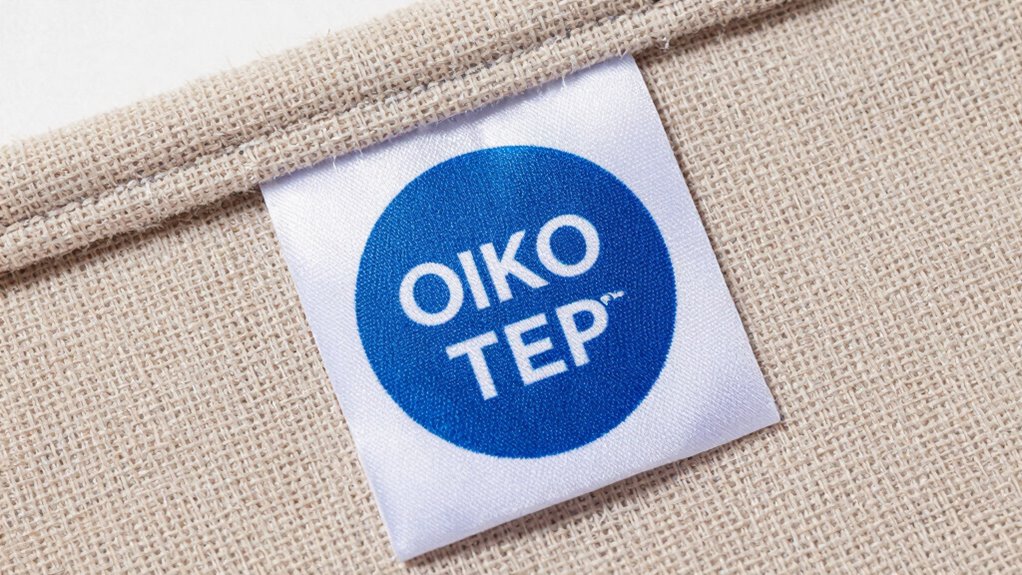
Understanding how to read OEKO-TEX labels is essential for making informed choices about textile safety. These labels carry certification symbols that signal compliance, but knowing what they mean is key. A vetted certification ensures the product has been tested for harmful substances, but it does not necessarily guarantee the absence of all hazards. Here’s how to interpret them: 1. certification symbols: Look for the OEKO-TEX standard number (like STANDARD 100) to identify the certification type. 2. Label interpretation: Check for clear, consistent symbols that indicate safety levels or specific product categories. 3. Additional info: Sometimes labels include batch or serial numbers, helping trace the product’s certification history.
What Are the Limitations of OEKO-TEX Certification?
Although OEKO-TEX certification indicates that textiles meet specific safety standards, it doesn’t guarantee that a product is entirely free of harmful substances or safe for all uses. One key limitation is its chemical limitations; the certification scope covers only certain substances and tests, meaning some chemicals may still be present. Additionally, OEKO-TEX tests for common harmful substances but doesn’t assess every possible chemical or emerging contaminant. This means that while the product meets established safety thresholds, it may not account for all potential risks, especially with new or less-studied chemicals. Furthermore, OEKO-TEX testing protocols focus on specific chemicals and may not cover all substances of concern in every textile application. Consequently, the certification provides a baseline of safety but isn’t an absolute guarantee of chemical-free textiles or suitability for every application. You should consider these limitations when choosing textiles with OEKO-TEX labels.
Frequently Asked Questions
Does OEKO-TEX Certification Cover All Types of Textiles Worldwide?
Oeko-Tex certification doesn’t cover all textile types worldwide. It primarily tests textiles for harmful substances, but its global coverage is limited to specific product categories and manufacturing regions. You should know that not every textile type, especially certain specialty or raw materials, automatically gets certified. So, if you want all-encompassing safety, check whether the specific textile type and region you’re interested in are included in the Oeko-Tex certification scope.
How Often Are OEKO-TEX Standards Updated?
You might think OEKO-TEX standards stay frozen in time, but they actually get updated regularly—usually every few years. They refine manufacturing processes and chemical testing to keep up with new developments and safety concerns. So, if you’re wondering how often updates happen, rest assured, it’s a dynamic process designed to improve textile safety continuously. Staying current means your textiles meet evolving health and environmental standards.
Can a Textile Pass OEKO-TEX but Still Contain Harmful Chemicals?
Yes, a textile can pass OEKO-TEX standards and still contain harmful chemicals, especially in synthetic fibers. OEKO-TEX tests for many common substances, but it doesn’t cover all chemical residues or potential toxins. If a textile uses synthetic fibers, it might pass the certification while still harboring residual chemicals from manufacturing processes. Always verify for additional certifications or testing if you want to guarantee safety from harmful chemical residues.
What Are the Costs Associated With Obtaining OEKO-TEX Certification?
Ever wonder about the costs of OEKO-TEX certification? You’ll need to contemplate certification fees, which vary depending on the size and complexity of your production, and testing expenses, covering laboratory analyses to meet standards. These costs can range from a few hundred to several thousand dollars. Is investing in certification worth it? Absolutely, as it boosts consumer trust and demonstrates your commitment to safety and quality.
How Do OEKO-TEX Standards Compare to Other Eco-Labels?
You’ll find OEKO-TEX standards focus on chemical safety and consumer health, making its certification credible for textile safety. Compared to other eco-labels like GOTS or Bluesign, OEKO-TEX emphasizes chemical testing rather than overall sustainability practices. For eco label comparison, OEKO-TEX offers reliable certification, but if you want broader sustainability assurance, you might consider labels that cover environmental and social impacts alongside chemical safety.
Conclusion
While OEKO-TEX certification offers a helpful hint of safety, it’s not a guarantee of green glamour. Don’t depend solely on labels—delve deeper into product details, demand transparency, and explore eco-friendly options. By balancing basic bounds with broader beliefs, you can better buy responsibly. Remember, responsible choices require research, skepticism, and savvy—so stay sharp, stay skeptical, and make smarter, safer textile selections every time.
Halloween Picks
halloween
As an affiliate, we earn on qualifying purchases.