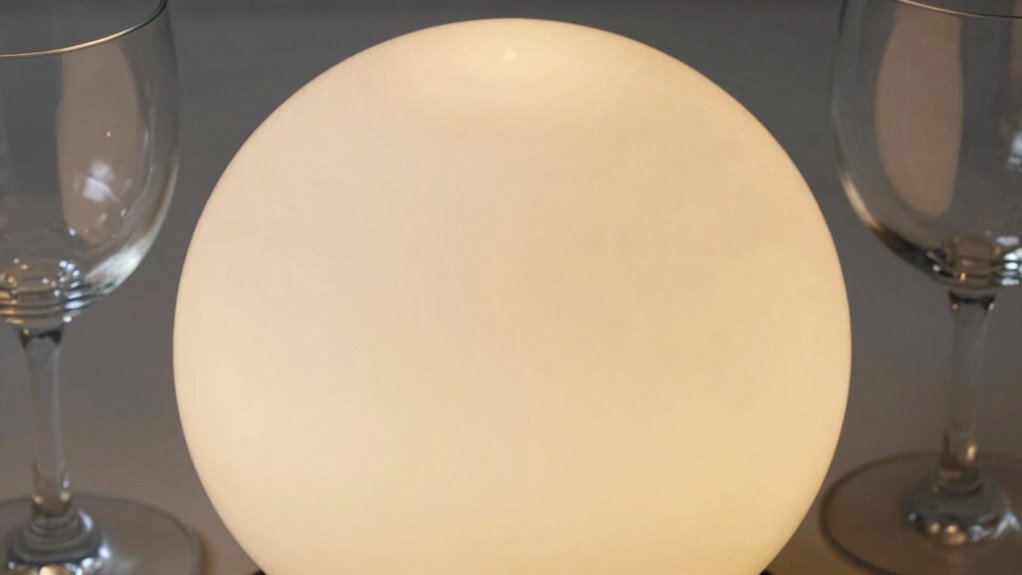

Alabaster lighting feels softer than clear glass because its surface diffuses and filters light, creating a warm, gentle glow. Instead of sharp or harsh illumination, alabaster scatters light in multiple directions, reducing glare and harsh shadows. It mimics natural sunlight, giving your space a cozy, inviting vibe. The subtle variations in alabaster’s surface add unique visual charm, making your lighting feel more organic. Want to discover how this creates a truly calming ambiance? Keep exploring.
Key Takeaways
- Alabaster’s opaque or semi-translucent surface diffuses light, creating a gentle, mellow glow rather than harsh beams.
- Its warm hue mimics natural sunrise or sunset light, enhancing a cozy, calming atmosphere.
- Light scattering through alabaster softens edges and reduces harsh shadows and glare.
- The even distribution of light minimizes stark contrasts, promoting a balanced, harmonious ambiance.
- Natural variations in alabaster add organic beauty, enhancing the perception of softness and warmth.
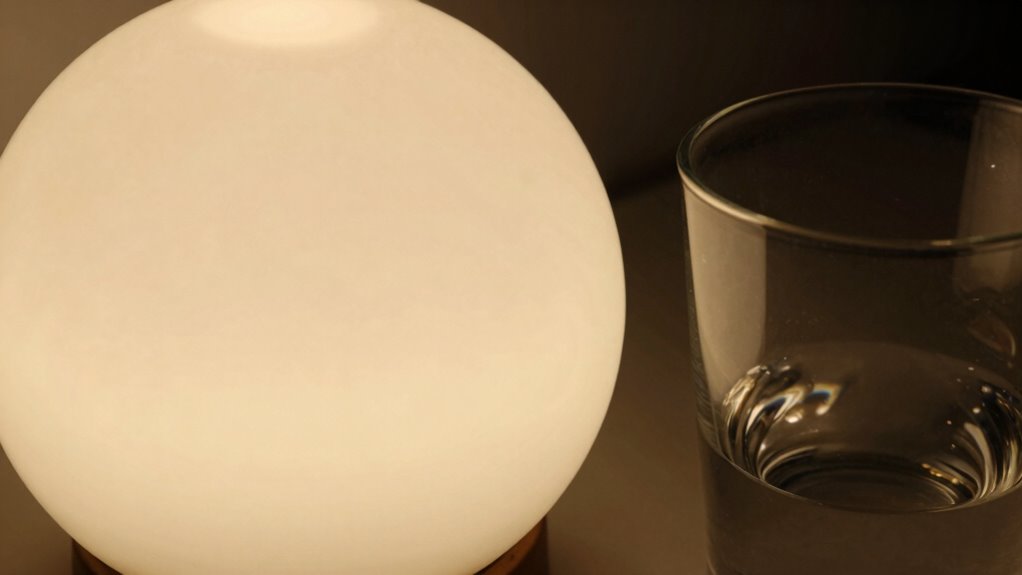
Alabaster lighting has a way of transforming any space into a serene sanctuary, evoking feelings of warmth and tranquility. One of the reasons it feels so gentle and inviting compared to clear glass is how it interacts with light, particularly regarding color temperature and light diffusion. When you choose alabaster fixtures, you’re opting for a softer, more comforting glow that’s often associated with a warm color temperature. Unlike clear glass, which tends to let light pass through with minimal alteration, alabaster’s opaque or semi-translucent surface filters the light, creating a gentle, mellow illumination.
The warm hue of alabaster’s color temperature plays a significant role in how you perceive its softness. It typically emits a warm white or amber glow that mimics natural sunlight during sunrise or sunset. This warmth has a calming effect, making your space feel more intimate and cozy. Clear glass, on the other hand, often produces a cooler, more clinical light that can feel stark or uninviting. The subtle warmth of alabaster helps you relax and feel more at ease, which is why it’s often chosen for bedrooms, living rooms, and spaces meant for unwinding.
Light diffusion is another essential factor that makes alabaster feel softer. Unlike clear glass, which allows light to shine brightly and unfiltered, alabaster’s surface scatters light in many directions. This diffusion softens the light’s edges, reducing harsh shadows and glare. When you’re under alabaster lighting, your eyes aren’t bombarded with sharp, direct beams; instead, you experience a gentle, enveloping glow that seems to caress your surroundings. This diffusing quality creates an ambiance of calmness, making the lighting feel more natural and less intrusive.
Because alabaster’s surface disperses light evenly, it minimizes the stark contrasts often associated with clear glass fixtures. This even distribution of light helps maintain a sense of softness throughout the room. You’ll notice that spaces illuminated by alabaster feel more harmonious and less jarring. The combination of the warm color temperature and the effective light diffusion results in a luminous experience that’s soothing to the senses. When you step into a room bathed in alabaster light, you’re likely to feel more relaxed, more connected to your environment, and subtly comforted by the gentle, inviting glow that only alabaster can provide. Additionally, the translucent surface of alabaster enhances this softening effect, creating a more natural and pleasing illumination. Furthermore, the natural variations in alabaster contribute to its unique visual appeal, making each fixture subtly different and adding an element of organic beauty to your decor. This natural variability is a hallmark of biodiversity and sustainable practices, showcasing how organic materials can bring both beauty and environmental consciousness into your home. Incorporating these features in lighting also emphasizes the importance of natural materials in creating an inviting, eco-friendly environment. Recognizing the benefits of natural materials can inspire more sustainable choices in interior design and lighting.
As an affiliate, we earn on qualifying purchases.
Frequently Asked Questions
How Does Alabaster Affect the Color Temperature of Lighting?
Alabaster affects the color temperature of lighting by diffusing it softly, which creates a warmer, more inviting glow. Its material enhances warmth through color diffusion, making the light appear less harsh and more comforting. When you use alabaster, you’ll notice the light’s warmth is subtly amplified, giving your space a cozy ambiance. This natural warmth enhancement makes alabaster ideal for creating a relaxed, welcoming environment.
Can Alabaster Lighting Be Used Outdoors Effectively?
Yes, alabaster lighting can be used outdoors effectively if it’s specifically designed for outdoor weather resistance. Look for fixtures made with durable, weatherproof materials that withstand moisture and temperature changes. Alabaster’s soft glow pairs beautifully with landscaping, creating a warm ambiance. However, make certain the design is suitable for outdoor use to prevent damage, and consider regular maintenance to keep your outdoor alabaster lighting looking its best.
What Maintenance Is Required for Alabaster Lighting Fixtures?
You’ll want to keep your alabaster lighting fixtures looking their best by establishing regular cleaning routines, using a soft, damp cloth to gently wipe away dust and dirt. Coincidentally, this routine also helps identify any chips or cracks early. For replacement tips, always handle the alabaster with care, and consider professional assistance for repairs or replacements to maintain its soft glow and preserve its delicate beauty.
Are There Different Types of Alabaster Used in Lighting?
Yes, there are different types of alabaster used in lighting, each varying based on marble varieties and mineral sources. You’ll find that mineral sources influence the translucency and color, such as Italian or Egyptian alabaster, which have distinct veining and textures. These variations affect how the light diffuses through the material, giving each fixture a unique, softer glow. Exploring different marble varieties helps you choose the perfect alabaster for your lighting needs.
How Does Alabaster Compare to Frosted Glass in Durability?
Alabaster generally isn’t as durable as frosted glass because its material resilience is lower. You’ll find that frosted glass withstands impacts and scratches better, making it more suitable for high-traffic areas. Alabaster’s softer, more porous nature means it’s more prone to chipping or cracking over time. If durability is your priority, frosted glass offers a better durability comparison, but alabaster provides a warm, softer aesthetic that many find appealing.
Conclusion
When you choose alabaster lighting, you embrace a softness that soothes, a warmth that welcomes, and an ambiance that invites reflection. The gentle diffusion, the subtle glow, and the calming presence all work together to create a space that feels more than just illuminated — it feels alive. With alabaster, you don’t just light a room; you craft an experience. And in that experience, you find comfort, serenity, and a touch of timeless elegance.