To style indoor trees so they feel architectural, carefully position them to complement your space’s architecture and emphasize focal points like art or seating areas. Pair taller trees with sleek furniture and use diverse textures and shapes for visual interest. Prioritize natural light and use strategic lighting to highlight their form and shadows. By intentionally planning placement and pairing trees with your decor, you’ll create a cohesive, architectural look that enhances your space—there’s more to contemplate for a truly striking effect.

Get furniture and decor delivered free — and shop member deals
- Fast, free delivery on millions of items
- Access to Prime Big Deal Days deals on October 6–7
- Prime Video, Amazon Music and more included
Key Takeaways
- Position trees strategically near architectural features or focal points to create a deliberate, cohesive visual flow.
- Pair tall, slender trees with sleek furniture to emphasize structure and maintain a clean, architectural aesthetic.
- Use layered, directional lighting to highlight the tree’s form and cast intentional shadows for depth.
- Incorporate varied textures and leaf shapes to add visual interest without disrupting the design harmony.
- Choose native or regionally adapted plants to enhance ecological harmony and reinforce the sense of intentional design.
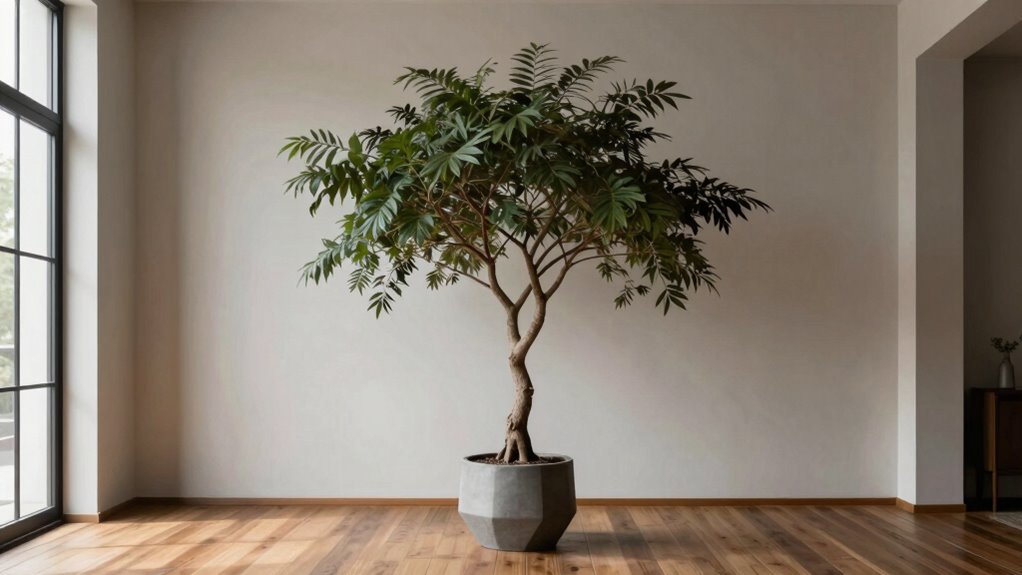
Have you ever wondered how to transform a simple indoor tree into a stunning focal point? It all starts with intentional plant placement. You want your tree to feel like a deliberate part of your space, not just an afterthought. Think about the room’s architecture and how the tree can complement or enhance it. Place your tree where it naturally draws the eye—near a seating area, in a corner with high ceilings, or beside a piece of artwork. Avoid scattering trees randomly across the room; instead, position them to anchor the space or create a visual pathway. Elevate your styling by pairing your tree with furniture or decor that highlights its shape and size. For example, a tall, slender tree works beautifully next to a sleek console table, while a bushier variety can serve as a natural divider between living zones. Incorporate biodiversity principles by selecting native or regionally adapted plants that support local ecosystems, even indoors. Additionally, choosing plants with varied textures and leaf shapes can add visual interest and emphasize their architectural qualities.
Lighting techniques are equally crucial in elevating your indoor tree from casual to architectural. Natural light is your best friend, so position your tree where it can soak up indirect sunlight—near a window with sheer curtains or in a well-lit corner. If natural light is limited, supplement with strategic artificial lighting. Use spotlights or adjustable track lights to cast a gentle glow on your tree’s canopy, emphasizing its structure and texture. Directional lighting can also create dramatic shadows that add depth and dimension to your space. Be mindful not to over-light, as harsh lighting can flatten the tree’s form or create unintended glare. Instead, aim for soft, layered lighting that highlights your tree’s silhouette and brings out its unique features.
indoor architectural tree planters
As an affiliate, we earn on qualifying purchases.
As an affiliate, we earn on qualifying purchases.
Frequently Asked Questions
Which Indoor Trees Are Easiest to Care for in Low Light?
If you’re looking for indoor trees that are easy care in low light, go for the snake plant or ZZ plant. Both thrive in low light conditions, need minimal watering, and are tough to kill. They’re perfect for adding architectural presence without demanding much attention. Keep in mind, these plants adapt well to low light, making them ideal choices if you want a stylish, low-maintenance indoor tree.
How Do I Choose the Right Size Tree for My Space?
You should pick a tree size that fits comfortably in your space—no one wants a jungle in their living room or a tiny sapling overshadowed by furniture. Think about plant placement and how tall the tree grows; measure your ceiling height and available floor space. Opt for a tree height that complements your room’s proportions, ensuring it feels intentional, not overwhelming, and creates an architectural statement rather than chaos.
Can Indoor Trees Be Used as Room Dividers?
Yes, indoor trees can serve as room dividers, creating natural separation while maintaining a sense of openness. You can position a tall, lush tree to define different areas, such as separating a living room from a dining space. This enhances visual flow, making your space feel cohesive yet distinct. Choose a tree with a dense canopy for privacy, and guarantee it’s healthy and well-lit to keep your room inviting and functional.
What Are Common Mistakes When Styling Indoor Trees?
Think of indoor trees as the backbone of your space—poor placement can make them look lost or overwhelming. Common mistakes include neglecting tree placement and lighting considerations, which can drown the tree in shadow or make it feel out of place. You might also overlook proportion and scale, causing the tree to dominate or fade into the background. Pay attention to these details to create a balanced, architectural statement.
How Often Should Indoor Trees Be Pruned for a Structured Look?
You should prune indoor trees every 4 to 6 weeks to maintain a structured look. Use proper pruning techniques, like trimming just above leaf nodes, to encourage growth maintenance and shape. Regular pruning keeps the tree’s form tidy and architectural, preventing it from becoming unruly. Adjust frequency based on the tree’s growth rate, but consistent pruning guarantees your indoor tree stays balanced, healthy, and visually striking.
Conclusion
By thoughtfully styling your indoor trees, you turn them into striking architectural features that breathe life into your space. Imagine walking into a room where a tall, sculptural tree stands proudly, its silhouette commanding attention like a living piece of art. With strategic placement and careful pruning, your indoor greenery becomes a bold statement rather than a random flourish. Embrace the power of design, and let your indoor trees transform your home into a lush, architectural oasis.
Fall Picks
fall essentials
As an affiliate, we earn on qualifying purchases.