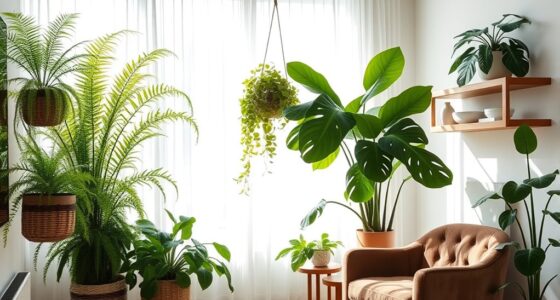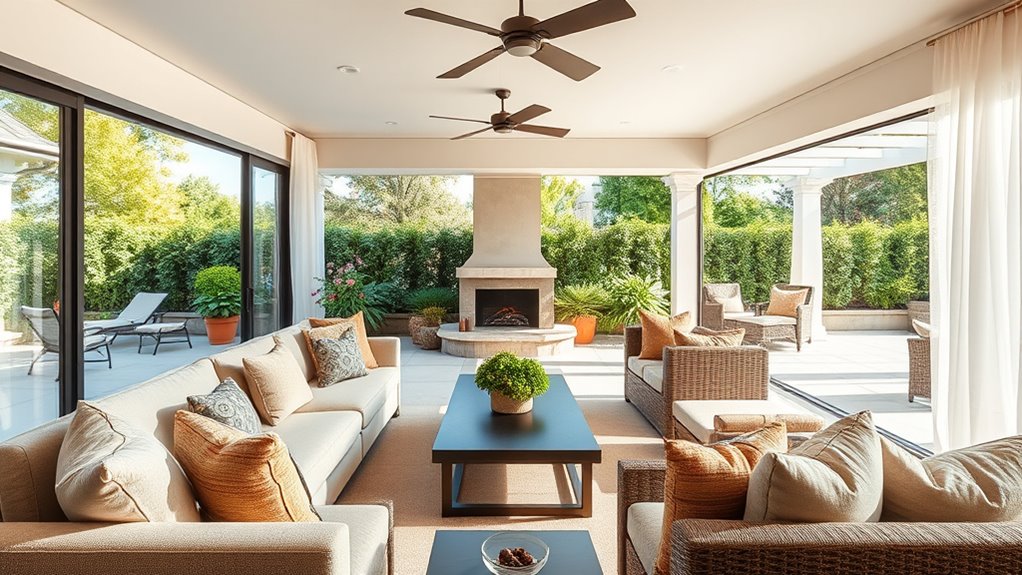

To create seamless indoor-outdoor living, choose furniture with similar styles and materials on both sides, encouraging a natural flow. Use layered lighting—like string lights outside and warm indoor lamps—to unify the space and set the mood. Maintain a consistent color palette and textures, extending greenery and decor outdoors. Focus on strategic placement of furniture and lighting to soften boundaries, making passage areas inviting. Keep exploring these tips to master the art of cohesive outdoor-integration.
Key Takeaways
- Use matching or complementary furniture styles and materials to create visual harmony between indoor and outdoor spaces.
- Incorporate layered, adjustable lighting with consistent color temperatures to unify the ambiance.
- Maintain a cohesive color palette and natural textures across both areas for seamless flow.
- Position furniture near transitions and open doorways to facilitate easy movement and connection.
- Add greenery and decorative elements to soften boundaries and enhance the sense of continuity.
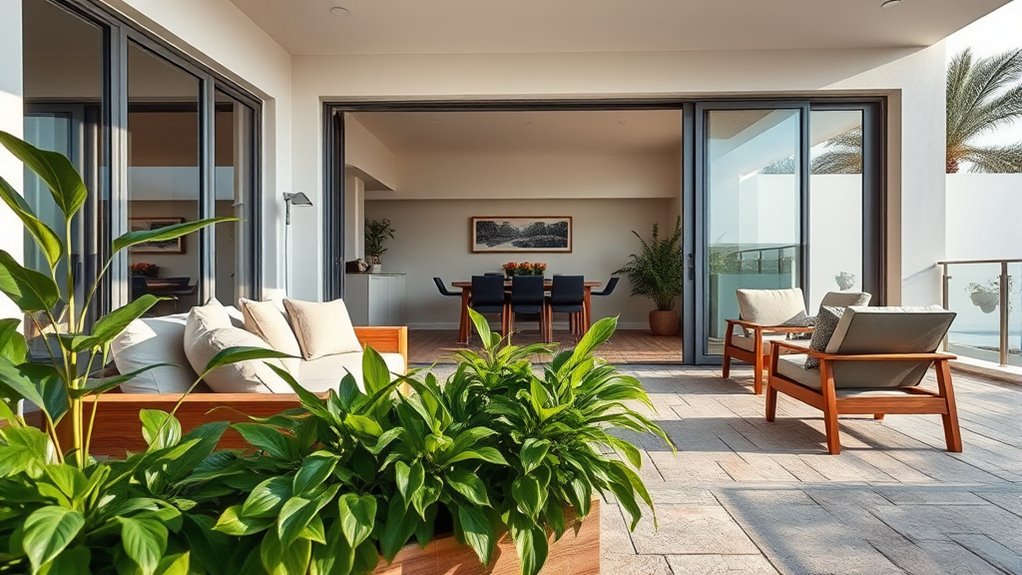
Ever wondered how to seamlessly blend your indoor and outdoor spaces for a more functional and inviting home? Achieving this balance starts with thoughtful furniture placement. When designing transitional areas, you want to create a natural flow that encourages movement between inside and out. Start by using similar or complementary furniture styles and materials on both sides of your space. For example, if your indoor furniture features sleek, modern lines, carry that aesthetic outdoors with matching or coordinating pieces. Position your furniture to foster easy conversation and accessibility, such as placing seating arrangements near open doorways or large windows. This invites you to move effortlessly between spaces, making the progression feel natural rather than forced.
Lighting solutions play a vital role in unifying your indoor and outdoor environments. Well-planned lighting not only enhances safety but also sets the mood and highlights the architectural features of your transition zones. Incorporate layered lighting—ambient, task, and accent—across both areas to create harmony. For instance, install warm, soft outdoor string lights or lanterns that complement your indoor lamps. Use dimmable fixtures so you can adjust the atmosphere depending on the occasion, whether it’s a cozy evening indoors or a lively outdoor gathering. Consider using similar color temperatures and styles of lighting fixtures on both sides to reinforce a cohesive look. Strategically placed lighting can also visually connect different zones, making the progression feel more fluid. Incorporating lighting design principles ensures a balanced and inviting ambiance across your entire space.
Another tip is to align the color palette and textures used inside and outside. This continuity in design helps your spaces appear as parts of a whole rather than separate entities. For example, if your indoor decor features neutral tones with natural textures like wood or stone, reflect this outdoors with matching furniture or decorative elements. Incorporate rugs, cushions, or throws that can be used both inside and outside to further blur the boundaries. Adding planters or greenery that extend from indoors to outdoors also helps to soften the division and bring a lively, vibrant feel to the progression.
Frequently Asked Questions
How Do I Choose Durable Materials for Outdoor Furniture?
To select durable outdoor furniture, opt for materials that withstand weather and require minimal furniture maintenance. Look for options like teak, aluminum, or synthetic wicker, which resist moisture and UV damage. Prioritize sustainable materials to guarantee eco-friendliness. By choosing resilient, eco-conscious choices, you’ll enjoy long-lasting furniture that maintains its beauty with minimal upkeep, making your transitional space both stylish and practical for years to come.
What Lighting Options Work Best for Transitional Spaces?
You should opt for a mix of ambient lighting and statement fixtures to enhance your passageway. Use soft, warm LED lights for a cozy atmosphere, while bold pendant lights or chandeliers add visual interest and define the area. Incorporate dimmers to adjust brightness as needed, creating a seamless flow between indoor comfort and outdoor ambiance. This combination balances functionality and style, making your space inviting and versatile.
How Can I Create Privacy Without Sacrificing Style?
To create privacy without sacrificing style, you can incorporate privacy screens or decorative curtains into your passageway. Privacy screens offer a sleek, modern look, while decorative curtains add softness and elegance. Both options allow you to block unwanted views and define your area. Choose materials and colors that complement your design, and consider layering with plants or furniture to enhance privacy while maintaining a cohesive, stylish look.
What Plants Are Ideal for Indoor-Outdoor Zones?
When selecting plants for your indoor-outdoor zones, opt for versatile varieties like ferns, snake plants, or pothos—they thrive in diverse lighting and humidity levels. Consider plant selection that complements your space’s vibe and enhances container gardening efforts. These adaptable greens add a lush touch without overwhelming your design, creating a seamless shift. Embrace the natural flow, and your space will feel inviting, fresh, and effortlessly stylish.
How Do I Maintain Seamless Flooring Between Spaces?
To maintain seamless flooring between indoor-outdoor spaces, focus on smooth flooring progressions and material consistency. Choose flooring materials that complement each other, such as tile blending with hardwood or concrete. Use threshold strips or level the surfaces to create a unified look. Regularly clean and inspect the transitions to prevent gaps or unevenness, ensuring your space feels cohesive and inviting without visual interruptions.
Conclusion
By blending your indoor and outdoor spaces seamlessly, you create a haven that feels both welcoming and harmonious. Think of your bridging areas as the heart of your home, where nature and comfort dance together in perfect harmony. With thoughtful styling and the right touches, you turn these spaces into timeless retreats—proof that true elegance lies in the details. After all, isn’t life best when it flows effortlessly from inside to outside?