TL;DR

Get furniture and decor delivered free with Prime
- Fast, free delivery on millions of items
- Prime Video, Amazon Music and more included
- Member-only deals all year
A report by Ideal Home spotlights Richard E. Grant’s circus-inspired dining area after he shared a dinner-party photo on Instagram. Interior designers praised the room’s humour and personal character, and suggested starting small with colour, bunting or distinctive tableware rather than copying the whole look.
Richard E. Grant’s circus-inspired dining area is drawing attention in an Ideal Home report, which asked interior designers what makes the room work for entertaining. The report describes a space filled with theatrical details and everyday comforts, presenting it as an expression of the actor’s personality rather than a deliberate attempt to follow a design trend.
The report says Grant shared a group photo on Instagram from a dinner party attended by friends, including Helena Bonham Carter and Christine Baranski. The article’s writer says the room’s Victorian-circus look stood out alongside the guests. The supplied material does not give the post’s date or further details about the occasion.
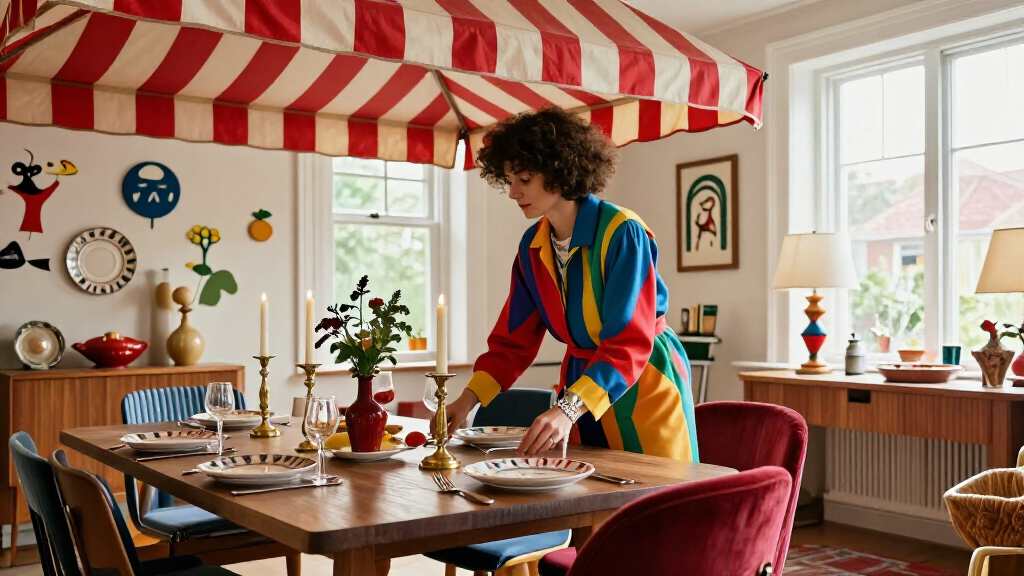
Visible features described in the report include large circus-style masks, bunting, colourful lighting and garlands, along with hydrangeas, houseplants and mismatched servingware. Together, those elements create what the article calls a characterful, humorous and kooky dining space. That description is the report’s assessment, rather than a formal label given by Grant.
Interior designer Lia Gold, winner of BBC One’s Interior Design Masters, said the room feels closely tied to its owner. Alison Westaby, head of interior design at Barker and Stonehouse, said that despite its visual drama, it appears comfortable and usable, rather than designed only to look good in photographs.
A Dining Room Built for Conversation
The designers’ comments focus on a practical question for hosts: how can a dining room feel memorable without making guests uncomfortable? Gold points to the room’s conversation-starting decorations and playful atmosphere. Westaby says its apparent comfort and humour help counter the formality that can surround hosting.
The advice is not to reproduce Grant’s room piece by piece. Instead, the report suggests that an individual detail—such as bold tableware, an ornament or bunting—can add personality without committing to a full maximalist makeover. For readers planning a dinner party, the broader takeaway is that a welcoming atmosphere need not depend on a perfectly coordinated room.
As an affiliate, we earn on qualifying purchases.
From Personal Style to FunHaus
Ideal Home links the dining room’s circus aesthetic to FunHaus, a playful interiors trend the article says Pinterest declared would be big in 2026. The report frames Grant’s room as an example of a similar mood, but cautions against assuming he designed it to match a trend. The writer says his interiors appear to reflect his own taste, citing other colourful features of his home, including a hot-pink snug and garden decorations.
That distinction shapes the design advice. Gold recommends using elements such as bunting and strong colour, while Westaby suggests combining collected or older objects with newer furniture, then connecting contrasting pieces through a repeated colour, material or shape. Both experts encourage homeowners to keep items that feel personal rather than pursuing an exact replica of a celebrity’s space.
““It’s kooky. It’s a little bit mad. It takes you by surprise, but so does Richard E. Grant.””
— Lia Gold, interior designer and winner of BBC One’s Interior Design Masters, quoted by Ideal Home
What the Instagram Post Shows
The available report does not state when Grant shared the dinner-party photo, whether the pictured decorations are permanent, or whether he has commented on the room or its design. It also does not establish that he intended to follow the FunHaus trend. The link between the trend and his dining area is the article’s comparison, while the design judgments are attributed to the quoted experts.
The source provides no independent account of the room, its cost or how it is used outside the dinner-party setting. Descriptions of the space as relaxed and welcoming are the designers’ interpretations based on the images and information in the report.
Ideas for Adapting the Look
Ideal Home’s practical suggestions begin with small changes: add distinctive serving pieces, a table ornament or simple bunting, then build on the look only if it suits the home. The article also points to artwork, accessories and plants as ways to introduce colour, height and contrast.
No further announcement or update from Grant is included in the source material. For readers, the next step is a design choice rather than a scheduled event: use the report’s ideas selectively, keeping the room functional and anchored in personal taste.
Key Questions
What is distinctive about Richard E. Grant’s dining area?
The Ideal Home report describes circus-inspired masks, bunting, colourful lighting and garlands, alongside plants, flowers and mismatched servingware.
Did Grant say he was following the FunHaus trend?
The report does not say that. It compares the room’s playful, circus-like style with FunHaus, but presents Grant’s decor as personal rather than necessarily trend-driven.
What do the designers say makes the room suitable for entertaining?
Lia Gold points to decorations that can prompt conversation and a playful mood. Alison Westaby says the room appears comfortable and relaxed despite its dramatic decor.
How can someone borrow the style without copying the whole room?
The experts suggest starting with one or two elements, such as bold tableware, an unusual ornament, artwork or bunting. Repeating a colour, material or shape can help varied pieces feel connected.
Source: rss
Fall Picks
fall essentials
As an affiliate, we earn on qualifying purchases.